Coconut sugar is available in several formats, and each format serves a different purpose. While granules and powder are practical for food manufacturing, coconut sugar mould products offer something different: shape, portion control, presentation, and a traditional product experience. For importers and food businesses, moulded sugar can be an interesting option for retail products, foodservice, hospitality, traditional beverages, gift products, and specialty food markets. However, buying moulded coconut sugar is not simply about choosing a shape. Buyers also need to consider the mould design, product size, weight, packaging, moisture protection, quality, production process, and shipping requirements.
A well-designed mould can help create consistent coconut sugar shapes that fit a specific market or application. At the same time, the actual sugar quality remains the most important factor. A visually attractive product still needs suitable specifications, stable quality, and appropriate packaging.
This guide explains how coconut sugar moulds work, what buyers should consider, and how to evaluate a supplier when sourcing moulded coconut sugar for international markets.
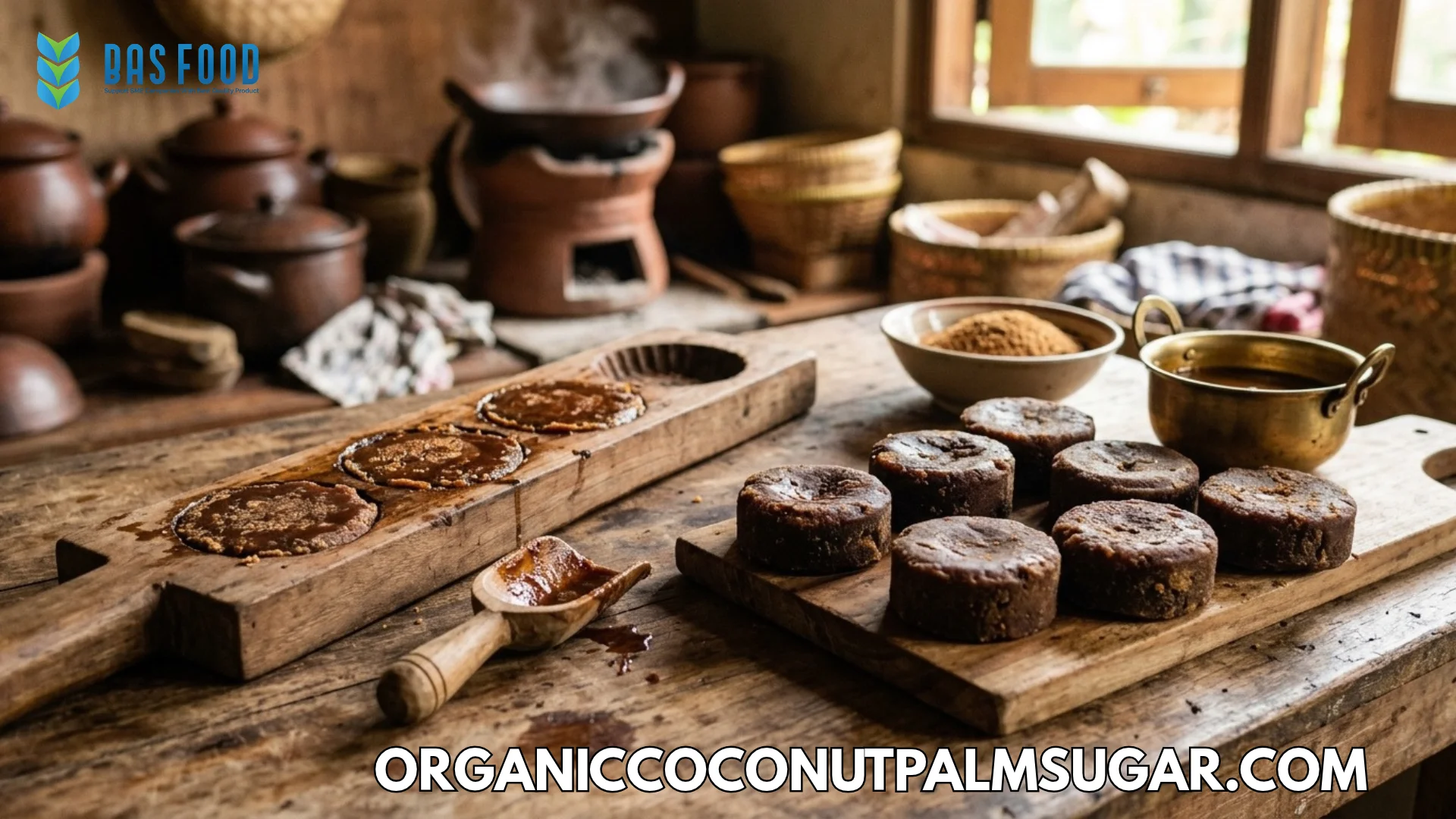
What Is a Coconut Sugar Mould?
A coconut sugar mould is a tool used to shape coconut sugar into a specific form after the sugar has been processed into a suitable consistency. Instead of selling the product as loose granules or powder, manufacturers can create individual pieces with defined shapes and sizes.
The mould determines the basic appearance of the finished product. Depending on the production method and buyer requirements, the resulting pieces can be round, rectangular, square, cylindrical, or another practical shape.
The exact design possibilities depend on the manufacturing process and the mould used. Therefore, buyers should discuss their desired shape with the supplier before production begins.
The term “coconut sugar mould” can also refer to the moulding equipment itself rather than the finished sugar product. In commercial discussions, it is useful to clarify whether you are talking about the mould, the moulded product, or both.
Why Moulded Coconut Sugar Is Different
Moulded coconut sugar offers a different purchasing experience compared with granulated or powdered coconut sugar.
Granules are often convenient for measuring, mixing, and industrial food production. Moulded products, on the other hand, can provide a defined portion and a more recognizable physical form.
This can make moulded coconut sugar suitable for markets where product presentation matters. Retailers, restaurants, hotels, cafes, traditional food businesses, and specialty stores may use shaped sugar pieces in ways that differ from industrial food manufacturers.
For example, individual pieces can be served with beverages or packed as a retail product. The shape can also become part of the product’s visual identity.
However, shape should not replace quality. Buyers should evaluate both the physical appearance and the underlying product specification.
Coconut Sugar Blocks and Their Common Uses
One popular form of moulded product is coconut sugar blocks.
Blocks provide a simple and practical shape that can be packed individually or grouped into larger packages. Depending on the intended market, blocks can be designed for household use, foodservice, traditional cooking, beverage preparation, or specialty retail.
The appropriate block size depends on the customer’s application. A foodservice buyer may prefer a different portion from a retail consumer. Likewise, a manufacturer using the blocks as an ingredient may have different requirements.
For this reason, buyers should define the intended use before selecting a mould.
A supplier can then discuss possible dimensions, weight ranges, packaging options, and production considerations.
Exploring Different Coconut Sugar Shapes
One of the interesting advantages of moulded products is the ability to create different coconut sugar shapes.
The shape can influence how consumers perceive the product and how they use it. A simple block may communicate practicality, while a traditional or distinctive shape may create a stronger connection with local culinary traditions.
For private-label products, shape can also become part of the packaging and branding strategy.
However, buyers should remember that unusual shapes may require a dedicated mould and additional production planning. A custom design can therefore require more discussion than a standard shape.
Before requesting a custom mould, provide the supplier with a clear concept. A drawing, dimension specification, reference product, or technical design can make communication much easier.
How Does a Coconut Sugar Mould Work?
The basic concept is straightforward. Processed coconut sugar is prepared to a suitable consistency and then placed into a mould or shaped using a moulding process.
The sugar is then allowed to reach the appropriate condition so that it maintains the desired shape. The exact production steps can vary depending on the manufacturer’s process, equipment, and product specification.
The mould must provide enough consistency to produce pieces with similar dimensions and appearance. At the same time, the process must maintain the desired product characteristics.
This is why mould design and production control work together. A good mould alone cannot guarantee a consistent product if the production process is not controlled properly.
What Makes a Good Coconut Sugar Mould?
For B2B buyers, a good mould should support consistent production.
The first consideration is shape consistency. Each piece should generally follow the agreed design and dimensions within the supplier’s production tolerance.
The second consideration is practical handling. The mould should support efficient production and allow the finished sugar pieces to be removed without unnecessary damage.
The third consideration is cleanliness and food-contact suitability. The materials and handling practices used in the moulding process should be appropriate for food production.
Finally, the mould should match the buyer’s packaging requirements. A shape that looks attractive but does not fit efficiently into the selected packaging can create unnecessary costs.
Standard Moulds vs Custom Moulds
B2B buyers generally have two broad options: use an existing mould design or develop a custom mould.
A standard mould can be more straightforward because the supplier may already understand the production process and packaging requirements. It may also reduce the development work needed before production.
A custom mould, however, gives buyers greater control over the final appearance.
Custom moulding can be useful for private-label brands, specialty retailers, hospitality products, promotional food products, and businesses that want a distinctive product shape.
Before selecting a custom design, buyers should consider expected order volume, packaging, production requirements, and the commercial value of the customized shape.
When Should You Consider a Custom Mould?
A custom mould makes the most sense when the shape provides a clear business purpose.
For example, a brand may want a unique sugar shape that matches its visual identity. A hotel may want a special shape for serving with coffee or tea. A specialty food company may want a traditional shape that reflects the product’s origin.
However, custom mould development should not be treated as a cosmetic decision only.
The buyer should also consider how the product will be packed, transported, stored, displayed, and used. A practical shape can reduce packaging difficulties and product damage during shipping.
Before starting production, ask the supplier to confirm whether the requested design is technically practical.
Coconut Sugar Mould and Packaging Considerations
Packaging is particularly important for moulded products because the pieces need to retain their shape during handling and transportation.
The packaging should protect the product from excessive moisture, contamination, crushing, and other conditions that could affect quality.
Buyers should discuss the packaging format with the supplier at the same time they discuss the mould design.
For example, individually wrapped pieces may be suitable for retail or hospitality applications, while larger inner bags or cartons may be more practical for bulk buyers.
The final choice depends on the target market, distribution system, product size, and buyer requirements.
Moisture and Storage
Moulded coconut sugar can be sensitive to storage conditions, especially when exposed to unsuitable moisture levels.
Moisture can influence texture, surface condition, and the physical stability of shaped sugar products. Therefore, packaging and storage conditions should be discussed before placing a large order.
Buyers should ask suppliers for recommended storage conditions and shelf-life information based on the actual product specification.
Warehouses should also maintain suitable conditions according to the supplier’s recommendations.
Good storage practices help preserve the physical characteristics of the moulded product until it reaches the final customer.
Quality Control for Moulded Coconut Sugar
Quality control should cover more than shape.
The supplier should evaluate the product according to the agreed specification. Depending on the product, buyers may review appearance, color, aroma, flavor, texture, weight, dimensions, moisture, microbiological parameters, packaging condition, and other relevant characteristics.
The exact quality parameters should be agreed before production.
This is especially important for repeat orders. A buyer may approve a sample based on its appearance, but future batches also need to remain within the agreed requirements.
Therefore, the approved sample and written specification should work together as references.
Why Samples Matter Before Bulk Orders
A sample is one of the easiest ways to evaluate whether a moulded product is suitable for your business.
Buyers can examine the shape, weight, texture, color, packaging, and overall appearance. They can also test how easily the product fits into their intended application.
For example, a hospitality buyer can test how the product looks when served with beverages. A retailer can test how it fits into the proposed packaging. A food manufacturer can assess whether the product works in its production process.
If a custom shape is requested, sample approval becomes even more important.
Do not approve a large production run based only on a drawing. The physical sample gives you a much better understanding of the finished product.
Choosing a Coconut Sugar Supplier
Selecting the right coconut sugar supplier requires more than comparing quotations.
Start with the product. Ask whether the supplier can produce the required moulded format consistently.
Next, evaluate communication. The supplier should understand your requirements and provide clear answers about mould design, product specifications, packaging, and production.
You should also discuss production capacity and lead time. Custom moulding may require additional preparation, so realistic planning is important.
Finally, ask about export experience if you are buying internationally. Documentation, packaging, shipping coordination, and customs requirements all become part of the transaction.
Working With a Coconut Sugar Exporter Supplier
An experienced coconut sugar exporter supplier can help international buyers coordinate several parts of the sourcing process.
The exporter may assist with product preparation, packaging, documentation, and shipment coordination. However, the buyer should still clearly communicate the requirements of the destination market.
Before confirming an order, discuss:
- Product shape
- Dimensions
- Target piece weight
- Product specification
- Packaging
- Labeling
- Quantity
- Production lead time
- Shipping requirements
- Export documents
- Destination requirements
Clear communication reduces the risk of misunderstandings.
For recurring orders, it is also useful to keep an approved product specification and sample as references for future production.
Private Label and Branded Moulded Coconut Sugar
Moulded coconut sugar can be interesting for private-label businesses because the physical product itself can become part of the brand experience.
A unique shape may help a product stand out on a retail shelf or create a recognizable presentation in hospitality settings.
However, branding involves more than changing the shape. Buyers should also consider packaging design, labeling requirements, product information, and target-market regulations.
If you want a custom shape, discuss the design with the supplier early. Provide technical information such as dimensions, shape references, and expected piece weight where possible.
This makes it easier for the supplier to determine whether the design can be produced consistently.
Working With CV Bonafide Anugerah Sentosa
For buyers exploring Indonesian sources, CV Bonafide Anugerah Sentosa can be contacted to discuss coconut sugar products, including moulded formats and export requirements.
When making an inquiry, provide as much useful information as possible. For example, explain the desired shape, approximate dimensions, target quantity, packaging preference, intended application, and destination market.
If you already have a reference design, sharing a drawing or product photograph can make the discussion clearer.
Buyers should also request product specifications and samples before approving a large production order. This helps both sides confirm that the product meets the commercial requirements.
Final Thoughts
A coconut sugar mould is more than a tool for creating attractive sugar pieces. It can influence product size, presentation, portioning, packaging, handling, and the overall customer experience.
For B2B buyers, the best approach is to start with the intended application and work backward. Decide how the product will be used, select a practical shape, define the specification, evaluate packaging, and then discuss production with a suitable supplier.
Moulded coconut sugar and coconut sugar blocks can serve different commercial applications, while custom coconut sugar shapes may provide additional opportunities for private-label and specialty products.
Whether you are a distributor, importer, retailer, food manufacturer, hotel, restaurant, or private-label brand, careful planning can help you source a moulded product that fits your market.
For buyers sourcing from Indonesia, discussing your requirements directly with a capable coconut sugar supplier or coconut sugar exporter supplier is a practical first step. Always request samples, confirm specifications, and agree on packaging before moving into bulk production.
With the right design and the right production process, moulded coconut sugar can become a practical product format rather than simply a different shape of sugar.