For food manufacturers, distributors, importers, and ingredient traders, finding a coconut sugar supplier is only the first step. The bigger challenge is building a reliable coconut sugar granule supply that can support regular production and customer demand.
A business may receive an excellent sample from a supplier, but that does not automatically guarantee reliable supply for future orders. Buyers also need to consider product consistency, production capacity, packaging, quality control, lead times, shipping, and communication.
This becomes even more important when coconut sugar granules are purchased in bulk. A small difference in supply planning can create problems for manufacturers that depend on the ingredient for daily production.
Therefore, B2B buyers should look beyond the product itself. They should evaluate the entire supply chain and understand how the supplier manages production from raw materials to export shipment.
This guide explains the key factors behind reliable coconut sugar granule supply and provides a practical framework for importers and food businesses looking for long-term sourcing partners.
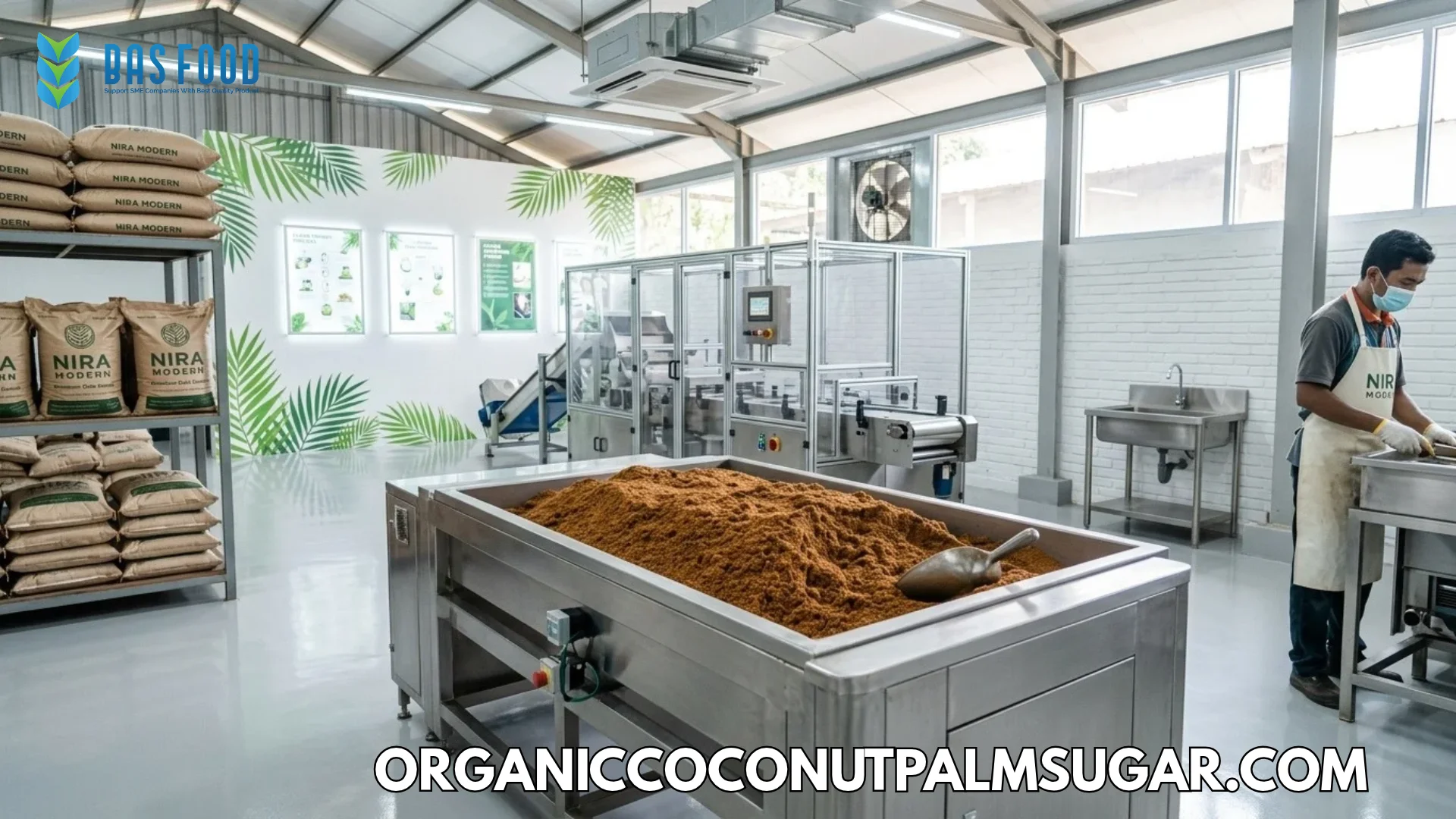
What Does Coconut Sugar Granule Supply Mean?
Coconut sugar granule supply refers to the ability of a supplier to provide coconut sugar in granulated form according to an agreed specification, quantity, schedule, and quality requirement.
For a retail buyer, supply may simply mean having enough products available for sale. However, for a food manufacturer or importer, supply involves much more.
The buyer needs to know whether the supplier can provide the required volume consistently, maintain agreed product characteristics, prepare suitable packaging, and coordinate shipments according to the purchasing schedule.
In other words, reliable supply is not only about having stock today. It is about creating a predictable sourcing system that can support future orders.
For this reason, B2B buyers should evaluate production capability, sourcing practices, quality control, storage, packaging, and export processes before committing to a regular purchasing program.
Why Stable Supply Matters to B2B Buyers
A stable supply of coconut sugar granules helps businesses plan their operations with greater confidence.
Imagine a food manufacturer that uses coconut sugar every week. If the supplier cannot provide the required quantity when needed, the manufacturer may have to delay production, find another source, or reformulate the product.
These changes can create additional costs and operational pressure.
A stable supply relationship can help buyers plan production and inventory more effectively. It also allows purchasing teams to forecast future demand and communicate requirements to suppliers earlier.
However, stable supply does not mean that a supplier must keep unlimited stock. In many export businesses, production and shipment are planned according to confirmed orders and forecasts.
Therefore, buyers should discuss supply planning directly with the supplier.
Understanding the Coconut Sugar Supply Chain
Before evaluating a supplier, it helps to understand the basic supply chain behind coconut sugar granules.
The process starts with coconut raw materials and continues through sap collection, processing, drying or granulation, quality control, packaging, storage, and transportation.
Each stage can influence the final product and its availability.
For example, raw material availability can affect production planning. Processing capacity can determine how quickly an order can be prepared. Packaging capacity can also influence the final shipment schedule.
Because several stages are connected, supply reliability depends on more than the final production facility.
A professional buyer should therefore ask how the supplier manages its upstream sourcing and production process.
Production Capacity and Supply Planning
Production capacity is an important factor when evaluating coconut sugar granule supply.
A supplier may be able to fulfill a small order easily but face different challenges when a buyer suddenly increases the order volume.
That is why buyers should communicate expected purchasing volumes early.
Instead of simply asking, “How much can you supply?”, buyers can provide information about expected monthly or quarterly demand. This gives the supplier a better understanding of the potential business relationship.
The supplier can then assess whether its production and sourcing arrangements can support the expected volume.
Buyers should also ask about normal production lead times. Lead time can vary depending on order volume, product specification, packaging, production planning, and shipping arrangements.
A realistic supply plan should consider all of these factors.
Product Specification Is Part of Supply Reliability
Having enough coconut sugar granules is not enough if the product changes significantly between shipments.
For B2B buyers, supply reliability includes both quantity and quality.
A manufacturer may need a specific granule characteristic for its production process. A distributor may need a consistent product appearance for its customers. A retail brand may need the product to match an approved sample.
Therefore, buyers should establish a product specification before regular purchasing begins.
Depending on the application, specifications may cover:
- Granule characteristics
- Appearance
- Color
- Flavor
- Aroma
- Moisture requirements
- Food safety requirements
- Packaging
- Storage conditions
- Other agreed quality parameters
The exact requirements should be determined by the buyer and supplier together.
Once agreed, the specification becomes a useful reference for future orders.
Bulk Sourcing Requires Better Planning
Bulk sourcing is different from buying a small quantity for testing.
When a buyer moves into bulk purchasing, production scheduling, packaging, transportation, and inventory planning become much more important.
A buyer should estimate how much coconut sugar it expects to use and how often it needs deliveries.
For example, a food manufacturer may prefer scheduled shipments rather than ordering only when inventory becomes critically low.
Forecasting can help the supplier prepare production and packaging more effectively.
At the same time, buyers should avoid unrealistic forecasts. A supplier needs useful information to plan production, but demand can naturally change.
The best approach is regular communication between the purchasing team and supplier.
Why Supplier Communication Matters
Communication is sometimes overlooked when buyers evaluate international suppliers.
However, good communication can make a major difference when managing an international coconut sugar granule supply.
Buyers may need to discuss specifications, production schedules, packaging changes, shipping dates, documents, or unexpected issues.
If communication is slow or unclear, even a good product can become difficult to manage.
A reliable supplier should be able to answer practical questions clearly and provide updates when important changes occur.
Buyers should also communicate their own requirements clearly. Supply planning works best when both parties share useful information.
Samples Should Come Before Regular Supply
Before entering a long-term sourcing agreement, buyers should request a product sample.
A sample allows the buyer to evaluate the actual coconut sugar granules before placing a larger order.
The buyer can check the product’s appearance, color, aroma, flavor, texture, and granule characteristics. If the product will be used in manufacturing, the buyer should also test it in the intended application.
For example, a bakery manufacturer can test the granules in selected recipes. A beverage company can evaluate how they dissolve and contribute to the final drink.
The goal is to make sure the approved product matches the buyer’s needs.
Once approved, the sample can serve as a reference alongside the written specification.
Quality Control Supports Reliable Supply
A strong quality control process helps protect supply consistency.
Suppliers should have suitable checks throughout production rather than relying only on a final visual inspection.
Depending on the product and customer requirements, quality control may include checks on raw materials, processing, finished product characteristics, packaging, and batch identification.
For B2B buyers, documentation can also be useful. Depending on the supplier and destination market, buyers may request product specifications, test results, certificates of analysis, or other relevant documents.
However, buyers should always confirm that the documentation applies to the specific product and requirements involved in the transaction.
Good quality control supports both product consistency and supply confidence.
Packaging and Its Role in Supply
Packaging is another important part of coconut sugar granule supply.
The packaging needs to protect the product during storage, handling, transportation, and export.
For bulk buyers, packaging requirements can be different from those for retail products.
A food manufacturer may require larger food-grade bags or bulk packaging, while a private label brand may need consumer-sized retail packaging.
Buyers should discuss packaging early because packaging production can affect the overall lead time.
The buyer and supplier should confirm:
- Packaging material
- Pack size
- Inner and outer packaging
- Label information
- Batch identification
- Carton configuration
- Pallet requirements, when applicable
- Shipping protection
- Storage instructions
Clear packaging specifications reduce the risk of delays and misunderstandings.
Storage and Inventory Management
Even when the supplier provides a reliable product, buyers still need to manage inventory correctly.
Coconut sugar granules should be stored according to the supplier’s recommended conditions. Buyers should pay particular attention to moisture exposure because dry sugar products can be affected by unsuitable storage environments.
Warehouse conditions, packaging integrity, handling, and stock rotation can all influence product performance.
For importers, storage planning should begin before the shipment arrives.
The buyer should know where the product will be stored, how much inventory can be handled, and when the next order should be placed.
Good inventory planning works together with a stable supply relationship.
Export Suppliers and International Sourcing
International buyers often work with an export supplier rather than purchasing directly from a local producer.
An export supplier can help coordinate product preparation, export packaging, documentation, and shipment arrangements.
However, buyers should still confirm the supplier’s actual capabilities.
Ask whether the supplier regularly handles international orders and whether it can provide the documents required for the destination market.
The buyer should also provide clear information about the destination country and import requirements.
International sourcing works best when both sides understand their responsibilities.
What to Look for in a Coconut Sugar Exporter Supplier
For businesses importing coconut sugar, choosing the right coconut sugar exporter supplier can simplify the sourcing process.
An experienced exporter should understand that international buyers may have different requirements from domestic customers.
For example, an overseas buyer may need specific export packaging, product documentation, labeling information, shipping coordination, and shipment scheduling.
However, buyers should not assume that every exporter offers the same service.
Evaluate each supplier based on the actual product, quality system, communication, export process, and commercial terms.
A good sourcing process is based on evidence and clear requirements rather than assumptions.
Sourcing Coconut Sugar Granules From Indonesia
Indonesia is an important origin for coconut-based agricultural products. International buyers can explore Indonesian suppliers when developing their coconut sugar sourcing strategy.
However, choosing a supplier should involve more than simply selecting Indonesia as the origin.
Buyers should evaluate the individual supplier’s product specifications, production system, quality control, packaging, and export capabilities.
Sample approval remains an important part of the process.
For buyers looking for coconut sugar granule supply, Indonesia can be considered as one sourcing option, especially when the supplier can support the required product and export specifications.
CV Bonafide Anugerah Sentosa for Coconut Sugar Sourcing
For buyers researching Indonesian suppliers, CV Bonafide Anugerah Sentosa can be included in the sourcing process for coconut sugar products.
When approaching a supplier, buyers should provide a clear purchasing brief.
The brief can include the required coconut sugar granule format, estimated order volume, packaging requirements, destination market, expected delivery schedule, and documentation needs.
This helps the supplier understand the project and provide more relevant information.
Buyers can then request samples and evaluate the product before discussing regular bulk sourcing.
As with any B2B supplier relationship, buyers should confirm the final specifications, commercial terms, packaging, documentation, and delivery arrangements before placing an order.
Building a Stable Supply Agreement
Once a supplier passes the initial evaluation, the next step is creating a more predictable purchasing arrangement.
Some buyers may place individual purchase orders. Others may provide rolling forecasts to help the supplier prepare for future demand.
The appropriate model depends on the buyer’s business.
For companies with regular demand, sharing forecasts can help both parties plan production and shipping.
However, forecasts are not always firm purchase commitments. Buyers and suppliers should clearly distinguish between expected demand and confirmed orders.
This simple distinction can help prevent misunderstandings.
Managing Seasonal and Market Changes
Agricultural products can be influenced by changes in raw material availability, weather, market demand, and logistics.
Therefore, buyers should avoid assuming that supply conditions will always remain exactly the same.
A better approach is to maintain regular communication with the supplier.
If the buyer expects a major increase in demand, it should communicate that change as early as possible.
Likewise, suppliers should provide reasonable updates if a situation may affect production or delivery schedules.
This two-way communication can make supply planning more flexible.
Common Mistakes When Buying Coconut Sugar Granules in Bulk
One common mistake is choosing a supplier based only on the lowest price.
While price affects purchasing decisions, supply interruptions or inconsistent quality can create additional costs.
Another mistake is failing to define the product specification. Without a clear specification, the buyer and supplier may have different ideas about what the final product should look like.
Some buyers also wait too long before placing repeat orders. International shipments require planning, so buyers should consider production and transportation lead times.
Finally, buyers sometimes fail to maintain a backup sourcing plan.
A primary supplier can remain the main partner while the buyer keeps alternative supplier information for business continuity planning.
How Buyers Can Improve Supply Reliability
Buyers can also take steps to improve their own supply planning.
First, maintain accurate demand forecasts. The more clearly a buyer understands its expected consumption, the easier it becomes to communicate future requirements.
Second, avoid waiting until inventory is nearly empty before placing a new international order.
Third, maintain open communication with the supplier about upcoming demand.
Finally, keep a record of product specifications, approved samples, purchase orders, shipment documents, and quality feedback.
These simple practices can make future orders easier to manage.
Reliable supply is a shared responsibility between buyer and supplier.
The Long-Term Value of a Reliable Supplier
A reliable supplier can become more than a source of ingredients. Over time, the supplier can become an important part of the buyer’s supply chain.
A long-term relationship can make communication easier because both sides understand the product and purchasing requirements.
The buyer can provide better demand forecasts, while the supplier can better understand expected volumes and packaging needs.
This relationship can also make it easier to discuss future product development.
For example, a buyer may later need a different granule specification, packaging size, or private label format.
A supplier that already understands the buyer’s business may be easier to work with when these requirements arise.
Final Thoughts on Coconut Sugar Granule Supply
Reliable coconut sugar granule supply involves much more than finding a supplier that has coconut sugar available today.
B2B buyers need to consider production capacity, product specifications, quality control, packaging, inventory, export capability, lead times, and communication.
For bulk sourcing, planning becomes especially important. Buyers should communicate their expected demand and allow enough time for production and international transportation.
At the same time, suppliers need to provide clear information about product specifications, production schedules, packaging, and export requirements.
For businesses searching for a coconut sugar supplier, the best starting point is a clear product brief followed by sample evaluation and supplier assessment.
Whether you are a food manufacturer, distributor, importer, or ingredient trader, a structured procurement process can help you build a more dependable supply chain.
By treating supply as an ongoing partnership rather than a one-time transaction, businesses can create better conditions for consistent purchasing and long-term growth.