As food manufacturers, beverage brands, distributors, and importers look for versatile sweetening ingredients, coconut sugar syrup is becoming an interesting option to explore. Made from concentrated coconut palm sap, this liquid sweetener offers a distinctive caramel-like flavor and a convenient format for many food applications. For businesses that purchase ingredients in commercial quantities, sourcing wholesale coconut sugar syrup involves more than finding an attractive price. Buyers need to consider product specifications, quality consistency, packaging, storage, shipping, and the supplier’s ability to support repeat orders.
Whether you manufacture beverages, produce sauces, distribute food ingredients, or import specialty sweeteners, choosing the right supplier can make a real difference to your purchasing process. A suitable business partner should understand your requirements and provide clear information before you commit to a large order.
In this guide, we explore the key factors to consider when buying coconut sugar syrup in bulk, from product characteristics to supplier selection and export arrangements.
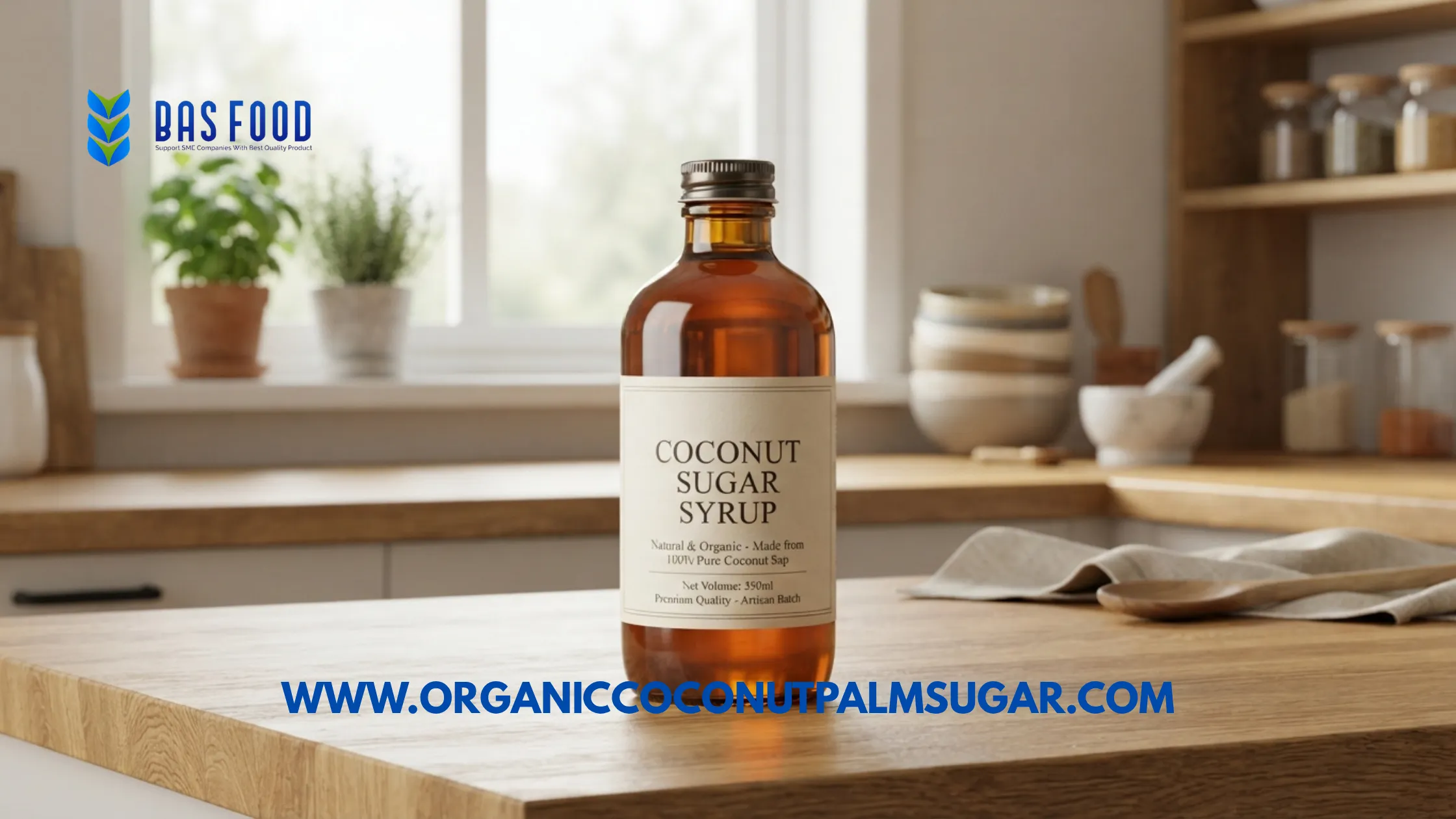
Why Food Businesses Choose Coconut Sugar Syrup
Coconut sugar syrup offers several practical features that make it worth considering for commercial food production. Its liquid form can simplify ingredient handling in formulations that already use liquid sweeteners.
For example, beverage manufacturers may explore it for coffee drinks, tea, smoothies, flavored beverages, and drink concentrates. Sauce producers can test it in marinades, dressings, dipping sauces, and cooking sauces. Bakeries and dessert manufacturers may also use it in selected recipes that benefit from its characteristic flavor.
Another reason businesses explore coconut sugar syrup is its distinctive taste. Its cooked-sugar and caramel-like notes can add a different flavor dimension compared with some conventional sweeteners. This can be useful for brands that want to develop products with a recognizable flavor profile.
However, coconut sugar syrup is not automatically a direct replacement for dry sugar in every recipe. It contributes both dissolved sugar solids and water. Therefore, manufacturers may need to adjust the liquid balance, sweetness level, and processing conditions of their formulations.
The most suitable application depends on the product’s specifications and the buyer’s formulation goals. Testing samples in the intended production process is the best way to assess performance.
Understanding Quality Before Buying in Bulk
Quality evaluation is one of the most important steps when purchasing wholesale coconut sugar syrup. A small difference in product characteristics may affect the flavor, appearance, handling, or consistency of a finished food product.
Before confirming a commercial order, buyers should understand the main specifications and decide which ones matter most to their application.
Color and appearance
Coconut sugar syrup commonly has a brown color, although the shade can vary between products. Raw material characteristics and processing conditions can influence the final appearance.
Buyers should agree on an acceptable color range rather than assume that darker syrup is always better. The right appearance depends on the intended application and product expectations.
Flavor and aroma
The syrup generally offers a sweet taste with caramel-like or cooked-sugar notes. However, flavor intensity may differ between manufacturers and production batches.
Ask for a sample and evaluate its aroma and taste. A clean, pleasant flavor profile is important, especially when the syrup will become a regular ingredient in a branded food product.
Viscosity
Viscosity describes how easily a liquid flows. It can affect pumping, filling, dosing, mixing, and handling during production.
Temperature and concentration influence viscosity, so buyers should confirm the conditions used when the supplier measures it. This helps ensure that the specification is meaningful for the buyer’s processing environment.
Brix and concentration
Brix is commonly used as an indicator of soluble solids concentration in sugar solutions. It helps buyers understand the concentration of the syrup, but it is not a direct measurement of moisture content or water activity in every complex product.
Moisture and water activity
Moisture content measures how much water a product contains. Water activity measures how available that water is for microbial growth and other processes. These are different measurements, and one should not be used as a substitute for the other.
For buyers with specific product stability or food safety requirements, it may be necessary to request relevant laboratory results and supporting documentation.
Finding the Right Bulk Syrup Supplier
A dependable bulk syrup supplier should provide more than a product quotation. Buyers need a business that understands the product, communicates clearly, and can explain the specifications relevant to commercial purchasing.
Start by checking the supplier’s product knowledge. Ask about the raw material, manufacturing process, color, flavor, concentration, viscosity, and available packaging. The supplier should be able to explain which details are confirmed and which may depend on the order.
Next, discuss quality management. Ask how the supplier handles raw materials, monitors production, checks finished products, and identifies batches. Depending on your requirements, you may also request a product specification sheet, Certificate of Analysis (COA), or relevant laboratory test results.
Sample availability is another important consideration. A sample allows your technical or production team to test the syrup before committing to a larger quantity. This is especially useful when the ingredient will be used in an established recipe or manufacturing process.
Finally, evaluate communication and order support. A supplier that responds clearly to questions about specifications, MOQ, packaging, lead time, and shipping can make purchasing easier to manage.
Wholesale Applications Across the Food Industry
Coconut sugar syrup can be explored in several food categories. Its liquid form and distinctive flavor make it a useful ingredient to test in formulations where both sweetness and flavor contribution matter.
Beverages and drink concentrates
Beverage manufacturers can test coconut sugar syrup in coffee, tea, flavored drinks, smoothies, and liquid drink concentrates. Its pourable consistency can simplify sweetener handling in suitable production systems.
However, formulators should account for the syrup’s water content and dissolved solids. They may need to adjust the recipe to maintain the desired sweetness, body, and final concentration.
Sauces and dressings
Sauce manufacturers may use coconut sugar syrup in marinades, dipping sauces, dressings, and cooking sauces. It can contribute sweetness, color, and a cooked-sugar flavor.
The right quantity depends on the acidity, salt level, viscosity, and other ingredients in the formulation. Product trials help determine whether the syrup delivers the intended result.
Bakery and desserts
Bakeries can explore coconut sugar syrup in cakes, muffins, fillings, toppings, and dessert sauces. Its flavor may complement recipes that benefit from caramel-like sweetness.
Because the syrup adds liquid, manufacturers should review the recipe’s moisture balance. Adjustments to other liquid ingredients may be necessary to achieve the desired texture and baking performance.
Confectionery and sweet snacks
Selected confectionery and sweet snack products may also benefit from testing coconut sugar syrup. However, the syrup’s performance depends on concentration, temperature, moisture, and the structure of the final product.
For specialized applications, manufacturers should carry out formulation trials before introducing the ingredient into large-scale production.
Packaging Options for Commercial Coconut Sugar Syrup
Packaging plays an important role in bulk purchasing because it affects product protection, storage, handling, and transportation. Since coconut sugar syrup is a liquid food ingredient, buyers should select packaging that suits the order quantity and supply chain.
Depending on the supplier’s capabilities, possible formats to discuss may include bottles, jerry cans, food-grade pails, drums, and larger bulk containers. These are examples of commercial packaging options, not guaranteed formats from every supplier.
When reviewing packaging, buyers should ask about the material, closure system, sealing method, and suitability for food contact. The material must also be compatible with the syrup and the expected conditions of use.
For larger orders, importers should consider how the packaging will be loaded, secured, handled, and stored. Outer protection and palletization may also be relevant, depending on the transport arrangement.
Do not assume that packaging alone guarantees product stability. The syrup’s shelf life depends on its formulation, processing, packaging system, hygiene, and storage conditions. Buyers should request product-specific shelf-life information and follow the supplier’s handling instructions.
How to Calculate Your Bulk Purchasing Requirements
Buying in bulk can support a regular supply plan, but ordering too much can create unnecessary storage and inventory risks. For this reason, buyers should estimate their actual consumption before deciding on an order quantity.
Start by reviewing your production schedule. Calculate how much coconut sugar syrup each production batch requires, then estimate the total amount needed over a specific period.
Next, consider your storage capacity and the product’s stated shelf life. Make sure your warehouse can store the quantity under the recommended conditions. A clean, dry storage area protected from direct sunlight, excessive heat, and contamination is generally important.
You should also consider lead time and shipping schedules. Importers may need to allow time for order preparation, export handling, international transportation, customs clearance, and delivery to their facility.
A simple purchasing estimate can help:
Estimated order quantity = Expected consumption during the purchasing period + Planned safety stock
The safety stock should reflect actual demand patterns, delivery lead times, and storage capacity. It should not be set so high that the business holds more inventory than it can use within the product’s recommended shelf life.
By planning quantities carefully, businesses can balance supply reliability with inventory costs.
Understanding Wholesale Pricing and Total Landed Cost
The price of coconut sugar syrup can vary depending on several factors. These may include raw material costs, manufacturing processes, product specifications, order quantity, packaging, and shipping arrangements.
A larger order may create opportunities for more competitive pricing, but buyers should not assume that every supplier offers the same volume discounts. Always request a quotation based on your actual product and packaging requirements.
For importers, the product price is only one part of the total purchasing cost. The total landed cost may include:
- Product purchase price
- Packaging and export preparation
- Inland transportation
- Port and handling charges
- International freight
- Insurance, where applicable
- Import duties and taxes
- Customs clearance and destination handling
These costs depend on the destination country, shipment size, Incoterms, and local import regulations.
When comparing quotations, make sure suppliers are offering the same product specifications and commercial terms. A lower product price may not represent better value if packaging, shipping, or quality requirements differ.
A clear quotation should identify the product, quantity, packaging, price basis, delivery terms, and other relevant commercial conditions.
Export Considerations for International Buyers
When sourcing coconut sugar syrup internationally, buyers and suppliers need to coordinate product preparation, shipping, and documentation. Planning these details early can help reduce delays and misunderstandings.
Depending on the shipment and destination market, export documentation may include a commercial invoice, packing list, bill of lading, certificate of origin where applicable, and other product-related documents.
Importers should check the regulations that apply to food ingredients in their destination countries. Requirements may involve ingredient declarations, product labeling, food safety documentation, testing, or other import procedures.
It is also important to agree on Incoterms. These define responsibilities for transportation, costs, and risk between the seller and buyer. Both parties should understand who handles export clearance, freight arrangements, insurance, and destination procedures.
For liquid products, shipping preparation deserves particular attention. Buyers should discuss container cleanliness, packaging protection, loading conditions, and expected transit time with the supplier and logistics provider.
A capable food ingredient distributor or importer should also maintain clear communication with the exporter throughout the shipment process. This helps both parties manage expectations and respond to issues promptly.
CV Bonafide Anugerah Sentosa: Your Coconut Sugar Sourcing Partner
For international businesses exploring Indonesian coconut-based ingredients, CV Bonafide Anugerah Sentosa is a company to consider. The business operates as an exporter of coconut sugar and other coconut derivative products, serving buyers interested in sourcing from Indonesia.
As a coconut sugar exporter supplier, CV Bonafide Anugerah Sentosa provides an opportunity for importers, distributors, and food businesses to discuss their coconut sugar sourcing requirements.
Businesses interested in wholesale coconut sugar syrup should communicate their product requirements directly. Useful details include the intended application, required specifications, preferred packaging, estimated order quantity, and destination country.
Buyers should confirm the availability of the requested product form, technical specifications, MOQ, and commercial terms before placing an order. Requesting samples and reviewing available product information can also help determine whether the syrup meets the intended requirements.
If your business is looking for a long-term coconut sugar supplier, a clear discussion about product needs and purchasing plans can provide a practical starting point.
Build a Reliable Wholesale Coconut Sugar Syrup Supply
Sourcing wholesale coconut sugar syrup can create opportunities for food manufacturers, beverage brands, distributors, and importers that want to explore liquid coconut sweeteners. However, a successful purchasing decision depends on more than finding a competitive quotation.
Buyers should evaluate product specifications, sample quality, packaging, storage requirements, and export arrangements. They should also select a bulk syrup supplier that communicates clearly and understands the needs of commercial customers.
Whether you are a manufacturer purchasing ingredients directly or a food ingredient distributor supplying other businesses, careful supplier evaluation can help you manage product quality and procurement more effectively.
CV Bonafide Anugerah Sentosa welcomes inquiries from international businesses interested in Indonesian coconut sugar and related products. Share your product requirements, discuss the available options, and explore a sourcing arrangement that supports your business.