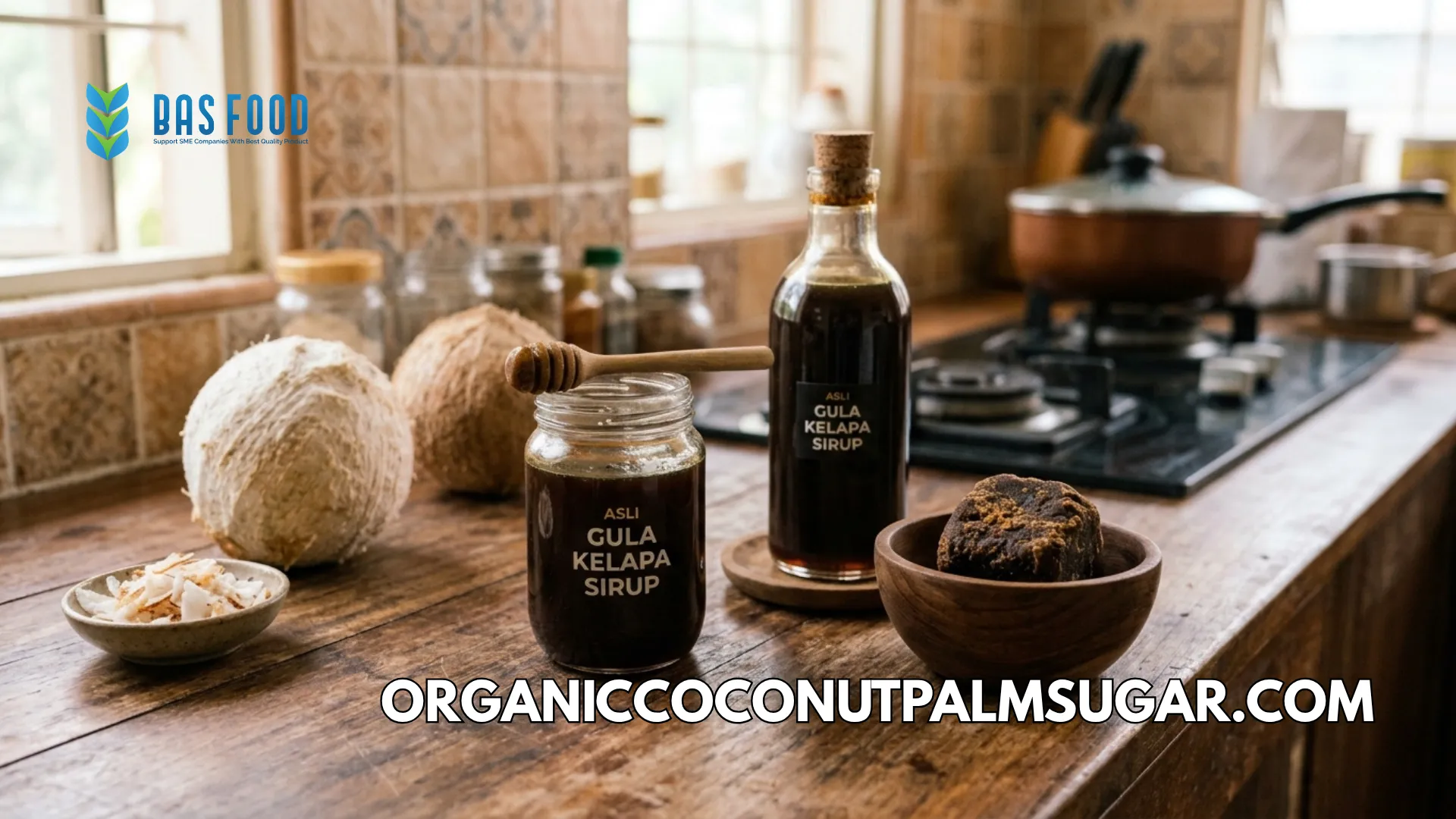
The confectionery industry continues to explore new ingredients that can deliver distinctive flavors, attractive textures, and reliable performance in finished products. From chewy candies and soft caramels to chocolate fillings, dessert toppings, and fruit-based sweets, manufacturers need sweeteners that do more than simply add sweetness. They also need ingredients that support product development and meet changing consumer preferences. One ingredient gaining attention is coconut sugar syrup for confectionery. Made from concentrated coconut palm sap, this liquid sweetener offers a naturally rich caramel-like flavor and can be used in different confectionery applications. Its liquid form also makes it interesting for manufacturers who want to experiment with sweetener blends, flavor profiles, and product textures.
For food manufacturers, however, choosing an ingredient requires more than looking at its taste. They must consider its composition, consistency, processing behavior, storage requirements, and compatibility with other ingredients. Therefore, understanding how coconut sugar syrup works can help confectionery businesses decide where it fits into their production process.
This guide explores its characteristics, applications, formulation considerations, and sourcing factors for manufacturers, importers, and food ingredient distributors.
Why Confectionery Manufacturers Are Exploring Coconut Sugar Syrup
Sweetness is essential in confectionery, but flavor plays an equally important role. Consumers often look for sweets with interesting taste combinations, recognizable ingredients, and distinctive sensory experiences. Coconut sugar syrup offers a caramel-like flavor that can complement products such as chewy candies, soft caramels, dessert sauces, and sweet fillings.
Moreover, manufacturers can use its flavor as part of a broader product concept. For example, a confectionery brand may develop a caramel-style candy using coconut sugar syrup alongside dairy ingredients, chocolate, vanilla, or roasted nuts. The syrup can contribute sweetness and flavor while helping create a product with a different taste profile from conventional sugar-based recipes.
Another reason to consider this ingredient is its liquid format. Many confectionery production processes involve liquid sweeteners, glucose syrups, or concentrated sugar solutions. Coconut sugar syrup may fit into selected processes where manufacturers want to introduce coconut palm sugar flavor without first dissolving a solid sweetener.
Nevertheless, it should not be treated as a direct replacement for every conventional sweetener. Each sweetener has different properties, and the right choice depends on the desired texture, sweetness level, moisture content, and processing method.
Coconut Sugar Syrup as One of the Versatile Confectionery Ingredients
Manufacturers use a wide range of confectionery ingredients to create the desired sweetness, texture, appearance, and shelf stability. These ingredients may include sugar, glucose syrup, invert syrup, cocoa, milk solids, fats, flavors, emulsifiers, and stabilizers.
Coconut sugar syrup can become part of this ingredient system. Its main role is to provide sweetness and a characteristic flavor. Depending on the recipe, it may also contribute soluble solids and moisture. These properties make it worth testing in selected confectionery formulations.
For example, manufacturers developing soft caramel products may explore coconut sugar syrup as part of their sweetener blend. Its flavor can complement butter, cream, vanilla, and other ingredients commonly used in caramel-style confectionery. However, the final texture still depends on the balance of sugars, fats, proteins, moisture, and cooking conditions.
In addition, the syrup may be suitable for selected fillings and toppings. A chocolate product with a caramel-style center, for instance, could use coconut sugar syrup as one of its sweetening components. Meanwhile, dessert manufacturers may test it in sweet sauces, fruit preparations, and confectionery coatings.
The following table provides an overview of potential applications:
| Confectionery product | Potential role of coconut sugar syrup |
|---|---|
| Soft caramel | Adds sweetness and caramel-like flavor |
| Chewy candy | Can contribute sweetness and soluble solids |
| Chocolate filling | Provides flavor and sweetness in selected fillings |
| Dessert topping | Works as a liquid sweetening component |
| Toffee-style products | May complement rich, cooked sugar flavors |
| Fruit confectionery | Adds sweetness and a deeper flavor profile |
| Sweet spreads | Can contribute sweetness and syrup consistency |
These applications are starting points for product development, not guaranteed results. Manufacturers should conduct formulation trials to determine whether the syrup performs well in each specific recipe.
How Coconut Sugar Syrup Supports Sweet Snack Manufacturing
The market for sweet snack manufacturing includes a broad range of products, from traditional sweets to modern packaged snacks. Candy, chocolate, cereal bars, filled biscuits, fruit snacks, and dessert bites all require carefully selected sweetening ingredients.
Coconut sugar syrup offers manufacturers another option when developing products with a richer sweet flavor. For example, a snack producer may test it in nut clusters, caramel-coated popcorn, or sweet cereal bars. Its flavor can work well with roasted nuts, oats, seeds, cocoa, and dried fruit.
In cereal bars, the syrup may serve as part of the liquid sweetener blend that helps bind ingredients together. However, its binding performance depends on the complete formulation, including the proportion of other syrups, fats, dry ingredients, and moisture. Manufacturers should test the finished bar for firmness, stickiness, and texture during storage.
Similarly, snack producers can explore the syrup in chocolate-coated products or soft confectionery centers. It may provide a flavor that pairs well with chocolate, coffee, cinnamon, and roasted ingredients. This creates opportunities for product developers who want to introduce a different flavor profile without relying entirely on conventional sweeteners.
However, product stability remains important. The manufacturer must evaluate moisture migration, texture changes, packaging compatibility, and microbial stability. A syrup-based formulation does not automatically have a long shelf life. Proper processing, packaging, and product testing remain essential.
Exploring Different Syrup Applications in Confectionery
The range of possible syrup applications depends on the product’s texture, processing temperature, and ingredient composition. Coconut sugar syrup can be tested in several confectionery categories, although each application requires a different formulation approach.
Soft Caramel and Toffee
Caramel and toffee products are natural candidates for testing coconut sugar syrup because of their flavor compatibility. The syrup may contribute a deeper caramel-like note that complements dairy ingredients, butter, vanilla, and other sweeteners.
However, caramel production involves controlled heating and moisture reduction. Manufacturers must monitor cooking temperature, concentration, and final moisture to achieve the desired texture. Coconut sugar syrup may also affect the color and flavor development of the finished product.
Chocolate and Candy Fillings
Chocolate manufacturers can explore coconut sugar syrup in selected fillings, centers, and sweet sauces. For example, it may be incorporated into caramel-style fillings or chocolate spreads where a liquid sweetener is suitable.
Nevertheless, moisture control is especially important in chocolate applications. Water introduced through a syrup can affect chocolate flow and texture. Manufacturers should therefore develop a suitable filling formulation and ensure that moisture does not compromise the finished product.
Fruit-Based Confectionery
Fruit-based sweets often combine fruit preparations, sugar, acids, and gelling ingredients. Coconut sugar syrup may provide additional sweetness and a richer flavor that complements selected fruits.
Its use must be evaluated alongside the fruit’s natural moisture and acidity. These factors influence the texture, flavor balance, and stability of the final product. A formulation trial can help determine the right proportion of syrup.
Dessert Sauces and Toppings
Coconut sugar syrup can also be tested in dessert sauces, sweet toppings, and confectionery-style drizzles. Its liquid form makes it practical for applications where manufacturers need a pourable sweetening ingredient.
For these products, consistency matters. The syrup’s viscosity may change with temperature and concentration. Therefore, manufacturers should assess its flow behavior under actual production and serving conditions.
Formulation Considerations: Sweetness, Moisture, and Texture
Before using coconut sugar syrup in commercial confectionery, product developers should understand how it affects the overall formulation. One of the most important considerations is moisture content. Unlike dry sugar, syrup introduces both sugar solids and water into the recipe.
As a result, manufacturers should not assume that one kilogram of coconut sugar syrup can replace one kilogram of granulated sugar. The syrup’s soluble-solids concentration must be considered when calculating the amount needed. Otherwise, the finished product may become too soft, sticky, or moist.
Sweetness is another factor. Different sweeteners do not always provide the same sweetness intensity or flavor profile. Coconut sugar syrup may contribute caramel-like notes that influence the overall taste. Manufacturers should conduct sensory testing to find a suitable balance with other sweeteners and flavor ingredients.
Texture also requires attention. In soft candies and caramel products, the balance between sugar solids and water affects chewiness, firmness, and stickiness. In fillings, excessive moisture may influence flow and storage stability. In chocolate products, moisture can create additional processing challenges.
For this reason, product developers should evaluate at least the following parameters:
- Brix or soluble solids: Helps assess the concentration of dissolved solids in the syrup.
- Moisture content: Provides information about the amount of water in the product.
- Water activity: Helps evaluate the availability of water for microbial growth.
- Viscosity: Indicates how easily the syrup flows under defined conditions.
- Color: Influences the appearance of the finished confectionery.
- Flavor profile: Determines how well the syrup complements other ingredients.
- Microbiological quality: Supports food safety assessment and product development.
It is important to remember that Brix, moisture content, and water activity measure different properties. They should not be used interchangeably. Manufacturers should request relevant product data and conduct additional testing when required.
Processing and Storage Challenges
Coconut sugar syrup can be useful in confectionery, but manufacturers should consider its behavior during processing. Heating may change the syrup’s color, flavor, concentration, and viscosity. Therefore, processing temperatures and heating times should be selected according to the product being developed.
For example, a syrup used in a soft caramel recipe may undergo a different heating process from one used in a chocolate filling. The manufacturer should monitor the formulation carefully to avoid excessive darkening, unwanted flavor changes, or an unsuitable final texture.
Storage is equally important. Coconut sugar syrup should be kept in appropriate, food-grade packaging that protects it from contamination and environmental conditions. Manufacturers should follow the supplier’s storage recommendations and avoid assuming that all syrup products have identical storage requirements.
In addition, the shelf life of the finished confectionery product depends on more than the syrup itself. Ingredients, processing hygiene, moisture level, water activity, packaging, and distribution conditions all influence stability. Product-specific shelf-life testing is therefore necessary before commercial release.
How to Choose a Reliable Coconut Sugar Supplier
Choosing a dependable coconut sugar supplier is an important step for confectionery manufacturers. A consistent supply of ingredients helps businesses maintain production schedules and control product quality. However, buyers should evaluate suppliers based on more than price alone.
Start by reviewing the supplier’s product specifications. These should explain the syrup’s physical and chemical characteristics, including available information about soluble solids, moisture, viscosity, color, and microbiological quality. The exact parameters required will depend on the intended application.
Next, ask about product consistency between batches. Variations in color, flavor, or concentration may affect the finished confectionery. A supplier should be able to explain its quality-control procedures and provide relevant documentation for the product offered.
Packaging is another practical consideration. Importers and manufacturers should confirm available packaging options, net weight, storage conditions, and suitability for international transport. They should also discuss order quantities, lead times, sample availability, and shipping arrangements before placing a commercial order.
Finally, request a product sample when possible. Testing the syrup in an actual recipe provides more useful information than relying on a product description alone. It allows the development team to assess flavor, processing behavior, and finished-product quality before moving to larger orders.
Sourcing from a Coconut Sugar Exporter Supplier in Indonesia
Indonesia is an important origin for coconut-based products, supported by coconut-growing communities and traditional sap-processing activities. For international confectionery manufacturers, working with an Indonesian supplier can provide access to coconut sugar products while supporting connections with local producers.
However, buyers should select an exporter that understands the requirements of international trade. Product documentation, packaging information, communication, and shipment coordination all play a role in a successful sourcing relationship.
A reliable coconut sugar exporter supplier should be able to discuss product specifications, samples, packaging, and export requirements clearly. This helps importers evaluate whether the product meets their production needs and destination-market requirements.
CV Bonafide Anugerah Sentosa is an Indonesian exporter and supplier of coconut sugar and other coconut-derived products. The company works with international buyers seeking Indonesian ingredients for food manufacturing and distribution.
For businesses exploring coconut sugar syrup for confectionery, CV Bonafide Anugerah Sentosa can be a starting point for discussing product requirements and sourcing possibilities. Buyers should communicate their intended application, target specifications, packaging preferences, and estimated order volume to determine product suitability.
The Future of Coconut Sugar Syrup in Confectionery
Confectionery manufacturers continue to develop products that offer new flavor experiences and respond to changing ingredient preferences. Coconut sugar syrup provides another option for businesses looking beyond conventional liquid sweeteners.
Its caramel-like flavor and liquid form create opportunities in soft caramels, chocolate fillings, dessert toppings, fruit-based sweets, and selected sweet snacks. It can also support product concepts that highlight coconut palm sugar as part of their ingredient story.
Even so, successful use depends on technical evaluation. Manufacturers must understand the syrup’s concentration, moisture contribution, viscosity, and flavor characteristics. They should also confirm that the ingredient works with the processing conditions and shelf-life requirements of the finished product.
For importers, distributors, and food manufacturers, the next step is to identify a suitable supplier, request product specifications, and conduct formulation trials. With proper testing and sourcing, coconut sugar syrup can become a useful ingredient in a range of confectionery products.
Conclusion: Turning Coconut Palm Sap into New Confectionery Possibilities
Coconut sugar syrup offers confectionery manufacturers an interesting combination of sweetness, caramel-like flavor, and liquid handling characteristics. From soft caramels and chocolate fillings to dessert toppings and sweet snacks, it can be explored in different product categories.
However, manufacturers should not treat it as a universal replacement for conventional sugar or glucose syrup. Its moisture content, soluble solids, flavor, and viscosity must fit the requirements of the final product. Careful testing and reliable product specifications are essential.
If your business is looking for an Indonesian coconut sugar supplier or a coconut sugar exporter supplier, CV Bonafide Anugerah Sentosa can be contacted to discuss sourcing requirements for coconut sugar and related products. Share your application, target specifications, and packaging needs to begin evaluating the right ingredient for your confectionery production.