The global demand for natural sweeteners continues to rise as consumers become more interested in clean-label foods and responsibly sourced ingredients. Coconut sugar has become one of the leading alternatives to refined sugar because it is minimally processed, naturally sweet, and suitable for a wide range of food and beverage applications. However, many importers and food manufacturers ask the same question before placing an order: Should we choose organic or conventional coconut sugar?
Understanding the differences between these two products is important because the right choice depends on your target market, certification requirements, product positioning, and budget. While both products are made from fresh coconut blossom sap, they differ in farming practices, certification processes, and market opportunities.
When comparing organic coconut sugar vs conventional, buyers should look beyond price alone. Production methods, traceability, certifications, customer expectations, and export requirements all play important roles in sourcing decisions.
In this guide, we will explain everything importers need to know about organic coconut sugar vs conventional, including how certified organic coconut sugar differs from conventional coconut sugar, their benefits, common applications, and how to choose the best option for your business.
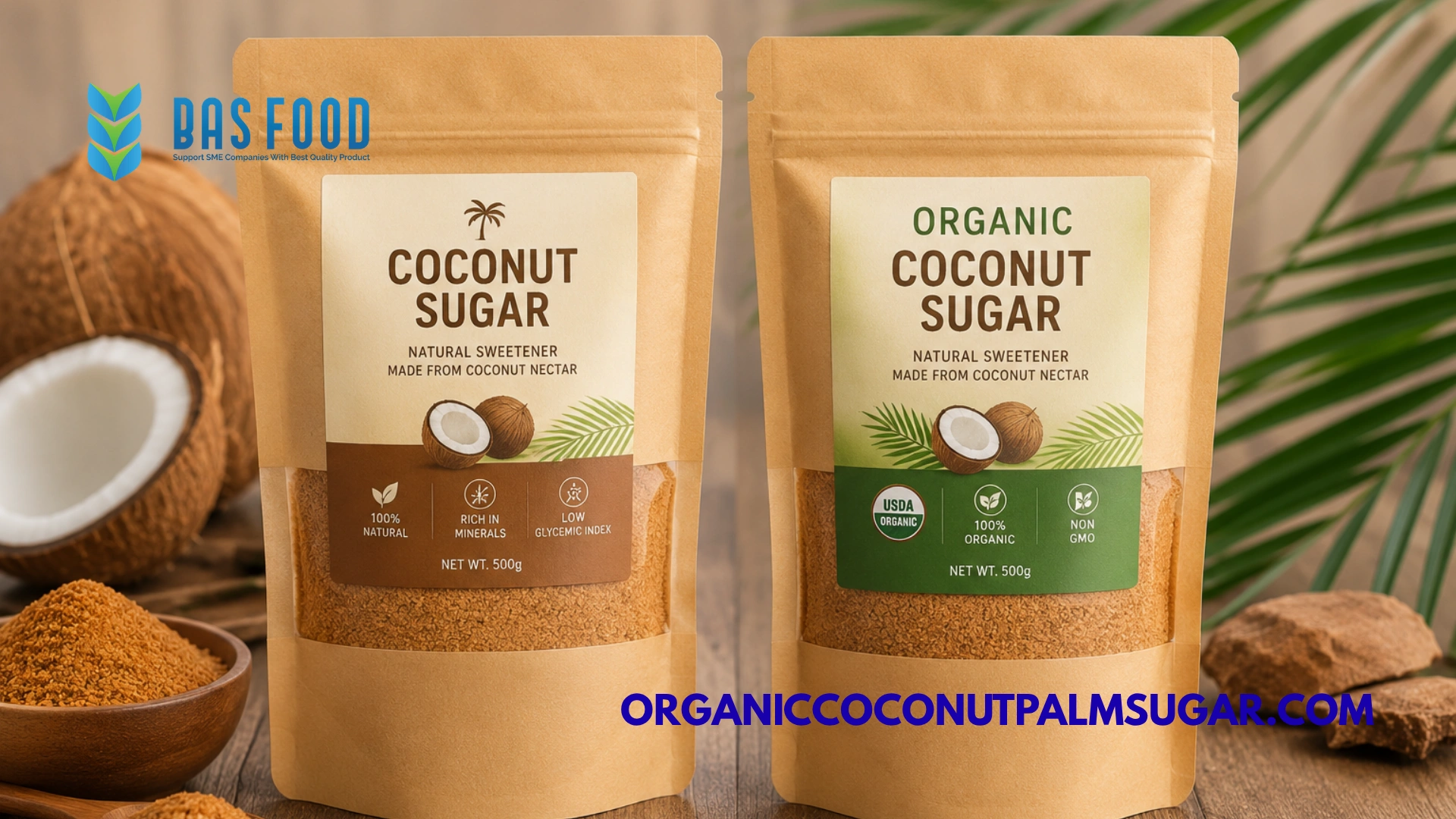
Understanding Coconut Sugar Production
Before comparing organic and conventional products, it is helpful to understand how coconut sugar is made.
Coconut sugar is produced from the fresh sap collected from coconut blossom flowers. Skilled farmers harvest the sap every day before it is filtered and slowly heated to evaporate water. As the sap thickens, natural sugar crystals form and are then dried to produce the final product.
The basic production process is similar for both organic and conventional coconut sugar. The biggest differences occur before processing begins, particularly in farming practices and certification requirements.
Both products retain the characteristic caramel-like flavor, natural brown color, and versatility that make coconut sugar popular in global food manufacturing.
Understanding this shared production process helps buyers focus on the specific factors that truly differentiate organic and conventional products.
What Is Certified Organic Coconut Sugar?
Certified organic coconut sugar is produced according to internationally recognized organic farming standards.
Organic certification requires farmers and manufacturers to follow strict guidelines throughout cultivation, harvesting, processing, storage, and handling. These standards are verified through regular inspections conducted by accredited certification bodies.
Organic farming emphasizes sustainable agricultural practices and careful management of natural resources. Every stage of production must be documented to ensure traceability from the coconut plantation to the finished export product.
For international buyers, certified organic coconut sugar provides additional confidence that the product has been produced under verified organic standards.
Many retailers and premium food brands specifically require certified organic products because they support their brand positioning and meet consumer expectations.
What Is Conventional Coconut Sugar?
Conventional coconut sugar is also made from fresh coconut blossom sap using similar production methods. However, it is not produced under certified organic farming programs.
This does not mean the product is low quality. In fact, many conventional coconut sugar producers maintain excellent manufacturing standards, strict food safety procedures, and consistent product quality.
Conventional coconut sugar remains one of the most widely traded forms because it offers reliable availability, flexible production capacity, and competitive pricing.
Many food manufacturers choose conventional coconut sugar when organic certification is not required by their customers or regulatory markets.
It continues to perform exceptionally well across bakery products, beverages, confectionery, sauces, cereals, and numerous other food applications.
Organic Coconut Sugar vs Conventional: The Main Differences
When comparing organic coconut sugar vs conventional, several important differences should be considered.
The first difference is certification. Certified organic coconut sugar follows internationally recognized organic standards and undergoes regular inspections. Conventional coconut sugar does not carry these certifications.
The second difference involves market positioning. Organic products are often marketed toward consumers who specifically seek certified organic ingredients, while conventional products serve a broader commercial market.
Pricing is another consideration. Organic production generally requires additional certification, documentation, inspections, and compliance activities. These factors often result in higher prices compared to conventional products.
Despite these differences, both products can deliver excellent quality when sourced from experienced manufacturers.
The best choice depends on your business goals rather than assuming one product is universally better than the other.
Quality Standards for Both Product Types
Quality should always remain the highest priority regardless of certification status.
Professional manufacturers apply quality control procedures throughout production to ensure consistent product performance.
Typical quality evaluations include:
- Moisture content
- Particle size
- Color consistency
- Aroma
- Taste
- Product cleanliness
- Packaging quality
- Food safety practices
Reliable exporters understand that international buyers expect consistent specifications from shipment to shipment.
Whether purchasing certified organic or conventional coconut sugar, buyers should request detailed product specifications and quality documentation before confirming orders.
Strong manufacturing standards are just as important as certification.
Food Applications for Organic and Conventional Coconut Sugar
Both product types are highly versatile and suitable for many food industries.
Manufacturers use coconut sugar in:
- Bakery products
- Cookies
- Cakes
- Bread
- Chocolate
- Breakfast cereals
- Granola
- Beverages
- Coffee products
- Tea blends
- Protein powders
- Nutrition bars
- Sauces
- Marinades
- Dessert toppings
Premium organic brands often prefer certified organic coconut sugar to support their marketing strategy and meet retailer requirements.
Meanwhile, large-scale food manufacturers frequently choose conventional coconut sugar because it combines dependable quality with efficient production costs.
The intended market largely determines which option is most appropriate.
Market Demand Around the World
Demand for both organic and conventional coconut sugar continues to grow across international markets.
In Europe and North America, certified organic ingredients have become increasingly popular among health-focused consumers and premium retailers.
Many supermarkets now offer dedicated organic product sections, creating additional opportunities for certified coconut sugar suppliers.
At the same time, conventional coconut sugar remains highly attractive for industrial food production because it supports large manufacturing volumes while maintaining competitive pricing.
Importers serving different customer segments may even choose to source both product types to expand their product portfolio.
Understanding market demand helps businesses make smarter sourcing decisions.
Choosing the Right Product for Your Business
Selecting between organic and conventional coconut sugar depends on several business factors.
First, identify your target customers. Retail brands focused on organic products often require certified ingredients to maintain consumer trust.
Second, evaluate regulatory requirements in your destination market. Some customers or retailers specifically request certified organic documentation.
Third, consider your pricing strategy. Organic products generally command higher prices but may also generate higher retail value.
Fourth, review production volumes. Conventional coconut sugar often offers greater flexibility for large-scale manufacturing.
Finally, discuss your requirements with an experienced exporter who can recommend the most suitable product based on your market objectives.
There is no universal answer because every business has different priorities.
Packaging and Export Considerations
Packaging plays an important role in preserving product quality throughout international transportation.
Both organic and conventional coconut sugar are commonly available in:
- Retail pouches
- Kraft paper bags
- Stand-up pouches
- Bulk bags
- Industrial packaging
- Private label packaging
- OEM packaging
Certified organic products may require additional labeling to maintain certification compliance throughout the supply chain.
Reliable exporters also prepare complete export documentation, product specifications, and packaging according to customer requirements.
Professional packaging protects the product while supporting efficient global distribution.
Why Indonesia Is a Trusted Source for Coconut Sugar
Indonesia is one of the world’s largest producers and exporters of coconut sugar.
The country’s tropical climate supports extensive coconut plantations, while experienced farmers continue traditional sap harvesting methods that have been refined over generations.
Many Indonesian manufacturers produce both certified organic coconut sugar and conventional coconut sugar to serve different international markets.
Modern processing facilities combine traditional expertise with standardized quality management systems, allowing exporters to deliver consistent product quality alongside reliable export services.
International buyers also benefit from flexible packaging options, customized specifications, and dependable logistics support from experienced Indonesian suppliers.
Building a Long-Term Supply Partnership
Successful sourcing involves more than choosing the right product.
Long-term partnerships with experienced suppliers create greater consistency, stronger communication, and more reliable production planning.
Before placing commercial orders, buyers should request product samples, specifications, certification information when applicable, packaging options, and production schedules.
Regular communication helps suppliers understand changing customer needs while supporting continuous improvement.
Strong business relationships ultimately create more efficient supply chains and higher customer satisfaction.
Conclusion
Understanding organic coconut sugar vs conventional helps importers make informed sourcing decisions based on market requirements, customer expectations, and business objectives. While certified organic coconut sugar offers verified organic certification and strong appeal in premium markets, conventional coconut sugar provides dependable quality, greater production flexibility, and competitive pricing for large-scale manufacturing.
Both products share the same natural origin and can deliver excellent performance when sourced from experienced manufacturers with strong quality management systems.
For importers, wholesalers, distributors, and food manufacturers, partnering with a trusted Indonesian exporter ensures consistent product quality, flexible packaging solutions, professional export support, and long-term supply reliability. By selecting the right type of coconut sugar for your target market, you can strengthen your product portfolio and build lasting success in the growing natural sweetener industry.