Coconut sugar has become an interesting ingredient for food manufacturers, retailers, beverage businesses, and importers looking for alternatives to conventional sweeteners. While many buyers know coconut sugar in granulated or powdered form, moulded coconut sugar offers a different product format with its own production method, handling needs, and commercial uses. At the heart of this product is the coconut sugar moulding process. It may look simple from the outside, but producing consistent moulded sugar requires careful control from sap collection through cooking, concentration, forming, cooling, and packaging. Each stage can influence the final shape, texture, color, aroma, and stability of the product.
For B2B buyers, understanding this process is useful because the production method directly affects product quality. It also helps importers ask better questions when choosing a coconut sugar supplier or evaluating samples before placing a larger order.
This guide explains how coconut sugar moulding works, what happens at each stage, which quality factors matter, and how buyers can evaluate a reliable supplier.
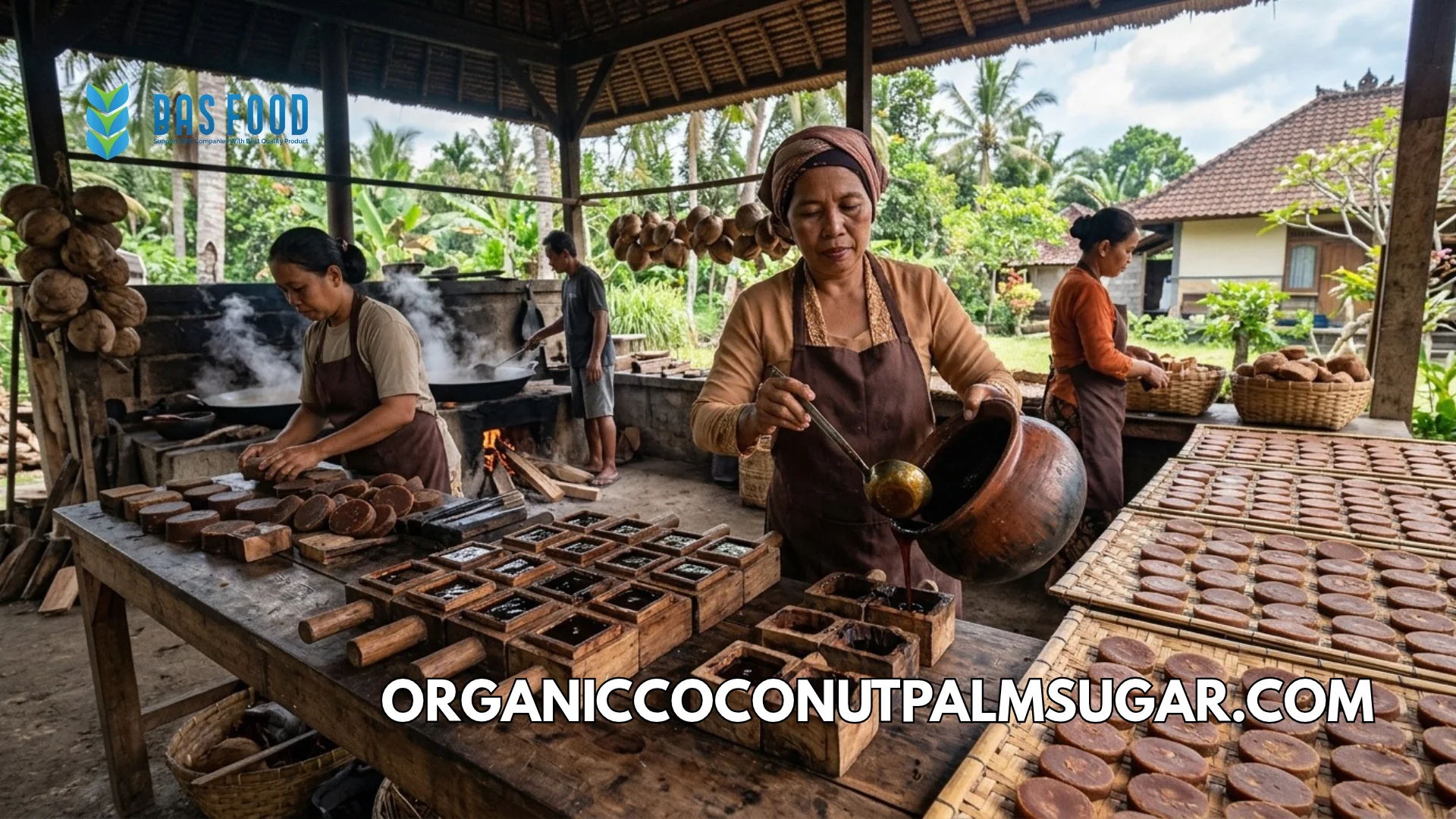
What Is Moulded Coconut Sugar?
Moulded coconut sugar is coconut sugar that has been formed into a specific shape instead of being sold as loose granules or powder. Depending on the production method and buyer requirements, the sugar can take forms such as small blocks, discs, rounds, cups, or other agreed shapes.
The basic ingredient comes from coconut palm sap. Farmers collect the sap from coconut flower stalks and bring it into the production process. The sap is then heated to reduce its water content and concentrate its natural sugars. Once the desired consistency is reached, producers can form the concentrated sugar into moulds.
This is where coconut sugar moulding becomes important. The forming stage determines the physical appearance of the finished product. However, moulding is not only about making the sugar look attractive. The shape also affects portioning, packaging, storage, handling, and the way consumers use the product.
For B2B buyers, moulded coconut sugar can be useful when a specific physical format is needed. Retail brands, traditional food producers, specialty food companies, and businesses selling portion-sized sweeteners may all have different requirements.
Therefore, buyers should not simply ask whether a supplier offers moulded coconut sugar. They should also discuss the required shape, size, weight, packaging, production consistency, and intended application.
The Journey Begins With Fresh Coconut Sap
The coconut sugar moulding process starts long before the sugar enters a mould. The quality of the raw material plays an important role in the final product. Coconut sap is collected from coconut flower stalks by trained farmers using established harvesting practices.
After collection, the sap needs proper handling. Fresh sap contains a significant amount of water, so it cannot immediately become a solid sugar block. The producer must process it through controlled heating and concentration.
Raw material handling can affect the aroma, color, flavor, and overall characteristics of the finished sugar. That is why a reliable supply chain matters. Producers need to pay attention not only to the cooking stage but also to how the sap reaches the processing area.
For exporters, this stage is especially important because consistent raw materials help support consistent production. If the starting material changes significantly from batch to batch, the final moulded sugar can also show differences in color, texture, or behavior during forming.
Consequently, B2B buyers should consider the entire supply chain when evaluating a product. A supplier’s ability to maintain consistent processing practices can be just as important as the final appearance of the sugar.
Cooking and Concentrating the Coconut Sap
Once the sap reaches the processing stage, producers heat it to remove water and concentrate the sugars. Traditional production can involve cooking the sap in suitable vessels while monitoring the changes in texture and consistency.
The cooking stage requires attention because the producer needs to reach a suitable concentration before moving to the forming stage. If the material is too thin, it may not hold its intended shape. If it becomes too concentrated or is handled incorrectly, the texture can change and forming may become more difficult.
Temperature, cooking time, batch size, and raw material characteristics can all influence the result. Therefore, the moulding process should not be viewed as an isolated step. It is connected to everything that happens before it.
As the sap loses water, its color and consistency change. The producer monitors these changes and determines when the concentrated sugar is ready for further handling.
For commercial production, consistency matters. A supplier serving B2B customers needs to repeat the process from one batch to another as closely as practical. This helps buyers receive products with more predictable characteristics.
Preparing the Sugar for the Moulding Stage
After sufficient concentration, the hot sugar mass needs to reach a condition that allows proper sugar forming. At this point, the material is no longer a thin liquid like fresh sap. It has become a concentrated sugar mass that can be transferred and shaped.
The timing between cooking and forming matters. The sugar must remain workable enough to enter the moulds while also being concentrated enough to retain its shape afterward.
This stage requires practical production experience. Workers need to understand how the material behaves during handling and how much product should be placed into each mould.
For standard products, the producer may use established mould sizes and shapes. For custom products, however, the process may require additional planning. The buyer and supplier need to agree on the desired dimensions, weight, shape, and packaging format before production begins.
A sample is particularly useful for this reason. Instead of discussing shape only through words or photographs, a physical sample allows the buyer to evaluate the actual product.
How the Coconut Sugar Moulding Process Works
The central step is placing the concentrated sugar into prepared moulds. The mould provides the physical structure that the sugar will take as it cools and sets.
Depending on the product design, the mould can create individual pieces or larger blocks. The exact method can vary between producers. Some operations may use manual handling, while others may use equipment designed to improve production consistency.
The amount of sugar placed into each mould is important. Consistent filling helps produce pieces with similar dimensions and weight. For B2B applications, this consistency can make packaging, inventory planning, portioning, and retail presentation easier.
During coconut sugar moulding, producers also need to handle the product carefully. Uneven filling, incorrect timing, or unsuitable mould preparation can affect the final shape.
That is why experienced workers and clear production procedures are valuable. The objective is not simply to make a shape once. The objective is to produce the agreed shape repeatedly across production batches.
Cooling and Setting the Moulded Sugar
After forming, the moulded sugar needs time to cool and become firm. The cooling stage allows the concentrated sugar to set into the shape created by the mould.
This step may appear straightforward, but it still deserves attention. The product needs suitable handling conditions so that the pieces can maintain their shape during removal from the mould.
Once the sugar has sufficiently set, workers can remove it from the moulds. The finished pieces are then checked for appearance, shape, texture, and other agreed product characteristics.
Cooling also affects how the product feels when handled. A properly formed piece should be stable enough for its intended packaging and transportation conditions.
For exporters, this matters because the product may travel a long distance before reaching the buyer. Therefore, the supplier needs to consider not only how the sugar looks when it leaves production but also how it will behave during storage and shipping.
Shape, Size, and Weight Matter to B2B Buyers
One of the biggest advantages of moulded coconut sugar is the ability to create a defined physical format. However, the buyer and supplier should clearly agree on what that format means.
For example, a buyer may require a certain shape for retail packaging. Another customer may need smaller pieces for portion control. A food business may prefer larger blocks for further processing.
Consequently, buyers should provide clear product requirements. These can include dimensions, approximate piece weight, shape, packaging method, and acceptable variations.
A coconut sugar supplier should be able to discuss these requirements before production starts. Clear communication reduces the risk of receiving a product that technically qualifies as moulded sugar but does not suit the buyer’s intended market.
Custom moulds may also be possible depending on the supplier’s production capabilities. However, custom production should always be discussed in advance because it can involve additional development, sampling, and production considerations.
What Determines the Quality of Moulded Coconut Sugar?
The quality of moulded coconut sugar depends on more than its shape. Buyers should consider several characteristics when evaluating a sample.
First, look at the appearance. The pieces should have a reasonably consistent shape and size according to the agreed specification. Color should also be evaluated because natural coconut sugar can show variation based on raw materials and processing conditions.
Next, consider texture. The product should behave appropriately for its intended use. Depending on the specification, buyers may want a firm piece that can be handled and packed without excessive breakage.
Aroma and flavor are also important. Coconut sugar is known for its characteristic caramel-like profile, but the exact sensory profile can vary between products. Buyers should therefore establish a reference sample or agreed specification when consistency is important.
Finally, consider moisture and storage behavior. Excess moisture can influence texture, stability, and handling. For international trade, the product specification should be discussed together with packaging and storage conditions.
Moulded Coconut Sugar vs Granulated Coconut Sugar
Moulded and granulated coconut sugar come from the same basic sweetener source, but their physical formats are different.
Granulated coconut sugar is loose and can be measured easily for food manufacturing, beverages, baking, and other formulations. Moulded coconut sugar, on the other hand, is formed into defined pieces or blocks.
The best choice depends on the buyer’s application. A food manufacturer that needs to blend sugar directly into a formulation may prefer granules. A retail brand selling traditional-style sweetener portions may prefer moulded pieces.
Packaging requirements can also differ. Granules generally need packaging that prevents moisture exposure and protects the loose product. Moulded sugar needs packaging that protects individual pieces from breakage and unwanted moisture.
Therefore, buyers should choose the format based on actual use rather than assuming one format is universally better.
Packaging Moulded Coconut Sugar for Export
Packaging is an important part of the overall supply chain. Even a well-made moulded product can experience problems if the packaging does not protect it adequately.
The packaging should match the product characteristics, transportation method, destination market, and buyer requirements. Export buyers may need individual wrapping, retail-ready packaging, bulk cartons, inner bags, or other agreed formats.
Packaging should also help control exposure to moisture. Because sugar products can respond to environmental humidity, suitable packaging and storage conditions are important for maintaining product quality.
For B2B orders, buyers should discuss packaging before production begins. Important points include pack size, inner packaging, outer cartons, labeling, product identification, batch information, and shipping configuration.
If the buyer plans to sell the product under a private label, packaging specifications should be discussed even earlier. This allows both parties to align the product, label, packaging material, and production schedule.
Quality Control During the Moulding Process
A professional production system should include quality checks throughout the process, not only at the end.
The first checks can focus on the raw coconut sap and its handling. During cooking, producers monitor the transformation of the sap into concentrated sugar. During forming, workers check shape, filling, and consistency.
After cooling, the finished pieces can be inspected for visual and physical characteristics. Depending on the buyer’s requirements, additional product testing and documentation may also be relevant.
For international B2B transactions, a product specification sheet can make communication much easier. It provides a shared reference for product characteristics and helps both sides understand what is being purchased.
When applicable, buyers can also request relevant quality documentation from the supplier. The exact documents depend on the product, destination country, customer requirements, and applicable regulations.
Most importantly, buyers should compare the delivered product against the agreed specification or approved sample. This creates a clear quality reference for future orders.
Why Samples Matter Before a Bulk Order
Ordering a sample is one of the simplest ways to evaluate moulded coconut sugar before committing to a larger purchase.
A sample allows buyers to inspect the actual shape, color, aroma, texture, packaging, and general product quality. It also provides an opportunity to test the sugar in the intended application.
For example, a retailer can evaluate whether the moulded pieces fit its packaging. A food business can test how the product dissolves or behaves during preparation. An importer can check whether the packaging is suitable for its distribution system.
Samples also improve communication between the buyer and supplier. Instead of relying on vague descriptions, both sides can refer to an actual product.
For long-term supply, the approved sample can become a useful reference. If future batches are expected to follow the same specification, the sample helps establish a shared understanding of the target product.
Choosing the Right Coconut Sugar Exporter Supplier
Choosing a supplier involves more than comparing prices. For moulded coconut sugar, production capability and communication are especially important.
A reliable coconut sugar exporter supplier should be able to explain its product format, production process, packaging options, and quality approach clearly. The supplier should also understand that international buyers often need consistent specifications and documentation.
Ask practical questions before placing an order. What moulded shapes are available? Can the supplier produce a custom shape? What packaging options are available? How is product consistency checked? Can the buyer receive samples? What information is included in the product specification?
These questions help buyers understand whether the supplier can support their requirements.
It is also useful to evaluate communication. A supplier that responds clearly and provides complete information can make international procurement easier. Export orders involve multiple steps, so good communication can reduce misunderstandings.
Sourcing Moulded Coconut Sugar From Indonesia
Indonesia is an important origin for coconut-based products because coconut palms are widely grown across the country and support established agricultural communities.
For international buyers, sourcing from Indonesia can provide access to coconut sugar products in different formats. However, buyers should still evaluate each supplier individually because production methods, specifications, packaging, and commercial capabilities can vary.
Working directly with an experienced Indonesian producer or exporter can simplify communication about product requirements. Buyers can discuss mould dimensions, packaging, sampling, quality expectations, and export arrangements with the supplier before confirming an order.
For companies looking for an Indonesian coconut sugar supplier, the key is to match the supplier’s production capabilities with the intended application.
CV Bonafide Anugerah Sentosa, for example, can be approached as a supplier and exporter for buyers interested in coconut-based sugar products. Buyers should communicate their desired product specifications clearly so the appropriate product format can be discussed.
Final Thoughts: Turning Coconut Sap Into a Consistent Product
The coconut sugar moulding process transforms concentrated coconut sap into a practical and recognizable product format. Although the moulding stage itself is relatively straightforward, the final result depends on the entire production chain.
From raw sap handling and cooking to sugar forming, cooling, quality control, packaging, and shipping, every stage has a role. Therefore, B2B buyers should evaluate moulded coconut sugar as a complete product rather than focusing only on its appearance.
For importers, retailers, food businesses, and manufacturers, the best approach is simple: define the specification, request a sample, evaluate the product, confirm packaging, and communicate requirements clearly before placing a bulk order.
When buyers work with a capable coconut sugar supplier, they can create a clearer path from Indonesian coconut sap to a market-ready product. For businesses exploring moulded coconut sugar from Indonesia, CV Bonafide Anugerah Sentosa can be part of that sourcing discussion, especially when buyers have specific requirements for product format, packaging, and export supply.
Ultimately, good coconut sugar moulding is not only about creating a shape. It is about producing a consistent product that can be handled, packaged, transported, and sold according to the buyer’s needs.