For food manufacturers, ingredient distributors, wholesalers, and importers, finding the right coconut sugar supplier involves more than comparing prices. Buyers also need to consider product consistency, packaging, food safety, shipping arrangements, and long-term supply reliability. These factors become even more important when purchasing moulded coconut sugar in bulk for international markets. If you need to source moulded coconut sugar, it’s important to know what qualities to look for in a reputable supplier. Moulded coconut sugar is a traditional coconut-derived sweetener made by concentrating coconut palm sap and shaping the resulting sugar into blocks, cakes, or other moulded forms. Its distinctive caramel-like flavor and practical solid form make it interesting for food businesses that want to offer traditional sweeteners, develop specialty products, or serve customers looking for alternatives to refined sugar.
Indonesia is an important origin to explore when sourcing coconut-derived products. However, buyers still need to evaluate individual suppliers carefully because product availability, production methods, quality specifications, and export capabilities can vary.
In this guide, we will explain how to source moulded coconut sugar efficiently, what specifications to discuss with suppliers, how to evaluate product samples, and what international buyers should prepare before placing a bulk order. We will also explain how businesses can approach an Indonesian supplier, including CV Bonafide Anugerah Sentosa, to confirm their sourcing requirements.
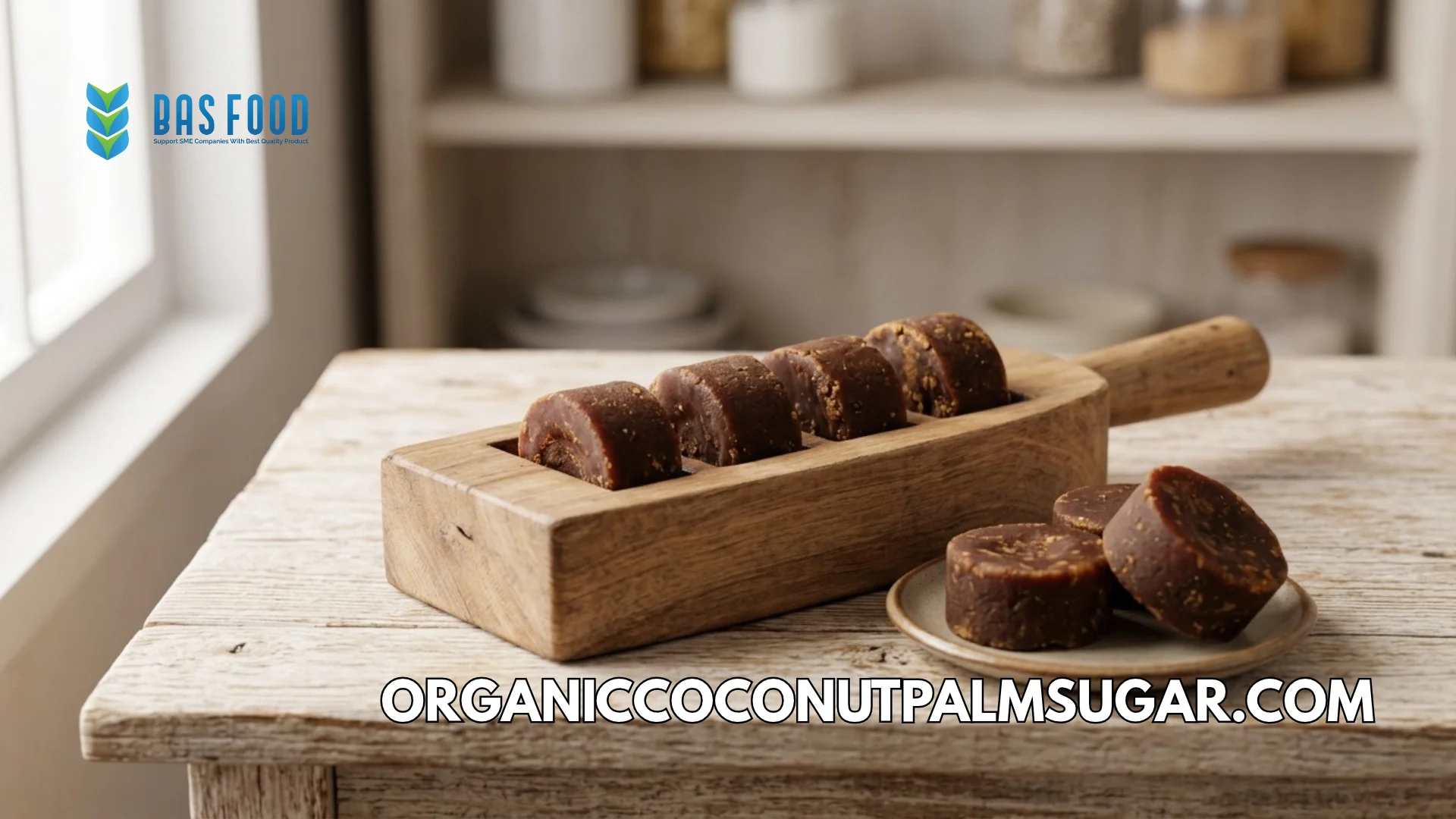
Why Source Moulded Coconut Sugar from Indonesia?
Indonesia is worth considering for coconut sugar sourcing because coconut cultivation and coconut-based food production form part of the country’s agricultural and food supply landscape. The country has communities with experience collecting coconut sap and producing traditional coconut-derived sweeteners.
For international buyers, working with an Indonesian supplier may provide an opportunity to explore products made using locally sourced agricultural raw materials. However, the actual origin, production process, and traceability of each product should be verified with the supplier rather than assumed from the country name alone.
Another advantage of exploring Indonesian suppliers is the possibility of discussing different product formats and packaging requirements. Depending on the supplier’s actual product range, buyers may be able to request product samples, compare moulded and granulated forms, or discuss packaging options suitable for wholesale distribution.
Nevertheless, not every Indonesian business offers the same services. Some businesses focus on domestic sales, while others may handle international orders. Production capacity, minimum order quantities, lead times, quality systems, and export documentation can also differ.
As a result, the best sourcing strategy is to evaluate the individual supplier rather than relying only on the product’s country of origin. Ask for information about the product’s source, manufacturing process, quality controls, packaging, and export experience. Then compare the answers against your company’s purchasing requirements.
How to Find a Reliable Moulded Coconut Sugar Supplier
Finding a suitable supplier starts with targeted research. Search for businesses that handle coconut sugar, traditional sweeteners, or related coconut-derived food ingredients. Supplier websites, trade directories, industry exhibitions, business referrals, and export networks can all provide starting points.
However, a website or online listing is only the beginning of the evaluation process. A supplier may describe itself as a manufacturer, exporter, or wholesale distributor, but buyers should confirm what the company actually does. Ask whether it manufactures the product directly, works with producer groups, or sources from other businesses.
This distinction matters because it can affect traceability, production planning, quality control, and communication. A supplier that coordinates production through multiple producers may have a different supply arrangement from a single factory. Neither model automatically guarantees better quality, so focus on how the supplier manages consistency and accountability.
Next, evaluate the supplier’s responsiveness. A reliable business should be able to answer reasonable questions about the product, explain its documentation process, and identify which requirements it can meet. If a specification is unavailable, a transparent explanation is more useful than an unsupported promise.
You should also review the supplier’s ability to support your intended order size. Ask about minimum order quantity, estimated production lead time, packaging options, and how the business handles changes in demand. Confirm that any quoted figures apply to the product and delivery arrangement you actually require.
When comparing suppliers, use the same questions and specification sheet for each business. This makes it easier to compare offers fairly and identify gaps that need clarification before moving forward.
Essential Quality Specifications for Moulded Coconut Sugar
Quality specifications should describe the actual product you want to purchase. Because moulded coconut sugar is made from an agricultural raw material, some natural variation may occur. Nevertheless, buyers and suppliers can agree on measurable requirements to establish acceptable limits.
Appearance and color are often among the first characteristics to evaluate. Ask the supplier to describe the expected color range and surface condition. If appearance matters to your customers, request representative photographs and physical samples. Photographs alone should not serve as the final approval method because lighting can change how a product looks.
Dimensions and weight are important for packaging, portion control, and manufacturing. If your business requires blocks of a specific size, provide drawings or measurements and agree on acceptable tolerances. Also clarify whether the quoted weight applies to each block or to a complete package.
Moisture content deserves attention because it can influence texture, hardness, stickiness, and storage stability. The appropriate limit should be agreed upon with the supplier based on the product, processing method, packaging, and intended shelf life. Do not assume that all moulded coconut sugar products share the same moisture specification.
Taste and aroma may also matter, especially when the product will be sold directly to consumers or used in recipes where its flavor is noticeable. Agree on how samples will be assessed and what differences are acceptable.
Finally, establish requirements for foreign matter, hygiene, packaging integrity, and relevant food safety parameters. Depending on the destination market and intended use, you may need additional laboratory testing or supporting documents. A written specification makes it easier for both parties to understand the acceptance criteria.
Request Samples Before Placing a Bulk Order
A product sample allows buyers to evaluate moulded coconut sugar before committing to a large shipment. It helps confirm whether the product’s appearance, texture, taste, dimensions, and packaging meet expectations.
When requesting samples, provide enough information for the supplier to send the right item. Include the product form, approximate block size, intended application, and any important quality requirements. If you are comparing several suppliers, use the same evaluation criteria for each sample.
Once the samples arrive, inspect them systematically. Record their color, dimensions, weight, surface condition, hardness, and aroma. If your business has a technical team or product development department, involve them in evaluating the sample for its intended use.
Also examine the packaging. Check whether the blocks are protected against physical damage and whether the packaging suits the planned distribution environment. For long-distance shipping, packaging should be evaluated for handling, stacking, and moisture protection as appropriate.
If the product will be used in manufacturing, test it under realistic conditions. For example, assess how it dissolves, breaks apart, or performs in your intended recipe or production process. A sample that looks attractive may not necessarily perform as expected in a commercial formulation.
Finally, document the sample approval. Keep a record of the agreed product characteristics and, where practical, retain an approved reference sample under suitable conditions. This record can help both parties investigate differences if a later shipment does not match the agreed requirements.
Bulk Sourcing: MOQ, Lead Time, and Supply Planning
Bulk sourcing requires more planning than a small trial purchase. Buyers need to understand the supplier’s minimum order quantity, available volume, production schedule, and ability to fulfill repeat orders.
Minimum order quantity, or MOQ, can depend on the product, packaging, production arrangement, and order destination. A supplier may set different minimums for standard packaging and custom packaging. Therefore, ask for the MOQ for the exact product configuration you want rather than assuming that one quantity applies to every order.
Lead time should also be clarified. Ask how much time the supplier needs for raw material preparation, production, quality checks, packaging, and shipment readiness. If the product requires special moulds or custom packaging, confirm whether these requirements will add time or cost.
For recurring orders, share a realistic demand forecast. If you expect to purchase every month or every quarter, discuss the likely volume and how much notice the supplier needs. Forecasts help suppliers plan production, while buyers can use them to reduce the risk of running short of inventory.
It is also wise to plan for seasonal changes or unexpected delays. Agricultural products can be affected by raw material availability, weather, logistics, and other supply factors. Ask the supplier how it communicates potential disruptions and what alternatives may be available if the original delivery schedule changes.
Do not choose a supplier solely because it promises the shortest lead time. Instead, compare its schedule with your inventory requirements, production calendar, and customer commitments. A realistic and well-communicated delivery plan is more useful than a deadline that cannot be maintained.
Packaging Moulded Coconut Sugar for International Shipping
Packaging protects moulded coconut sugar during storage, handling, and transportation. It can also influence product presentation, warehouse efficiency, and the amount of material lost through breakage or damage.
The right format depends on the product’s size, moisture characteristics, order volume, destination, and intended sales channel. Options may include food-contact inner packaging, sealed bags, cartons, or larger shipping units. Buyers should confirm that all packaging materials are suitable for the intended food application and meet relevant destination-market requirements.
For retail distribution, packaging may need individual portions, product labels, ingredient information, net weight, lot identification, and other details required by local law. For industrial or wholesale customers, bulk packaging may prioritize handling efficiency, protection, and clear batch identification.
Regardless of format, packaging should protect the product from contamination and damage. The supplier and buyer should discuss how cartons will be packed, stacked, and secured. If the shipment will travel through humid or variable-temperature environments, ask how the packaging and storage arrangements address those conditions.
Custom packaging also requires early planning. Printed materials, private-label artwork, packaging dimensions, and approval procedures can affect cost and lead time. Confirm who supplies the packaging, who approves the artwork, and what happens if the packaging is damaged or printed incorrectly.
Before shipment, agree on the final packing configuration and check that it matches the quotation and purchase order. Clear packaging instructions reduce confusion during receiving and help the buyer prepare warehouse space and distribution plans.
Export Documentation and International Shipping Considerations
When sourcing moulded coconut sugar across borders, buyers must consider documentation, customs procedures, shipping terms, and destination-market rules. Requirements can differ by country, so importers should confirm the applicable rules with their customs broker, freight forwarder, and relevant authorities.
Commercial documents commonly used in international trade include a commercial invoice, packing list, and transport document. Depending on the shipment and destination, a certificate of origin, product specification, certificate of analysis, health-related documentation, or other documents may be required. The exact list depends on the product classification, origin, destination, and current regulations.
Do not assume that every shipment requires the same certificates. Instead, provide the supplier with your destination country and ask which documents it can provide. Then verify the import requirements independently before the order is finalized.
Shipping terms should also be clear. Agree on the relevant Incoterms rule, named place or port, allocation of freight costs, insurance responsibilities where applicable, and the point at which risk transfers from seller to buyer. Confirm these details in the purchase order or sales contract.
The buyer should also verify product classification and any applicable import duties or taxes with a qualified customs professional. Accurate product descriptions and consistent documents can help reduce delays caused by missing or conflicting information.
Finally, discuss shipment timing and communication. Ask when the supplier expects the goods to be ready, when documents will be shared, and how the parties will handle a delayed sailing or a document correction. Good communication is especially valuable when a shipment supports a production schedule or a committed delivery to your own customers.
How to Compare Supplier Quotes Fairly
Price is important in bulk sourcing, but the lowest quoted price does not always represent the lowest overall cost. Buyers should compare offers using the same product specification, quantity, packaging format, and delivery terms.
Begin by checking what the price includes. Does it cover the agreed packaging? Is the quote based on a particular order quantity? Does it apply at the supplier’s premises, at a port, or at another named destination? If these details differ, the quotations may not be directly comparable.
Next, review the product specification. A cheaper offer may involve different block dimensions, packaging, quality limits, or documentation. These differences are not necessarily problems, but you need to know about them before making a decision.
Consider the wider costs as well. Freight, insurance where applicable, customs clearance, import duties, taxes, inspection, warehousing, and possible product losses can affect the final landed cost. Buyers should calculate these expenses using realistic assumptions and confirmed shipping information.
Payment terms also deserve attention. Confirm the payment schedule, currency, bank charges, and any conditions linked to production or shipment. For new supplier relationships, use appropriate commercial checks and documented agreements rather than relying on informal promises.
Finally, assess the supplier’s communication and ability to meet your specifications. A slightly higher price may be justified if the supplier provides suitable documentation, consistent product quality, and clear handling of issues. The goal is to secure the best overall fit for your business, not simply the lowest number on a quotation.
Working with CV Bonafide Anugerah Sentosa
Businesses searching for an Indonesian source of coconut-derived ingredients may wish to contact CV Bonafide Anugerah Sentosa to discuss their sourcing needs. The company operates in Indonesia’s commodity supply and export sector, but buyers should confirm its current product range and specific capabilities before assuming that moulded coconut sugar is available.
When contacting the company, explain that you are looking to source moulded coconut sugar and provide the details that matter to your business. Include the destination country, estimated order quantity, required block size, packaging format, target quality specifications, and preferred shipping terms.
Ask whether the company can supply the requested product form, whether it works directly with producers or through a supply network, and which quality documents are available. If the product is offered, request a current quotation and representative sample before confirming a bulk order.
You should also ask about the process for approving samples and handling quality concerns. Clarify whether the company can provide batch identification, a certificate of analysis where applicable, product specifications, and export documents required for your destination. Confirm the expected production lead time and how the company will communicate changes.
For international buyers, these questions create a practical starting point for evaluating a potential supplier. They also help distinguish between general interest in coconut products and a confirmed ability to meet a specific purchase requirement.
A professional sourcing relationship begins with accurate information on both sides. By explaining your requirements clearly and checking the supplier’s current capabilities, you can decide whether the company is a suitable partner for your moulded coconut sugar purchasing plan.
Conclusion: Build a Smarter Strategy to Source Moulded Coconut Sugar
To source moulded coconut sugar successfully, buyers need a clear specification, a reliable supplier evaluation process, and a practical plan for quality control and international logistics. Product form, dimensions, weight, moisture, packaging, and documentation all influence whether the product meets your commercial requirements.
Indonesia is a useful origin to investigate, but the supplier’s actual capabilities matter more than a general country-of-origin claim. Ask targeted questions, request samples, compare quotations on the same basis, and confirm that the supplier can meet your destination-market requirements.
For businesses exploring Indonesian coconut-derived ingredients, CV Bonafide Anugerah Sentosa may be a point of contact for discussing sourcing needs. Confirm current moulded coconut sugar availability, technical specifications, pricing, and export arrangements directly with the company before placing an order.
Most importantly, treat sourcing as a process rather than a single price comparison. By setting clear expectations, documenting agreements, and evaluating samples carefully, your business can make more informed purchasing decisions and build a stronger foundation for long-term supplier relationships.