For food manufacturers, wholesalers, distributors, and importers, choosing the right sweetener is about more than taste. Buyers also need consistent quality, reliable supply, suitable packaging, and a supplier who understands international trade. That is why wholesale moulded coconut sugar can be an interesting option for businesses looking for traditional coconut-based sweeteners in solid block form. Made from coconut palm sap, moulded coconut sugar offers a distinctive caramel-like flavor and a traditional appearance that suits many food applications. Depending on the product’s specifications, buyers may use it for traditional recipes, sauces, beverages, bakery products, and specialty food ranges. However, successful bulk purchasing requires careful planning, especially when ordering from an overseas supplier.
In this guide, we explain what wholesale moulded coconut sugar is, how businesses can evaluate its quality, what to consider when ordering in bulk, and how to select a supplier for long-term cooperation. We also discuss how CV Bonafide Anugerah Sentosa can be contacted to explore sourcing options and confirm current product availability.
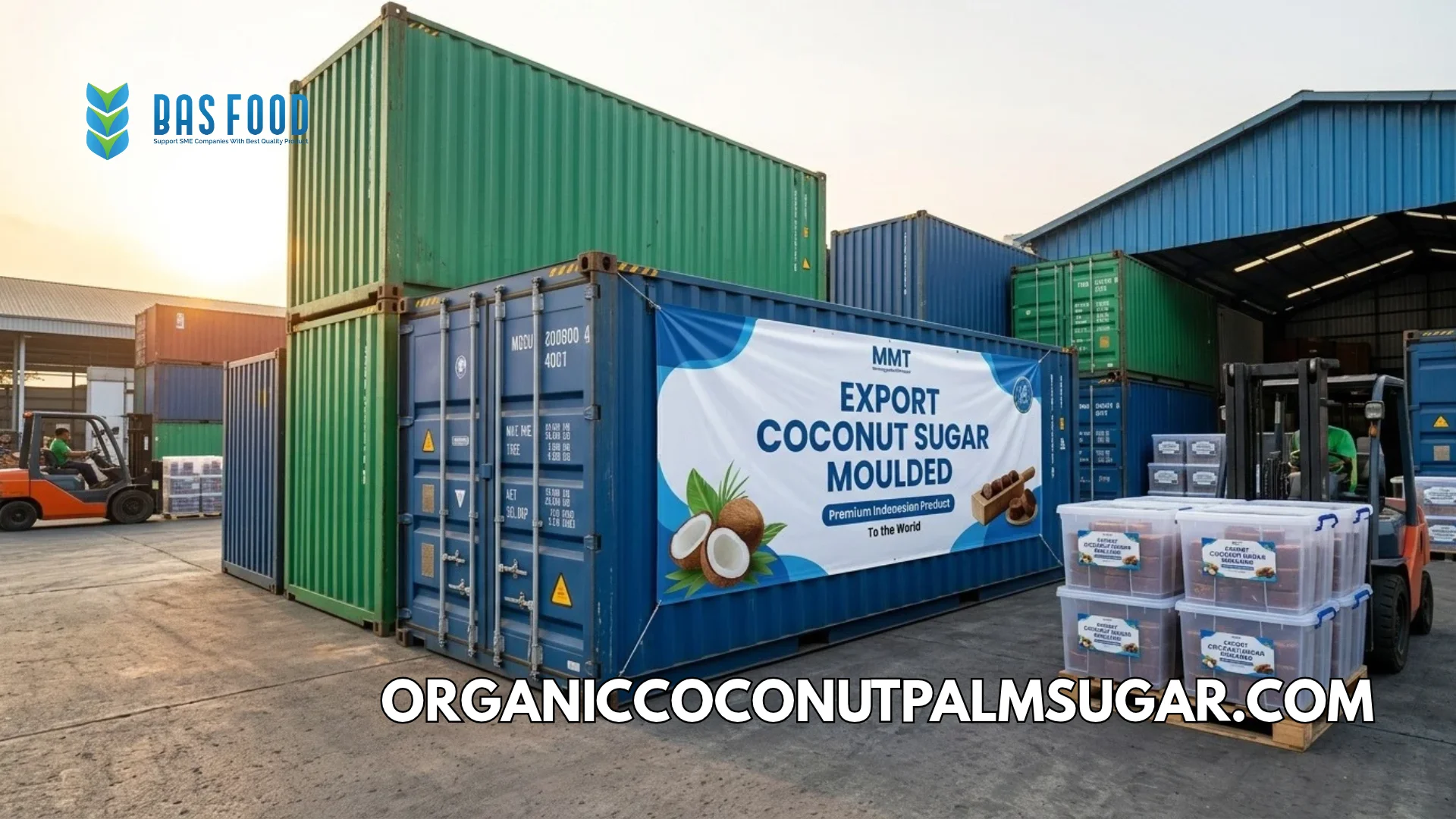
What Is Wholesale Moulded Coconut Sugar?
Wholesale moulded coconut sugar is coconut sugar produced in solid shapes using moulds and sold in commercial quantities. Producers generally make this sugar by collecting sap from coconut palm flower stalks, heating the sap to reduce its water content, and allowing the concentrated liquid to set into a solid form.
The final product can vary in color, shape, size, hardness, and texture depending on the production method and product specifications. Some blocks are compact and firm, while others may have a slightly softer texture. Therefore, buyers should not assume that every supplier offers identical products, even when they use the same product name.
The term wholesale refers to purchasing quantities intended for commercial use or resale rather than buying a few retail packs. Depending on the supplier’s capabilities, a wholesale order may involve multiple cartons, larger consolidated shipments, or palletized export cargo. Buyers should confirm the available order quantities and shipping arrangements directly with each supplier.
How Is Moulded Coconut Sugar Different From Granulated Coconut Sugar?
The main difference lies in the product’s physical form. Granulated coconut sugar consists of small particles that businesses can measure and mix directly into recipes. Moulded coconut sugar, on the other hand, comes in solid blocks or other formed shapes that may need to be broken, grated, chopped, or dissolved before use.
For some businesses, moulded sugar offers a traditional product presentation that supports specific culinary applications. It may suit specialty food shops, traditional food manufacturers, ethnic grocery distributors, and brands that sell ingredients in solid form.
However, granules may be more convenient for automated weighing, dry blending, and production processes that require uniform particles. The best choice depends on how a business plans to use, process, package, or sell the sugar.
Why Do Businesses Buy Moulded Coconut Sugar in Bulk?
Buying in bulk can help businesses coordinate purchasing with their production schedules and distribution plans. Instead of placing frequent small orders, a company may consolidate its demand into larger shipments, subject to supplier terms and practical storage capacity.
Bulk purchasing can also support more consistent procurement when the buyer establishes clear specifications and an ongoing relationship with a supplier. Nevertheless, a large order does not automatically guarantee a lower total cost. Freight, duties, storage, packaging, product losses, and financing costs can affect the final landed cost.
For that reason, buyers should compare the full cost of purchasing and receiving the product, not just the quoted price per kilogram.
Why Wholesale Moulded Coconut Sugar Appeals to B2B Buyers
Coconut sugar has a characteristic sweet flavor that many buyers describe as caramel-like. Its flavor profile can make it suitable for products that benefit from a deeper taste than ordinary refined white sugar provides. However, the exact flavor, color, and aroma depend on the product and production process.
Moulded coconut sugar also has a recognizable solid form. This can be useful for traditional food products and specialty ingredient ranges where shape and presentation matter. Businesses may sell it directly to consumers, supply it to food-service operators, or use it as an ingredient in processed foods.
Another reason to consider this product is its connection to traditional coconut sap processing. Buyers interested in origin stories can ask suppliers about the production region, sourcing practices, traceability arrangements, and available supporting documents. These details can help businesses communicate accurately with their customers.
Potential Applications Across Different Industries
The suitability of moulded coconut sugar depends on its quality, dimensions, solubility, and the requirements of the final application. Potential uses include:
- Traditional foods: Recipes that call for solid coconut sugar or a traditional coconut-based sweetener.
- Sauces and condiments: Formulations in which the sugar can be dissolved and blended with other ingredients.
- Beverages: Drinks that can accommodate sugar blocks after suitable dissolution or preparation.
- Bakery and confectionery: Selected recipes that can process solid sugar into a usable ingredient.
- Specialty retail: Products sold as traditional sweeteners through grocery stores and specialty food shops.
- Food-service supply: Ingredients purchased by restaurants, caterers, and commercial kitchens for appropriate recipes.
Before using the product in large-scale manufacturing, businesses should test it under actual production conditions. For example, a food manufacturer may need to check how quickly the sugar dissolves, whether it changes the color of a finished product, and how its flavor interacts with other ingredients.
Is Moulded Coconut Sugar Suitable for Every Recipe?
Not necessarily. Some recipes require a fine, uniform sweetener that dissolves quickly, while others can accommodate blocks that need additional preparation. Moulded coconut sugar may also vary in moisture content and hardness, which can influence handling and processing.
Consequently, buyers should match the product to their intended application. A beverage manufacturer with automated ingredient dosing, for example, may find granulated sugar easier to handle. A producer of traditional foods may prefer blocks because they fit the recipe and expected product format.
If a business is unsure, it should request a representative sample and conduct a product trial before committing to a large wholesale order.
How to Choose the Right Wholesale Coconut Sugar Supplier
Selecting a supplier is not simply a matter of finding the lowest price. Buyers need to understand whether the supplier can provide the required product, communicate clearly, and meet agreed commercial and documentation requirements.
A good sourcing process starts with a detailed request for quotation (RFQ). The request should explain the product form, estimated quantity, destination, packaging preferences, quality requirements, and expected delivery arrangements. The more precise the request, the easier it becomes to compare offers fairly.
Check Product Availability and Specifications
First, confirm that the supplier can offer moulded coconut sugar in the required form. Do not assume that a company selling coconut sugar granules or other coconut products also carries every moulded format.
Ask for the current product specification, photographs if useful, sample availability, and information about the production batch. If you need a particular block size or packaging arrangement, make that requirement clear from the beginning.
Also, confirm whether the supplier can accommodate your expected order volume and delivery schedule. Product availability, production lead times, and order conditions can change, so buyers should obtain current information rather than depend on assumptions.
Assess Communication and Export Experience
Clear communication is especially important in international trade. A supplier should be able to explain product specifications, packing details, quotation terms, and the documents it can provide.
Buyers should also establish who is responsible for export arrangements, freight booking, customs documentation, and other shipment-related tasks. These responsibilities depend on the agreed Incoterms and the parties involved in the transaction.
If you are working with a new supplier, start with a structured evaluation. Review the quotation, verify the business details, inspect available documents, and arrange sample testing before committing to a substantial purchase.
Consider CV Bonafide Anugerah Sentosa
CV Bonafide Anugerah Sentosa operates in the Indonesian commodity export and supply sector, including coconut-related products. For buyers exploring Indonesian sourcing options, the company can be contacted to discuss business requirements and confirm whether wholesale moulded coconut sugar is currently available.
When making an inquiry, explain your target quantity, required block specifications, destination country, packaging needs, and preferred shipping terms. This allows the company to assess the request and clarify which product options and export arrangements may be possible.
Do not assume that every requested size, specification, certification, or private-label arrangement is automatically available. Confirm the details directly with the company before making purchasing decisions.
Planning a Wholesale Sugar Order Without Unnecessary Risk
A successful wholesale purchase begins before the buyer sends a purchase order. Businesses should define the expected demand, establish a realistic budget, and understand the practical requirements for receiving and storing the product.
For example, a distributor serving several retail outlets may need regular shipments, while a food manufacturer may need enough stock for a planned production period. These businesses have different inventory needs, so they should not use the same purchasing assumptions.
Calculate Your Actual Demand
Start by estimating how much sugar your business will use or sell over a specific period. Consider production schedules, historical sales, seasonal demand, and the time needed to replenish inventory.
Next, compare that demand with your available storage capacity and working capital. A larger purchase may reduce the frequency of ordering, but it can also tie up funds and increase storage requirements.
It is generally better to establish a practical ordering plan than to buy more than the business can use or distribute within a reasonable period.
Understand Minimum Order Quantities and Lead Times
A minimum order quantity (MOQ) is the smallest order a supplier is willing to accept under specified conditions. MOQ can differ depending on the product, packaging, production arrangements, and shipping method.
Lead time refers to the period between agreed order milestones and readiness for delivery or shipment. Buyers should clarify whether the quoted lead time starts after the purchase order, payment, sample approval, or another event.
For imported goods, remember that production and shipping are separate parts of the schedule. Customs clearance and inland delivery may add further time after the goods leave the supplier’s facility.
Ask the supplier to confirm the current MOQ, estimated lead time, and shipment schedule in writing. Avoid relying on generic estimates when planning customer commitments.
Compare the Full Landed Cost
The quoted product price is only one part of the total purchasing cost. For international buyers, the landed cost may include:
- Product price and export packaging.
- Inland transport and export handling.
- International freight and insurance, where applicable.
- Customs duties, import taxes, and clearance fees.
- Port handling, storage, and local delivery.
- Inspection, testing, or other compliance costs.
Not every cost applies to every transaction. The final amount depends on the destination country, shipping arrangement, tariff classification, Incoterms, and service providers involved.
Compare quotations using the same assumptions. A lower product price may not be the better offer if the packaging, freight arrangement, documentation, or delivery terms differ substantially.
Packaging and Storage for Wholesale Moulded Coconut Sugar
Packaging protects the product during handling, transportation, and storage. It can also influence how easily a distributor receives, counts, stores, and resells the goods.
The appropriate packaging depends on the product’s physical properties, shipment conditions, buyer requirements, and destination-market rules. Some buyers may need bulk protective packaging for further processing, while others may require smaller packs for retail distribution.
Choose Packaging for the Supply Chain
Discuss the proposed packaging with the supplier before confirming the order. Ask how individual blocks will be protected, how the products will be packed into cartons or other outer packaging, and how the shipment will be labeled.
If your business sells directly to consumers, you may need retail-ready packaging with specific label information. If you are purchasing for manufacturing, bulk packaging may be more suitable. In either case, confirm whether the supplier can meet the requested format.
Packaging suitability should be evaluated against the actual transport route and handling conditions. Buyers should also clarify the net weight, gross weight, dimensions, and number of units per carton to support freight planning.
Protect the Product During Storage
Coconut sugar should generally be stored in a clean, dry environment, protected from moisture, pests, direct contamination, and strong odors. Moisture exposure can affect the texture and handling characteristics of sugar, so storage conditions deserve attention from the moment the shipment arrives.
Keep cartons off damp floors and follow the supplier’s storage recommendations. Where necessary, use suitable warehouse controls and inspect incoming goods for damaged packaging or signs of moisture exposure.
Businesses should also maintain batch identification and stock records. A first-in, first-out inventory approach can help reduce the risk of older stock remaining unused while newer shipments are distributed.
The appropriate storage period and conditions should be confirmed using the product’s actual specifications and supporting information. Do not assume a universal shelf life for every moulded coconut sugar product.
Working With an Indonesian Coconut Sugar Exporter Supplier
Indonesia is an important origin to consider when researching coconut-based ingredients. However, buyers should evaluate each supplier individually rather than assume that every Indonesian supplier offers the same products, quality controls, or export services.
An experienced coconut sugar exporter supplier should be able to discuss the product being quoted, explain the available specifications, and clarify the documentation and shipping arrangements relevant to the transaction. Buyers should still verify the supplier’s claims and confirm that the proposed product meets their own requirements.
Why Origin and Traceability Matter
Product origin can be important for importers, retailers, and manufacturers that communicate sourcing information to customers. Buyers may want to understand where the raw material comes from, how production batches are identified, and what records are available to support traceability.
Ask specific questions about the supplier’s sourcing and documentation practices. If your business requires particular sustainability standards, certifications, or audit records, explain those requirements early and request evidence before relying on them in marketing or compliance materials.
Do not assume that a product has organic certification, a particular sustainability status, or a specific quality certification simply because it comes from Indonesia. Confirm each claim with valid supporting documentation.
Finding the Right Supply Partner for Long-Term Growth
Long-term sourcing works best when buyers and suppliers agree on product specifications, order planning, communication methods, and procedures for handling quality concerns. These arrangements can help reduce misunderstandings as purchase volumes increase.
CV Bonafide Anugerah Sentosa is one company buyers may contact when exploring Indonesian coconut-related commodity sourcing. Businesses interested in wholesale moulded coconut sugar should describe their requirements and request confirmation of current availability, product specifications, quotation terms, and export capabilities.
Spanish-speaking buyers may also search for an exportador de azúcar de coco when researching suppliers. Regardless of the language used to find a supplier, the same checks apply: verify the business, review product information, confirm the terms, and evaluate the product before committing to a major order.
Final Thoughts: Make Your Wholesale Coconut Sugar Purchase With Confidence
Wholesale moulded coconut sugar can be a useful option for distributors, food manufacturers, specialty retailers, and importers seeking a traditional coconut-based sweetener. However, successful sourcing depends on more than choosing a product name or comparing prices.
Start by defining your product requirements, checking samples, agreeing on quality specifications, and calculating the full landed cost. Then confirm packaging, documentation, shipping terms, and storage arrangements before placing your order.
If you are exploring Indonesian sourcing, contact CV Bonafide Anugerah Sentosa to discuss your business requirements and verify current product availability. With clear specifications and careful supplier evaluation, your business can make more informed purchasing decisions and build a stronger supply strategy for the long term.