Choosing the right sweetener can make a big difference in food production. It affects flavor, texture, processing time, storage, packaging, and even the final appearance of a product. For manufacturers, bakeries, beverage brands, and ingredient distributors, understanding coconut sugar syrup vs granules can help simplify purchasing decisions and improve product consistency. Both forms come from coconut sap, but they offer different benefits. Coconut sugar syrup provides a liquid sweetener that blends easily into many recipes. Granulated coconut sugar, on the other hand, offers a dry format that works well in baking mixes, dry blends, and many everyday applications. Neither format is automatically better than the other. The right choice depends on your recipe, production equipment, storage conditions, and target market.
For B2B buyers, the decision involves more than taste. You also need to consider product specifications, packaging, transport, handling, and supplier reliability. In this guide, we compare liquid coconut sugar and granulated coconut sugar to help your business select the most suitable option.
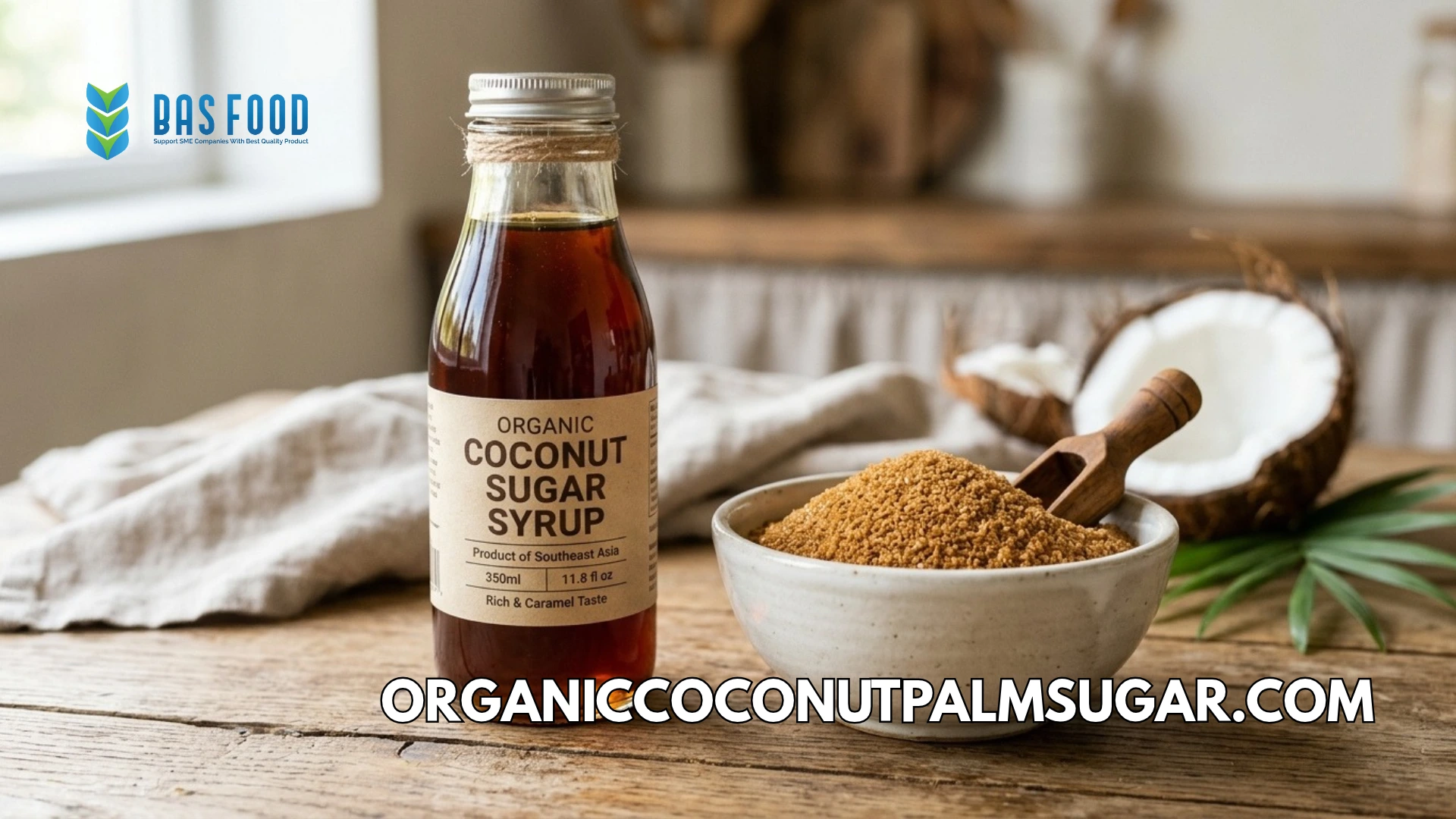
What Is Granulated Coconut Sugar?
Granulated coconut sugar is a dry sweetener made by concentrating coconut sap and processing it into small grains. Depending on the production method, manufacturers may dry, break up, sieve, or otherwise process the concentrated sugar to achieve a suitable texture.
The finished product generally resembles other granulated sweeteners, although its color, aroma, grain size, and flow characteristics may differ. Its flavor often includes caramel-like notes that can complement baked goods, beverages, desserts, and other foods.
Why Do Manufacturers Choose Granulated Coconut Sugar?
Granulated coconut sugar is convenient for dry ingredient handling. Manufacturers can weigh it, blend it with other dry ingredients, and incorporate it into many recipes without first managing a liquid sweetener.
For instance, a bakery may use it in cookies or cakes, while a food manufacturer may include it in a dry beverage mix or dessert preparation. It can also be useful for retail products aimed at consumers who prefer a granulated sweetener for home cooking.
Nevertheless, granulated coconut sugar does not always behave exactly like refined white sugar. Its flavor, color, particle size, moisture level, and dissolution behavior may influence the final product. Recipe adjustments or production trials may be necessary to achieve the desired result.
Coconut Sugar Syrup vs Granules: The Main Differences
When comparing coconut sugar syrup vs granules, start with their physical form. Syrup is liquid, while granulated coconut sugar is dry and free-flowing when properly processed and stored. This basic difference affects how each product is measured, mixed, transported, and used.
The syrup format can simplify blending in liquid applications. Meanwhile, granules are often easier to incorporate into dry mixtures and recipes that call for a granular sweetener. The best option depends on the process rather than the product name alone.
A Practical Comparison for B2B Buyers
| Factor | Coconut sugar syrup | Granulated coconut sugar |
|---|---|---|
| Physical form | Liquid | Dry granules |
| Typical handling | Pumping, pouring, or liquid dosing | Weighing, scooping, or dry dosing |
| Mixing | Often convenient in liquids and moist mixtures | Often convenient in dry blends and solid recipes |
| Moisture contribution | Adds water along with dissolved solids | Usually contributes less moisture than syrup |
| Storage considerations | Container sealing, leakage, viscosity, and product stability | Moisture protection, clumping, and free-flowing texture |
| Transport considerations | Liquid packaging and handling requirements | Dry packaging and moisture protection |
| Recipe adjustments | May require control of added water and solids | May require attention to grain size and dissolution |
| Potential applications | Drinks, sauces, glazes, and liquid formulations | Baking, dry mixes, desserts, and granular sweetener uses |
This table provides a general guide, not a universal specification. Actual performance depends on the product’s composition, processing method, and intended use.
Before ordering either format, ask the supplier for a technical data sheet and representative sample. These allow your production team to evaluate the properties that matter most to your business.
Flavor and Sweetness: Which One Performs Better?
Both forms can provide sweetness and characteristic coconut sugar flavor. However, the perceived flavor may differ because of concentration, processing, and the way the sweetener interacts with other ingredients.
Coconut sugar syrup may distribute easily throughout a liquid product, making its flavor more uniform when properly mixed. Granulated coconut sugar can add sweetness and caramel-like notes to baked goods or other recipes, although the time required to dissolve it depends on grain size, temperature, and the recipe’s moisture content.
Does Coconut Sugar Syrup Taste Sweeter Than Granules?
Not necessarily. A spoonful of syrup and a spoonful of granulated sugar do not provide a fair comparison because they can contain different amounts of sugar and water. Their sweetness per gram can therefore differ.
For a more useful comparison, manufacturers should evaluate sweetness on a defined basis, such as equal amounts of product or comparable quantities of sugar solids. The chosen method should match the purpose of the test.
For example, if you are developing a beverage, compare the products at controlled concentrations and assess sweetness, flavor, color, and aftertaste. If you are making baked goods, evaluate the finished product rather than judging the sweeteners in isolation.
How Flavor Affects Product Development
The natural caramel-like notes associated with coconut sugar can complement coffee drinks, desserts, baked goods, and sauces. However, the best flavor profile depends on the target product and customer preferences.
A light beverage may need a carefully controlled amount of sweetener so that the coconut sugar flavor does not dominate. A cookie or cake, by contrast, may benefit from more pronounced caramel notes. Product testing helps determine whether syrup or granules delivers the intended result.
Which Sweetener Format Is Better for Food Manufacturing?
The choice between liquid and dry sweeteners often comes down to the production line. Manufacturers need ingredients that work with their equipment, formulation, and quality standards.
For businesses that already use liquid dosing systems, coconut sugar syrup may fit into the workflow with fewer handling steps. For manufacturers that rely on weighing and blending dry ingredients, granulated coconut sugar may be easier to manage.
When Coconut Sugar Syrup Makes Sense
Consider coconut sugar syrup when your production process includes:
- Ready-to-drink beverages and drink concentrates.
- Sauces, glazes, and dressings.
- Liquid dessert bases.
- Sweetened coffee or tea products.
- Formulations where a liquid sweetener is practical.
These are potential applications rather than guarantees of suitability. Before using syrup in commercial production, check its viscosity, solids content, flavor, microbiological specifications, and other parameters relevant to your product.
A liquid sweetener can also change the water balance of a recipe. In applications that require a specific texture or shelf life, the formulation may need adjustments to preserve the desired outcome.
When Granulated Coconut Sugar Makes Sense
Granulated coconut sugar may be a practical choice for:
- Cookies, cakes, and other baked goods.
- Dry beverage and dessert mixes.
- Dry ingredient blends.
- Retail sweetener packs.
- Recipes that call for a granular sugar ingredient.
Granules can simplify weighing and dry blending, but particle size and moisture content still matter. For example, coarse grains may dissolve more slowly than fine grains, while moisture exposure can cause clumping.
If your business manufactures several product types, consider testing both formats. The results may reveal that syrup suits some products while granules perform better in others.
Storage, Shelf Life, and Handling Considerations
Storage requirements are another important part of the coconut sugar syrup vs granules decision. Each format has different physical characteristics, so businesses should follow the supplier’s product-specific storage instructions.
Coconut sugar syrup requires packaging that can contain the liquid securely. Buyers should consider the risk of leakage, the suitability of the container, the product’s viscosity, and the temperature conditions during storage and transport. Once opened, the product may also require specific handling procedures to reduce contamination risks.
Granulated coconut sugar generally needs protection from moisture. Exposure to humid air or poorly sealed packaging can cause the grains to absorb moisture, clump, or lose their free-flowing texture. Suitable packaging and dry storage conditions can help maintain product quality.
How Long Does Each Format Last?
There is no single shelf-life period that applies to every coconut sugar syrup or granulated coconut sugar product. Shelf life depends on factors such as composition, processing, packaging, storage conditions, and the manufacturer’s validation data.
For syrup, solids content and other product characteristics can influence stability, but no single measurement proves that a product is microbiologically safe. For granules, low moisture alone should not be treated as a complete guarantee of safety or long-term stability.
Ask the supplier for the stated shelf life, production or batch identification, storage instructions, and guidance on handling opened packaging. For commercial production, use the product within the supplier’s documented conditions and your own food-safety procedures.
Packaging and Logistics for Bulk Buyers
Packaging affects product protection, warehouse operations, and the total cost of sourcing. Therefore, B2B buyers should assess packaging alongside the product specification rather than treating it as a last-minute detail.
Coconut sugar syrup needs packaging designed for liquids and suitable for the planned transportation method. The buyer should consider container strength, closures, handling equipment, filling arrangements, and leakage prevention. Depending on the order and supplier, different packaging formats may be available.
Granulated coconut sugar needs packaging that helps protect the product from moisture and contamination. The ideal format depends on order volume, storage facilities, handling systems, and whether the buyer plans to use the product in bulk production or repack it for retail.
Compare Total Landed Cost, Not Just Unit Price
A syrup quotation and a granule quotation may use different pricing units or reflect different amounts of water and sugar solids. As a result, comparing their prices per kilogram alone may not reveal which option offers better value.
For a fair comparison, consider the amount of sweetener or sugar solids needed for your recipe, packaging costs, shipping, storage, handling, production losses, and any required recipe adjustments. You should also account for the equipment needed to pump or dose syrup if your facility does not already have suitable systems.
For international shipments, clarify the Incoterms, named delivery location, transport arrangements, insurance responsibilities, and destination charges. This will help your purchasing team calculate a more realistic landed cost for each format.
How to Choose a Reliable Coconut Sugar Supplier
The right coconut sugar supplier should offer clear product information, realistic commercial terms, and communication that supports your purchasing process. A competitive quotation matters, but it should not replace technical evaluation.
Start by asking for a product specification sheet that describes the format, relevant quality parameters, packaging, and storage requirements. Request a sample when product performance is important, and make sure your team evaluates it using consistent criteria.
You should also confirm whether the supplier can support your expected order volume, shipment schedule, and documentation needs. If you plan to purchase repeatedly, discuss how the supplier manages batch consistency and communicates any changes that could affect product performance.
Questions to Ask Before Placing a Bulk Order
Before confirming a purchase, ask:
- Which syrup or granule specifications are currently available?
- What are the product’s moisture or solids characteristics, as applicable?
- What packaging formats and order quantities can be offered?
- What shelf life and storage instructions apply to the specific product?
- Which quality and export documents are available?
- What are the production lead time and shipping arrangements?
- Can the supplier provide samples for approval?
- How are quality complaints or discrepancies handled?
The answers should match the quotation, product documents, and final agreement. Clear expectations at the beginning can reduce confusion later and support a stronger business relationship.
Sourcing from CV Bonafide Anugerah Sentosa
For businesses exploring Indonesian coconut-derived products, CV Bonafide Anugerah Sentosa is a potential supplier contact. Buyers interested in coconut sugar products can inquire about available formats, current specifications, packaging options, and export arrangements.
When contacting the company, explain whether you are interested in liquid coconut sugar, granulated coconut sugar, or both. Also share your intended application, target order volume, destination market, and required documentation. This gives the supplier a clearer understanding of your needs and helps establish whether the requested product and terms can be supported.
The company operates in the wider coconut product supply and export sector, but buyers should confirm the current availability of each specific product directly. Do not assume that a particular syrup concentration, granule size, packaging format, or order quantity is available without written confirmation.
Why Clear Specifications Matter
A successful sourcing relationship begins with a shared understanding of the product. If you are comparing syrup and granules, request separate specifications and samples for each format rather than assuming that one product’s documentation applies to the other.
This approach is especially important for manufacturers whose recipes depend on consistent sweetness, flavor, moisture, or processing behavior. Once the product meets your requirements, document the approved specification and commercial terms before arranging repeat orders.
Coconut Sugar Syrup vs Granules: Making the Final Decision
So, which option should your business choose? The answer depends on how you use the sweetener, how your production line handles it, and what qualities your finished product requires.
Choose coconut sugar syrup when a liquid format fits your process and the recipe can accommodate its water content and other product characteristics. Consider granulated coconut sugar when you need a dry ingredient for baking, dry blending, retail packs, or recipes that benefit from granular handling.
For businesses with varied product lines, there may be no need to choose only one format. Using syrup for beverages or sauces and granules for dry mixes or baked goods can provide greater flexibility, provided both products meet the required specifications.
A Simple Decision Checklist
Before making your final choice, consider these questions:
- Does your recipe require a liquid or dry sweetener?
- Will the sweetener affect moisture, texture, color, or flavor?
- Can your production equipment handle the chosen format?
- What packaging and storage conditions can your facility support?
- How does each option compare in cost per unit of useful sweetening solids?
- Can the supplier provide consistent specifications and the required documents?
Answering these questions helps turn a broad product comparison into a practical purchasing decision.
Conclusion: Choose the Format That Works for Your Recipe
Understanding coconut sugar syrup vs granules helps food manufacturers, distributors, and importers select a sweetener that fits their products and operations. Syrup offers a liquid format that can be convenient for beverages, sauces, and moist formulations. Granulated coconut sugar offers a dry format that works well in many baking applications, dry blends, and retail products.
However, the best option depends on more than physical form. Flavor, solids content, moisture, storage, packaging, processing equipment, and total landed cost all influence the final decision. Testing samples and reviewing product-specific specifications are essential steps before placing a commercial order.
If you are exploring Indonesian coconut sugar products, CV Bonafide Anugerah Sentosa can be contacted to discuss current product availability and sourcing requirements. By communicating your specifications clearly and evaluating each format on its own merits, your business can make a more informed choice and build a practical long-term supply strategy.