Coconut sugar syrup is more than a natural sweetening ingredient. Its rich sweetness, caramel-like flavor, and smooth consistency make it an interesting option for beverage manufacturers, bakeries, food processors, and ingredient distributors worldwide. However, maintaining its quality requires more than producing a good syrup. Proper coconut sugar syrup storage plays an important role in protecting flavor, appearance, consistency, and microbiological safety throughout the supply chain.
For B2B buyers, storage becomes especially important when products travel internationally. A shipment may spend weeks in transportation before reaching a warehouse or manufacturing facility. During that time, temperature changes, unsuitable packaging, and poor handling can affect product quality.
Therefore, understanding storage conditions, container selection, and syrup handling helps businesses reduce unnecessary risks and maintain consistent ingredient performance.
This guide explains practical storage strategies, common mistakes, packaging considerations, and quality monitoring methods for coconut sugar syrup. It also explores how international buyers can evaluate suppliers and establish better storage procedures for commercial operations.
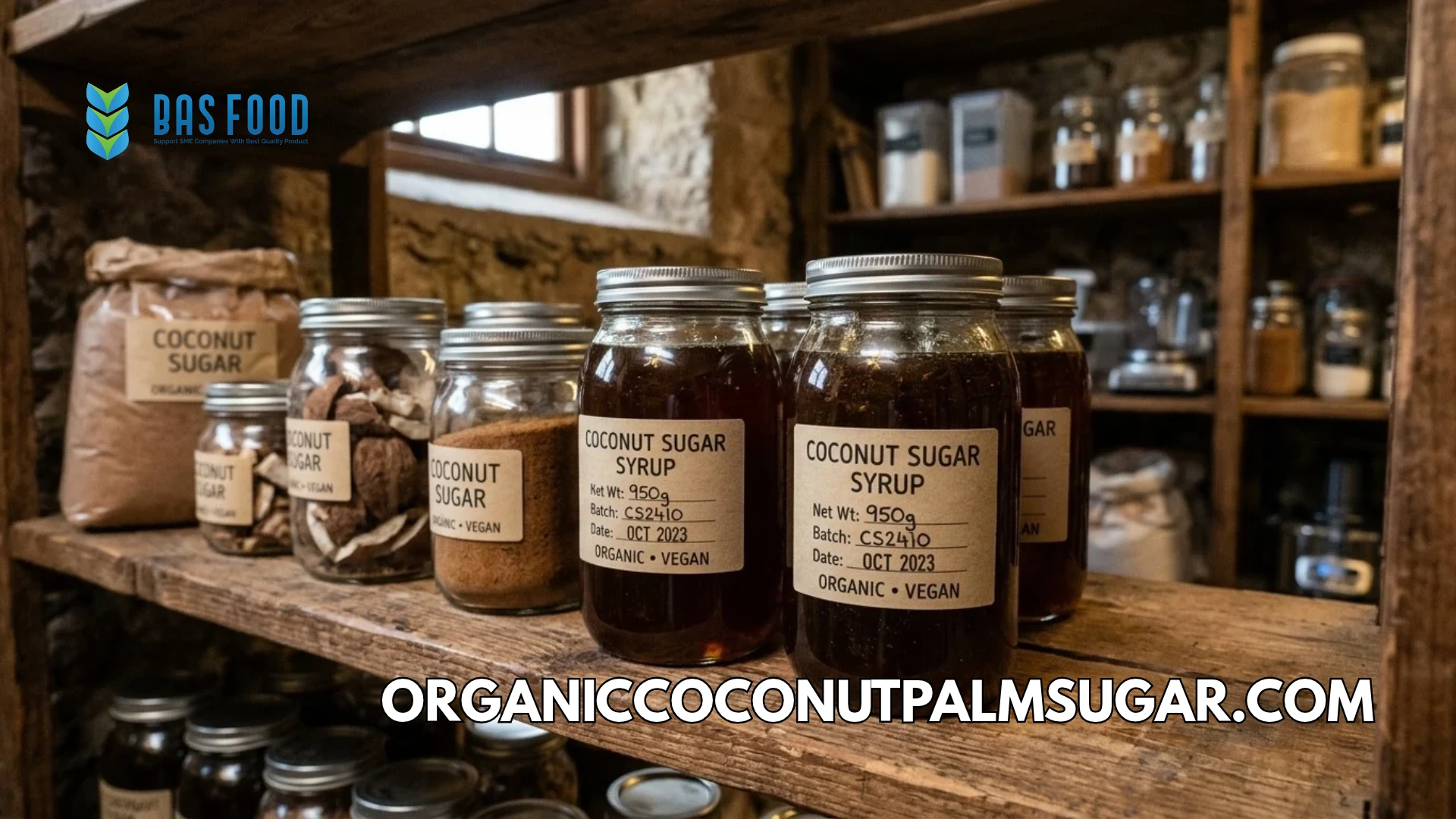
Understanding Coconut Sugar Syrup and Its Storage Characteristics
Coconut sugar syrup is a liquid sweetener made by concentrating sap collected from coconut palm flower stalks. Producers heat the sap to remove part of its water content and create a thicker, sweeter liquid.
The finished syrup may have a golden-brown to dark-brown appearance, depending on the raw material and processing conditions. Its flavor often includes warm, caramel-like notes that complement coffee, tea, desserts, sauces, and bakery products.
Unlike dry coconut sugar granules, syrup contains a liquid phase that can influence its storage behavior. Its stability depends on factors such as water activity, soluble solids concentration, acidity, processing hygiene, packaging, and storage temperature.
Why concentration matters
During production, water removal increases the concentration of dissolved sugars and other soluble components. This can reduce the amount of water available for microbial growth.
However, concentrated syrup is not automatically microbiologically safe or shelf-stable. Some yeasts and molds can tolerate high-sugar environments, while product stability also depends on acidity, processing conditions, and contamination control.
Manufacturers commonly use Brix measurements to assess soluble solids concentration. Nevertheless, Brix alone cannot establish microbial safety or guarantee a specific shelf life.
For this reason, buyers should request relevant product specifications and follow storage recommendations supported by the supplier’s testing.
Ideal Storage Conditions for Coconut Sugar Syrup
Appropriate storage conditions help protect the quality of coconut sugar syrup during distribution and commercial use.
In general, manufacturers should store the syrup according to the validated conditions provided by the producer. These instructions may specify an acceptable temperature range, protection from direct sunlight, and requirements for handling unopened or opened containers.
For some properly processed and packaged syrups, controlled ambient storage may be suitable. Other formulations may require refrigeration or additional precautions.
Therefore, businesses should not assume that every coconut sugar syrup product can safely remain at room temperature.
Temperature control
Temperature influences viscosity, flavor development, and microbiological stability.
High temperatures can accelerate certain chemical changes that affect syrup color and flavor. Prolonged exposure may lead to unwanted darkening or changes in aroma.
Meanwhile, lower temperatures can increase viscosity and make pumping or pouring more difficult. Depending on the formulation, cooling may also contribute to sugar crystallization.
These physical changes do not always indicate spoilage, but they may affect manufacturing efficiency.
For commercial storage, temperature monitoring helps businesses identify conditions outside the approved range.
Protection from sunlight and heat
Direct sunlight can increase the temperature of stored containers, especially in warehouses or transportation areas with limited temperature control.
Consequently, businesses should avoid placing syrup containers near windows, heating equipment, or other sources of excessive heat.
A clean, appropriately ventilated storage area can help maintain more consistent conditions.
However, the specific temperature and environmental requirements should always come from the product’s validated storage instructions.
Choosing the Right Containers for Coconut Sugar Syrup
Proper container selection is essential for protecting syrup during storage and transportation.
Packaging serves several purposes. It helps prevent contamination, limits unwanted exposure to the environment, supports safe handling, and protects the product during distribution.
For B2B applications, packaging also affects logistics costs, warehouse efficiency, and the ease of transferring syrup into production equipment.
Common packaging options
Depending on supplier capabilities and product requirements, coconut sugar syrup may be packed in:
- Food-grade plastic bottles.
- Food-grade jerrycans.
- Suitable plastic drums.
- Intermediate bulk containers (IBCs).
- Other approved food-contact packaging systems.
Each format offers different advantages.
Smaller containers may be convenient for sampling, foodservice operations, or businesses with limited storage capacity.
Meanwhile, drums and IBCs may suit manufacturers that use larger quantities of liquid sweeteners.
What makes a good syrup container?
A suitable container should be compatible with the syrup and intended storage conditions.
It should also provide an effective closure system and protect the product against contamination during transportation and handling.
Food-contact materials must comply with applicable regulations in the destination market.
For example, European importers should consider relevant EU food-contact material requirements when evaluating packaging.
Buyers should confirm the packaging specification, closure type, filling conditions, and suitability for their distribution system before placing an order.
How to Prevent Contamination During Syrup Handling
Good syrup handling practices are just as important as appropriate packaging.
Even a properly manufactured syrup can become contaminated if workers use unclean equipment, leave containers open, or introduce water and other substances during transfer.
Therefore, food businesses should establish hygienic handling procedures for receiving, dispensing, transferring, and storing the product.
Use clean and suitable equipment
All equipment that comes into contact with coconut sugar syrup should be appropriate for food production.
This includes pumps, hoses, valves, measuring tools, and dispensing systems.
Businesses should clean and, where required, sanitize equipment according to validated procedures.
They should also prevent cross-contamination from other ingredients, cleaning chemicals, or non-food materials.
Keep containers properly closed
After opening a container, workers should close it promptly whenever the process allows.
Leaving syrup exposed increases opportunities for contamination and may affect its quality.
Repeatedly inserting unclean utensils into a container can also introduce microorganisms or foreign materials.
For large-scale operations, closed transfer systems may help reduce exposure during dispensing.
However, the appropriate equipment depends on the production process and facility requirements.
Coconut Sugar Syrup Storage After Opening
Storage requirements may change after a container has been opened.
An unopened package may benefit from controlled filling, an effective seal, and reduced exposure to the surrounding environment. Once opened, those protective conditions can change.
For example, dispensing operations may introduce air, moisture, or microorganisms. Repeated opening and closing can also increase handling risks.
Therefore, manufacturers should follow the supplier’s specific instructions for opened containers.
Does coconut sugar syrup need refrigeration?
There is no universal answer.
Some commercially manufactured syrups may have validated procedures that allow storage under specified ambient conditions after opening. Others may require refrigeration or a limited period of use.
The correct decision depends on the product’s formulation, processing, packaging, and microbiological stability.
Buyers should not rely on sweetness or appearance alone when deciding whether refrigeration is necessary.
Managing opened inventory
Businesses should label opened containers with relevant information, such as the opening date and internal identification details.
Where applicable, they should also record the required storage conditions and approved use period.
These records support traceability and help employees follow consistent handling procedures.
For manufacturing facilities, a documented system can reduce confusion when multiple containers are in use.
Understanding Coconut Sugar Syrup Shelf Life
Shelf life describes the period during which a food product is expected to maintain its required safety and quality characteristics under specified storage conditions.
For coconut sugar syrup, shelf life depends on multiple factors, including processing, soluble solids concentration, water activity, acidity, packaging, and storage conditions.
It may also depend on whether the container remains unopened or has been opened for use.
Therefore, businesses should avoid assuming a universal shelf life for every coconut sugar syrup product.
How manufacturers establish shelf life
Food producers may use stability studies, microbiological testing, chemical measurements, and sensory evaluations to support their shelf-life decisions.
Relevant tests can include yeast and mold analysis, water activity, pH, soluble solids, and changes in flavor or appearance.
The exact testing program depends on the product and applicable food safety requirements.
Importantly, a high Brix value does not independently prove that a syrup is safe for long-term storage.
What buyers should request
Before importing coconut sugar syrup, buyers should confirm the product’s stated shelf life and the storage conditions under which it applies.
They should also ask how the expiration or best-before information is established and how batch identification works.
If the product will be repacked or used in another formulation, the buyer may need additional stability evaluation.
The original ingredient’s shelf life does not automatically determine the shelf life of the finished food or beverage.
Common Storage Problems and How to Recognize Them
Several changes may occur during coconut sugar syrup storage. Some involve physical characteristics, while others may indicate quality deterioration or contamination.
Understanding these differences helps manufacturers respond appropriately.
Sugar crystallization
Crystallization may occur when dissolved sugars form visible crystals under certain conditions.
Temperature changes, concentration, and sugar composition can influence this process.
Crystallization does not automatically indicate microbial spoilage. However, it can affect appearance, texture, and processing performance.
Businesses should follow approved product-handling instructions rather than applying uncontrolled heating to dissolve crystals.
Unexpected color changes
Coconut sugar syrup naturally varies in color, but unusual darkening may occur during storage.
Heat exposure and chemical reactions can influence the syrup’s appearance over time.
A darker color does not necessarily mean the product is unsafe. Nevertheless, unexpected changes should trigger a quality review.
Off-odors, gas, or unusual packaging changes
Unexpected sour, fermented, or otherwise abnormal odors may indicate quality problems.
Gas formation, swollen packaging, visible mold, or other unusual changes should also be treated as warning signs.
If these issues appear, businesses should isolate the affected product and follow their food safety procedures.
They should not taste suspicious syrup to determine whether it remains safe.
Warehouse Management for Bulk Coconut Sugar Syrup
Commercial warehouses need organized systems to protect ingredients and support efficient stock management.
For businesses importing large quantities, warehouse procedures can influence product quality, inventory accuracy, and manufacturing continuity.
A good system begins with receiving inspections.
Workers should check the condition of incoming containers, verify shipment identification, and compare delivered quantities with purchasing documents.
They should also review relevant quality records and identify any visible damage or leakage.
Applying inventory rotation
Businesses commonly use first-in, first-out (FIFO) or first-expired, first-out (FEFO) inventory systems.
FEFO can be particularly useful when products have different remaining shelf lives.
These systems help reduce the risk of holding older inventory unnecessarily.
Protecting containers in storage
Containers should be stored in suitable locations that reduce the risk of damage, contamination, and exposure to inappropriate environmental conditions.
Warehouse staff should follow approved stacking limits and handling procedures.
For drums and IBCs, businesses should also consider safe access, lifting equipment, and spill management.
Regular inspections help identify damaged packaging or storage problems before they affect larger quantities of inventory.
International Shipping and Coconut Sugar Syrup Storage
International shipping introduces additional challenges because products may experience changing environmental conditions.
A shipment leaving Indonesia for Europe, the United States, Taiwan, Saudi Arabia, or Africa may encounter different temperatures and handling conditions during transportation.
These changes can influence syrup viscosity and may affect product quality if conditions exceed the validated storage range.
Therefore, exporters and importers should discuss shipping requirements before dispatch.
Preparing syrup for export
Export packaging should protect the product against leakage, contamination, and foreseeable transportation stresses.
Buyers should confirm container specifications, pallet arrangements, closure integrity, and labeling requirements.
Where necessary, temperature monitoring or additional logistics controls may be appropriate.
However, these measures should be based on the product’s actual storage requirements rather than assumptions.
Inspecting shipments upon arrival
Importers should inspect containers for visible damage, leakage, swelling, or other abnormalities.
They should also verify batch numbers, product identification, and relevant shipping documents.
If there is evidence of temperature abuse or packaging damage, the product should be evaluated according to the buyer’s quality procedures before use.
A documented receiving process supports traceability and helps resolve potential shipment-related disputes.
How Proper Storage Supports Food Manufacturing
Consistent ingredient quality is important for food manufacturers.
When coconut sugar syrup changes in viscosity, flavor, or concentration, it may affect the performance of a finished product.
For example, beverage manufacturers depend on predictable sweetness and mixing behavior.
If the syrup becomes unusually thick, dispensing and dosing may become more difficult.
Similarly, bakery manufacturers may need consistent syrup properties to maintain repeatable recipe results.
Reducing production problems
Proper storage helps businesses maintain ingredients within their approved specifications.
It can also reduce unnecessary waste caused by packaging damage, poor handling, or preventable contamination.
However, storage cannot correct an ingredient that was already unsuitable or unsafe when received.
For this reason, quality assurance should begin with supplier qualification and continue through receiving, storage, and production.
Supporting batch consistency
Manufacturers should establish procedures for checking relevant ingredient characteristics before use.
Depending on the application, these checks may include appearance, packaging condition, temperature, and selected analytical parameters.
When deviations occur, staff should follow documented procedures rather than automatically adjusting the ingredient.
This approach supports more reliable production and better quality control.
Choosing a Reliable Coconut Sugar Syrup Supplier
A dependable supplier should help buyers understand the product’s technical characteristics and recommended storage requirements.
When evaluating a coconut sugar supplier, importers should request relevant product information before placing commercial orders.
This may include a technical data sheet, specification sheet, storage instructions, packaging details, and available quality documentation.
Buyers should also confirm whether the supplier can provide batch identification and appropriate traceability information.
A reliable coconut sugar exporter supplier should communicate clearly about confirmed specifications and commercial terms.
Sourcing Coconut Sugar Products with CV Bonafide Anugerah Sentosa
Indonesia is an important origin for coconut-derived ingredients, including coconut sugar products.
CV Bonafide Anugerah Sentosa operates in Indonesia’s commodity supply and export sector and works with coconut-derived products for international markets.
Businesses interested in coconut sugar syrup can contact the company to confirm current availability, product specifications, packaging options, and export arrangements.
For B2B buyers, it is useful to explain the intended application and expected purchasing volume.
A beverage manufacturer, for example, may prioritize consistent viscosity and flavor, while a food distributor may focus on packaging and warehouse handling.
Building better sourcing communication
When requesting a quotation, buyers should include their destination country, required packaging format, estimated order quantity, and relevant quality requirements.
They should also ask for storage instructions and product documentation appropriate to their market.
Do not assume that a particular certification, packaging format, minimum order quantity, or shelf life is available until the supplier confirms it.
Clear communication helps both parties determine whether the product and commercial arrangement meet the buyer’s requirements.
Conclusion: Protect Quality from Production to Final Use
Effective coconut sugar syrup storage is essential for businesses that want to maintain consistent ingredient quality throughout their supply chains.
Temperature management, suitable container selection, hygienic syrup handling, and organized inventory procedures all contribute to better storage practices.
However, there is no single storage method that applies to every coconut sugar syrup formulation. The correct approach depends on the product’s characteristics, processing, packaging, and validated shelf-life conditions.
For importers and food manufacturers, the best strategy is to combine supplier documentation with appropriate receiving inspections, warehouse controls, and food safety procedures.
Businesses exploring Indonesian coconut-derived ingredients can contact CV Bonafide Anugerah Sentosa to discuss current product availability, storage requirements, and export options.
With careful planning and reliable supplier communication, companies can protect the quality of coconut sugar syrup from the point of production to its final use in food and beverage manufacturing.