The global food industry is changing faster than ever. Consumers are looking beyond taste and price when choosing food products. Today, many people also care about ingredient quality, sustainability, and clean labels. As a result, food manufacturers are developing products made with recognizable ingredients that support modern eating preferences. One ingredient that continues to gain attention is coconut sugar. Made from the sap of coconut blossoms, coconut sugar offers a naturally rich caramel flavor and works well in a wide range of food applications. Unlike refined white sugar, it provides a deeper taste profile that complements many plant-based recipes.
The growing demand for coconut sugar plant based foods reflects the rapid expansion of vegan, vegetarian, and flexitarian lifestyles. From dairy-free desserts and protein bars to plant-based beverages and meat alternatives, coconut sugar helps manufacturers create products with balanced sweetness and premium flavor.
For B2B buyers, understanding how coconut sugar performs in commercial food manufacturing is essential before selecting a supplier. Whether you produce vegan snacks, dairy-free beverages, or innovative plant-based meals, choosing a trusted ingredient partner can help improve product consistency and support long-term growth.
This comprehensive guide explores everything you need to know about coconut sugar plant based foods, including product applications, manufacturing benefits, formulation tips, and how working with an experienced coconut sugar supplier can strengthen your business.
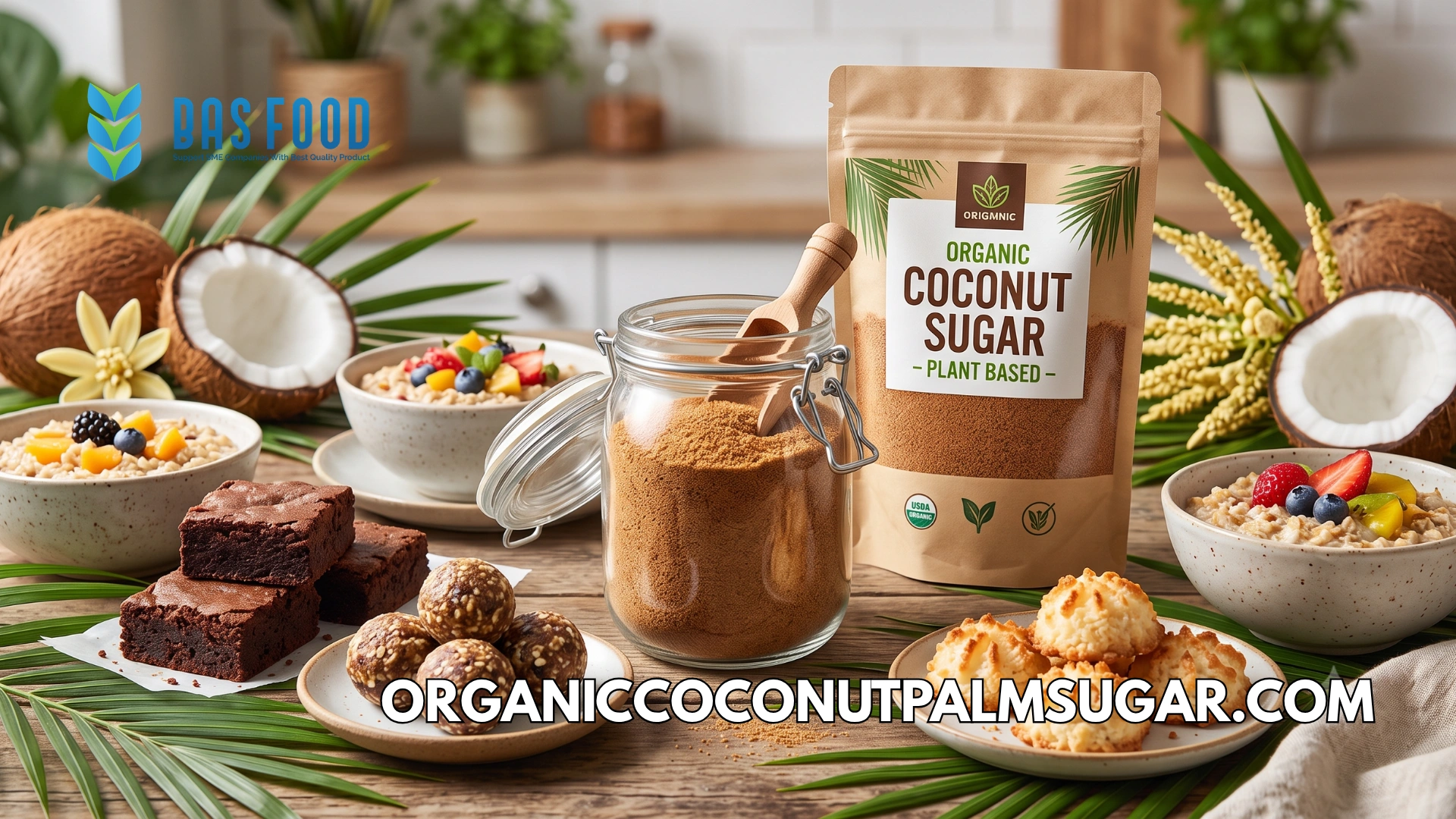
Why Coconut Sugar Is Becoming Popular in Plant-Based Foods
The plant-based food industry continues to expand worldwide. Consumers are choosing more plant-based products for many reasons, including taste, variety, sustainability, and personal dietary preferences. This shift has encouraged manufacturers to create products with simple and recognizable ingredient lists.
Coconut sugar fits naturally into this movement. Since it is produced from coconut blossom sap through a relatively simple process, many brands use it as a natural sweetener in premium food products. While coconut sugar is still a sugar and should be consumed in moderation, its less refined image and distinctive flavor make it attractive for clean-label product development.
Another reason for its popularity is versatility. Coconut sugar pairs well with grains, legumes, nuts, seeds, fruits, vegetables, cocoa, spices, and plant-based proteins. Its caramel flavor enhances recipes without overpowering other ingredients, making it suitable for both sweet and savory applications.
Manufacturers also appreciate that coconut sugar supports premium branding. Consumers often associate natural ingredients with higher-quality products, helping brands differentiate themselves in an increasingly competitive marketplace.
Understanding Coconut Sugar as One of Today’s Vegan Food Ingredients
Sweeteners do much more than simply make products taste sweet. They also influence texture, color, aroma, moisture retention, and the overall eating experience.
Among today’s preferred vegan food ingredients, coconut sugar offers excellent functionality. Its balanced sweetness allows the natural flavors of plant-based ingredients to remain the focus while adding gentle caramel notes.
During cooking or baking, coconut sugar develops pleasant roasted aromas that complement oats, soy, almonds, coconut, pea protein, cocoa, and many other plant-derived ingredients.
Manufacturers generally evaluate coconut sugar using several quality specifications:
- Moisture content
- Particle size
- Color consistency
- Solubility
- Flavor profile
- Shelf stability
- Food safety compliance
Working with a dependable coconut sugar supplier helps ensure these specifications remain consistent across every production batch, making large-scale manufacturing more efficient.
Coconut Sugar in Plant-Based Dairy Alternatives
One of the fastest-growing coconut sugar plant based foods applications is dairy-free alternatives.
Consumers increasingly purchase plant-based milk, yogurt, ice cream, creamers, and frozen desserts. They expect these products to deliver excellent flavor while containing familiar ingredients.
Coconut sugar works especially well in:
- Oat milk
- Almond milk
- Soy milk
- Coconut milk beverages
- Cashew milk
- Rice milk
- Plant-based yogurt
- Dairy-free frozen desserts
Its caramel flavor blends naturally with vanilla, chocolate, coffee, cinnamon, coconut, and fruit flavors.
Manufacturers also appreciate that coconut sugar contributes a smooth sweetness without masking the creamy characteristics of plant-based dairy products.
For premium product lines, coconut sugar helps create richer flavor profiles while supporting clean-label positioning.
Coconut Sugar in Meat Alternatives
The global demand for meat alternatives continues to grow as consumers seek more diverse protein choices.
Although sweeteners may seem unusual in savory foods, they often play an important role in balancing flavors.
Coconut sugar performs exceptionally well in plant-based meat products because it complements spices, herbs, tomato paste, soy sauce, and fermented ingredients.
Common applications include:
- Plant-based burger patties
- Vegan meatballs
- Meat-free sausages
- Plant-based barbecue products
- Vegan jerky
- Meat-free marinades
- Plant-based meat glazes
Its mild caramel flavor helps create balanced seasoning while supporting attractive browning during cooking.
Manufacturers developing premium meat alternatives often use coconut sugar to enhance overall flavor complexity.
Coconut Sugar in Plant-Based Snacks
Snacking continues to be one of the fastest-growing food categories worldwide.
Consumers increasingly look for plant-based snacks made with recognizable ingredients and natural sweeteners.
Coconut sugar is widely used in:
- Granola bars
- Protein bars
- Energy bites
- Roasted nuts
- Trail mixes
- Seed bars
- Baked snack products
- Breakfast snacks
Its balanced sweetness pairs naturally with oats, almonds, peanuts, cashews, cocoa, dried fruit, coconut flakes, pumpkin seeds, and sunflower seeds.
These coconut sugar plant based foods appeal to consumers looking for convenient snacks without sacrificing ingredient quality.
Coconut Sugar in Plant-Based Beverages
Plant-based beverages continue to experience strong global demand.
Consumers now enjoy a wide variety of dairy-free coffee drinks, smoothies, nutritional beverages, protein shakes, and ready-to-drink products.
Coconut sugar complements many beverage flavors, including:
- Coffee
- Chocolate
- Vanilla
- Matcha
- Cinnamon
- Coconut
- Banana
- Berry blends
Its natural caramel notes enhance overall flavor while supporting premium product positioning.
Manufacturers also appreciate its compatibility with beverage formulations designed for clean-label markets.
Coconut Sugar in Bakery and Dessert Applications
Plant-based bakery products continue to gain popularity among consumers worldwide.
Coconut sugar performs exceptionally well in vegan baked goods because it provides both sweetness and attractive golden coloring.
Common applications include:
- Cookies
- Cakes
- Muffins
- Brownies
- Bread
- Pancakes
- Waffles
- Pastries
It also enhances dairy-free desserts such as puddings, mousse, frozen treats, and dessert sauces.
Its caramel flavor naturally complements cocoa, cinnamon, vanilla, coffee, nuts, and fruit ingredients.
For premium vegan bakeries, coconut sugar supports recipes that combine rich taste with simple ingredient lists.
Why Coconut Sugar Supports Modern Plant-Based Food Manufacturing
Commercial food production requires ingredients that perform consistently throughout manufacturing.
Whether products are baked, blended, extruded, frozen, or packaged, ingredient consistency directly affects product quality.
Coconut sugar offers several manufacturing advantages.
Its granulated form blends easily with dry ingredients and dissolves efficiently in liquid formulations.
During thermal processing, it develops pleasant caramel aromas while maintaining balanced sweetness.
Manufacturers also appreciate its compatibility with automated production systems used in large-scale food processing.
Reliable ingredient performance improves production efficiency while reducing batch variation.
Product Development Tips for Coconut Sugar Plant Based Foods
Replacing refined sugar with coconut sugar requires careful formulation.
Although coconut sugar performs well in many applications, manufacturers should always conduct pilot trials before moving to full-scale production.
Important factors to evaluate include:
- Sweetness level
- Flavor balance
- Moisture retention
- Color development
- Solubility
- Heat stability
- Shelf life
- Packaging compatibility
Because coconut sugar naturally has a golden-brown color, finished products may appear slightly darker than products made with refined sugar.
For many premium plant-based foods, this characteristic enhances the perception of natural quality.
Testing multiple formulations helps manufacturers achieve the best balance of flavor, appearance, and production efficiency.
Choosing a Reliable Coconut Sugar Supplier
Ingredient quality plays a critical role in commercial food manufacturing.
Manufacturers should evaluate suppliers based on both product consistency and service reliability.
A professional coconut sugar supplier should provide:
- Consistent granule size
- Stable moisture content
- Reliable flavor profile
- Food safety certifications
- Batch traceability
- Laboratory testing
- Export-ready packaging
- Technical documentation
Reliable suppliers help manufacturers maintain product quality while simplifying production planning.
Long-term partnerships also reduce supply chain risks and improve inventory management.
Palm Sugar Supplier or Coconut Sugar Supplier?
Many international buyers compare both a palm sugar supplier and a coconut sugar supplier when sourcing natural sweeteners.
Although coconut sugar belongs to the broader palm sugar family, it is produced specifically from coconut blossom sap.
Other palm sugars may come from aren, palmyra, or date palms, each offering unique flavor characteristics.
Before selecting a supplier, manufacturers should review:
- Botanical origin
- Production process
- Moisture specifications
- Particle size
- Food safety certifications
- Organic certification availability
- Packaging options
- Export capabilities
Working with the right supplier ensures consistent product quality while supporting long-term innovation.
Why Working with a Professional Palm Sugar Exporter Matters
International sourcing involves much more than purchasing ingredients.
Manufacturers need dependable partners who understand export regulations, food safety requirements, and international logistics.
An experienced palm sugar exporter or coconut sugar supplier serving export markets typically offers:
- Bulk packaging
- Private label services
- OEM manufacturing
- Export documentation
- International certifications
- Stable production capacity
- Quality assurance systems
- Responsive customer support
These services reduce operational risks while helping manufacturers maintain uninterrupted production.
Strong supplier relationships also improve forecasting and long-term supply security.
The Future of Coconut Sugar Plant Based Foods
Consumer demand for plant-based products continues to grow across global markets.
Brands are introducing innovative foods that combine sustainability, premium taste, and clean-label ingredients.
As this trend continues, coconut sugar plant based foods will likely expand into many exciting product categories, including:
- Functional nutrition products
- High-protein foods
- Plant-based desserts
- Dairy-free beverages
- Vegan bakery products
- Meat alternatives
- Ready-to-eat meals
- Premium snack foods
Manufacturers that adopt coconut sugar today can position themselves ahead of changing consumer expectations.
By partnering with an experienced coconut sugar supplier, trusted palm sugar supplier, or reliable palm sugar exporter, businesses can access consistent ingredients that support product innovation and international growth.
Frequently Asked Questions
What are coconut sugar plant based foods?
Coconut sugar plant based foods are vegan or plant-based products sweetened with coconut sugar instead of refined white sugar. These include beverages, snacks, dairy alternatives, baked goods, desserts, and meat alternatives.
Is coconut sugar suitable for vegan products?
Yes. Coconut sugar is widely used in many vegan food ingredients applications because it blends well with plant-based recipes and provides balanced sweetness with a natural caramel flavor.
Can coconut sugar be used in meat alternatives?
Absolutely. Coconut sugar helps balance savory flavors and supports browning in meat alternatives, making it suitable for plant-based burgers, sausages, jerky, and marinades.
Why do manufacturers use coconut sugar in plant-based foods?
Manufacturers use coconut sugar because it enhances flavor, supports clean-label product development, and complements many plant-based ingredients.
What should I look for in a coconut sugar supplier?
Choose a supplier with consistent product quality, food safety certifications, export experience, reliable logistics, technical documentation, and flexible packaging options.
Conclusion
The growing popularity of coconut sugar plant based foods reflects the food industry’s focus on natural ingredients, premium flavor, and clean-label innovation. Whether used alongside other vegan food ingredients in dairy alternatives, blended into nutritious snacks, or incorporated into meat alternatives, coconut sugar offers manufacturers an excellent balance of functionality, flavor, and consumer appeal.
For B2B businesses, choosing the right sourcing partner is just as important as creating the right product. A dependable coconut sugar supplier can provide consistent ingredient quality, while an experienced palm sugar exporter and trusted palm sugar supplier can support reliable international supply chains and long-term business growth.
As the global plant-based market continues to expand, coconut sugar is well positioned to remain one of the most valuable natural sweeteners for innovative food manufacturers seeking to meet the evolving expectations of consumers worldwide.