Coffee is one of the world’s most popular beverages, and the way people sweeten it continues to change. For many years, white sugar was the standard choice. Today, however, cafés, beverage manufacturers, hotels, restaurants, and consumers are exploring different sweeteners that can add more than simple sweetness. One option gaining attention is coconut sugar granules for coffee. Made from coconut blossom sap, coconut sugar has a distinctive brown color and a naturally warm flavor that can complement many coffee profiles. Its granular form also makes it practical for cafés, foodservice businesses, beverage manufacturers, and retail products.
For B2B buyers, the appeal goes beyond the ingredient itself. The right coconut sugar needs to provide consistent granule size, stable quality, suitable packaging, and reliable supply. These factors become especially important when coconut sugar is purchased in bulk and used across multiple beverage products.
Whether you operate a specialty coffee brand, café chain, hotel, restaurant, beverage factory, or food distribution business, understanding how coconut sugar works with coffee can help you make better sourcing decisions.
This guide explores the benefits, applications, formulation considerations, packaging requirements, and sourcing factors businesses should know before buying coconut sugar granules for coffee.
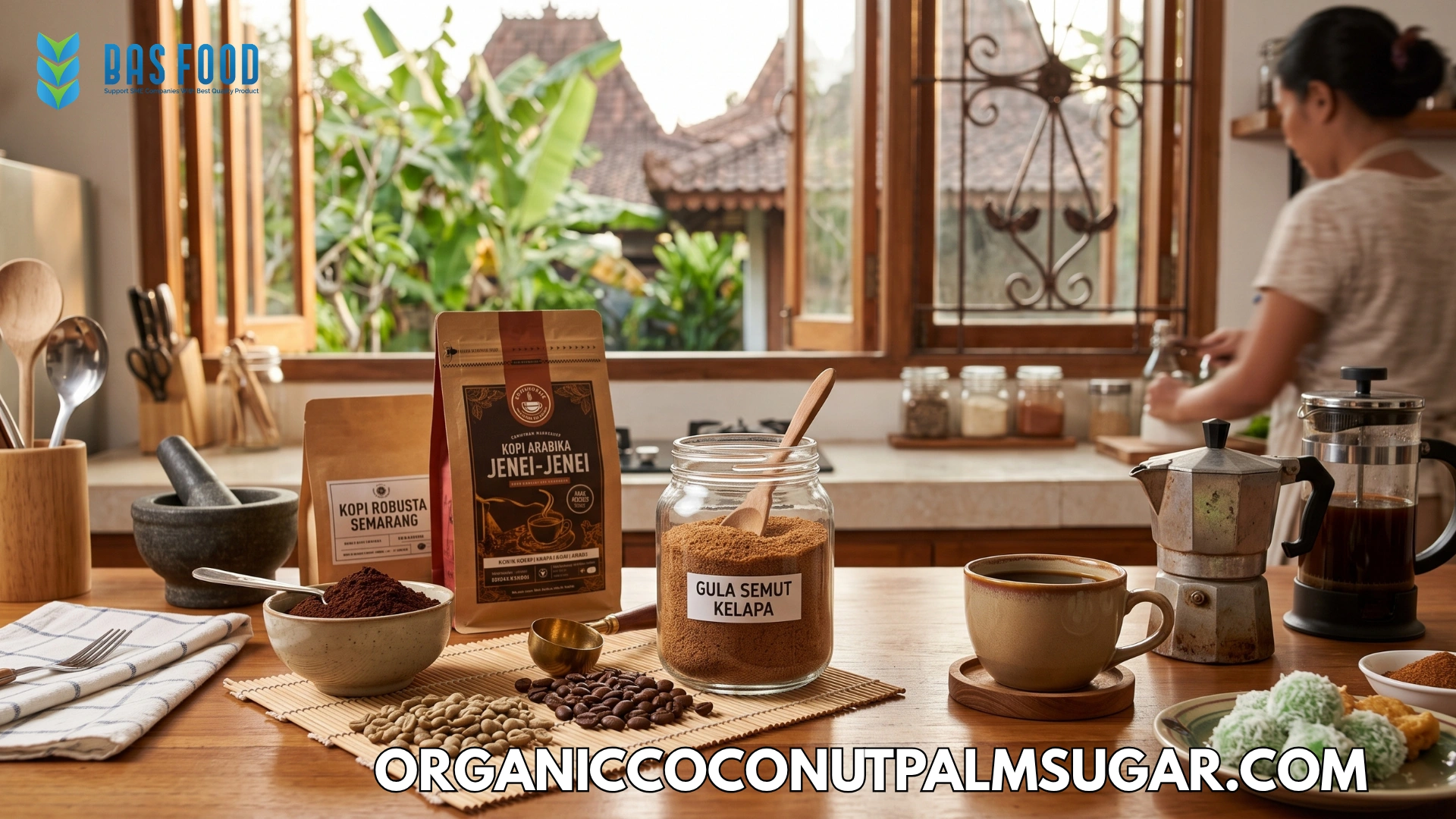
What Are Coconut Sugar Granules for Coffee?
Coconut sugar granules are small particles of coconut sugar made from coconut blossom sap. Farmers collect the sap from coconut flower stalks, and producers then process and heat it to reduce its water content and concentrate the naturally occurring sugars.
After processing, the sugar can be prepared into different forms. Granules are particularly practical for beverages because they are easy to measure, store, portion, and blend into drinks.
When used in coffee, coconut sugar provides sweetness while also contributing its own flavor characteristics. Compared with refined white sugar, it generally has a darker color and a more noticeable caramel-like or brown-sugar character.
This makes coconut sugar granules for coffee interesting for businesses that want to offer a different sweetening experience.
Why Granules Are Practical
Granulated coconut sugar is easy to handle in commercial environments. Cafés can place it in dispensers, use it in beverage recipes, or provide it as an alternative sweetener for customers.
Beverage manufacturers can also incorporate it into powdered drink mixes, ready-to-drink formulations, or specialty coffee products, depending on the recipe and processing requirements.
For B2B purchasing, granules also make it easier to establish a defined product specification. Buyers can discuss particle size, moisture, color, packaging, and other quality requirements with their supplier.
Why Coconut Sugar Works Well With Coffee
Coffee has a complex flavor profile. Depending on the origin and roast, it can have notes ranging from chocolate and caramel to nuts, fruit, spices, or even floral characteristics.
Sweeteners influence how these flavors are perceived. A highly neutral sweetener mainly adds sweetness, while a more distinctive sweetener can also contribute flavor.
Coconut sugar can add warm notes that complement many coffee styles. This can be particularly interesting for medium and dark roasted coffees, where caramel and toasted flavors may already be present.
However, coffee and coconut sugar should be balanced carefully. The goal is not to hide the coffee’s natural character. Instead, the sweetener should support the overall cup profile.
A Different Coffee Experience
Using coconut sugar can give cafés and beverage brands another way to differentiate their menu.
For example, a café could offer coconut sugar as an alternative to regular sugar. A coffee brand could use it as part of a specialty formulation. A hotel could provide it alongside coffee and tea service.
This flexibility makes coconut sugar relevant to different B2B applications.
At the same time, businesses should test the ingredient with their actual coffee products. Different beans, roast levels, brewing methods, and drink formats can produce different results.
Coconut Sugar as a Coffee Sweetener
Coconut sugar can function as a coffee sweetener in both consumer and commercial settings.
At a café, customers can add the granules directly to brewed coffee, espresso-based drinks, or other beverages. The sugar dissolves as the drink is stirred, although the speed and completeness of dissolution can depend on particle size, beverage temperature, and formulation.
For foodservice operations, granules can be supplied in larger containers and portioned as needed. Alternatively, businesses can develop individual serving packs for table service or takeaway products.
Coffee Applications for B2B Businesses
Coconut sugar can be considered for:
- Brewed coffee
- Espresso-based drinks
- Café beverages
- Iced coffee
- Specialty coffee drinks
- Coffee mixes
- Instant beverage formulations
- Coffee gift sets
- Hotel coffee service
- Restaurant beverage menus
The most suitable format depends on the application.
For example, a café may prefer granules that customers can easily scoop. A beverage manufacturer may require a more specific particle size for automated production.
Therefore, buyers should define their application before selecting a product specification.
Particle Size Matters More Than You Might Think
When sourcing coconut sugar granules for coffee, particle size is an important consideration.
Very large particles may take longer to dissolve in certain beverages. Finer particles may disperse more quickly, which can be useful in applications where rapid dissolution matters.
However, smaller is not automatically better. The ideal particle size depends on the equipment, beverage formulation, packaging, and intended customer experience.
A commercial coffee mix may require a different specification from loose coconut sugar served at a café.
Match Granules to the Beverage
Businesses should test the sugar with their actual beverage.
For hot brewed coffee, the temperature generally helps the sugar dissolve. In iced coffee, however, the lower temperature can affect dissolution.
This means a product designed for hot beverages may not perform exactly the same way in a cold beverage application.
B2B buyers should therefore communicate their intended use to their supplier. A good coconut sugar supplier can then discuss the available product formats and specifications.
Coconut Sugar for Hot Beverages Beyond Coffee
Although coffee is a major application, coconut sugar can also be used as a tea sweetener and in other hot beverages.
Tea has its own flavor characteristics, and coconut sugar can provide a warm sweetness that works with selected tea varieties.
It can also be considered for hot chocolate, herbal drinks, traditional beverages, milk-based drinks, and specialty café creations.
This broader application can be useful for foodservice businesses because one sweetener can potentially serve several menu categories.
One Ingredient, Several Menu Opportunities
A hotel, for example, may serve coffee at breakfast, tea throughout the day, and specialty hot drinks in its restaurant.
Offering coconut sugar across several beverage categories can create a consistent ingredient story.
Similarly, a café chain can develop signature drinks around coconut sugar and use the ingredient across different recipes.
For distributors, this versatility can also make coconut sugar attractive because the same product may be suitable for multiple customer segments.
Coconut Sugar and Coffee Flavor Pairing
Not every coffee tastes the same, so the interaction between coffee and coconut sugar deserves attention.
Light-roasted coffees often have bright acidity and fruit-like notes. Adding a strongly flavored sweetener may change the balance of the cup more noticeably.
Medium and darker roasts tend to have deeper caramel, chocolate, nutty, and roasted characteristics. These profiles may pair naturally with the warm notes of coconut sugar.
Still, this is not a strict rule. Coffee formulation is highly dependent on the specific bean, roast, brewing method, and desired flavor profile.
Test Different Ratios
Coffee businesses can experiment with different sugar-to-coffee ratios.
Too much sugar can cover the coffee’s character. Too little may not provide the desired sweetness.
For product developers, small trials can help determine the preferred level.
A café might test different serving amounts, while a beverage manufacturer can evaluate the ingredient as part of a larger formulation.
The key is to develop the recipe around the intended sensory result rather than simply replacing another sugar without testing.
Coconut Sugar for Café and Foodservice Operations
Cafés and restaurants are important users of specialty sweeteners. Customers increasingly expect more choices, and offering alternatives can make a beverage menu more interesting.
Coconut sugar can be provided in dispensers, jars, individual sachets, or other suitable foodservice formats.
The packaging should be easy for staff and customers to use while protecting the sugar from moisture.
For businesses operating multiple locations, consistency is especially important. Each branch should ideally receive the same product specification and packaging format.
Supporting a Consistent Customer Experience
A café chain may serve thousands of cups every month. Even small differences in the sweetener can affect customer perception.
That is why businesses should establish clear specifications with their supplier.
These can include:
- Granule size
- Color
- Flavor
- Moisture
- Packaging
- Net weight
- Storage requirements
- Batch information
Once the specifications are approved, maintaining them across future orders becomes important.
This is one reason why choosing a dependable coconut sugar supplier matters for growing foodservice businesses.
Using Coconut Sugar in Coffee Products
The coffee industry includes more than cafés. Manufacturers also produce packaged coffee products that may contain sweetening ingredients.
Coconut sugar can be explored in coffee mixes, powdered beverages, specialty drink blends, and other formulations.
However, the ingredient needs to work with the manufacturer’s processing system.
Particle size, moisture, flowability, and packaging can all influence manufacturing performance.
Product Development Is Essential
Before commercial production, manufacturers should conduct trials.
A development team can evaluate how the coconut sugar behaves during mixing, filling, storage, and final preparation.
For powdered coffee products, the manufacturer may also need to assess how easily the sugar blends with coffee powder and other ingredients.
These tests help determine whether the ingredient is suitable for the production line.
Packaging and Storage of Coconut Sugar Granules
Good packaging helps protect coconut sugar during storage and transportation.
Coconut sugar can interact with moisture in the surrounding environment. Therefore, appropriate food-grade packaging is important, particularly when the product is shipped internationally.
B2B packaging can vary depending on the order volume. Smaller quantities may use smaller inner packs, while larger orders may use bulk sacks or other industrial packaging.
The package should also be practical for warehouse handling.
Protect the Product From Humidity
Storage conditions matter as well.
Coconut sugar should be kept in a clean, dry storage area and protected from direct contact with water.
Once a package is opened, businesses should handle it properly and avoid unnecessary exposure to humid air.
For cafés and restaurants, this may mean using containers that can be closed securely after service.
For manufacturers, it means controlling how long opened ingredient packages remain exposed in the production area.
Sourcing Coconut Sugar From Indonesia
Indonesia is well known for its coconut-growing regions and traditional coconut-based products.
For international buyers, sourcing coconut sugar from Indonesia can provide access to products made close to the agricultural source.
However, buyers should carefully evaluate potential suppliers before establishing a long-term relationship.
Product consistency, communication, packaging, documentation, production capacity, and export experience all matter.
CV Bonafide Anugerah Sentosa
CV Bonafide Anugerah Sentosa is an Indonesian exporter and supplier of coconut sugar and other coconut-derived products.
For B2B buyers, supplier discussions can cover product format, packaging, quantity, and other purchasing specifications.
When sourcing coconut sugar granules for coffee, buyers should clearly explain their intended application. A coffee manufacturer, café distributor, and retail importer may have very different requirements.
Clear communication helps both buyer and supplier establish the right specification before production and shipment.
Coconut Sugar Mould Supplier and Other Coconut Sugar Formats
Although this article focuses on granules, coconut sugar is available in several formats.
Some buyers may prefer blocks or moulded pieces for foodservice or traditional cooking. Others may need granules for coffee and beverage applications.
This is where working with a supplier that understands different product formats can be useful.
A coconut sugar mould supplier can support buyers interested in moulded or block formats, while granulated products may be more suitable for beverage applications.
Choosing the Right Format
The format should always match the intended use.
For coffee, granules are convenient because they can be measured and mixed into beverages.
For individual foodservice presentation, moulded pieces may offer a different experience.
For industrial food production, buyers may choose whichever format works best with their processing equipment.
Understanding these differences allows buyers to select the product based on function rather than appearance alone.
Benefits and Considerations for B2B Buyers
There are several reasons businesses may consider coconut sugar for coffee.
First, it provides a distinctive alternative to conventional sweeteners. Second, its warm flavor can complement selected coffee profiles. Third, granules are easy to measure and use across foodservice and beverage applications.
It can also support product differentiation for cafés and specialty beverage brands.
However, buyers should also consider the differences between coconut sugar and refined sugar.
Coconut sugar has its own color and flavor characteristics. Therefore, it may change the sensory profile of the finished drink.
Test Before Making It a Standard Ingredient
The best approach is to test.
Coffee businesses should prepare their actual beverages with coconut sugar and evaluate the result.
Manufacturers should conduct laboratory and pilot-scale trials before commercial production.
This simple step can help identify the right particle size, serving amount, packaging, and formulation.
Why Coconut Sugar Granules Can Be a Smart Coffee Ingredient
The growth of specialty coffee has encouraged businesses to think beyond the coffee bean itself.
Sweeteners, milk, syrups, toppings, and other ingredients all contribute to the customer experience.
Coconut sugar provides another tool for coffee businesses looking to create distinctive beverages.
Its brown color and characteristic flavor can complement selected coffee profiles, while the granulated format makes it practical for everyday use.
A Flexible Ingredient for Global Markets
For international B2B buyers, coconut sugar can also fit different market strategies.
A café can use it as an alternative sweetener. A hotel can offer it with coffee and tea. A distributor can supply it to restaurants. A manufacturer can explore it in packaged coffee products.
The opportunity is therefore not limited to one type of customer.
As long as the product specification matches the intended application, coconut sugar granules can become a useful ingredient across several parts of the beverage supply chain.
Final Thoughts: Adding More Than Sweetness to Coffee
Coconut sugar granules for coffee offer businesses an opportunity to explore a different approach to sweetening coffee and other beverages.
The ingredient can provide sweetness while contributing a warm, distinctive flavor profile. Its granular form also makes it practical for cafés, hotels, restaurants, beverage manufacturers, distributors, and specialty food businesses.
However, successful sourcing requires attention to detail. Particle size, moisture, flavor, packaging, storage, consistency, and supply reliability all need consideration.
For international buyers, choosing an experienced coconut sugar supplier is an important part of the process. Buyers should request samples, review specifications, test the product, and communicate their intended application clearly.
For businesses sourcing from Indonesia, CV Bonafide Anugerah Sentosa can be considered as a potential supplier and export partner for coconut sugar products.
Ultimately, the best sweetener is the one that fits the product. When the flavor, format, quality, packaging, and supply chain all work together, coconut sugar can become more than an alternative ingredient. It can become part of a distinctive coffee experience.