The beverage industry continues to explore new ingredients that offer distinctive flavors, practical handling, and flexibility in product development. From ready-to-drink coffee and bottled tea to smoothies, flavored milk, and specialty beverages, manufacturers need sweeteners that work well with their recipes and production systems. One ingredient worth considering is coconut sugar syrup.
Made by concentrating sap from coconut flower stalks, coconut sugar syrup is a liquid sweetener with a naturally sweet taste and characteristic caramel-like notes. Its liquid form makes it convenient to measure, blend, and incorporate into many beverage recipes. In addition, its flavor can add a distinctive touch to drinks that need more than ordinary sweetness.
For companies exploring coconut sugar syrup for beverage manufacturers, understanding its properties is essential before choosing it as a commercial ingredient. Sweetness, flavor, color, Brix, viscosity, solubility, and storage conditions can all affect the final drink.
This guide explains how beverage producers can use coconut sugar syrup, what to consider during drink formulation, and how to select a dependable supplier for bulk purchasing.
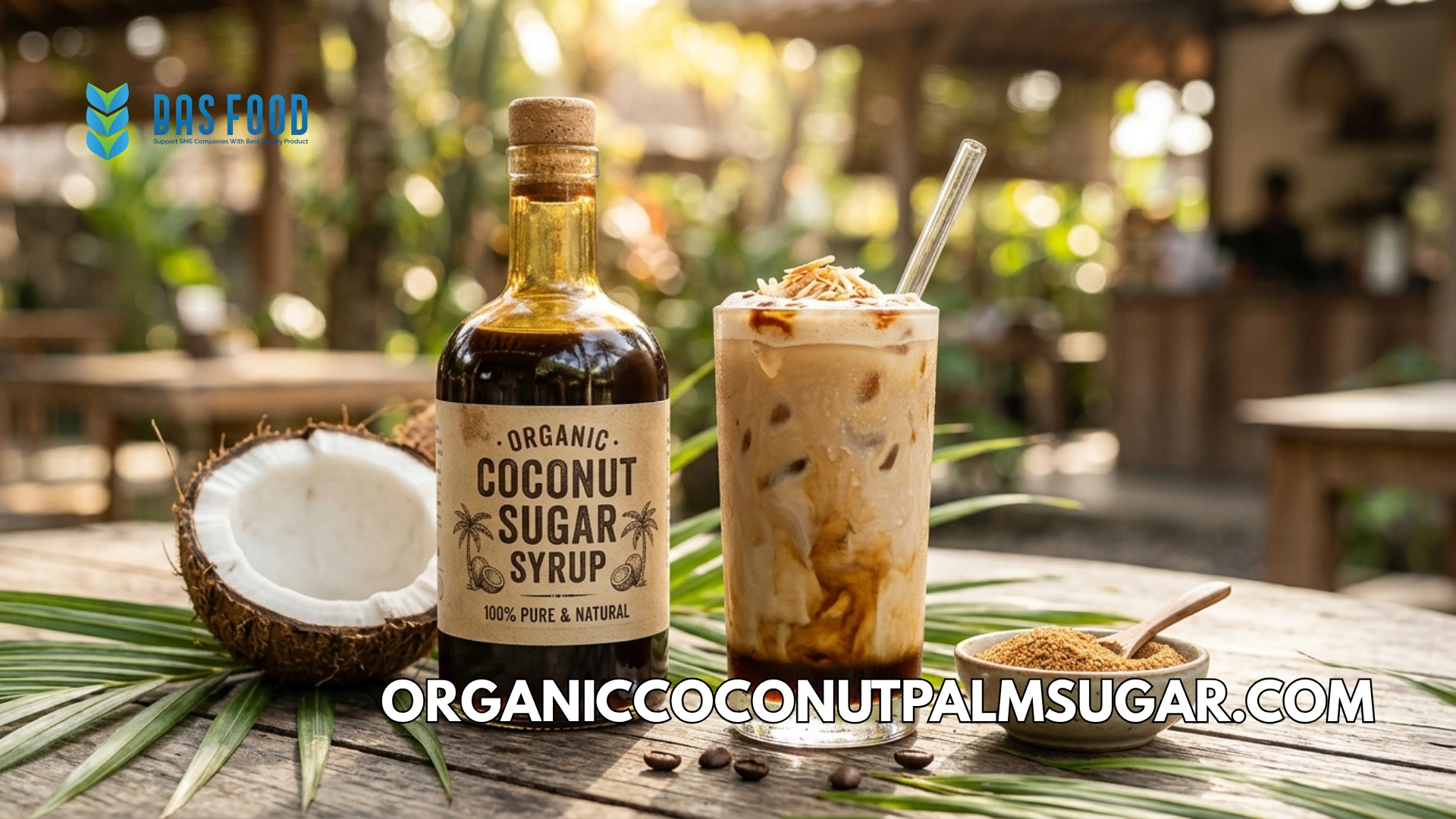
What Is Coconut Sugar Syrup and Why Does It Suit Beverage Production?
Coconut sugar syrup is a liquid sweetener produced from the sap of coconut flower stalks. Producers collect the sap, filter it, and heat it to evaporate water until it reaches the desired concentration and consistency. The result is a sweet liquid that commonly has a brown color and caramel-like flavor.
Unlike granulated coconut sugar, syrup does not need to dissolve before it enters a beverage mixture. This can make ingredient handling easier, especially when manufacturers work with liquid recipes or automated dosing equipment. However, the syrup’s viscosity and concentration still need to match the production process.
A Convenient Liquid Sweetener
A liquid sweetener can simplify several steps in beverage manufacturing. Operators can measure it by weight or through suitable liquid dosing systems, then blend it with water, milk, coffee, tea, fruit preparations, or other ingredients.
This format may reduce the extra step of dissolving solid sugar. Nevertheless, manufacturers should test the syrup under their actual processing conditions. A thick syrup may need different pumping, mixing, or temperature conditions from a thinner sweetener.
A Distinctive Flavor Profile
Coconut sugar syrup often provides caramel, toffee, or molasses-like flavor notes. These characteristics can complement beverages that benefit from a warm, rounded sweetness.
For example, it may work well in coffee-based drinks, milk beverages, chocolate drinks, and selected tea recipes. However, the flavor is not neutral. Manufacturers should consider whether its taste supports the intended beverage profile before adding it to a commercial formulation.
Beverage Ingredients: Where Can Coconut Sugar Syrup Be Used?
The suitability of coconut sugar syrup depends on the beverage category, target flavor, and processing requirements. It can be explored in several types of drinks, although each application requires formulation trials.
Rather than treating it as a universal replacement for every sweetener, manufacturers should consider it an ingredient with its own flavor, color, and physical properties.
Coffee and Specialty Coffee Drinks
Coffee is one of the natural application opportunities for coconut sugar syrup. Its caramel-like notes can complement roasted coffee flavors and create a distinctive sweetness in iced coffee, milk coffee, and specialty coffee beverages.
For example, manufacturers may test it in ready-to-drink coffee, bottled latte products, coffee concentrates, and café-style beverage bases. The syrup can be blended with coffee and milk ingredients, provided the formulation maintains the desired flavor and stability.
However, coffee bitterness, acidity, milk composition, and syrup concentration can influence the final taste. Therefore, producers should test different inclusion levels rather than assume that one ratio will suit every coffee product.
Tea and Herbal Drinks
Coconut sugar syrup may also be considered for bottled tea, milk tea, herbal beverages, and specialty tea products. Its flavor can add depth to recipes that combine tea extracts with spices, milk, or other flavor ingredients.
For lighter teas, the syrup’s color and caramel notes may become more noticeable. Manufacturers should evaluate whether these characteristics fit the product concept. A sample trial can help determine the right balance between sweetness and the natural character of the tea.
Smoothies and Fruit-Based Beverages
Smoothies and fruit-based drinks often combine several ingredients with different levels of sweetness and acidity. Coconut sugar syrup can be tested as one of the sweetening components in these recipes.
However, its brown color and distinctive flavor may affect the appearance and taste of delicate fruit beverages. It may be more suitable for recipes where caramel-like notes complement the fruit combination, such as banana-based or chocolate-fruit drinks.
Plant-Based and Dairy-Style Drinks
Manufacturers developing oat, soy, coconut, and other plant-based beverages may also explore coconut sugar syrup. It can provide sweetness while contributing its own flavor profile.
In dairy-style drinks, the formulation team should check how the syrup interacts with proteins, stabilizers, minerals, and other ingredients. Heat treatment and storage trials are important because sweetness alone does not determine beverage stability.
How Coconut Sugar Syrup Influences Drink Formulation
Successful drink formulation requires more than adding a sweetener until the beverage tastes right. Manufacturers must consider concentration, flavor balance, viscosity, color, acidity, processing conditions, and shelf-life requirements.
Coconut sugar syrup has several properties that can influence the final drink. Understanding them early can reduce unnecessary adjustments during product development.
Sweetness and Brix
Brix is commonly used to estimate the concentration of soluble solids in a syrup. It provides a useful reference when manufacturers compare batches or adjust a recipe.
However, Brix is based on a sucrose reference scale. Coconut sugar syrup contains different soluble compounds, so its Brix value should not be treated as an exact measurement of total sugar content or sweetness intensity.
Two syrups with similar Brix readings may not taste equally sweet. Therefore, manufacturers should combine Brix measurements with sensory testing and, where needed, more detailed compositional analysis.
Viscosity and Mixing
Viscosity describes how easily a liquid flows. A thicker syrup may take longer to mix into a beverage, while a thinner syrup may move more easily through dosing equipment.
Temperature can affect viscosity, so manufacturers should compare measurements under consistent conditions. They should also test the syrup in their actual mixing tanks, pumps, and filling systems.
If a beverage line uses automatic dosing, the supplier’s viscosity information can help the production team assess whether the syrup requires equipment adjustments.
Color and Flavor Balance
Coconut sugar syrup usually has a brown color. When manufacturers add it to a clear or pale beverage, it may change the final appearance.
This may be desirable in coffee, chocolate, or caramel-style drinks. However, it may not suit products that require a clear appearance or a bright fruit color.
The syrup’s flavor can also influence the final product. A small-scale trial helps determine whether the caramel-like notes complement the beverage or overpower its main flavor.
Choosing the Right Sweetener for Different Beverage Concepts
Not every beverage needs the same type of sweetener. Some products require a neutral taste, while others benefit from a sweetener that contributes additional flavor.
Coconut sugar syrup can be a good candidate when manufacturers want a liquid ingredient with a recognizable coconut sugar character. However, the decision should depend on the product concept and technical requirements.
Coconut Sugar Syrup vs. Granulated Sugar
Granulated sugar has a neutral and familiar sweetness. It is widely used in beverage production, but manufacturers may need to dissolve it before blending, depending on the process.
Coconut sugar syrup offers a different flavor and arrives in liquid form. This can make it convenient for liquid formulations, although its color and taste may require recipe adjustments.
Coconut Sugar Syrup vs. Other Liquid Sweeteners
Manufacturers may compare coconut sugar syrup with glucose syrup, invert syrup, honey, agave syrup, or other liquid sweeteners. Each ingredient has a different composition, sweetness profile, viscosity, and functional behavior.
For example, glucose syrup may serve specific purposes in texture and solids management, while honey contributes its own aroma and flavor. Coconut sugar syrup offers a caramel-like profile that may suit selected beverage concepts.
The best choice depends on the intended product. Buyers should compare technical specifications and conduct formulation trials instead of selecting an ingredient based on its name or marketing description alone.
Quality Parameters Beverage Manufacturers Should Check
When sourcing coconut sugar syrup for beverage manufacturers, product consistency is especially important. A change in concentration, viscosity, color, or flavor can affect the finished drink and create additional work for the production team.
Before approving a supplier, request a product specification sheet and review the parameters that matter for your application.
Brix Specification
Ask for the supplier’s Brix range and the method used to measure it. Confirm whether the reported value is a typical result or a guaranteed acceptance limit.
For beverage production, consistent concentration can support recipe control. Still, Brix should be considered alongside taste and other product properties.
Viscosity Requirements
If your production line uses pumps or automatic dosing equipment, viscosity may be an important purchasing parameter. Ask the supplier how viscosity is measured and under what temperature conditions.
A viscosity result without test conditions may be difficult to compare with another supplier’s result. Agree on a clear method if this measurement is part of the purchase specification.
Color, Aroma, and Flavor
Ask for a representative sample and establish acceptable sensory characteristics. Coconut sugar syrup can naturally vary in color and flavor due to raw material and processing conditions.
A reference sample can help both parties agree on the expected product characteristics. It is also useful when evaluating consistency across later batches.
pH, Moisture, and Microbiological Quality
pH provides information about acidity, but it does not independently prove that a syrup is safe or stable. Moisture content and water activity are also different measurements, and buyers should identify which one is relevant to their requirements.
Microbiological testing may be necessary depending on the product, processing method, application, and destination-market rules. Buyers should agree on suitable criteria with the supplier and verify any applicable regulatory requirements.
Processing and Food Safety: What Beverage Companies Need to Know
Beverage manufacturers need ingredients that meet appropriate food safety requirements. Coconut sugar syrup should therefore come from a production system that controls raw materials, hygiene, processing, storage, and packaging.
The process starts with coconut sap collection. Producers should use clean collection equipment and manage the time between collection and processing because fresh sap can ferment. Changes during this stage may affect the syrup’s acidity, aroma, and flavor.
Hygienic Production
After collection, producers filter and heat the sap to concentrate it. They should maintain clean equipment and control the heating process to achieve the intended product characteristics.
Once production is complete, cooling, storage, and filling must also take place under suitable hygienic conditions. Clean tanks, transfer lines, containers, and closures help prevent contamination after processing.
Documentation and Traceability
For commercial supply, buyers should ask how the supplier identifies and tracks production batches. Traceability makes it easier to connect a finished product with its production records and laboratory results.
Useful documents may include:
- Product specification sheet.
- Batch-specific Certificate of Analysis (COA).
- Relevant food safety documentation.
- Microbiological test results, where applicable.
- Packaging and storage information.
- Shelf-life statement.
- Country-of-origin and export documents, as required.
The exact documents depend on the buyer’s market and intended application. A supplier should be able to explain which documents are available and which requirements need to be confirmed.
From Sample to Production: A Practical Formulation Process
Before purchasing a large quantity, beverage manufacturers should test coconut sugar syrup in a controlled development process. This helps confirm whether the ingredient works with the recipe, processing equipment, and final product expectations.
Start by reviewing the specification sheet and requesting a representative sample. Record the syrup’s Brix, viscosity, color, aroma, and flavor where relevant.
Step 1: Conduct Bench Trials
Begin with small-scale recipes. Test different syrup inclusion levels and compare the sweetness, flavor, color, and mouthfeel.
For coffee and chocolate beverages, check whether the caramel notes improve the flavor. For fruit drinks and tea, assess whether the syrup changes the intended taste or appearance too much.
Step 2: Test Processing Compatibility
Once the initial recipe looks promising, evaluate how the syrup performs during mixing, heating, pasteurization, or other processing steps used in your facility.
Check whether it dissolves or blends evenly and whether it causes unwanted changes in viscosity or appearance. If the beverage contains milk or plant proteins, assess compatibility with the complete formulation.
Step 3: Evaluate Finished Product Stability
The final beverage should undergo suitable stability and shelf-life testing. Depending on the product, this may include monitoring appearance, flavor, pH, microbiological quality, and physical stability over time.
Do not assume that the syrup’s own shelf life automatically determines the finished beverage’s shelf life. The complete formulation and processing conditions must be evaluated.
Bulk Purchasing: Packaging, Storage, and Supply Planning
Once the formulation team approves the syrup, procurement needs to plan the commercial order. Buying bulk beverage ingredients requires coordination between the supplier, quality team, warehouse, and production department.
The packaging should protect the syrup from contamination and leakage during storage and transport. Buyers should discuss suitable food-contact materials, container sizes, closures, labeling, and pallet arrangements.
Storage and Handling
Store the syrup according to the supplier’s documented instructions. Keep containers properly sealed and use clean equipment when transferring the product into production tanks.
Temperature, exposure to air, handling hygiene, and packaging integrity can influence product condition. For this reason, buyers should request storage guidance and clarify the stated shelf life.
Planning Repeat Orders
For ongoing beverage production, consistency between shipments is important. Buyers should agree on product specifications and acceptance criteria before placing repeat orders.
It is also useful to discuss lead times, order quantities, production schedules, and shipping arrangements. Clear planning helps manufacturers maintain ingredient availability and reduce unexpected interruptions.
How to Choose a Reliable Coconut Sugar Supplier
A good supplier should understand the technical needs of beverage manufacturers, not simply offer a sweetener at a competitive price. Look for clear communication, product documentation, sample support, and a practical approach to quality requirements.
Ask the supplier about its production process, available specifications, batch testing, packaging options, and export experience. If the syrup will be used in a specific beverage category, explain the application so the supplier can clarify whether its current product is suitable.
Working with CV Bonafide Anugerah Sentosa
CV Bonafide Anugerah Sentosa is an Indonesian supplier and exporter of coconut-derived products. Beverage companies interested in sourcing coconut sugar products can contact the company to discuss current availability, product specifications, samples, packaging options, and export arrangements.
Businesses searching for a coconut sugar supplier or coconut sugar exporter supplier should confirm that the supplier can provide the required syrup form and technical documentation. Coconut sugar granules, moulded sugar, and syrup are different products, so buyers should specify the exact form they need.
For international procurement, both parties should agree on specifications, sample approval, order quantity, packaging, quality checks, and delivery terms before confirming a shipment.
Conclusion: Make Every Ingredient Work Harder in Your Beverage
Coconut sugar syrup for beverage manufacturers offers a useful option for companies exploring liquid sweeteners with distinctive flavor and convenient handling. It can be considered for coffee, tea, smoothies, milk-based drinks, and other beverage concepts where its color and caramel-like notes fit the recipe.
However, successful use depends on more than sweetness. Manufacturers should assess Brix, viscosity, flavor, color, food safety, processing compatibility, and finished-product stability. Testing the syrup in the actual formulation is the best way to understand its performance.
For B2B buyers, a clear specification, representative sample, and batch-specific quality documentation provide a strong foundation for sourcing decisions. By working closely with a supplier and agreeing on requirements before ordering, beverage companies can develop products with greater confidence and plan a more consistent supply.