Liquid sweeteners do more than make food taste sweet. They influence flavor, color, texture, moisture, and even the way a finished product behaves during processing. That is why choosing the right sweetener matters to food manufacturers, beverage brands, bakeries, and ingredient distributors. Two popular options are coconut sugar syrup and honey. Both come from natural sources and offer distinctive flavors, but they have different origins, compositions, production methods, and applications. Understanding coconut sugar syrup vs honey can help businesses select an ingredient that fits their recipes and market requirements.
In this guide, we explore the main differences between these two sweeteners. We also discuss when coconut sugar syrup can work as a honey alternative, how each ingredient affects food formulation, and what importers should check before purchasing liquid sweeteners in bulk.
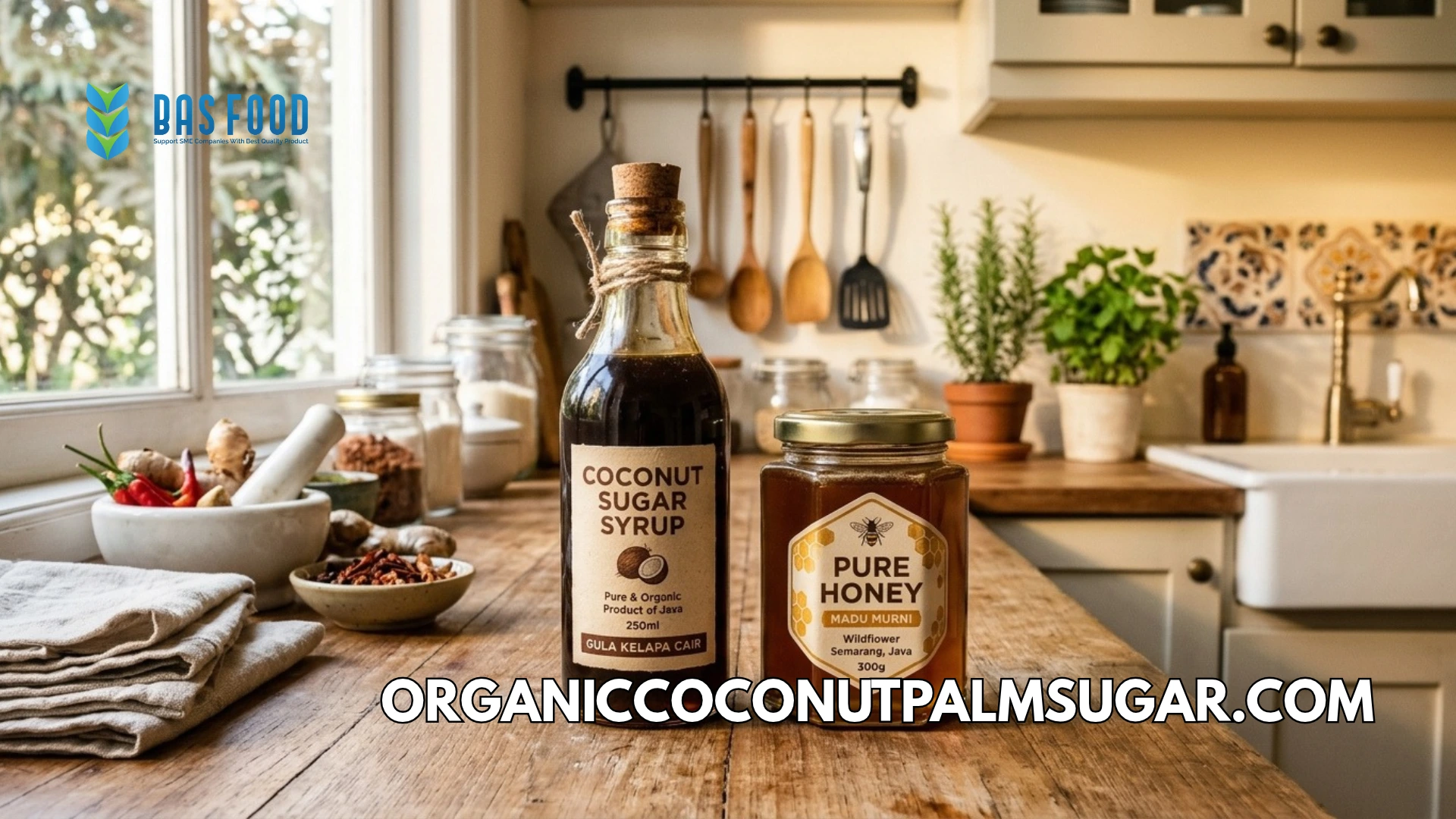
What Are Coconut Sugar Syrup and Honey?
Coconut sugar syrup is a liquid sweetener made from the sap of coconut palm flower stalks. Farmers collect the fresh sap and deliver it for processing. Producers then filter and heat the sap to reduce its water content and concentrate its natural sugars.
The finished syrup usually has a golden-brown to dark-brown color, depending on the raw material and production conditions. Its flavor often resembles caramel or brown sugar, with a warm sweetness that works well in coffee, desserts, sauces, and bakery products.
Honey, on the other hand, is a natural sweet substance produced by honeybees. Bees collect nectar from flowers, transform it through enzymatic activity, and store it in honeycomb cells, where it matures. Beekeepers then harvest and process the honey for sale.
Honey has a wide range of colors, aromas, and flavors. These characteristics depend on the flowers visited by the bees, the region, the season, and the handling process. Some honey varieties taste light and floral, while others have darker colors and stronger flavors.
Although both products are liquid sweeteners, they come from very different sources. Coconut sugar syrup comes from coconut palm sap, while honey comes from flower nectar processed by bees. This difference gives each ingredient its own identity and role in food manufacturing.
Coconut Sugar Syrup vs Honey: Main Differences at a Glance
A side-by-side comparison makes it easier to understand how these sweeteners differ. The following table provides a general overview.
| Feature | Coconut Sugar Syrup | Honey |
|---|---|---|
| Source | Coconut palm flower sap | Flower nectar collected by honeybees |
| Production | Sap filtration and concentration | Bee processing, harvesting, and handling |
| Typical color | Golden brown to dark brown | Light gold to dark amber, depending on variety |
| Flavor | Caramel-like, brown-sugar notes | Floral, fruity, mild, or strong, depending on source |
| Main sugars | Usually a mixture of sucrose, glucose, and fructose | Mainly fructose and glucose |
| Texture | Viscous liquid | Viscous liquid, with consistency varying by variety |
| Aroma | Warm, caramel-like | Often floral or plant-specific |
| Common uses | Coffee, desserts, sauces, bakery products | Tea, beverages, bakery products, sauces, and spreads |
| Natural variation | Influenced by sap and processing conditions | Influenced by floral source, season, and region |
These characteristics are general rather than fixed specifications. For example, coconut sugar syrup can vary in color and thickness according to its concentration. Likewise, honey from different floral sources can have very different aromas and sugar profiles.
Therefore, manufacturers should avoid selecting a sweetener based only on its general description. A proper liquid sweetener comparison should include product specifications, samples, and testing in the intended application.
How Are Coconut Sugar Syrup and Honey Produced?
Understanding the production process helps buyers evaluate product quality and consistency. Although both products are natural sweeteners, their manufacturing systems are quite different.
Coconut sugar syrup production
Coconut sugar syrup starts with fresh sap collected from coconut flower stalks. Farmers need to handle the sap carefully because it can ferment if producers leave it untreated for too long.
After collection, producers filter the sap to remove unwanted particles. They then heat it to evaporate water and increase the concentration of dissolved sugars. The heating process continues until the syrup reaches the required consistency and soluble-solids level.
Producers must control the processing conditions to achieve a consistent product. Differences in sap quality, concentration, temperature, and processing time can affect the final color, flavor, and viscosity.
Once the syrup reaches the target specifications, producers may carry out further filtration and quality checks before packaging. Proper hygiene and suitable packaging help protect the product during storage and distribution.
Honey production
Honey production begins when honeybees collect nectar from flowering plants. Bees carry the nectar back to the hive, where they process and store it in honeycomb cells. Through enzymatic activity and water reduction, the nectar gradually becomes honey.
Beekeepers harvest the mature honey from the combs. Commercial processing may include straining or filtration to remove wax particles and other physical materials. Some producers also use controlled warming to make honey easier to handle and package.
However, processing conditions matter. Excessive heat or unsuitable storage can affect honey’s aroma, flavor, and quality characteristics. Buyers should therefore ask suppliers about handling practices and relevant quality tests.
The production methods explain why the two sweeteners have different sensory characteristics. Coconut sugar syrup develops its caramel-like profile through the concentration of coconut sap, while honey carries characteristics linked to its floral source and natural maturation.
Flavor and Aroma: Which Sweetener Fits Your Product?
Flavor is often the first factor manufacturers consider when choosing a sweetener. The ingredient must complement the other components in a recipe rather than overpower them.
Coconut sugar syrup generally has a warm, rich flavor. Its caramel-like notes can add depth to coffee drinks, chocolate desserts, pancakes, sauces, and baked goods. It is especially useful when a manufacturer wants sweetness with a noticeable brown-sugar character.
Honey offers a much wider range of flavor profiles. Depending on its floral source, it can taste mild, floral, fruity, herbal, or strongly aromatic. This variety gives manufacturers more choices, but it also means they must select the right honey type for each product.
For example, a mild honey may work well in tea or light beverages. A stronger variety may suit marinades, sauces, or bakery products that can accommodate a more pronounced flavor.
Coconut sugar syrup may be a good choice when a recipe needs a caramel-like taste. Honey may be more suitable when floral notes are part of the desired product identity. The best option depends on the recipe and the flavor experience a brand wants to create.
Sweetness and Sugar Composition: Understanding the Difference
Coconut sugar syrup and honey contain naturally occurring sugars, but their composition is not identical. This difference can influence sweetness, formulation, and the amount required in a recipe.
Coconut sugar syrup typically contains sucrose, glucose, and fructose in varying proportions. The exact composition depends on the coconut sap and how the producer processes and concentrates it.
Honey mainly contains fructose and glucose. Their proportions vary according to the floral source and other production factors. Because fructose is generally perceived as sweeter than sucrose at comparable conditions, some honey varieties may taste particularly sweet.
However, it is not accurate to assume that every honey is sweeter than every coconut sugar syrup. Concentration, sugar composition, temperature, acidity, and the other ingredients in a recipe can affect perceived sweetness.
For manufacturers, the practical lesson is simple: compare the actual products rather than relying on broad assumptions. Request sugar composition data where available, review the Brix or soluble-solids specification, and conduct sensory tests before deciding on a replacement.
It is also important to remember that both ingredients contribute sugars and calories. Natural origin does not mean sugar-free, and neither product should automatically be marketed as suitable for unrestricted consumption or as a treatment for blood glucose concerns.
Texture, Viscosity, and Brix in Food Manufacturing
Sweeteners influence the physical properties of food products. Their viscosity, water content, and concentration can affect mixing, pumping, filling, and the final texture of a recipe.
Coconut sugar syrup often has a thick, smooth consistency. Its viscosity depends on concentration, temperature, and the composition of the syrup. A more concentrated product may flow more slowly and provide more soluble solids per unit of weight.
Honey also has a naturally thick texture, but its viscosity varies. Floral source, water content, temperature, and sugar composition can all influence how easily it pours. Some honey varieties crystallize during storage, while others remain liquid for longer periods.
One important measurement in syrup production is Brix. It indicates soluble-solids concentration using a scale based on sucrose solutions. However, a Brix reading does not always represent the exact sugar percentage in products containing different sugars and other soluble substances.
When comparing coconut sugar syrup and honey for industrial use, buyers should consider:
- Brix or soluble solids: Helps assess product concentration.
- Viscosity: Indicates how easily the sweetener flows under specified conditions.
- Moisture content: Important for formulation and storage considerations.
- pH or acidity: Can influence compatibility with other ingredients.
- Sugar composition: Helps manufacturers adjust sweetness and recipe ratios.
- Color and aroma: Affect the appearance and sensory profile of the final product.
These parameters are especially important for large-scale production. A syrup that works well in a small kitchen trial may behave differently in industrial mixing or filling equipment.
Food Applications: Where Does Each Sweetener Work Best?
Both coconut sugar syrup and honey can be used across several food and beverage categories. However, their different flavors and physical properties make them more suitable for particular applications.
Coffee and beverages
Coconut sugar syrup works well in coffee products that benefit from caramel-like sweetness. Coffee shops and beverage manufacturers can test it in iced coffee, milk-based coffee, flavored lattes, and specialty drinks.
Honey is commonly used in tea, herbal drinks, fruit beverages, and selected coffee recipes. Its floral notes can create a different taste experience, especially when paired with citrus, ginger, or herbal ingredients.
Bakery and desserts
Coconut sugar syrup can add sweetness, color, and caramel-like flavor to cakes, fillings, dessert sauces, and toppings. Since it introduces moisture, bakers may need to adjust other liquid ingredients in the recipe.
Honey also adds sweetness and moisture to baked goods. It can contribute browning and a distinct flavor, depending on the type used. However, its composition and acidity may affect the behavior of some recipes.
Sauces, marinades, and dressings
Coconut sugar syrup can work well in barbecue sauces, glazes, marinades, and sweet-savory preparations. Its deeper flavor can complement spices and roasted ingredients.
Honey is also popular in sauces and marinades. Its flavor varies by type, so manufacturers can select a mild or stronger variety depending on the desired result.
Confectionery and food fillings
Both sweeteners may be suitable for fillings, toppings, and selected confectionery products. However, manufacturers should test moisture, texture, crystallization behavior, and storage stability before commercial production.
In every application, recipe testing is essential. The ingredient that works best depends on the complete formulation, not just the sweetener itself.
Can Coconut Sugar Syrup Replace Honey?
Coconut sugar syrup can serve as a honey alternative in many recipes. However, manufacturers should not assume that both ingredients can be exchanged in equal quantities without changing the final product.
The first consideration is flavor. Coconut sugar syrup brings caramel-like notes, while honey may contribute floral or fruity characteristics. A substitution can therefore change the product’s taste and aroma.
The second consideration is sweetness. Because the sugar composition and concentration may differ, the same weight or volume of each sweetener may not deliver the same result. Manufacturers should compare the products using technical specifications and controlled recipe trials.
Color is another important factor. Coconut sugar syrup may darken a product more than a light-colored honey. This can work well in chocolate desserts, coffee drinks, and sauces, but may not suit products that require a pale appearance.
Moisture also matters. Both ingredients contain water, but their moisture levels can vary. Replacing one with the other may affect dough consistency, filling texture, or the stability of a finished product.
A practical substitution process includes:
- Start with a small test batch.
- Compare the ingredients by weight rather than volume.
- Adjust the sweetener quantity based on taste and concentration.
- Check the effect on color, aroma, and texture.
- Adjust other liquids if the recipe requires it.
- Test the finished product under the intended storage conditions.
This approach helps manufacturers determine whether coconut sugar syrup is a suitable honey alternative for their particular application.
Nutrition, Food Safety, and Labeling Considerations
Natural sweeteners often attract consumer interest, but food businesses must communicate their properties accurately. Coconut sugar syrup and honey are both sugar-containing ingredients. Their natural origin does not remove the need to consider total sugar intake or nutritional labeling.
Honey also requires special attention in products intended for certain consumer groups. For example, honey should not be given to infants under 12 months because of the risk of infant botulism. Food manufacturers should consider this when developing products and determining their target consumers.
From a food safety perspective, businesses should review the supplier’s hygiene controls, handling procedures, packaging, and product testing. They should also confirm that the sweetener meets applicable microbiological and chemical requirements for the intended market.
Labeling rules differ between countries. Importers and manufacturers should check requirements for ingredient declarations, nutrition information, product naming, country of origin, and any permitted claims. They should not use claims such as sugar-free or universally healthier unless the product meets the relevant legal definition and supporting requirements.
Accurate specifications and reliable documentation help businesses avoid misleading claims and reduce compliance risks.
Bulk Sourcing: Choosing a Reliable Coconut Sugar Syrup Supplier
After deciding which sweetener suits the product, businesses need to evaluate potential suppliers. For B2B buyers, a reliable supplier should offer clear product information, consistent communication, suitable packaging, and the documentation needed for commercial transactions.
Start by requesting a current product specification sheet. For coconut sugar syrup, this should describe characteristics such as appearance, flavor, Brix, viscosity where available, packaging, and storage recommendations. A batch-specific Certificate of Analysis (COA) can provide further information about the product being supplied.
Samples are equally important. Test the syrup in the actual product rather than judging it only by appearance or taste on its own. A sweetener that tastes excellent by itself may not perform as expected when combined with coffee, dairy ingredients, fruit, or other components.
Before placing a bulk order, international buyers should also confirm:
- Current product availability and production lead time.
- Minimum order quantity and supply capacity.
- Available packaging and container options.
- Product shelf life and validated storage conditions.
- Batch traceability and quality documentation.
- Export documents required by the destination market.
- Shipping arrangements and agreed Incoterms.
CV Bonafide Anugerah Sentosa is an Indonesian commodity supplier and exporter. Buyers interested in coconut-derived products can contact the company to discuss current product availability, specifications, samples, packaging, and export arrangements.
If your business is comparing a coconut sugar exporter supplier or a coconut sugar supplier, evaluate the specific syrup product and request supporting documents. Supplier experience is valuable, but product specifications and consistent quality should guide the final purchasing decision.
Conclusion: Choose the Sweetener That Works for Your Recipe
The comparison of coconut sugar syrup vs honey shows that both ingredients offer useful options for food and beverage manufacturers. Coconut sugar syrup brings a warm, caramel-like flavor that suits coffee, desserts, sauces, and selected bakery products. Honey offers a wide range of floral and fruity profiles that can complement beverages, baked goods, marinades, and other preparations.
Neither sweetener is automatically the best choice for every product. The right ingredient depends on flavor goals, sweetness, color, viscosity, moisture, processing conditions, and target-market requirements.
For B2B buyers, a good decision starts with clear product specifications and practical testing. Request samples, compare technical data, and confirm the supplier’s documentation before committing to a bulk order.
If you are exploring coconut sugar syrup from Indonesia, CV Bonafide Anugerah Sentosa can be contacted to discuss current availability and export requirements.