The demand for natural-tasting sweeteners continues to create opportunities for food manufacturers, beverage brands, distributors, and ingredient importers. Among the products attracting attention is coconut sugar syrup, a liquid sweetener made from concentrated coconut palm sap. Its rich sweetness, distinctive caramel-like notes, and convenient liquid form make it an interesting ingredient for many food applications. However, finding the right coconut sugar syrup manufacturer requires more than searching for a company that produces liquid sugar. Buyers need to understand the manufacturing process, product specifications, quality control, packaging, and export capabilities before choosing a business partner.
A dependable manufacturer should also understand the needs of different industries. A beverage producer may prioritize flavor consistency and solubility, while a bakery manufacturer may focus on sweetness, color, viscosity, and performance during processing.
In this guide, we explain how coconut sugar syrup is made, what buyers should check before purchasing, and how to choose a suitable supplier for long-term business cooperation.
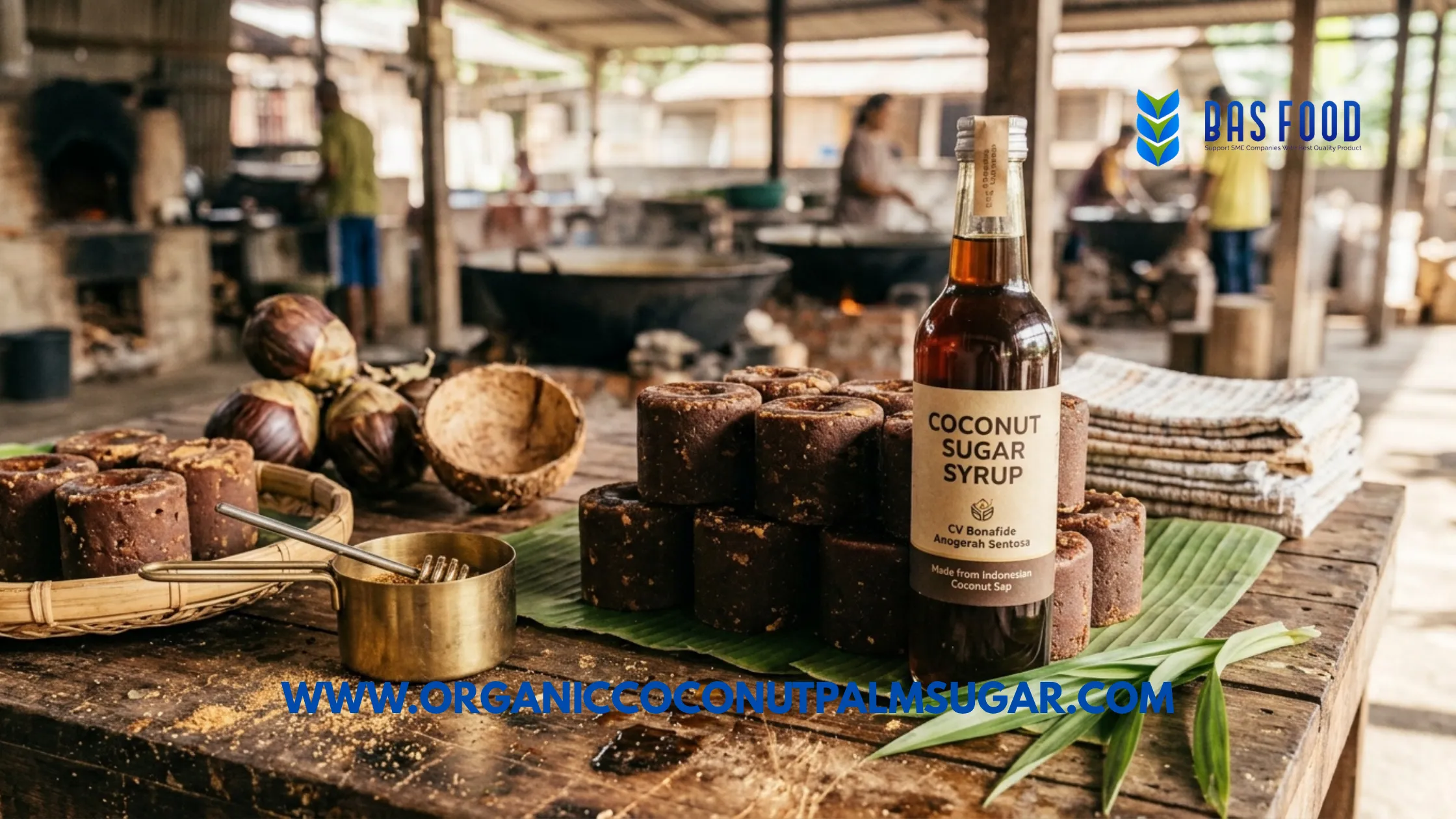
Why the Right Coconut Sugar Syrup Manufacturer Matters
Choosing the right coconut sugar syrup manufacturer can influence the consistency of your finished products. Even when two syrups have similar appearances, they may differ in flavor, concentration, viscosity, color, and other characteristics.
These differences matter in commercial food production. For example, a beverage manufacturer may need a predictable sweetness and flavor profile across multiple production batches. A sauce producer may require a syrup that blends properly with other ingredients without changing the intended texture.
A suitable manufacturer should understand these needs and communicate the product characteristics before a purchase takes place. Buyers should have access to relevant specifications, sample products, and clear information about packaging and storage.
Furthermore, a reliable manufacturing relationship can support better procurement planning. When buyers and manufacturers agree on product requirements, order quantities, packaging, and delivery schedules, they can reduce misunderstandings and make future purchases easier to manage.
For this reason, businesses should evaluate manufacturers based on product suitability, quality management, communication, and export support rather than price alone.
Inside the Coconut Sugar Syrup Manufacturing Process
Understanding the manufacturing process helps buyers evaluate how a producer handles raw materials and product consistency. Although production methods can differ between facilities, coconut sugar syrup generally follows several important stages.
Coconut sap collection
The process begins with collecting sap from coconut palm flower stalks. Farmers carefully gather the liquid and transfer it for processing.
Fresh coconut sap is naturally perishable. If producers do not handle it properly, fermentation can begin and change its flavor and quality. Therefore, hygienic collection, suitable containers, and timely processing are important considerations.
Raw material inspection
Before processing, producers should assess the condition of the incoming sap. The inspection may consider appearance, aroma, cleanliness, and other relevant quality indicators.
Good raw material handling provides a stronger starting point for consistent production. However, visual inspection alone cannot establish every aspect of food safety or product quality.
Heating and concentration
Next, producers heat the sap to evaporate part of its water content. This step increases the concentration of dissolved sugars and creates the syrup’s characteristic consistency.
The heating process needs appropriate control. Excessive or uneven heating may affect color, flavor, and other product characteristics. Manufacturers therefore need a process suitable for their intended product specifications.
Filtration and final processing
Depending on the production method, producers may filter the concentrated syrup to remove unwanted particles. They then prepare the product for filling and packaging.
The exact processing steps can vary between manufacturers. Buyers who need detailed production information should ask the supplier to explain the process used for the product they intend to purchase.
Key Product Specifications Buyers Should Understand
Before selecting a liquid sweetener manufacturer, buyers should identify the product specifications that matter to their application. A clear specification makes it easier to compare suppliers and assess whether a sample meets production requirements.
Color and appearance
Coconut sugar syrup can have a light to dark brown appearance. Its color depends on the raw material and concentration process. A darker shade does not automatically indicate higher quality, so buyers should define an acceptable color range based on the intended application.
Flavor and aroma
The syrup typically has a sweet flavor with cooked-sugar or caramel-like notes. However, flavor intensity can vary. Buyers should evaluate samples to determine whether the profile works with their recipes.
Viscosity
Viscosity describes how easily a liquid flows. Coconut sugar syrup may become thicker or thinner depending on its concentration, temperature, and composition.
This characteristic is important for pumping, filling, dosing, mixing, and production-line handling. Therefore, buyers should discuss viscosity requirements and the temperature at which the measurement applies.
Brix and concentration
Brix is commonly used as an indicator of soluble solids concentration in sugar solutions. However, it should not be treated as a direct measurement of moisture content or water activity in every complex syrup.
Buyers should ask manufacturers which measurement methods they use and request product-specific results where necessary.
Moisture content and water activity
Moisture content measures the amount of water in a product, while water activity indicates how available that water is for chemical reactions and microbial growth. These measurements are related but not interchangeable.
For businesses concerned with product stability, both may be relevant. A high sugar concentration alone does not guarantee microbiological safety or a particular shelf life.
Applications of Coconut Sugar Syrup in Food Manufacturing
Coconut sugar syrup offers food manufacturers another way to introduce sweetness and distinctive flavor into their products. Its liquid form can be useful when a recipe requires a sweetener that can be measured and incorporated as a liquid ingredient.
Beverages and drink concentrates
Beverage manufacturers can explore coconut sugar syrup in coffee drinks, tea, flavored beverages, smoothies, and drink concentrates. Its liquid form can simplify sweetener handling in suitable formulations.
However, the syrup also contributes water and dissolved solids. Therefore, manufacturers should adjust recipes rather than assume it can replace dry sugar on a one-to-one basis.
Sauces and dressings
Sauce producers may use coconut sugar syrup to add sweetness and flavor to marinades, dipping sauces, cooking sauces, and dressings. It can also contribute to the overall color and body of a formulation.
The amount used depends on the desired sweetness, acidity, viscosity, and processing conditions. Product testing helps determine the right balance.
Bakery and dessert products
Coconut sugar syrup can be tested in cakes, muffins, cookies, fillings, toppings, and desserts. Its flavor may complement recipes that benefit from caramel-like sweetness.
Nevertheless, adding a liquid sweetener can change the moisture balance of a recipe. Bakery manufacturers should adjust other liquid ingredients and test the finished product’s texture and baking performance.
Confectionery and sweet snacks
Manufacturers may also explore the syrup in fillings, dessert sauces, and selected confectionery applications. Its performance depends on concentration, moisture, temperature, and the structure of the finished product.
For specialized applications, formulation trials are essential. A syrup that works well in a beverage may not deliver the same results in a confectionery process.
Quality Control: What Should a Food Ingredient Producer Provide?
A professional food ingredient producer should have a clear approach to monitoring product quality. Buyers need more than a product description. They need relevant information that helps them determine whether the syrup meets their purchasing and manufacturing requirements.
Start by asking about the manufacturer’s quality checks. These may include inspection of incoming raw materials, monitoring of processing conditions, assessment of finished product characteristics, and packaging inspections.
Depending on the buyer’s requirements, useful documents may include:
- Product specification sheet
- Ingredient declaration
- Certificate of Analysis (COA), where available
- Relevant laboratory test results
- Product handling and storage instructions
- Packaging information
- Batch identification and traceability details
The exact documents available will depend on the manufacturer and product. Buyers should also identify any destination-market requirements before confirming an order.
Food safety should remain a priority throughout the supply chain. Hygienic processing, suitable packaging, proper storage, and appropriate testing all contribute to product quality. However, buyers should verify specific certifications or compliance claims directly rather than assuming every manufacturer holds the same approvals.
A good supplier should also be willing to discuss product samples. Testing a sample in your own production environment can reveal practical differences that a specification sheet alone may not show.
Packaging and Export Considerations for International Buyers
Packaging affects product protection, handling, storage, and transportation. Since coconut sugar syrup is a liquid food ingredient, buyers need packaging that can contain the product securely and suit the planned shipping arrangement.
Depending on the manufacturer’s capabilities and the buyer’s order requirements, possible packaging formats may include bottles, jerry cans, food-grade pails, drums, or larger bulk containers. These are examples to discuss with a supplier, not standard options guaranteed by every producer.
When evaluating packaging, ask about the material, closure system, filling method, sealing, and suitability for the product. Food-contact compliance should be confirmed for the exact packaging material and intended conditions of use.
Export buyers should also discuss outer protection, palletization where applicable, container loading, and transit conditions. The manufacturer and importer should agree on how the product will be protected during transportation.
In addition, buyers should confirm the documents needed for their destination market. Depending on the shipment and applicable regulations, export arrangements may involve commercial invoices, packing lists, certificates of origin, and other product-specific or regulatory documents.
Finally, agree on storage instructions and shelf-life information before shipment. Shelf life should be supported by appropriate evaluation and should not be assumed from Brix, packaging type, or sugar concentration alone.
How to Choose the Right Coconut Sugar Syrup Manufacturing Partner
A manufacturing partner should do more than supply products. It should understand your business requirements and provide useful information throughout the purchasing process.
When comparing potential manufacturers, consider these factors:
1. Raw material transparency
Confirm that the syrup comes from coconut palm sap. Ask about the origin of the raw material and how the producer handles it before processing.
2. Consistent product specifications
Check whether the manufacturer can provide clear specifications for important characteristics such as color, flavor, viscosity, Brix, and other agreed parameters.
3. Sample availability
Request a sample before committing to a large order. Test it in your intended application and compare the results with your formulation requirements.
4. Production and order capabilities
Discuss the manufacturer’s available supply, minimum order quantity, production lead time, and ability to handle repeat orders. Do not assume that every producer has the same capacity or commercial terms.
5. Packaging flexibility
Ask which packaging formats the manufacturer can provide and whether they are suitable for your storage, handling, and shipping needs.
6. Communication and export support
Choose a business that responds clearly to technical and commercial questions. International buyers should also discuss shipping arrangements, documentation, and delivery expectations early in the process.
Comparing these factors gives buyers a more complete picture of a supplier’s suitability. It also helps establish realistic expectations before the first purchase.
Why Work with CV Bonafide Anugerah Sentosa?
For international businesses exploring Indonesian coconut-based ingredients, CV Bonafide Anugerah Sentosa is a company to consider. The business operates as an exporter of coconut sugar and other coconut derivative products, serving buyers interested in sourcing from Indonesia.
As a coconut sugar exporter supplier, CV Bonafide Anugerah Sentosa provides an opportunity for importers, distributors, and food businesses to discuss their coconut sugar sourcing requirements.
When contacting the company about coconut sugar syrup, buyers should clearly explain the product they need and the intended application. This helps establish whether the available product specifications, packaging arrangements, and commercial terms match their requirements.
For a more productive discussion, prepare details such as:
- Intended use of the syrup
- Preferred flavor and color profile
- Required Brix or concentration, if specified
- Viscosity requirements, if relevant
- Preferred packaging format
- Estimated order quantity
- Destination country
- Required documents and quality standards
These details help the supplier understand the purchasing request and provide more relevant information.
Businesses looking for a coconut sugar supplier can also discuss related coconut sugar products based on their procurement needs. However, buyers should confirm the exact product form and specifications before placing an order.
How to Start Your Coconut Sugar Syrup Purchasing Process
Once you have identified a potential manufacturer, organize your requirements before requesting a quotation. A clear purchasing brief saves time and helps avoid confusion about the product.
First, define the application. Explain whether you intend to use coconut sugar syrup in beverages, sauces, bakery products, confectionery, or another food category. This information helps the supplier understand which product characteristics may matter most.
Next, request the available specification sheet and sample. Review the product’s color, aroma, flavor, consistency, and other relevant parameters. If your business has specific technical or regulatory requirements, arrange the necessary testing before approving the product.
After the sample evaluation, discuss the commercial details. Confirm the quotation, minimum order quantity, packaging, lead time, payment terms, Incoterms, and shipping arrangements. Make sure the agreed product specification is clearly documented.
Finally, maintain communication after receiving the shipment. Share feedback about product performance, packaging condition, and consistency. This can help both parties improve future orders and build a stronger business relationship.
Turn a Good Ingredient into a Reliable Supply Partnership
Coconut sugar syrup offers food businesses an interesting liquid sweetener option, but successful sourcing depends on choosing a manufacturer that understands both the product and the buyer’s requirements.
A dependable coconut sugar syrup manufacturer should provide clear product information, consistent specifications, suitable packaging, and practical communication. Buyers should also evaluate samples, review quality documents, and confirm export arrangements before placing large orders.
Whether you are searching for a liquid sweetener manufacturer, a food ingredient producer, or a long-term manufacturing partner, take time to compare the details behind each offer. Product suitability, quality management, and supply reliability are just as important as price.
CV Bonafide Anugerah Sentosa welcomes inquiries from international businesses interested in Indonesian coconut sugar and related products. Start with your product requirements, discuss the available specifications, and explore whether the company can support your sourcing needs.
A well-informed purchasing decision today can help your business build a more dependable ingredient supply for tomorrow.