For food manufacturers, beverage companies, importers, and distributors, considering coconut sugar syrup bulk packaging is about more than finding the right price. Packaging also plays an important role in protecting product quality, supporting efficient handling, and keeping shipments in good condition during transportation.
Choosing suitable coconut sugar syrup bulk packaging helps businesses manage storage, reduce handling problems, and prepare products for international distribution. The right packaging should match the syrup’s physical properties, the buyer’s production needs, and the conditions expected during shipping.
In this guide, we explain the main packaging options, what buyers should consider when choosing containers, and how packaging connects with wholesale purchasing and export logistics.
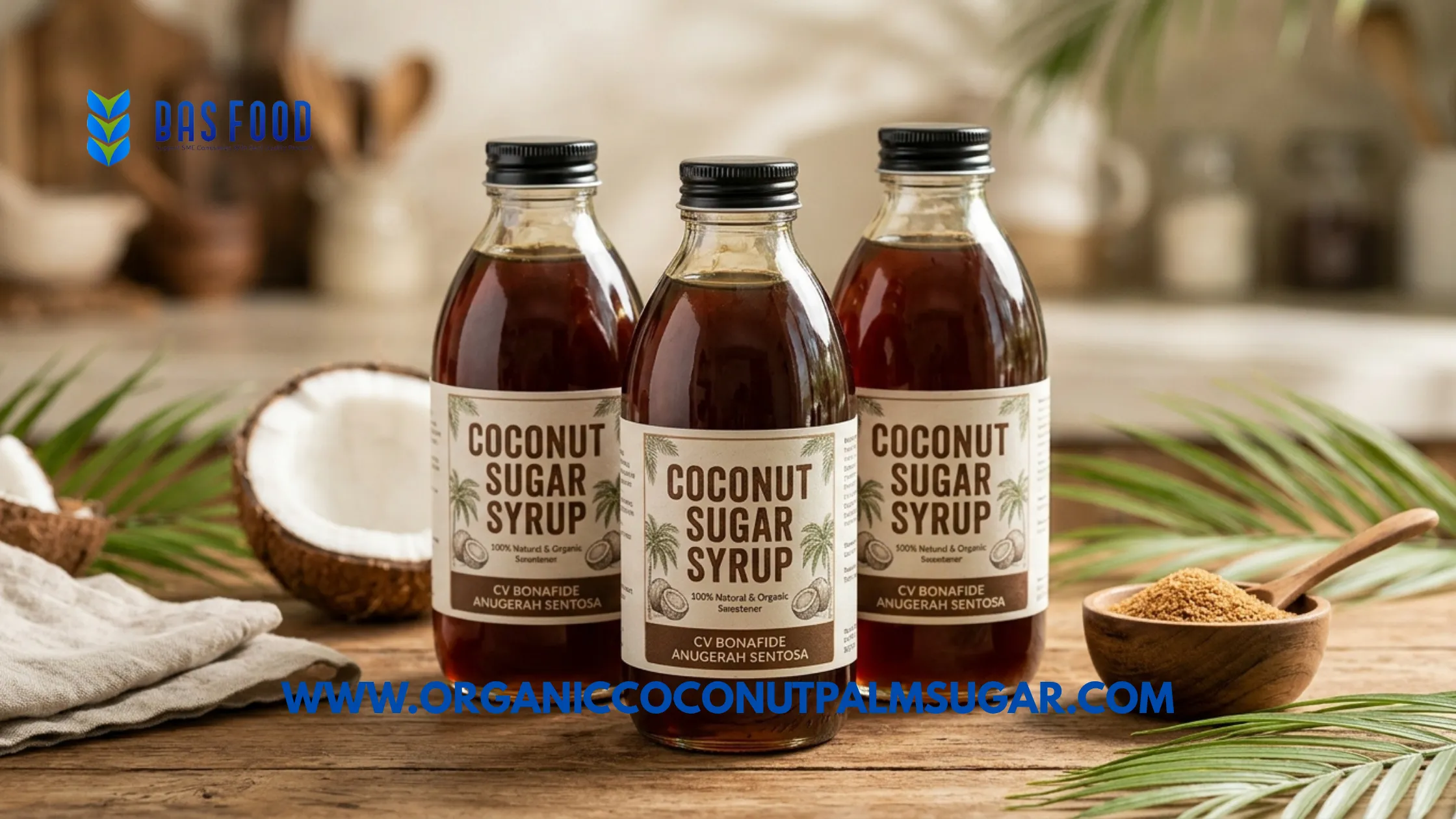
Why Bulk Packaging Matters for Coconut Sugar Syrup
Coconut sugar syrup is a liquid sweetener made by concentrating coconut palm sap. Its color, sweetness, viscosity, and other characteristics can vary depending on the raw material and production process. Because it is a liquid food ingredient, it needs packaging designed to contain liquids safely and support practical handling.
For businesses that use large quantities, bulk packaging can make purchasing and inventory management more efficient. Instead of handling many small retail containers, manufacturers can receive larger quantities in formats suited to their production systems. This can help simplify receiving, storage, and ingredient transfer.
However, larger packaging does not automatically mean better packaging. Buyers should consider the product’s viscosity, filling method, storage environment, transportation route, and handling equipment. A suitable package must protect the syrup while remaining practical for the people who receive and use it.
Understanding Common Coconut Sugar Syrup Bulk Packaging Options
Different businesses have different packaging requirements. A small food manufacturer may prefer manageable containers, while a large beverage producer may need packaging that works with regular ingredient deliveries. Therefore, buyers should discuss available formats with their coconut sugar supplier before placing an order.
Common options for liquid food ingredients include food-grade plastic jerry cans, drums, and larger intermediate bulk containers (IBCs). Each option has different benefits and limitations.
Food-Grade Jerry Cans
<escape> </escape>Jerry cans are useful for buyers who need manageable quantities without using many small bottles. Their handles can make manual movement easier, depending on the container size and filled weight. They may suit smaller manufacturers, distributors, and businesses that want to test a product before moving to larger orders.
When considering jerry cans, check the material, closure, filling opening, and compatibility with the syrup. Buyers should also confirm the container’s capacity and whether it is suitable for the expected transportation conditions.
Drums for Wholesale Orders
Drums are a common option for businesses that purchase liquid ingredients in larger quantities. They can support bulk storage and distribution while reducing the number of individual containers that a receiving team needs to manage.
However, drum selection requires attention to material strength, internal compatibility, sealing, and handling. Buyers should confirm whether the drum is suitable for food contact and whether the supplier can provide details about its construction and closure system.
Intermediate Bulk Containers (IBCs)
IBCs are larger containers designed for handling and transporting substantial volumes of liquid. Their structure often includes a container held within a protective outer frame, making them suitable for certain industrial supply chains.
For manufacturers with suitable storage areas and material-handling equipment, IBCs may help reduce repeated container handling. However, buyers must check the container’s food-contact suitability, cleaning or single-use status, filling and discharge connections, and compatibility with their receiving system.
How to Choose the Right Industrial Containers
Selecting industrial containers requires more than comparing capacity. The packaging must suit the syrup and the way your business handles it. Start by understanding the product’s physical properties, especially its viscosity and behavior at different temperatures.
Coconut sugar syrup can become thicker or flow more easily depending on temperature and concentration. This can affect filling, pouring, pumping, and emptying. If your production line uses pumps or automated dispensing equipment, share the relevant operating details with the supplier before confirming the packaging format.
Next, consider the material that comes into contact with the syrup. Packaging should use materials suitable for food contact and compatible with the product. Ask for relevant material information and confirm that the container, liner if used, and closure system are appropriate for the intended application.
The container should also protect against leakage and contamination during normal handling. Check the closure design, seal, filling opening, and discharge system. For export orders, these details matter because containers may pass through several handling stages before reaching the final buyer.
Finally, think about how your team will move the containers. Consider filled weight, pallet dimensions, forklift access, storage space, and unloading facilities. A container that works well at the supplier’s warehouse may not be practical at the buyer’s production site.
Wholesale Packaging: Balancing Cost, Quality, and Convenience
Wholesale packaging affects the total cost of purchasing coconut sugar syrup. Buyers should look beyond the price per container and calculate the full cost of receiving, storing, and using the product.
For example, larger containers may reduce the number of packages per shipment. This can simplify some handling activities, but it may also require suitable lifting equipment and enough storage space. Smaller containers may be easier to manage manually, although they can increase the number of units that staff must receive and handle.
Packaging costs should also be considered alongside product quantity, freight charges, pallet requirements, and destination handling fees. Ask the supplier whether the quoted price includes packaging, pallets, or other preparation costs. This helps your purchasing team compare offers on a consistent basis.
Another important point is packaging waste. Businesses with regular orders may want to review whether containers can be reused or recycled under suitable conditions and local regulations. Reuse should only take place when the container design, cleaning process, product safety requirements, and supplier guidance allow it. Never refill a container simply because it looks clean.
Protecting Product Quality During Storage and Handling
Good packaging helps protect coconut sugar syrup, but it cannot replace proper storage and handling practices. After receiving a shipment, buyers should inspect the containers for visible damage, leakage, broken seals, or signs of contamination.
Store the syrup according to the supplier’s product-specific instructions. The storage area should be clean and suitable for food ingredients. Avoid placing containers where they may be exposed to damaging conditions, including excessive heat, direct sunlight, or physical impact, unless the product and packaging have been assessed for those conditions.
Temperature can influence syrup viscosity. As a result, a product may flow differently during storage and use. If the syrup becomes thicker in a cooler environment, allow it to reach an appropriate handling temperature according to the supplier’s guidance. Do not apply uncontrolled heat, as this may affect the product or packaging.
Buyers should also understand the difference between Brix, moisture content, and water activity. Brix indicates soluble-solids concentration, while moisture content and water activity describe different product characteristics. None of these measurements alone provides a complete picture of microbial safety or shelf life. Request relevant specifications and testing information when these parameters are important to your application.
Export Logistics: Preparing Bulk Packaging for International Shipping
International shipments introduce additional challenges. Containers may be moved by truck, loaded into shipping containers, transferred at ports, and handled again at the destination. Therefore, export logistics should be part of the packaging discussion from the beginning.
First, confirm that the selected containers are suitable for the planned transport method. Discuss closure security, leakage prevention, palletization, stacking limitations, and protection against movement during transit. The packaging configuration should also comply with the carrier’s requirements and applicable destination rules.
Pallets and outer protection can help organize shipments and support warehouse handling. However, pallet dimensions and loading arrangements should be agreed upon before the order is prepared. Buyers should provide any special requirements for forklift access, pallet height, container loading, or warehouse receiving.
Documentation is another important part of export preparation. Depending on the destination and transaction, buyers may need commercial invoices, packing lists, bills of lading, certificates of origin, and product-related documents. Specific requirements vary by country and product classification, so importers should confirm them with their customs broker and relevant authorities.
Do not overlook shipment identification. Clear labels and shipping marks can help receiving teams identify the product, batch, net weight, and other relevant information. Confirm label content with the supplier before production or shipment, especially when the destination market has specific food-labeling rules.
Packaging Specifications Buyers Should Confirm Before Ordering
Before approving a bulk packaging format, prepare a clear specification sheet. This gives the buyer and supplier a shared reference and reduces the risk of misunderstanding.
Your specification should cover the following points:
- Container type: Jerry can, drum, IBC, or another agreed format.
- Nominal capacity: The container’s stated capacity and the intended filling quantity.
- Material: Food-contact suitability and compatibility with coconut sugar syrup.
- Closure system: Cap, seal, liner, and discharge connection where applicable.
- Filling method: Manual or automated filling requirements.
- Handling needs: Pallet dimensions, forklift access, and stacking limitations.
- Label information: Product name, batch identification, net weight, and other required details.
- Storage guidance: Product-specific storage instructions and relevant shelf-life information.
- Export preparation: Palletization, shipping marks, and destination documentation.
It is also useful to request photographs or technical details of the proposed packaging before confirming the order. If packaging performance is critical, buyers can discuss a packaging trial or sample container review.
Most importantly, ask whether the packaging used for the sample or initial order will match the format planned for regular commercial shipments. Consistency between the approved packaging and future deliveries can help prevent operational problems.
How to Work with a Reliable Coconut Sugar Supplier
Choosing a coconut sugar supplier means evaluating more than the syrup itself. Buyers should look for clear communication, useful product information, and a willingness to discuss packaging requirements before an order is confirmed.
Start by sharing your estimated purchasing volume, intended application, preferred container type, and destination country. If you already have packaging specifications, send them to the supplier for review. This allows both sides to identify practical requirements early.
You should also ask about product specifications, available quality documents, sample availability, lead times, and commercial conditions. If your business needs a specific container format, confirm whether the supplier can provide it rather than assuming every packaging option is available.
For recurring purchases, discuss how the supplier manages consistency between orders. This includes product specifications, packaging materials, filling quantities, and batch identification. A clear agreement helps both parties understand what to expect from each shipment.
CV Bonafide Anugerah Sentosa: Discuss Your Export Sourcing Needs
CV Bonafide Anugerah Sentosa is an Indonesian exporter of coconut sugar and other coconut-derived products. The company serves international sourcing needs and can discuss relevant product requirements with potential buyers.
If your business is looking for a coconut sugar exporter, you can contact CV Bonafide Anugerah Sentosa to discuss your sourcing plans. Share the intended application, required product specifications, estimated order volume, destination market, and preferred packaging format.
For buyers interested in coconut sugar syrup bulk packaging, confirm the current availability of the syrup and suitable packaging options directly with the company. You should also discuss container specifications, sample arrangements, export documentation, and shipping requirements before placing a commercial order.
Clear communication helps establish whether the product and packaging can meet your business needs. It also gives both parties a practical starting point for discussing future supply arrangements.
Build a Better Bulk Packaging Plan for Long-Term Supply
The right packaging can make a meaningful difference to the way your business receives, stores, and uses coconut sugar syrup. Jerry cans, drums, and IBCs each serve different needs, so the best choice depends on purchasing volume, production equipment, storage capacity, and transportation conditions.
Before making a decision, evaluate the container material, closure system, filling quantity, handling requirements, and export preparation. Also consider how the syrup behaves during storage and how your team will transfer it into the production process.
Ultimately, successful bulk sourcing depends on cooperation between buyer and supplier. By setting clear specifications and discussing packaging early, your business can reduce avoidable problems and create a more dependable supply process. Whether you are an importer, distributor, or food manufacturer, a well-planned packaging arrangement is an important part of bringing coconut sugar syrup from the supplier to your production line.