Choosing a supplier is one of the most important decisions when buying coconut sugar granules for commercial use. A product may look similar from one supplier to another, but differences in raw materials, processing, particle size, moisture control, packaging, documentation, communication, and export handling can affect the buying experience. That is why coconut sugar granule supplier evaluation should go beyond comparing prices. A reliable buyer needs to look at the complete supply chain and understand whether a supplier can consistently meet the required product specifications.
For food manufacturers, importers, distributors, wholesalers, and ingredient businesses, supplier evaluation provides a structured way to reduce sourcing risks. Instead of choosing the first supplier that appears in a search result, buyers can compare suppliers using clear and practical criteria.
This guide explains what to check, what questions to ask, how to review samples, and how to build a useful supplier evaluation process. It also explains how an Indonesian coconut sugar exporter supplier such as CV Bonafide Anugerah Sentosa can fit into an international sourcing strategy.
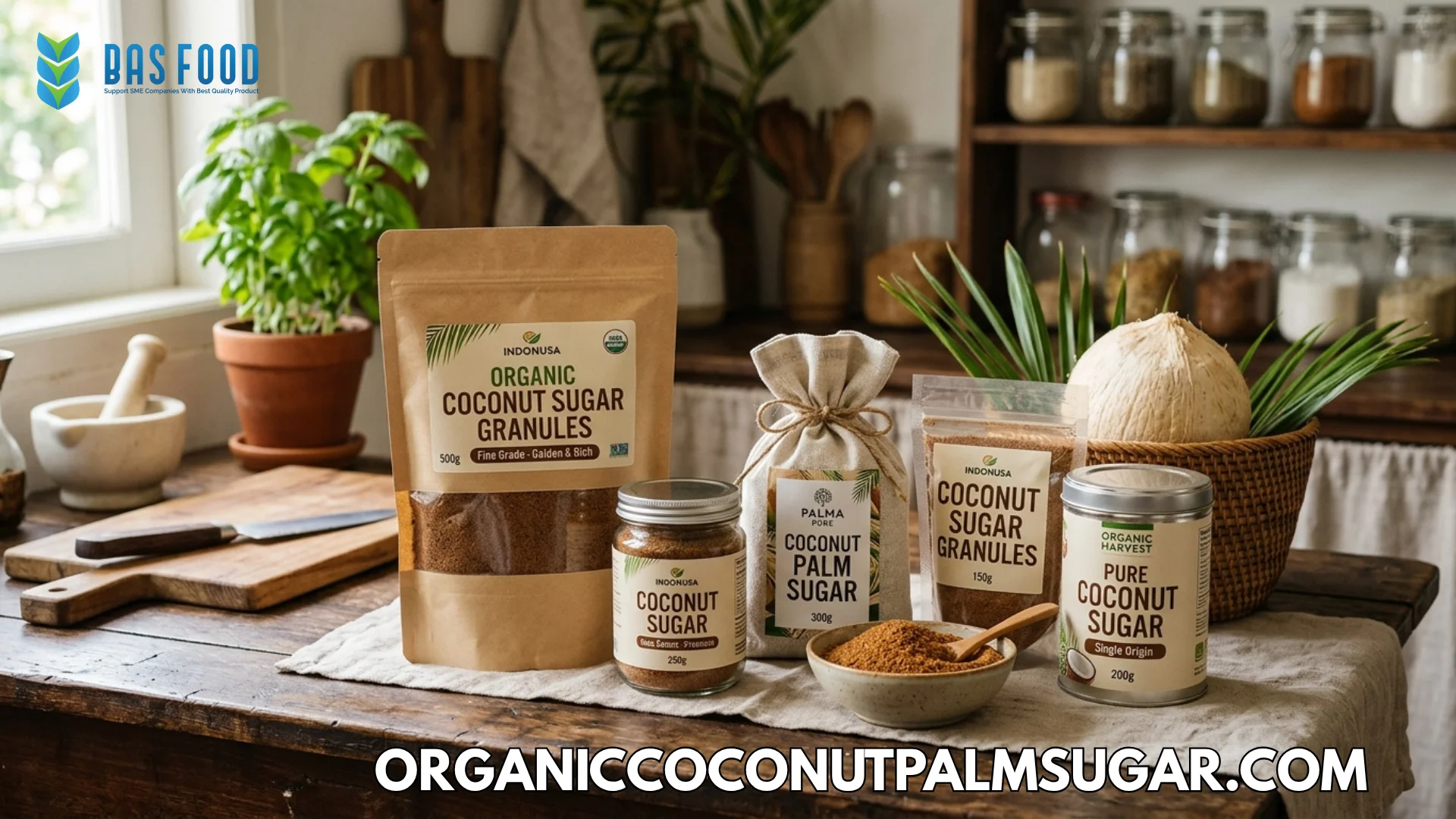
Why Coconut Sugar Granule Supplier Evaluation Matters
Coconut sugar granules are used as an ingredient in many food and beverage applications. Depending on the buyer’s formulation, the granules may need a particular particle size, moisture level, color, taste, texture, and packaging format.
However, supplier information does not always tell the whole story. Two suppliers can use the same general product name while offering products with different physical characteristics. One supplier may focus on fine granules, while another may offer a coarser particle size. Their packaging and handling processes can also differ.
Therefore, coconut sugar granule supplier evaluation helps buyers move from a simple product search to a structured sourcing process.
A proper evaluation also becomes more important when the purchase volume increases. A small sample order is relatively easy to manage. A commercial shipment, on the other hand, requires coordination between production, quality control, packaging, logistics, documentation, and import procedures.
Price Is Only One Part of the Decision
Price naturally matters in B2B purchasing. However, the lowest quotation does not automatically represent the lowest total cost.
For example, inconsistent particle size could create problems during production. Poor moisture control could affect handling. Weak packaging could create additional risks during transportation. Slow communication could also delay purchase orders or specification approvals.
As a result, buyers should consider total sourcing value rather than looking only at the price per kilogram.
A useful evaluation can include:
- Product consistency
- Particle size
- Moisture control
- Color and flavor
- Packaging quality
- Quality control procedures
- Documentation
- Production capability
- Communication
- Export experience
- Lead-time management
- Customization capability
- Commercial terms
This broader approach gives buyers a clearer picture of whether a coconut sugar supplier is suitable for long-term cooperation.
Start With a Clear Product Specification
Before evaluating suppliers, buyers should first define what they actually need. Supplier evaluation becomes difficult when the buyer does not have a clear product specification.
For example, simply requesting “coconut sugar granules” may not provide enough information. A supplier needs to understand the intended application and the physical requirements of the product.
A bakery manufacturer may need a different granule size from a beverage producer. Similarly, a distributor may prioritize packaging and shelf handling, while a food manufacturer may focus more heavily on particle consistency and formulation performance.
Define the Granule Requirements
A basic specification sheet can include several important points.
These may include:
- Product name
- Raw material
- Granule form
- Particle size or mesh requirement
- Moisture specification
- Color expectation
- Flavor profile
- Packaging requirement
- Net weight per package
- Labeling requirements
- Application
- Required documentation
The exact specification depends on the buyer’s needs. There is no single specification that works for every application.
For this reason, a professional coconut sugar exporter supplier should be able to discuss specifications rather than simply provide a standard price list.
Explain the Intended Application
Tell the supplier how you plan to use the product.
For instance, explain whether the coconut sugar granules will be used for:
- Bakery products
- Chocolate
- Granola
- Breakfast cereals
- Snacks
- Coffee products
- Beverage mixes
- Dessert products
- Food manufacturing
- Retail repacking
This information helps the supplier understand which product characteristics are important.
It also makes communication more efficient because both parties are discussing the product from a practical perspective rather than relying only on a generic product name.
Check Supplier Verification Before Discussing Large Orders
The next stage is supplier verification. This process helps determine whether the company you are communicating with is an actual supplier, manufacturer, exporter, or trading intermediary.
There is nothing inherently wrong with working with a trader or distributor. However, buyers should understand who they are dealing with and where the product comes from.
Transparency is especially important for international sourcing because the commercial relationship may involve several parties.
What Should Buyers Verify?
Start with basic company information.
Ask for details such as:
- Legal company name
- Company address
- Business website
- Product range
- Export markets
- Contact person
- Company registration information where appropriate
- Product specification
- Available documentation
- Packaging information
- Production or sourcing process
Buyers can also check whether the supplier’s product information is consistent across its website, quotation, specification sheet, and communication.
Inconsistent information does not automatically mean that a supplier is unreliable. However, it is a reason to ask additional questions.
Understand the Supply Chain
Ask where the coconut sugar comes from and how the supplier manages sourcing.
This is especially relevant for buyers who require consistent supply.
A supplier that understands its upstream sourcing network may be better positioned to explain how raw material availability can affect production.
For an Indonesian supplier, buyers can also ask about the sourcing region, processing arrangements, quality control, and export handling.
The goal is not to demand unnecessary information. Instead, the goal is to understand whether the supplier has a supply chain that matches your business requirements.
Evaluate Quality Control From Raw Material to Finished Product
Quality control should be one of the central parts of any supplier evaluation.
Coconut sugar granules go through several stages before reaching the buyer. Therefore, quality should not be viewed only as a final inspection.
The process can involve raw material sourcing, processing, heating, drying or crystallization, granulation, screening, packaging, storage, and shipment preparation.
A supplier should understand which points in the process can influence the finished product.
Consistency Is Especially Important for Manufacturers
A food manufacturer often designs a formula around specific ingredient characteristics.
If the physical properties of the coconut sugar change significantly from one shipment to another, the manufacturer may need to adjust its formulation or production process.
That is why supplier evaluation should consider not only whether the first sample looks good, but whether the supplier has a system for maintaining consistency.
A good sample is useful. A reliable quality system is even more valuable.
Test Samples Before Making a Commercial Commitment
Samples are one of the most practical tools in supplier evaluation.
A supplier may provide attractive photographs, specifications, and descriptions. However, buyers should still evaluate the actual product whenever possible.
Sample testing allows buyers to compare the product against their internal requirements.
What Should You Check in a Sample?
The exact testing method depends on the buyer’s application and quality requirements.
At a basic level, buyers can examine:
- Appearance
- Color
- Aroma
- Flavor
- Granule size
- Particle consistency
- Moisture-related handling
- Packaging condition
For manufacturers, laboratory testing may also be appropriate depending on the product specification and regulatory requirements of the destination market.
The important point is to define the acceptance criteria before evaluating the sample.
Compare Samples Fairly
If you are comparing three suppliers, use the same evaluation criteria for all three.
For example, create a simple table with categories such as:
| Evaluation Area | Supplier A | Supplier B | Supplier C |
|---|---|---|---|
| Product specification | Check | Check | Check |
| Particle consistency | Check | Check | Check |
| Moisture requirement | Check | Check | Check |
| Appearance | Check | Check | Check |
| Flavor | Check | Check | Check |
| Packaging | Check | Check | Check |
| Documentation | Check | Check | Check |
| Communication | Check | Check | Check |
| Export capability | Check | Check | Check |
This approach makes the evaluation more objective.
However, buyers should avoid turning supplier selection into a simple score alone. Some requirements may be mandatory. For example, a supplier that cannot meet an essential particle-size requirement may not be suitable even if its price is attractive.
Look Closely at Packaging and Moisture Protection
Packaging deserves more attention than many first-time buyers expect.
Coconut sugar granules can be affected by moisture exposure. Therefore, packaging needs to support product protection during storage, handling, and transportation.
The right packaging depends on the product, shipment size, destination, handling conditions, and buyer requirements.
What Should You Ask About Packaging?
Ask the supplier about:
- Primary packaging
- Outer packaging
- Bag or container material
- Sealing method
- Package size
- Palletization, if applicable
- Export labeling
- Batch identification
- Storage recommendations
If you are importing a commercial shipment, also consider how the product will move through the supply chain.
The product may travel from the production location to a warehouse, then to a port, through ocean transportation, and finally to the buyer’s warehouse.
Therefore, packaging should be considered as part of the overall logistics system.
Moisture Management Matters
Moisture can influence the physical condition of coconut sugar granules.
Depending on the product and packaging system, excessive moisture exposure may contribute to clumping or changes in handling characteristics.
For that reason, buyers should discuss moisture specifications and packaging protection with the supplier before placing a large order.
A supplier should also be able to explain appropriate storage conditions rather than simply providing the product and leaving storage considerations entirely to the buyer.
Evaluate Production and Supply Capability
A supplier may provide an excellent sample but still struggle to support larger commercial requirements.
This is why production and supply capability should form another part of coconut sugar granule supplier evaluation.
The goal is not necessarily to find the largest supplier. Instead, the goal is to find a supplier whose capacity and supply system fit your purchasing needs.
Ask About Commercial Supply
Relevant questions can include:
- Can you supply the required quantity?
- How is production scheduled?
- How do you manage repeat orders?
- What factors affect lead time?
- Can you support the required packaging?
- Can you maintain the approved specification?
- How far in advance should purchase orders be placed?
Do not assume that a supplier offering one successful sample can automatically handle every future order.
Commercial supply requires planning.
For buyers with recurring demand, it can also be useful to discuss forecast information. A supplier may be able to plan production more effectively when it understands expected purchasing patterns.
MOQ Should Be Discussed in Context
Minimum order quantity can vary depending on several factors.
These may include:
- Product specification
- Packaging format
- Customization
- Production scheduling
- Order frequency
- Shipment method
- Destination
- Supplier’s operating model
Therefore, buyers should not evaluate MOQ in isolation.
A slightly different MOQ may make sense if the supplier offers packaging that better matches the buyer’s distribution system or provides a product specification that reduces production adjustments.
Review Export Capability and Documentation
For international buyers, supplier evaluation should include export capability.
A supplier may produce a good product but still require additional support to manage international shipments effectively.
Export sourcing can involve commercial invoices, packing information, shipping documentation, customs requirements, and destination-specific requirements.
The exact documentation depends on the shipment and destination country.
Ask About Export Experience
Buyers can ask:
- Which markets do you currently serve?
- What export documents can you provide?
- How do you prepare shipment documentation?
- How do you coordinate with freight forwarders?
- How do you handle export packaging?
- How do you communicate shipment updates?
These questions help reveal whether the supplier understands the practical side of international trade.
For an importer, communication is particularly important because the buyer may need information before the shipment arrives.
Destination Requirements Matter
Every market can have different import requirements.
Therefore, buyers should confirm the requirements applicable to their own country rather than assuming that one supplier’s standard process will automatically satisfy every destination.
The buyer and supplier should discuss the required documentation and responsibilities before the purchase order is finalized.
This is one reason why working with an experienced coconut sugar exporter supplier can be useful for international buyers.
Evaluate Communication, Not Just the Product
Supplier evaluation is also a test of communication.
You may work with the supplier for months or even years. During that time, questions about specifications, purchase orders, production schedules, packaging, shipping, and documentation will naturally arise.
A supplier that communicates clearly can make these processes easier to manage.
Consider CV Bonafide Anugerah Sentosa for Indonesia Sourcing
For buyers looking to source coconut sugar from Indonesia, CV Bonafide Anugerah Sentosa can be included in the supplier evaluation process.
As an Indonesian business supplying coconut-derived products, the company can be considered by importers and businesses looking for an Indonesian coconut sugar supplier.
However, every buyer should still evaluate the supplier according to its own requirements.
The right approach is to discuss the required product specification, intended application, packaging, order requirements, documentation, and destination market.
Build the Evaluation Around Your Requirements
A supplier evaluation should begin with your business needs rather than with a supplier’s marketing claims.
For example, if you need coconut sugar granules for industrial food production, discuss the required particle size, moisture specification, packaging, and commercial quantity.
If you are a distributor, packaging, labeling, consistency, and logistics may receive greater attention.
If you are developing a new product, sample testing and formulation trials may become the first priority.
This makes the sourcing conversation more productive.
Conclusion: Evaluate the Whole Supply Relationship
Choosing a coconut sugar granule supplier requires more than comparing product prices.
A strong coconut sugar granule supplier evaluation process considers supplier verification, product specifications, quality control, samples, packaging, production capability, export experience, documentation, communication, and long-term supply.
For international buyers, these factors become especially important because the product must move through a longer supply chain before reaching the final warehouse or production facility.
Start by defining your product requirements. Then verify potential suppliers, request samples, review quality control, discuss packaging, and confirm export capabilities. Most importantly, keep your evaluation focused on the actual needs of your business.
For buyers exploring Indonesian sourcing, CV Bonafide Anugerah Sentosa can be considered as part of the supplier comparison process. By discussing your requirements directly with a coconut sugar supplier, you can determine whether its product specifications, sourcing process, packaging options, and supply capabilities fit your business.
A thoughtful evaluation does not need to be complicated. It simply needs to ask the right questions before a large purchase is made.