The confectionery industry is constantly evolving. Consumers no longer choose candy and chocolate based only on sweetness. Today, they also pay attention to ingredient quality, product origin, and natural food labels. As a result, confectionery manufacturers are searching for ingredients that deliver excellent flavor while meeting modern consumer expectations. One ingredient that continues to attract global attention is coconut sugar confectionery. Made from fresh coconut blossom sap, coconut sugar offers a naturally rich sweetness with gentle caramel notes that complement a wide range of confectionery products. It is a versatile ingredient that works well in traditional recipes as well as premium product lines. Whether manufacturers produce handcrafted chocolates, gourmet candies, caramel treats, or innovative snack products, coconut sugar provides both functionality and flavor.
For importers, wholesalers, distributors, and food manufacturers, selecting the right sweetener is a strategic decision. It affects product consistency, production efficiency, shelf stability, taste, and overall consumer appeal. Understanding how coconut sugar performs in confectionery applications helps businesses develop products that stand out in competitive international markets.
This comprehensive guide explains everything buyers need to know about coconut sugar confectionery, including its role in candy production, chocolate manufacturing, and why partnering with an experienced palm sugar supplier or trusted coconut sugar supplier Indonesia supports long-term business growth.
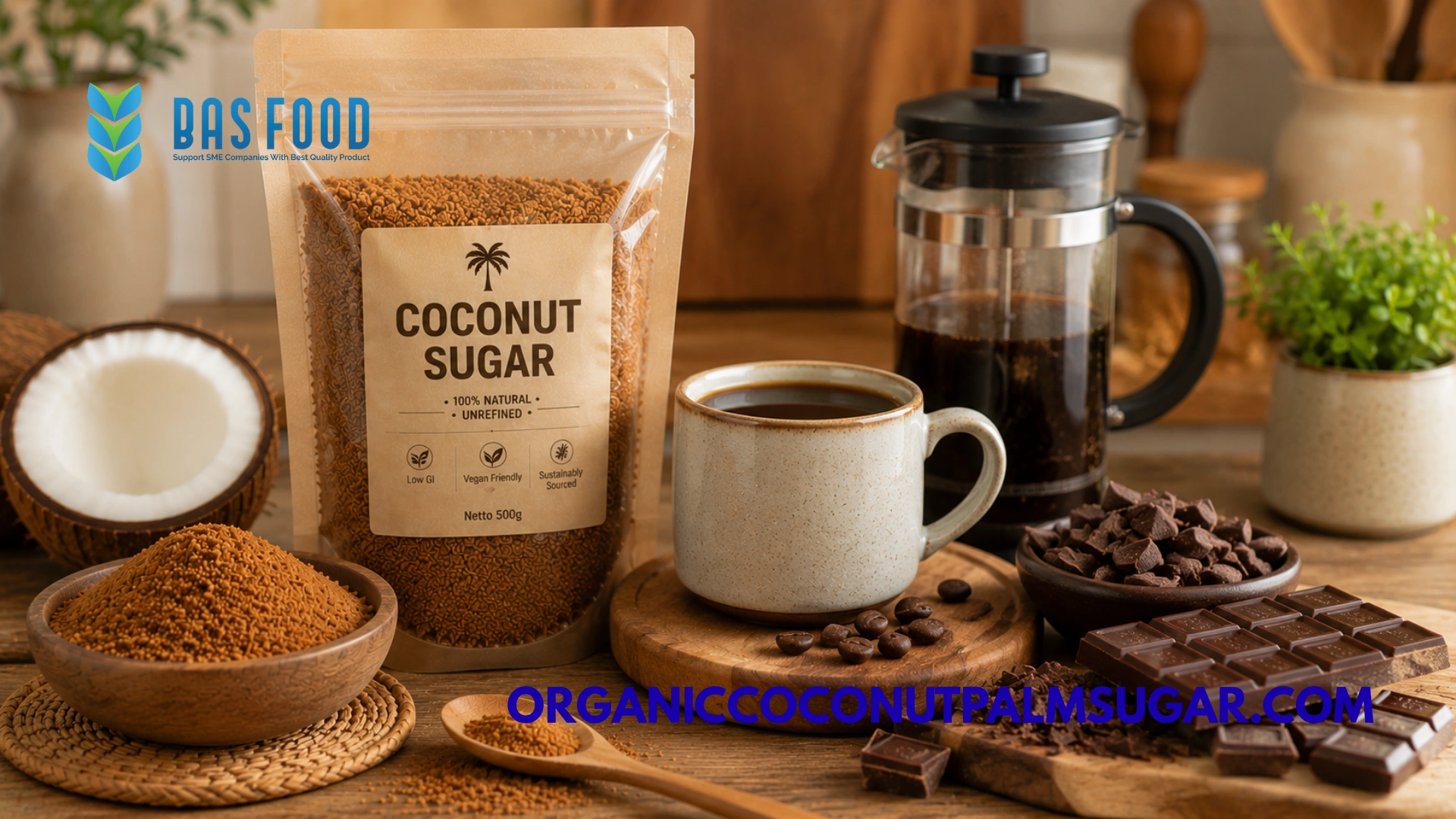
Why Coconut Sugar Is Gaining Popularity in Confectionery
Consumer preferences have shifted toward foods made with recognizable and minimally processed ingredients. This trend has encouraged confectionery brands to rethink the sweeteners they use.
Coconut sugar has become increasingly popular because it delivers natural sweetness together with a rich flavor profile. Instead of simply adding sweetness, it contributes subtle caramel notes that enhance many confectionery products.
Manufacturers also appreciate its versatility. Coconut sugar is available in granulated, powdered, block, syrup, and liquid forms, making it suitable for different production methods.
As premium confectionery continues to grow worldwide, coconut sugar offers manufacturers an opportunity to create products with a distinctive taste while responding to changing consumer expectations.
What Makes Coconut Sugar Ideal for Confectionery?
Every confectionery product depends on precise ingredient performance. The sweetener influences taste, texture, appearance, and processing behavior.
Coconut sugar performs well because it combines balanced sweetness with consistent functionality. Its pleasant caramel flavor complements chocolate, nuts, fruits, vanilla, spices, coffee, and dairy ingredients.
Unlike highly refined sweeteners that contribute mainly sweetness, coconut sugar adds depth to the overall flavor profile.
Manufacturers can also choose different particle sizes based on production requirements. Fine granules dissolve quickly, while coarser granules may provide additional texture in specialty products.
This flexibility makes coconut sugar suitable for both artisan confectioners and large-scale industrial manufacturers.
Coconut Sugar in Candy Production
One of the fastest-growing applications is candy production.
Manufacturers use coconut sugar in many confectionery products, including:
- Hard candies
- Soft candies
- Caramels
- Toffees
- Gummies
- Chewy sweets
- Nougat
- Fudge
- Fruit candies
- Premium confectionery
Its balanced sweetness creates a pleasant taste without overwhelming other ingredients.
Depending on the recipe, coconut sugar can also contribute a richer color and a more natural flavor profile.
Many premium candy brands use coconut sugar to differentiate their products from conventional confectionery.
As consumers continue seeking unique taste experiences, coconut sugar helps manufacturers develop products that feel both familiar and innovative.
Chocolate Manufacturing Benefits from Coconut Sugar
Chocolate manufacturing requires careful ingredient selection because every component affects flavor and texture.
Coconut sugar pairs exceptionally well with cocoa due to its mild caramel notes.
Dark chocolate benefits from added flavor complexity without masking cocoa characteristics.
Milk chocolate gains a richer sweetness that complements dairy ingredients.
Plant-based chocolate products also perform well because coconut sugar works naturally with oat milk, almond milk, coconut milk, and other dairy alternatives.
Manufacturers produce many chocolate products using coconut sugar, including:
- Chocolate bars
- Chocolate chips
- Filled chocolates
- Chocolate coatings
- Truffles
- Drinking chocolate
- Chocolate spreads
Its versatility allows brands to create premium chocolate collections with distinctive flavor profiles.
Flavor Profile That Enhances Premium Confectionery
Flavor remains one of the strongest reasons manufacturers choose coconut sugar.
Rather than creating an intensely sweet taste, coconut sugar delivers gentle sweetness balanced by subtle caramel notes.
This flavor complements ingredients such as:
- Cocoa
- Vanilla
- Cinnamon
- Coffee
- Coconut
- Almonds
- Hazelnuts
- Cashews
- Dried fruits
- Sea salt
Because coconut sugar contributes flavor as well as sweetness, manufacturers often create products with greater complexity and depth.
Consumers frequently associate these flavor characteristics with premium, handcrafted confectionery.
Texture and Processing Advantages
Texture plays a critical role in confectionery quality.
Coconut sugar supports consistent ingredient distribution throughout production.
Fine granules dissolve efficiently during cooking, helping create smooth caramel, chocolate fillings, and soft confectionery.
Coarser particles may contribute unique texture in specialty candy applications.
Manufacturers can select particle sizes according to production equipment and finished product requirements.
Consistent particle size also improves automated production by supporting predictable ingredient flow.
Reliable processing contributes to stable product quality across multiple production batches.
Coconut Sugar Supports Product Innovation
The confectionery market changes constantly as consumers seek new flavors and premium experiences.
Manufacturers continue developing healthier-looking ingredient lists while introducing creative flavor combinations.
Coconut sugar supports innovation because it works well alongside ingredients including:
- Nuts
- Fruits
- Seeds
- Cocoa
- Coffee
- Matcha
- Coconut
- Plant-based ingredients
- Spices
It also adapts easily to artisan production as well as industrial manufacturing.
Its flexibility encourages manufacturers to expand product portfolios without dramatically changing production systems.
Quality Standards Matter for Confectionery Manufacturers
High-quality confectionery requires consistent raw materials.
Professional suppliers implement quality management systems that maintain product consistency throughout production.
Important quality factors include:
- Moisture content
- Particle size
- Flavor consistency
- Aroma
- Color uniformity
- Product cleanliness
- Food safety controls
- Packaging quality
Manufacturers should request technical specifications before commercial purchases.
Testing product samples under actual production conditions also helps verify compatibility with existing recipes.
Reliable quality reduces production variability while supporting customer satisfaction.
Packaging Solutions for International Buyers
Proper packaging protects coconut sugar throughout storage and transportation.
Professional exporters provide packaging options suitable for confectionery manufacturers of different sizes.
Common packaging choices include:
- Kraft paper bags
- Food-grade inner liners
- Bulk industrial bags
- Retail pouches
- Private label packaging
- OEM packaging
Moisture-resistant packaging helps preserve product quality during international shipping.
Customized packaging also improves warehouse efficiency and production handling.
Reliable export packaging reduces transportation risks while supporting consistent product performance.
Choosing the Right Palm Sugar Supplier
Selecting an experienced palm sugar supplier provides advantages for businesses purchasing multiple natural sweeteners.
Many exporters offer both palm sugar and coconut sugar, allowing buyers to simplify procurement through one reliable supplier.
Before selecting a supplier, businesses should evaluate:
- Manufacturing experience
- Export capability
- Production capacity
- Quality control systems
- Packaging flexibility
- Technical support
- OEM manufacturing
- Private label services
Strong supplier relationships improve communication, planning, and long-term sourcing reliability.
Experienced suppliers also help buyers choose specifications that best match confectionery production requirements.
Why Buyers Trust a Coconut Sugar Supplier Indonesia
Indonesia is one of the world’s leading producers of coconut sugar thanks to its abundant coconut plantations and generations of experienced farmers.
Modern Indonesian manufacturers combine traditional sap harvesting with advanced processing technology to produce export-quality coconut sugar.
A trusted coconut sugar supplier Indonesia typically provides:
- Consistent production quality
- Multiple particle size options
- Customized packaging
- OEM manufacturing
- Private label services
- Export documentation
- Flexible production schedules
Indonesia’s well-established export infrastructure enables manufacturers to serve customers across Europe, North America, Asia, Africa, and the Middle East.
These capabilities make Indonesia one of the preferred sourcing destinations for premium confectionery ingredients.
Building Strong Supplier Partnerships
Successful confectionery production depends on more than choosing high-quality ingredients.
Manufacturers should establish long-term partnerships with suppliers that communicate clearly, maintain consistent quality, and understand international trade requirements.
Regular discussions about product specifications, production schedules, packaging improvements, and future demand help strengthen supply chain performance.
Reliable suppliers become strategic business partners who contribute to product development and operational efficiency.
These relationships support sustainable growth while reducing sourcing risks over time.
Conclusion
The growing popularity of coconut sugar confectionery reflects the confectionery industry’s increasing demand for natural ingredients, premium flavor, and flexible manufacturing solutions. From candy production to chocolate manufacturing, coconut sugar provides balanced sweetness, gentle caramel notes, and dependable performance across a wide range of confectionery applications.
Its versatility allows manufacturers to create premium candies, chocolates, caramels, fudges, and innovative snack products that meet changing consumer expectations while maintaining production efficiency.
By partnering with an experienced palm sugar supplier or trusted coconut sugar supplier Indonesia, importers and confectionery manufacturers gain access to consistent quality, customized specifications, professional export support, and dependable long-term supply. As global demand for premium confectionery continues to grow, coconut sugar remains an outstanding ingredient for businesses seeking innovation, quality, and sustainable sourcing.