For food manufacturers, distributors, and international buyers, sourcing ingredients is about more than finding the right product at the right price. A dependable supply chain also needs consistent quality, clear communication, suitable packaging, and reliable delivery planning. These factors become especially important when purchasing ingredients in bulk for ongoing production.
Coconut sugar syrup is gaining attention as a liquid sweetener for beverages, bakery products, sauces, desserts, and other food applications. Its distinctive caramel-like flavor and liquid form make it useful for manufacturers looking for alternatives to conventional liquid sweeteners. However, businesses need a clear sourcing strategy to keep production running without unnecessary delays.
Understanding coconut sugar syrup supply can help buyers make better purchasing decisions. From evaluating suppliers to planning inventory, managing orders, and preparing for international shipping, every step contributes to a more stable supply chain. This guide explains what B2B buyers should consider when sourcing coconut sugar syrup from Indonesia and how to build a practical long-term procurement strategy.
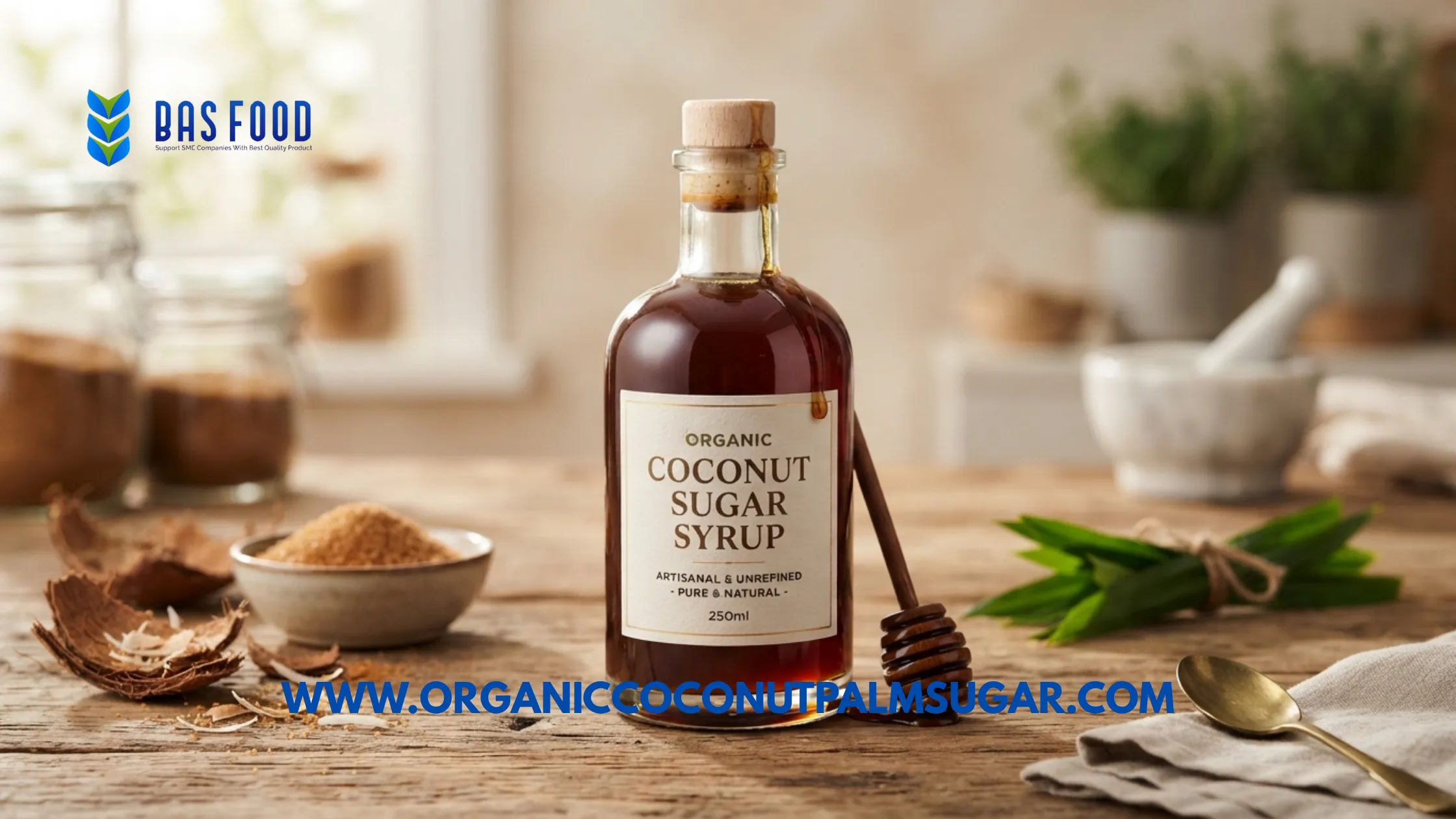
Understanding Coconut Sugar Syrup and Its Market Potential
Coconut sugar syrup is a liquid sweetener produced by concentrating sap collected from coconut palm flowers. During production, the sap undergoes heating and concentration until it reaches the desired consistency. The resulting syrup contains naturally occurring sugars and develops a characteristic sweet flavor that may include caramel-like or toasted notes.
Unlike granulated or block coconut sugar, syrup is already in liquid form. This can make it easier to incorporate into certain manufacturing processes, especially when a recipe requires a liquid sweetener. Depending on its concentration and viscosity, manufacturers may add it directly to mixing tanks, beverage formulations, sauces, and dessert preparations.
The product can serve several market segments, including:
- Beverage manufacturers
- Bakery and confectionery producers
- Dessert and ice cream businesses
- Sauce and condiment manufacturers
- Food ingredient distributors
- Retailers and specialty food brands
As food businesses explore different sweetener options, coconut sugar syrup can offer a distinct flavor profile and a practical liquid format. Nevertheless, its suitability depends on the product formulation, technical specifications, and intended market. Buyers should evaluate the actual product rather than relying only on general descriptions.
Why Reliable Coconut Sugar Syrup Supply Matters
A business may find a suitable coconut sugar syrup product, but that is only the beginning. Manufacturers also need confidence that the supplier can communicate clearly, manage orders, and provide the information required for purchasing and production decisions.
An unreliable ingredient supply can affect production schedules, inventory levels, and customer commitments. For example, if a manufacturer runs out of a key sweetener, it may need to delay production or adjust its formulation. These changes can increase operating costs and create problems for downstream customers.
A dependable supply arrangement helps businesses plan purchasing activities more effectively. It also allows procurement teams to coordinate ingredient orders with production schedules, warehouse capacity, and sales forecasts.
There are several reasons why supply reliability matters:
- Production stability: Manufacturers need ingredients available when production starts.
- Consistent product quality: Buyers need specifications that remain aligned with agreed requirements.
- Inventory control: Planned purchasing helps reduce unnecessary stock and unexpected shortages.
- Cost management: Better order planning can help businesses manage freight, storage, and procurement expenses.
- Customer commitments: A more predictable supply chain supports realistic delivery schedules for finished products.
Therefore, coconut sugar syrup sourcing should be treated as an ongoing business process rather than a one-time transaction.
Production Planning: Match Ingredient Supply with Manufacturing Needs
Good production planning starts with understanding how much coconut sugar syrup a business actually needs. Manufacturers should review their production targets, recipe requirements, ingredient usage, and expected demand before placing orders.
For example, a beverage manufacturer may use coconut sugar syrup in several product variations. Each formulation may require a different amount of syrup depending on the desired sweetness and flavor. By calculating expected consumption for each product, the purchasing team can estimate its monthly or quarterly requirements.
However, buyers should consider more than the volume used in the recipe. They should also account for production losses, product testing, changes in demand, and inventory held as a safety buffer. These factors can affect the quantity required for each purchasing cycle.
A practical production planning process includes:
- Estimate finished product demand. Use sales forecasts and confirmed customer orders to set production targets.
- Calculate ingredient consumption. Determine the amount of coconut sugar syrup required for each production batch.
- Review existing inventory. Check available stock and expected usage before placing a new order.
- Set purchasing schedules. Align order timing with supplier lead times and planned production dates.
- Allow for changes. Include reasonable flexibility for demand fluctuations and unexpected delays.
Production planning should also account for syrup concentration. A syrup with a different Brix level may contribute a different amount of soluble solids to a formulation. As a result, manufacturers should use the agreed product specifications when calculating ingredient requirements.
By connecting production planning with purchasing schedules, businesses can make more informed decisions about order quantities and delivery timing.
Bulk Ingredient Procurement: Buying in the Right Quantity
For many manufacturers and distributors, purchasing coconut sugar syrup in bulk can support regular production and reduce the need for frequent orders. However, bulk procurement requires careful planning. A large order is not automatically more cost-effective if the business cannot store or use the product within its planned period.
Before negotiating a bulk purchase, buyers should understand their average consumption, storage capacity, cash flow, and expected demand. They should also compare the total procurement cost rather than focusing only on the quoted price per kilogram.
Important cost factors include:
- Product price and agreed specifications
- Order volume and packaging format
- Inland transportation and export freight
- Import duties and destination-country charges
- Warehousing and handling costs
- Product testing and quality inspection
- Inventory financing and stock management
Packaging also plays an important role in bulk ingredient procurement. Depending on the supplier’s available formats and the buyer’s requirements, coconut sugar syrup may be packed in bottles, jerry cans, drums, or larger food-grade containers.
Each format has different handling and storage implications. Smaller containers may suit distributors or businesses with lower usage, while larger containers may be more practical for manufacturers with suitable storage and transfer equipment. Buyers should confirm the packaging material, net weight, closure system, and compatibility with the product.
It is also important to check whether the receiving facility can handle the selected packaging. For example, a manufacturer purchasing drums should have a suitable unloading and transfer process. Planning these details before shipment can prevent unnecessary handling problems after the goods arrive.
Supplier Evaluation: What Should Buyers Check?
Choosing the right coconut sugar supplier is one of the most important parts of building a stable supply chain. A supplier should be able to explain the product clearly and provide relevant information to support purchasing, quality control, and import procedures.
However, buyers should avoid selecting suppliers based only on price or promotional claims. A low quotation may not reflect the full cost of the product, particularly if specifications, packaging, or delivery arrangements differ.
Before entering a business relationship, evaluate the supplier using several practical criteria.
Product Information and Specifications
Ask for a product specification sheet that identifies the raw material, ingredient declaration, physical characteristics, and relevant quality parameters. For coconut sugar syrup, useful information may include Brix, viscosity, color, moisture content, and other parameters agreed upon by the buyer and supplier.
Remember that Brix measures soluble solids. It does not directly measure water activity or independently confirm product safety and shelf life. If these factors are important to your application, request the relevant test results.
Sample Evaluation
A product sample allows your technical team to assess the syrup before committing to a bulk order. Test it in the actual formulation whenever possible, rather than judging it only by appearance or taste.
Evaluate sweetness, aroma, flavor, color, viscosity, and mixing performance. If the product will be used in a beverage or sauce, check how it behaves after mixing with the other ingredients.
Communication and Order Management
Clear communication is essential for international procurement. Buyers should discuss order confirmation, product specifications, packaging, production schedules, lead times, and shipping arrangements before finalizing a purchase.
A supplier that provides clear and consistent information makes it easier for procurement teams to coordinate their activities. It also helps both parties manage expectations when production or shipping conditions change.
Supply Continuity: Preventing Unexpected Shortages
Supply continuity means maintaining access to the ingredients required for ongoing business operations. For food manufacturers, this involves more than keeping a large quantity of stock. It requires coordination between purchasing, production, suppliers, and logistics partners.
One useful approach is to establish a purchasing schedule based on actual consumption. Instead of waiting until inventory becomes critically low, businesses can monitor stock levels and place orders early enough to account for supplier lead times and shipping schedules.
A simple inventory planning system can track:
- Current stock levels
- Average daily or monthly consumption
- Confirmed purchase orders
- Expected arrival dates
- Supplier production lead times
- Safety stock requirements
For example, if a manufacturer uses coconut sugar syrup regularly, the procurement team can set a reorder point based on expected consumption during the replenishment period. The exact safety stock level should reflect demand variation, supplier lead times, and the business’s tolerance for supply interruptions.
It is also useful to maintain open communication with suppliers. Buyers should share realistic demand forecasts where possible and inform suppliers about significant changes in order volume. In return, they should request updates about production schedules and shipment progress.
For businesses with critical ingredient requirements, evaluating alternative supply arrangements may also be worthwhile. However, any alternative supplier should undergo the same product and quality evaluation process. Switching suppliers without checking specifications can affect the final product.
Quality Consistency Across Multiple Orders
Maintaining quality across repeat orders is essential for manufacturers that sell products under established recipes and brand standards. Even small differences in sweetness, color, or viscosity may affect the finished product.
Coconut sugar syrup characteristics can vary due to differences in coconut sap, collection conditions, concentration methods, and processing practices. Therefore, buyers should agree on clear specifications before beginning regular procurement.
A practical quality agreement should identify the parameters that matter for the intended application. For example, a beverage manufacturer may focus on sweetness, flavor, color, Brix, and mixing performance. A sauce manufacturer may also pay close attention to viscosity and the syrup’s behavior during heating.
Buyers should consider the following steps:
- Approve a representative product sample.
- Agree on the product specification and acceptable tolerances.
- Identify the quality checks required for each shipment or batch.
- Request relevant test reports where applicable.
- Document and communicate any quality concerns.
- Review changes before accepting revised product specifications.
Consistency does not mean every natural ingredient will have absolutely identical characteristics. Instead, it means defining acceptable product requirements and checking whether supplied batches meet the agreed standards.
This process supports better quality control and helps reduce unexpected formulation changes.
Export Packaging and International Logistics
For international buyers, coconut sugar syrup supply also depends on suitable export packaging and transportation arrangements. Since syrup is a liquid food ingredient, packaging must prevent leakage, protect the product from contamination, and withstand normal handling during transportation.
The appropriate packaging format depends on order volume, product characteristics, destination requirements, and the buyer’s receiving facilities. Before shipment, importers should confirm container suitability, food-contact compliance, closure integrity, labeling, and net weight.
Transportation planning should also consider the shipment route, transit time, loading conditions, and destination handling procedures. Buyers and suppliers should discuss these details before the goods leave the origin facility.
Export documentation is another important part of the process. Depending on the destination and transaction, documents may include:
- Commercial invoice
- Packing list
- Bill of lading
- Certificate of origin, where required
- Product specification or quality documents
- Health, food safety, or other certificates required by the importing market
Import regulations vary by country and product classification. Therefore, buyers should confirm the applicable requirements with their customs broker or relevant authorities before shipment.
Clear coordination between the supplier, freight forwarder, importer, and customs broker can help reduce documentation errors and avoid preventable delays.
Building a Long-Term Coconut Sugar Syrup Supply Partnership
A long-term supplier relationship can make procurement easier because both parties become more familiar with product requirements, order patterns, and communication procedures. However, a successful partnership needs clear expectations from the beginning.
Buyers should discuss forecast volumes, order frequency, product specifications, packaging preferences, payment terms, and delivery arrangements. They should also clarify how both parties will handle changes in demand, quality concerns, or shipment delays.
It is useful to review supplier performance regularly. Procurement teams can monitor whether orders arrive according to agreed schedules, whether supplied products meet specifications, and whether communication remains clear throughout the process.
For growing businesses, supplier discussions should also consider future demand. If production is expected to increase, buyers should communicate their plans early. This gives both parties an opportunity to assess whether the proposed order schedule and volume are practical.
A reliable partnership is built through consistent performance, accurate information, and realistic commitments. Neither side should make assumptions about production capacity, availability, or delivery dates without confirmation.
Sourcing Coconut Sugar Syrup from Indonesia
Indonesia is known for its coconut resources and established coconut-based food ingredient sector. For international buyers, sourcing from Indonesia can provide an opportunity to explore coconut-derived ingredients for food manufacturing, distribution, and retail markets.
However, buyers should still evaluate each product and supplier individually. Confirm the raw material, production details, specifications, packaging options, and export arrangements before making a purchasing decision.
CV Bonafide Anugerah Sentosa is an Indonesian exporter of coconut sugar and other coconut derivative products. The company also supplies spices, fishery products, and coffee. Businesses interested in Indonesian coconut-based ingredients can contact the company to discuss their sourcing requirements and confirm relevant product availability.
As a coconut sugar exporter and coconut sugar supplier, CV Bonafide Anugerah Sentosa can be a point of contact for businesses exploring Indonesian coconut sugar products. Buyers interested in coconut sugar syrup should confirm the available product form, specifications, packaging, order requirements, and shipping arrangements directly with the company.
When approaching a supplier, prepare a clear inquiry that includes your intended application, estimated order volume, preferred packaging, destination country, and required product specifications. This information helps both parties assess whether the proposed supply arrangement matches the buyer’s needs.
Final Thoughts: Make Supply Planning Part of Your Growth Strategy
A dependable coconut sugar syrup supply is an important part of successful ingredient procurement. For food manufacturers and distributors, the right sourcing strategy connects product quality with production planning, bulk ingredient procurement, inventory control, and international logistics.
Start by defining your product requirements and evaluating samples. Then, agree on specifications, packaging, order quantities, and delivery expectations with your supplier. Finally, monitor inventory and supplier performance to support supply continuity as your business grows.
Coconut sugar syrup can be a useful ingredient across different food applications, but successful sourcing depends on more than the product itself. By planning ahead and working with a supplier that communicates clearly, businesses can build a more predictable procurement process and support their long-term production needs.