As consumers become more aware of the nutritional content of the foods they eat, questions about sweeteners continue to grow. People are not only interested in where ingredients come from but also in how they contribute to a balanced diet. One of the most common questions today is about coconut sugar calories and how they compare with other sweeteners.
Coconut sugar has become a popular ingredient in bakery products, beverages, confectionery, sauces, dairy products, and many other food applications. Produced from the sap of coconut palm blossoms, it is valued for its pleasant caramel flavor, natural origin, and versatility. However, like every caloric sweetener, coconut sugar contributes energy to the diet. Understanding the calories in coconut sugar helps food manufacturers prepare accurate labels, assists importers in providing reliable product information, and enables consumers to make informed choices.
For businesses operating in international markets, presenting accurate sugar nutrition facts is essential. Nutrition labeling regulations vary by country, but transparency and factual communication remain universal expectations. This guide explains how coconut sugar is produced, explores its calorie content, discusses its nutritional profile, and provides practical sourcing insights for global buyers.
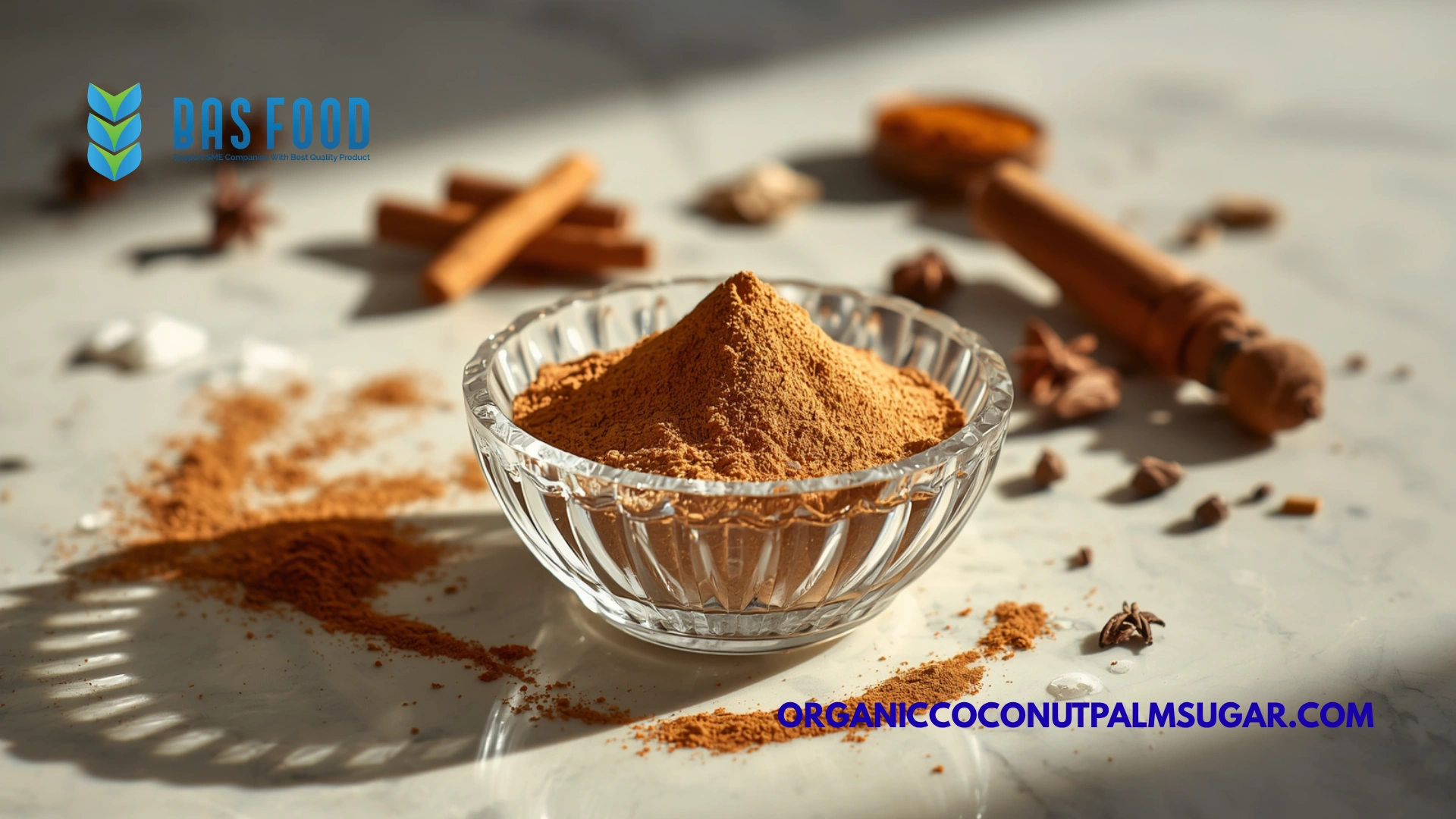
What Is Coconut Sugar?
Before discussing coconut sugar calories, it is helpful to understand how coconut sugar is made.
Coconut sugar is produced from the fresh sap collected from the flower blossoms of coconut palm trees. Skilled farmers tap the blossoms and collect the naturally sweet sap before fermentation begins.
The sap is then filtered and gently heated to evaporate water. As moisture decreases, the concentrated syrup gradually crystallizes into coconut sugar.
This relatively simple production process gives coconut sugar its characteristic caramel flavor and makes it a popular ingredient in both traditional and modern food products.
Manufacturers commonly produce coconut sugar in granulated, powdered, block, syrup, and liquid forms depending on customer requirements.
Understanding Coconut Sugar Calories
The term coconut sugar calories refers to the amount of energy coconut sugar provides when consumed.
Like other nutritive sweeteners, coconut sugar contains carbohydrates, which contribute calories to the diet. These carbohydrates originate naturally from the coconut blossom sap used during production.
Because coconut sugar is an added sweetener, it should be viewed as a source of dietary energy rather than a calorie-free ingredient.
Although nutritional values may vary slightly depending on the manufacturer and product specifications, coconut sugar generally provides a calorie content comparable to many traditional caloric sweeteners on a per-serving basis.
For exact nutritional values, manufacturers and importers should rely on laboratory analysis and the product’s official nutrition information.
Calories in Coconut Sugar and Why They Matter
Understanding the calories in coconut sugar is important for several reasons.
Nutrition Labeling
Food manufacturers must provide accurate nutritional information according to local regulations.
Reliable calorie information supports compliant packaging and consumer transparency.
Product Development
Recipe developers consider calorie contribution when creating bakery products, beverages, desserts, and snacks.
Consumer Education
Consumers increasingly compare nutrition labels before purchasing food products.
Providing accurate information helps them make informed decisions.
International Trade
Importers often request nutritional documentation to support product registration and regulatory compliance.
These practical considerations make accurate calorie information valuable throughout the food supply chain.
Understanding Sugar Nutrition Facts
When discussing sugar nutrition facts, it is important to understand that calories represent only one part of the nutritional profile.
Nutrition labels may also include information such as:
- Total carbohydrates
- Total sugars
- Serving size
- Energy value
- Other nutrients where applicable
Professional manufacturers develop nutrition panels using laboratory analysis or approved calculation methods that comply with destination-market regulations.
Because labeling requirements vary internationally, exporters often prepare customized documentation for different countries.
Accurate nutritional information supports both regulatory compliance and consumer confidence.
How Coconut Sugar Is Used in Food Manufacturing
Coconut sugar’s pleasant flavor and versatile functionality make it suitable for many commercial applications.
Bakery Products
Cookies, cakes, muffins, brownies, breads, and pastries often use coconut sugar.
Its caramel notes contribute both sweetness and color.
Beverages
Coffee drinks, tea, smoothies, flavored beverages, and nutritional drinks benefit from coconut sugar’s balanced sweetness.
Confectionery
Chocolate, candies, dessert fillings, and gourmet sweets frequently include coconut sugar.
Sauces and Condiments
Marinades, barbecue sauces, salad dressings, and seasoning blends also use coconut sugar.
Dairy Products
Ice cream, yogurt, frozen desserts, and flavored dairy products benefit from its unique flavor profile.
Factors That Influence Nutritional Information
Although the basic composition of coconut sugar remains consistent, nutritional documentation may vary slightly depending on several factors.
Production Methods
Different manufacturing practices may produce small variations in moisture content.
Product Format
Powder, granulated, block, syrup, and liquid products may have different serving recommendations.
Laboratory Analysis
Manufacturers rely on laboratory testing to verify nutritional values.
Local Labeling Regulations
Different countries require different nutrition label formats and calculation methods.
Professional exporters understand these requirements and prepare documentation accordingly.
Responsible Communication About Coconut Sugar Calories
Food businesses should present accurate nutritional information without exaggerating product benefits.
Although coconut sugar comes from a natural plant source, it remains a caloric sweetener.
Manufacturers should avoid implying that coconut sugar is calorie-free or suitable for unrestricted consumption.
Instead, businesses can communicate factual information regarding:
- Plant-derived origin
- Traditional production process
- Pleasant caramel flavor
- Versatile food applications
- Verified nutritional information
Balanced communication strengthens consumer confidence while supporting regulatory compliance.
Choosing the Right Coconut Sugar Supplier
Reliable suppliers contribute more than consistent product quality.
Professional exporters also provide:
- Product specifications
- Nutrition documentation
- Certificates of analysis
- Food safety documentation
- Export-ready packaging
- Quality control records
- Responsive customer service
Importers should evaluate supplier capabilities before establishing long-term sourcing relationships.
Strong partnerships support consistent product quality and smooth international trade.
Common Misunderstandings About Coconut Sugar Calories
Several misconceptions continue appearing in online discussions.
One common misunderstanding is that coconut sugar contains no calories because it is naturally derived.
In reality, coconut sugar contributes calories through its naturally occurring carbohydrates.
Another misconception is that all coconut sugar products contain identical nutritional values.
Actual nutrition information may vary slightly depending on product specifications and laboratory analysis.
Consumers should always refer to the official nutrition label provided by the manufacturer.
Frequently Asked Questions
What are coconut sugar calories?
Coconut sugar calories refer to the energy provided by coconut sugar when consumed.
Why do calories in coconut sugar matter?
They support nutrition labeling, product development, regulatory compliance, and informed consumer choices.
Are coconut sugar calories different from other sweeteners?
Coconut sugar generally provides a calorie contribution similar to many other nutritive sweeteners on a comparable serving basis.
Where can buyers find accurate nutrition information?
Manufacturers provide verified nutrition documentation supported by laboratory analysis or approved calculation methods.
Why should importers request nutrition documents?
Nutrition documentation supports food registration, labeling compliance, and customer communication in international markets.
Conclusion
Understanding coconut sugar calories helps food manufacturers, importers, distributors, and retailers communicate accurate nutritional information while meeting international food labeling requirements. Like other nutritive sweeteners, coconut sugar contributes energy through its naturally occurring carbohydrates, making knowledge of the calories in coconut sugar essential for responsible product development and consumer education.
Rather than focusing only on calorie content, businesses should consider the complete sugar nutrition facts, including serving size, carbohydrate content, product specifications, and applicable regulatory requirements. Transparent communication strengthens customer confidence while supporting compliance across global markets.
For companies sourcing premium coconut sugar, working with an experienced exporter provides access to consistent product quality, verified nutrition documentation, food safety records, and export-ready packaging. As demand for naturally sourced ingredients continues to grow worldwide, reliable nutritional information remains an important part of successful international food trade.