Exporting coconut sugar syrup involves more than preparing the product and arranging international shipping. Exporters and importers must also prepare the right documents to support customs clearance, confirm shipment details, and meet the requirements of the destination country. Even a small mistake in a document can cause delays, additional costs, or questions from customs authorities. For international buyers, understanding coconut sugar syrup export documents is an important part of planning a successful import. Documents such as the commercial invoice, packing list, and certificate of origin help explain what is being shipped, where it comes from, and how the transaction is structured. Depending on the destination market, additional food-related documents may also be necessary.
This guide explains the main documents used when exporting coconut sugar syrup from Indonesia. It also covers the responsibilities of exporters and importers, common documentation mistakes, and practical steps for preparing a shipment more smoothly.
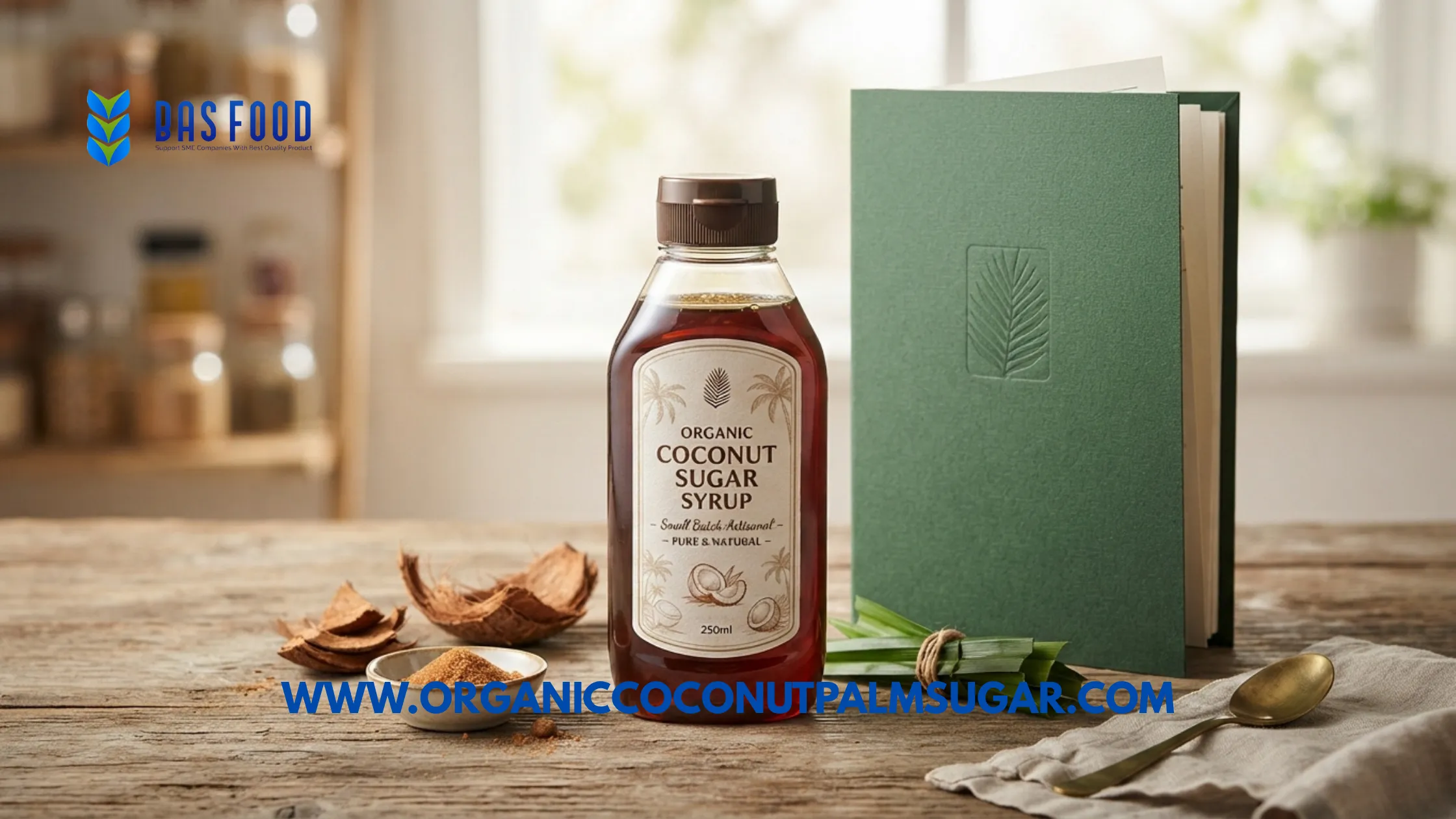
Why Export Documents Matter for Coconut Sugar Syrup
Coconut sugar syrup is a liquid food ingredient made by concentrating sap collected from coconut palm flowers. It can be used in beverages, sauces, bakery products, desserts, and other food applications. Because it is a food product shipped across international borders, its export process may involve customs procedures as well as food import requirements.
Export documents provide information about the product, seller, buyer, shipment, and country of origin. Customs authorities use these documents to review declarations, assess applicable duties and taxes, and determine whether the shipment meets import requirements. Importers may also need them for internal purchasing records, payment processing, and inventory management.
Preparing accurate documentation benefits both sides of a transaction. Exporters can reduce the risk of document corrections, while importers can prepare for customs clearance and arrange delivery after the goods arrive.
However, there is no single document checklist that applies to every country. Requirements depend on the destination, product classification, shipment method, buyer’s import status, and applicable food regulations. Therefore, exporters and importers should confirm the requirements before shipment.
Commercial Invoice: The Main Record of the Export Transaction
The commercial invoice is one of the most important documents in an international sale. It records the transaction between the exporter and importer and provides key information about the goods being shipped.
For a coconut sugar syrup shipment, the commercial invoice generally includes:
- Exporter’s company name and address
- Importer’s company name and address
- Invoice number and date
- Product description
- Quantity and unit of measurement
- Unit price and total value
- Currency used in the transaction
- Country of origin
- Delivery terms or Incoterms
- Payment terms, where applicable
The product description should be clear enough to identify the goods. For example, the invoice might describe the product as “Coconut Sugar Syrup” and include additional agreed details such as packaging type or net weight.
Avoid using descriptions that are too general, such as “food product” or “sweetener.” A clear description helps customs authorities and other parties understand what the shipment contains.
The declared value must also match the commercial agreement and relevant supporting records. If the invoice states a different quantity or value from the packing list or customs declaration, the importer may need to explain the discrepancy.
Before issuing the final invoice, both parties should check the buyer’s company details, product description, currency, quantity, and agreed delivery terms. These simple checks can prevent unnecessary corrections later.
Packing List: Explaining How the Goods Are Packed
While the commercial invoice focuses on the transaction, the packing list explains how the goods are arranged for transportation. It helps freight forwarders, customs officers, warehouse teams, and importers identify the packages included in a shipment.
For coconut sugar syrup, the packing list should provide information that reflects the actual packaging and loading arrangement. Depending on the shipment, it may include:
- Exporter and importer details
- Packing list number and date
- Product description
- Number of packages
- Packaging type
- Net weight
- Gross weight
- Package dimensions, where required
- Total shipment quantity
- Marks and numbers on packages
For example, if a shipment contains coconut sugar syrup packed in food-grade drums, the packing list should state the number of drums and the relevant weight information. If the product is packed in jerry cans or other containers, the document should reflect that arrangement instead.
Net weight refers to the weight of the product itself, while gross weight includes the product and its packaging. These figures should be calculated carefully because they may be used for shipping arrangements, freight calculations, and customs checks.
The packing list should also match the commercial invoice in terms of product description and total quantity. Differences between these documents can create confusion during customs clearance or cargo inspection.
Before shipment, the exporter should compare the final packing list with the actual packed goods. This is especially important when the order contains multiple packaging sizes or product variations.
Certificate of Origin: Confirming Where the Product Comes From
A certificate of origin is a document that certifies the country in which goods originate, according to the applicable rules of origin. For coconut sugar syrup exported from Indonesia, it may be used to support the declaration of Indonesian origin when the product meets the relevant origin requirements.
This document can be important for customs purposes and may help an importer claim preferential tariff treatment under a trade agreement, if the shipment qualifies and the correct origin rules and procedures are followed.
However, not every shipment automatically requires the same type of certificate of origin. Some destinations may require a specific form, while others may accept different origin evidence or apply different procedures. The buyer should check the import country’s requirements before the exporter prepares the document.
For Indonesian exports, the applicable certificate or origin declaration process depends on the destination and the trade arrangement being used. Exporters should confirm the correct procedure with the relevant issuing authority or authorized body.
Buyers should also understand that a certificate of origin does not automatically prove that a product is organic, certified sustainable, or compliant with every food safety standard. It confirms origin under the applicable rules, not every aspect of product quality.
Bill of Lading and Other Transport Documents
The bill of lading is a key transport document for sea freight. It is issued by the carrier or its agent and records important information about the cargo and transportation arrangement.
For coconut sugar syrup shipments, the bill of lading generally identifies the shipper, consignee, notify party, vessel, ports of loading and discharge, cargo description, package count, and relevant shipment details.
The bill of lading also serves important functions in the shipping process. Depending on its type and terms, it may act as a receipt for the goods, evidence of the contract of carriage, and a document of title. Buyers should understand which type of bill of lading is being issued and how it affects cargo release.
Common arrangements include:
- Original bill of lading: A negotiable or original document that may need to be presented according to its terms before cargo release.
- Sea waybill: A non-negotiable transport document that generally does not require presentation of an original for delivery.
- Telex release: A release instruction used in certain situations after the original bill of lading has been surrendered or otherwise handled according to the carrier’s procedure.
The exact process depends on the carrier, shipping arrangement, and transaction terms. Exporters and importers should agree on the required document handling before the vessel departs.
Other transport records may also be relevant, such as booking confirmations, shipping instructions, and arrival notices. These documents help coordinate cargo movement, although they do not all serve the same legal or customs purpose as a bill of lading.
Customs Documentation: Preparing for Export and Import Clearance
Customs documentation supports the formal declaration of goods when they cross international borders. Both exporters and importers need to understand their responsibilities because export clearance in Indonesia and import clearance in the destination country follow different procedures.
For Indonesian exports, the exporter or its appointed customs representative generally prepares the required export declaration and supporting information through the applicable customs process. The declaration must accurately identify the goods, quantity, value, and other required details.
On the import side, the buyer or its customs broker handles the destination country’s import declaration and supporting documents. These may include the commercial invoice, packing list, bill of lading, certificate of origin, and other documents required by local authorities.
One important point is product classification. Customs authorities use tariff classification systems, including HS codes, to identify goods and determine applicable duties, taxes, and regulatory requirements. Exporters should not guess the HS code based only on a product’s common name.
The correct classification should be confirmed based on the product’s composition, processing, intended use, and the importing country’s tariff schedule. Coconut sugar syrup may need careful classification because customs treatment depends on the product’s actual characteristics and applicable national rules.
Before shipment, buyers should work with their customs broker to confirm:
- The appropriate HS code and product description.
- Applicable import duties and taxes.
- Required permits or product registrations.
- Customs declaration procedures.
- Any additional documents needed for clearance.
This preparation helps reduce the risk of classification disputes, incorrect declarations, and unexpected import costs.
Food Safety and Product-Related Documents
Because coconut sugar syrup is intended for food use, customs documents may not be the only paperwork required. Some countries apply additional food safety, labeling, or import control rules to imported food ingredients.
Depending on the destination and product, importers may need documents such as:
- Product specification sheet
- Certificate of analysis (COA), where required or agreed
- Health certificate, if required by the destination authority
- Food safety or manufacturing documents, where applicable
- Ingredient declaration
- Allergen information, where relevant
- Shelf-life and storage information
- Label or packaging information
A product specification sheet describes the agreed characteristics of coconut sugar syrup. It may include color, flavor, Brix, viscosity, ingredient declaration, and other relevant parameters.
A certificate of analysis provides test results for a particular sample or batch. The parameters tested should match the buyer’s requirements and applicable regulations. For example, a buyer may request information about microbiological quality, moisture content, or other product characteristics.
It is important to distinguish between Brix, moisture content, and water activity. Brix indicates soluble solids, while moisture content measures the amount of water in the product. Water activity describes how available that water is for microbial growth. These measurements are not interchangeable.
Similarly, a COA does not automatically replace a health certificate or other official document when the importing country requires one. Buyers should confirm which documents must come from an authorized authority and which can be provided by the manufacturer or exporter.
Common Export Documentation Mistakes to Avoid
Even when exporters understand the required documents, small errors can still create problems. In many cases, delays happen because information differs between documents or because a required certificate was not arranged early enough.
One common mistake is using inconsistent product descriptions. For example, the commercial invoice may state “coconut sugar syrup,” while the packing list uses a vague description such as “liquid sweetener.” Although the descriptions may refer to the same goods, inconsistent wording can lead to additional questions.
Other common mistakes include:
- Incorrect buyer or consignee details
- Differences in quantity between the invoice and packing list
- Incorrect net or gross weight
- Missing package numbers or shipping marks
- Incorrect HS code
- Inaccurate country-of-origin information
- Missing signatures or required declarations
- Using an incorrect certificate format
- Preparing documents after the required deadline
Another issue involves shipment changes. If the packaging, quantity, vessel, or consignee changes after documents have been prepared, the relevant records may need to be updated. Exporters should communicate these changes promptly to the freight forwarder and importer.
A useful way to prevent errors is to create a document checklist for every shipment. The exporter can review the invoice, packing list, origin documents, customs declaration, and transport details before submitting or issuing the final versions.
Working with an Indonesian Coconut Sugar Exporter
Choosing a supplier involves more than checking product quality and price. International buyers should also consider whether the exporter can provide clear product information and coordinate the documentation needed for the agreed shipment.
CV Bonafide Anugerah Sentosa is an Indonesian exporter of coconut sugar and other coconut derivative products. The company also supplies spices, fishery products, and coffee. Businesses interested in Indonesian coconut-based ingredients can contact the company to discuss their sourcing requirements.
As a coconut sugar exporter and coconut sugar supplier, CV Bonafide Anugerah Sentosa can be a point of contact for buyers exploring coconut sugar products from Indonesia. Buyers interested in coconut sugar syrup should confirm product availability, specifications, packaging, order requirements, and export arrangements directly with the company.
When requesting a quotation, importers should provide useful details such as the destination country, estimated order volume, preferred packaging, product specifications, and expected shipping schedule. They should also identify any special documents required by their local authorities.
This early communication helps both parties understand the transaction and prepare the relevant paperwork before shipment.
Final Thoughts: Make Documentation Part of Your Export Strategy
Preparing coconut sugar syrup export documents is an essential part of international trade. The commercial invoice, packing list, certificate of origin, bill of lading, and customs documentation each serve a different purpose. Additional food-related documents may also be necessary, depending on the product and destination market.
The best approach is to confirm requirements before production and shipment are finalized. Exporters should prepare accurate commercial and shipping information, while importers should check local customs and food regulations with their brokers or relevant authorities.
With careful preparation, clear communication, and an organized document checklist, businesses can reduce avoidable errors and make coconut sugar syrup shipments easier to manage. For international buyers, working with an experienced and responsive supplier is an important part of building a reliable sourcing relationship.