Finding the right coconut sugar syrup supplier is an important step for food manufacturers, distributors, importers, and beverage businesses. Before placing a bulk order, buyers need to understand the product, check its quality, and make sure it meets their production needs. One practical way to do this is by requesting coconut sugar syrup samples.
A product sample allows buyers to evaluate the syrup before making a larger purchasing decision. It also gives suppliers an opportunity to demonstrate product consistency and understand the buyer’s requirements. In this guide, we explore how to request, evaluate, and use samples as part of a reliable sourcing process.
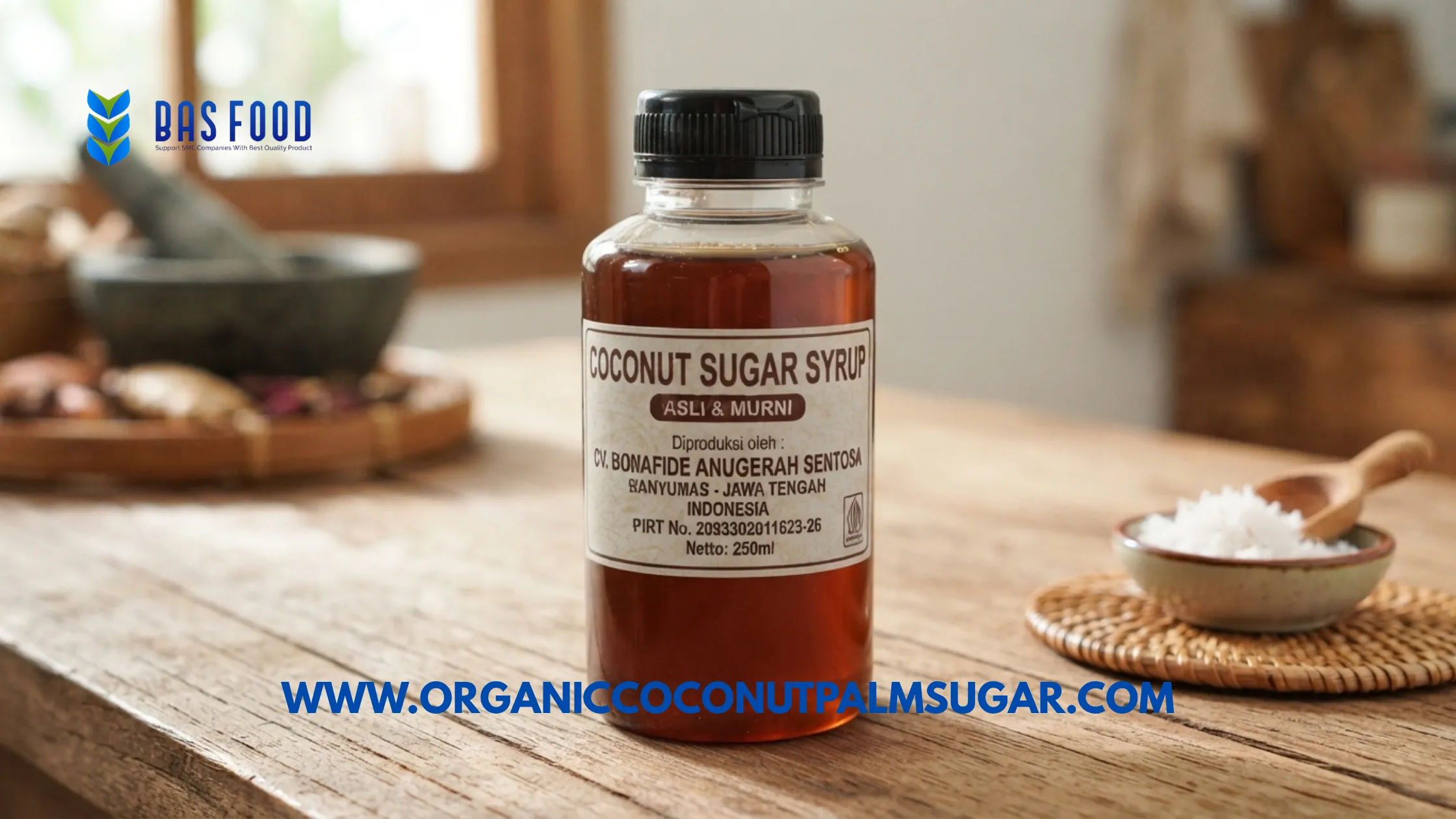
Why Request Coconut Sugar Syrup Samples Before Buying?
Buying ingredients in bulk involves more than comparing prices. A syrup may look suitable in a product description, but its actual color, aroma, sweetness, and texture can affect the final food or beverage product. Therefore, testing a sample helps buyers understand whether the ingredient matches their expectations.
For example, a beverage manufacturer may need a syrup that blends easily into coffee or tea. Meanwhile, a bakery may focus on sweetness, flavor, and performance during baking. By requesting coconut sugar syrup samples, each buyer can test the product in the same conditions used in their own production process.
Samples also help reduce uncertainty during supplier selection. Rather than relying only on product photographs or written specifications, buyers can examine the actual product and discuss any concerns directly with the supplier.
What Should Buyers Check During Product Sample Evaluation?
A good product sample evaluation should follow clear criteria. Start with the syrup’s appearance. Observe its color, clarity, and general consistency. Coconut sugar syrup can have a naturally brown appearance, but the exact shade may vary depending on the raw material and production process.
Next, evaluate the aroma and taste. Coconut sugar syrup generally has a sweet flavor with caramel-like notes, although its sensory profile can differ between products. Consider whether the taste works well with your intended application. For instance, a strong flavor may suit traditional beverages but may not fit every formulation.
Texture is another important factor. Check whether the syrup pours easily and whether it mixes well with other ingredients. If your business uses automated filling or dispensing equipment, you should also consider how the syrup behaves during handling.
Finally, record your findings. A simple evaluation sheet can help your purchasing and product development teams compare samples from different suppliers using the same criteria.
Syrup Quality Testing: Important Parameters to Consider
Sensory evaluation is useful, but it should not be the only part of the assessment. Syrup quality testing can provide additional information about the product’s physical and chemical properties. Depending on the application, buyers may want to check parameters such as Brix, pH, moisture-related characteristics, and viscosity.
Brix measures the concentration of soluble solids in a liquid. It can help buyers understand the syrup’s concentration, but it should not be treated as a direct measurement of water activity or microbial safety. Likewise, viscosity describes how easily a liquid flows and can change with temperature and composition.
Food manufacturers may also need microbiological testing and other safety checks based on their product category, destination market, and internal quality standards. Ask the supplier which test results or technical documents are available. If a particular parameter is essential, communicate the required method and acceptance range before ordering.
Most importantly, do not assume that every coconut sugar syrup has identical specifications. Buyers should evaluate the actual sample and request product-specific information before approving a supplier.
How to Request Samples from a Coconut Sugar Supplier
A clear sample request helps the supplier understand what your business needs. Start by introducing your company and explaining whether you are an importer, distributor, food manufacturer, or business owner. Then describe the intended application, such as beverages, bakery products, sauces, or confectionery.
You should also explain which product characteristics matter most. For example, mention your preferred flavor profile, color, viscosity, or Brix range if you already have defined requirements. If you are still developing your formulation, explain that you need a sample for initial product testing.
Before shipment, confirm practical details such as sample quantity, packaging, shipping arrangements, costs, and estimated delivery time. Also ask whether the sample represents the product that would be supplied in commercial orders. This point is important because a sample is most useful when it reflects the supplier’s regular production product.
Supplier Assessment: Look Beyond the Sample
A good sample is a positive sign, but it does not automatically prove that a supplier is suitable for long-term business. Supplier assessment should also consider communication, product information, consistency, and the supplier’s ability to understand your purchasing requirements.
First, check how clearly the supplier explains its product. A professional supplier should be able to discuss available specifications, packaging information, and relevant quality documents. If your business requires particular testing or export documentation, raise these needs early in the discussion.
Next, consider how the supplier handles questions and feedback. Responsive communication can make a difference when you need to clarify product details, coordinate shipments, or discuss future orders. You should also ask how the supplier manages product consistency between sample approval and bulk supply.
Finally, discuss commercial conditions before moving forward. Confirm minimum order quantities, pricing, payment terms, lead times, and shipping arrangements. These details help you determine whether the supplier fits your purchasing plan.
Using Coconut Sugar Syrup Samples in Real Applications
The best way to evaluate a sample is to test it in the product you intend to manufacture. For beverage businesses, try adding the syrup to coffee, tea, smoothies, or other drink formulations. Observe how it dissolves, how it affects the final color, and whether its sweetness matches the recipe.
For bakery and confectionery manufacturers, test the syrup in a small production batch. Coconut sugar syrup contains both sugar solids and water, so it may not replace dry sugar on a one-to-one basis. You may need to adjust the liquid content and other ingredients to maintain the desired texture.
Food manufacturers can also evaluate the syrup in sauces, dressings, and other prepared foods. Check its flavor contribution, flow behavior, and compatibility with the complete formulation. Keep test conditions consistent so that results can be compared fairly.
These practical trials help turn a simple sample review into useful product development information. They also make it easier to explain your requirements when discussing a commercial order with the supplier.
Choosing a Coconut Sugar Exporter for International Orders
For overseas buyers, choosing a coconut sugar exporter involves additional considerations. International sourcing requires attention to packaging, shipping, documentation, and destination-market requirements. A product that performs well in a sample test must also arrive in suitable condition after transportation.
Discuss packaging options with the supplier and confirm whether the materials are suitable for food contact and the intended shipping conditions. You should also ask about available export documents, product descriptions, and any certificates required by your importing country. Requirements can differ depending on the destination and product classification.
Shipping conditions deserve attention as well. Coconut sugar syrup is a liquid food ingredient, so buyers should consider packaging integrity, leakage prevention, handling, and temperature exposure. Any specific storage or shelf-life claims should be supported by product information and appropriate validation.
A reliable supplier should be willing to discuss these practical matters before the first commercial shipment. Clear communication at this stage can help prevent misunderstandings later.
CV Bonafide Anugerah Sentosa: Discuss Your Coconut Sugar Requirements
CV Bonafide Anugerah Sentosa is an Indonesian exporter of coconut sugar and other coconut-derived products. The company works with international buyers seeking Indonesian agricultural commodities for their business and sourcing needs.
If you are looking for a coconut sugar supplier, you can contact CV Bonafide Anugerah Sentosa to discuss your requirements and ask about relevant product options. Share your intended application, target specifications, packaging preferences, and estimated purchasing volume so the company can understand your needs.
If you are interested in coconut sugar syrup samples, confirm current sample availability and the applicable arrangements directly with the company. You should also discuss the product specifications and documentation needed for your market before proceeding with a larger order.
Make Sample Testing the First Step Toward Better Sourcing
Requesting samples is a practical way to make informed purchasing decisions. It allows buyers to check flavor, appearance, texture, and performance before committing to bulk orders. More importantly, it creates an opportunity to communicate expectations and build a working relationship with a potential supplier.
However, remember that sample approval should be part of a wider sourcing process. Combine sensory evaluation with appropriate quality testing, supplier assessment, and a review of commercial and export requirements. This approach helps your business choose an ingredient that fits both its product formulation and supply chain needs.
Whether you are developing a new beverage, expanding a bakery ingredient range, or sourcing ingredients for food manufacturing, start with clear requirements and a structured evaluation. The right coconut sugar syrup sample can be the first step toward a dependable supplier relationship.