Shipping liquid food ingredients across international borders requires more than choosing a suitable container and booking cargo space. Exporters must also consider temperature changes, transportation time, handling practices, packaging strength, and storage conditions. These factors become especially important when shipping coconut sugar syrup, a natural liquid sweetener made from concentrated coconut palm sap.
For importers, distributors, and food manufacturers, coconut sugar syrup shipping stability is an important part of product quality management. A shipment should arrive with its expected appearance, aroma, texture, and product characteristics intact. Although coconut sugar syrup has a concentrated sugar content, that does not mean it is automatically protected against every condition during transportation.
This guide explains how to prepare coconut sugar syrup for international shipping, manage export storage, apply temperature control, and select suitable shipping conditions. It also discusses what buyers should check when working with a coconut sugar exporter supplier such as CV Bonafide Anugerah Sentosa.
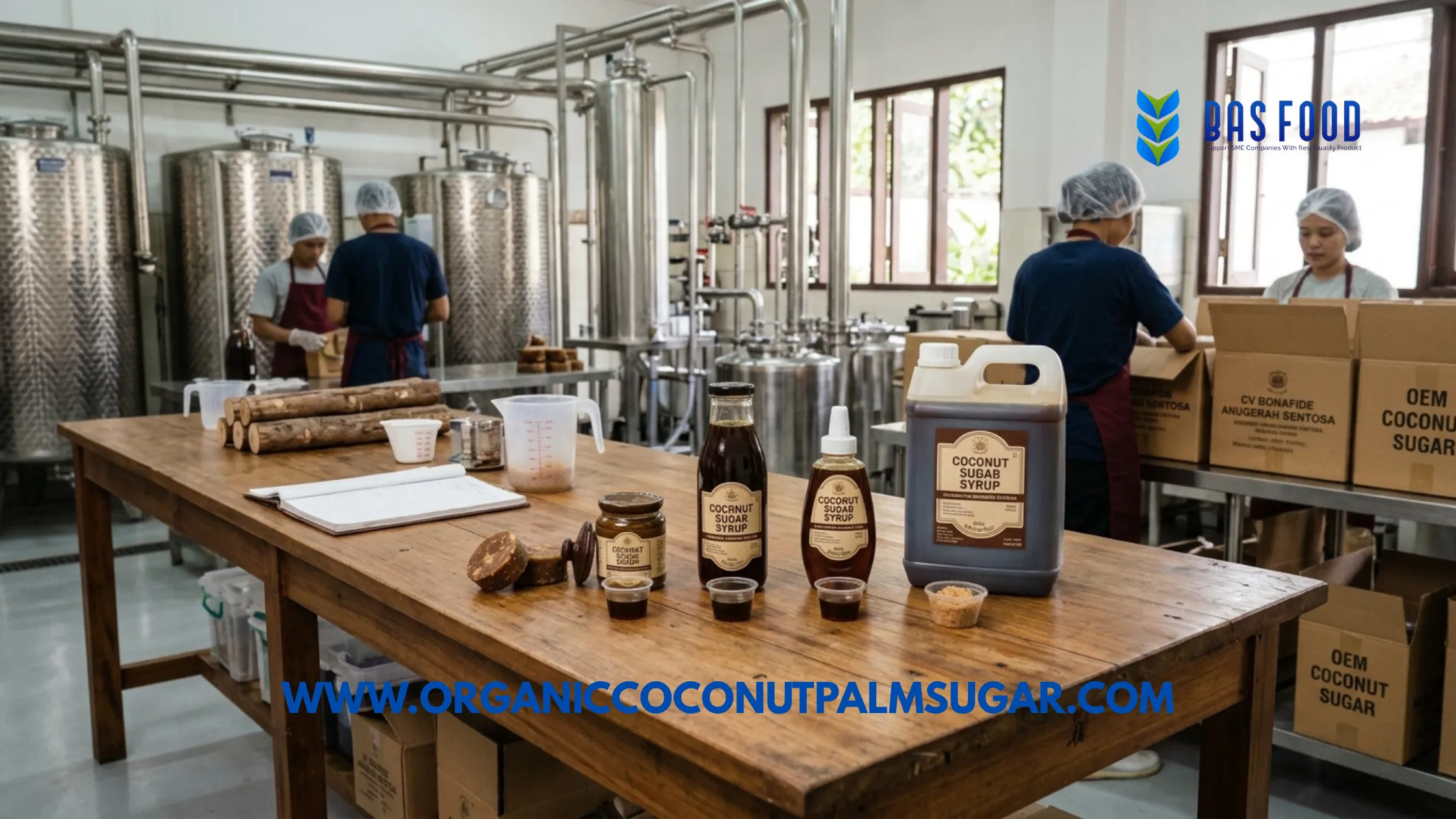
Why Coconut Sugar Syrup Shipping Stability Matters
Coconut sugar syrup is used in beverages, sauces, bakery products, confectionery, and other food applications. Unlike granulated or moulded coconut sugar, syrup is a liquid product. Therefore, its packaging and transportation requirements are different.
During international transportation, a shipment may pass through several environments. It can move from a production facility to a warehouse, then to a port, shipping container, destination port, and final storage facility. At each stage, the product may experience changes in temperature, movement, handling, and storage duration.
These conditions can influence product quality. For example, temperature fluctuations may change syrup viscosity. Rough handling can damage containers or loosen closures. Poor storage practices may also increase the risk of leakage or contamination.
For B2B buyers, shipping stability affects more than appearance. It can influence production schedules, inventory management, and the consistency of finished food products. A shipment that arrives in unsuitable condition may require additional inspection or create delays before the syrup can enter manufacturing.
That is why exporters and importers should treat shipping stability as part of the complete product quality process, rather than as a packaging issue alone.
Understanding the Natural Characteristics of Coconut Sugar Syrup
Before discussing transportation, it is useful to understand the characteristics of coconut sugar syrup. Manufacturers produce this sweetener by collecting coconut palm sap and concentrating it through a heating process. The result is a liquid sweetener with a distinctive caramel-like flavor and a color that can range from golden brown to darker brown.
Its composition and physical characteristics can vary depending on raw material quality, processing methods, concentration, and storage conditions. Some products have a thicker consistency, while others flow more easily. Temperature also plays an important role because syrup generally becomes more viscous when it cools and less viscous when it warms.
This change in viscosity does not necessarily indicate spoilage. It is a physical response that can affect pouring, pumping, filling, and unloading operations. For example, a syrup that flows easily during factory filling may become considerably thicker after exposure to cooler conditions during transportation.
Another important factor is the relationship between sugar concentration and product stability. Coconut sugar syrup contains dissolved sugars that can contribute to lower water activity. However, high sugar concentration alone does not guarantee microbiological safety or a specific shelf life. Certain yeasts and molds can tolerate high-sugar environments.
Therefore, exporters should understand the actual product specifications, including soluble solids, moisture content, water activity where relevant, pH, and microbiological characteristics. These measurements provide a more reliable basis for handling and shipping decisions than appearance alone.
The Main Factors That Affect Coconut Sugar Syrup Shipping Stability
Several factors influence coconut sugar syrup shipping stability. Understanding them helps exporters prepare suitable packaging and allows importers to establish realistic receiving procedures.
Temperature fluctuations are among the most important considerations. High temperatures can make syrup thinner and may affect its color, flavor, or quality over time, depending on the product formulation and exposure. Lower temperatures can increase viscosity and make pumping or pouring more difficult. Repeated temperature changes may also create challenges during handling.
Transportation time matters as well. A short domestic journey and a long international sea shipment do not create the same logistical conditions. Longer transit times increase the period during which the product remains exposed to changing environmental conditions. Consequently, exporters should consider the expected route, shipping schedule, and possible delays when selecting packaging and preparing documentation.
Packaging integrity is another essential factor. Containers must be suitable for food contact, compatible with the syrup, and strong enough for the expected transportation and handling conditions. Weak closures, damaged containers, or poor sealing practices can lead to leakage and contamination.
Finally, handling and loading practices influence the condition of the shipment. Containers that are dropped, stacked incorrectly, or exposed to excessive pressure may become damaged. Even when the syrup itself remains stable, packaging failure can make the shipment unsuitable for delivery.
Temperature Control: Managing Heat and Cold During Transportation
Temperature control is an important part of coconut sugar syrup logistics. However, it does not always mean that every shipment requires refrigerated transportation. The correct approach depends on the product’s validated storage requirements, formulation, packaging, and expected journey.
For some products, transportation under controlled ambient conditions may be suitable. Others may require specific temperature limits established by the manufacturer. Importers should request written storage and transportation recommendations rather than assume that all coconut sugar syrups have identical requirements.
High temperatures deserve particular attention. Shipping containers can become hot when exposed to direct sunlight, especially while waiting at ports or during inland transportation. Extended heat exposure may affect product quality, depending on the syrup’s composition and processing history.
On the other hand, cooler conditions can increase viscosity. This may not damage the syrup, but it can make unloading and transfer more difficult. Food manufacturers that use pumps or automated filling systems should consider this possibility when planning their receiving operations.
Here are several practical steps for managing temperature:
- Confirm the recommended storage and transportation temperature with the manufacturer.
- Avoid unnecessary exposure to direct sunlight during loading and temporary storage.
- Use suitable covered storage areas before container loading.
- Evaluate whether insulated or temperature-controlled transportation is necessary.
- Consider temperature monitoring for long-distance or sensitive shipments.
- Establish procedures for inspecting products that experience unexpected temperature exposure.
Temperature monitoring can provide useful information about transportation conditions. However, a temperature record does not replace product testing or validated shelf-life information. Buyers should interpret monitoring data alongside the manufacturer’s specifications.
Export Storage: Preparing Coconut Sugar Syrup Before Shipment
Proper export storage begins before the shipping container arrives. After production, coconut sugar syrup should remain in suitable food-grade containers and be stored under the conditions recommended by the manufacturer.
The storage area should be clean, dry, protected from direct sunlight, and managed to prevent contamination. Containers should remain closed when not in use. They should also be placed in a way that reduces the risk of physical damage, accidental leakage, or contact with unsuitable materials.
A clear stock rotation system can help exporters manage inventory. The first-in, first-out method is commonly used to organize products according to production or receiving dates. However, stock rotation should always follow the product’s actual shelf-life and batch management requirements.
Before shipment, exporters should check the condition of each container. Look for damaged surfaces, loose closures, visible leakage, and signs of contamination. Product identification should also remain clear so that warehouse staff can trace each batch.
Choosing Packaging That Protects Syrup During International Shipping
Packaging plays a major role in maintaining product quality. Since coconut sugar syrup is a liquid ingredient, containers must prevent leakage while remaining suitable for the product and transportation method.
The appropriate packaging format depends on order volume, buyer requirements, handling equipment, and destination market regulations. Common packaging options include bottles, jerry cans, food-grade pails, drums, and intermediate bulk containers (IBCs). These are general formats used for liquid food products, not a guarantee that every format is available for every coconut sugar syrup.
Bottles may suit smaller orders, retail distribution, or product sampling. They are easy to handle, but large quantities can require more packaging material and storage space.
Jerry cans and food-grade pails may be suitable for foodservice operations and medium-volume users. Buyers should confirm the material, closure system, and container capacity before ordering.
Food-grade drums can support larger industrial shipments. Their suitability depends on the syrup’s characteristics, filling method, and the equipment available at the destination.
IBCs can be considered for high-volume industrial supply. However, buyers must evaluate loading equipment, discharge connections, transport compatibility, and the container’s food-contact suitability.
Regardless of format, the packaging should meet the following requirements:
- Suitable for direct food contact.
- Compatible with the syrup’s composition.
- Strong enough for the expected transportation conditions.
- Equipped with secure closures.
- Suitable for the filling and unloading process.
- Clearly identified with relevant product and batch information.
Buyers should request relevant packaging documentation where necessary. A container described as food-grade should still be checked for its exact material, intended use, temperature limits, and compatibility with the product.
Shipping Conditions: From Factory Loading to Destination Port
Shipping conditions can change throughout an international journey. A container may experience movement during inland transportation, port handling, sea freight, and final delivery. Therefore, exporters should plan for the entire route rather than focus only on the departure stage.
Before loading, the shipping container should be inspected for cleanliness, dryness, unusual odors, visible damage, and signs of water entry. Any condition that could affect food packaging should be addressed before the cargo is loaded.
The loading arrangement also matters. Containers should be positioned securely to reduce movement during transportation. Pallets and secondary packaging can help protect the primary containers, while suitable load-securing materials can reduce the risk of shifting cargo.
Exporters should also avoid stacking containers beyond their permitted limits. Excessive stacking pressure may damage lower packages, especially when the containers are not designed to support the weight above them. The shipping plan should account for container dimensions, gross weight, pallet strength, and cargo distribution.
For long-distance shipments, buyers and exporters should discuss possible delays. Port congestion, vessel schedule changes, customs inspections, and transshipment can extend the journey. A realistic logistics plan should account for these possibilities and ensure that the product remains within its recommended storage conditions.
Finally, the importer should receive clear handling instructions before the shipment arrives. This allows the receiving team to prepare suitable storage space, unloading equipment, and inspection procedures.
Preventing Leakage, Contamination, and Packaging Damage
Leakage is one of the most avoidable problems in liquid food transportation. Even a small leak can damage secondary packaging, affect nearby cargo, and create additional handling costs.
To reduce this risk, exporters should use suitable closures and follow a controlled filling process. Containers should not be overfilled because liquid products need appropriate headspace, depending on the packaging design and transportation conditions. The correct filling level should follow the container manufacturer’s instructions and the exporter’s validated process.
Sealing systems should also match the packaging type. Caps, lids, gaskets, and other closure components must provide a secure fit. If tamper-evident features are required by the buyer or destination market, exporters should include them in the packaging specification.
Contamination prevention is equally important. Containers should be clean and suitable for food use before filling. The filling area, transfer equipment, and handling tools should follow appropriate hygiene procedures. Staff should also avoid leaving open containers exposed during production or packaging.
After filling, a visual inspection can identify obvious packaging defects. Depending on the packaging system and risk assessment, exporters may also apply suitable leak-testing or closure-integrity checks. The inspection method should be appropriate for the actual container rather than relying on a single test for every packaging format.
Quality Checks Before and After International Shipping
Quality checks help exporters and importers determine whether coconut sugar syrup meets the agreed product specifications. Ideally, both parties should establish acceptance criteria before the first shipment.
Before dispatch, the exporter can conduct product checks based on the agreed specification. These may include appearance, color, aroma, viscosity, soluble-solids content, pH, moisture, and microbiological parameters where relevant. Not every test applies to every buyer, so the testing plan should reflect the product and its intended use.
It is important to understand that Brix is commonly used to estimate soluble-solids concentration. However, it is not a direct measurement of moisture content or water activity. Buyers should not use a single Brix result as proof of shelf stability or microbiological safety.
At the destination, the importer should inspect the shipment before moving it into long-term storage. Check the packaging condition, labels, batch numbers, quantity, and visible product characteristics. If the shipment has experienced unusual temperature exposure, leakage, or extended delays, the importer should contact the supplier before using the product.
For ongoing supply agreements, retaining reference samples from each batch can help both parties investigate differences between shipments. A documented quality process also supports traceability and makes communication easier when a concern arises.
How Importers Can Evaluate a Coconut Sugar Supplier
Choosing a reliable coconut sugar supplier involves more than comparing prices. Importers should evaluate the supplier’s ability to provide consistent product information, suitable packaging, clear documentation, and practical export support.
Start by reviewing the product specification. Ask for details about the raw material, ingredients, appearance, soluble-solids content, viscosity, and relevant quality parameters. If the syrup is intended for a specific food application, discuss the required characteristics before placing a large order.
Next, ask about packaging options. Confirm container materials, filling volumes, closure systems, pallet arrangements, and any available packaging documents. These details help buyers determine whether the product can fit their warehouse and manufacturing operations.
It is also useful to discuss shipping arrangements early. Buyers should clarify the expected lead time, shipping route, export documents, and responsibilities under the agreed Incoterms. Clear communication helps prevent misunderstandings during the order process.
A dependable supplier should also be willing to discuss product handling and storage. Importers should receive practical guidance based on the actual syrup specification, not general promises that the product can withstand any transportation condition.
Sourcing Coconut Sugar Syrup from Indonesia with CV Bonafide Anugerah Sentosa
Indonesia is an important source of coconut-based agricultural products. Its coconut-growing regions support the supply of raw materials used in various food ingredients, including coconut sugar and coconut sugar syrup.
For international buyers, working with an Indonesian supplier can provide access to products for food manufacturing, distribution, and wholesale markets. However, buyers should still evaluate each supplier based on product specifications, packaging suitability, documentation, and export communication.
CV Bonafide Anugerah Sentosa is an Indonesian exporter of coconut sugar and other coconut-derived products. As a coconut sugar exporter supplier, the company can be approached by importers and food businesses interested in discussing product requirements and export sourcing.
When evaluating a potential order, buyers should communicate their preferred packaging format, required product specifications, destination country, estimated order volume, and intended application. These details help establish whether the proposed product and shipping arrangements match the buyer’s needs.
For businesses looking for a coconut sugar supplier, it is also worth discussing sample evaluation before moving to larger orders. Product samples allow manufacturers to assess flavor, color, viscosity, and performance in their own formulations.
Most importantly, buyers should request current product specifications and confirm packaging and storage recommendations for the specific syrup being offered. This creates a clearer foundation for managing coconut sugar syrup shipping stability from the production facility to the final destination.
Conclusion: Stability Starts Before the Shipment Leaves the Factory
Successful international delivery of coconut sugar syrup depends on preparation at every stage. Product characteristics, packaging integrity, export storage, temperature control, and shipping conditions all contribute to the final quality received by the importer.
For exporters, the best approach is to establish clear product specifications, use suitable food-grade packaging, inspect containers before loading, and communicate practical handling instructions. For importers, reviewing the product specification and agreeing on transportation requirements before shipment can reduce unexpected problems.
When these steps work together, businesses can manage coconut sugar syrup shipping stability more effectively and build stronger supply relationships. Whether sourcing for food manufacturing, wholesale distribution, or product development, choosing an experienced coconut sugar supplier and agreeing on clear quality requirements are essential steps toward reliable international trade.