Liquid sweeteners play an important role in today’s food and beverage industry. From coffee shops and bakeries to sauce manufacturers and beverage brands, businesses use syrups to add sweetness, improve texture, and create distinctive flavors. Among the many options available, coconut sugar syrup and agave syrup have attracted attention from manufacturers looking for alternatives to conventional liquid sugar. However, these two sweeteners are not the same. They come from different plants, have different flavor profiles, and may behave differently in food and beverage recipes. Understanding coconut sugar syrup vs agave syrup can help importers, distributors, and food manufacturers choose the right ingredient for their products.
In this guide, we compare their sources, production processes, taste, sweetness, applications, nutritional considerations, and sourcing factors. We also explain when coconut sugar syrup can work as an agave syrup alternative and what buyers should consider when purchasing natural liquid sweeteners in bulk.
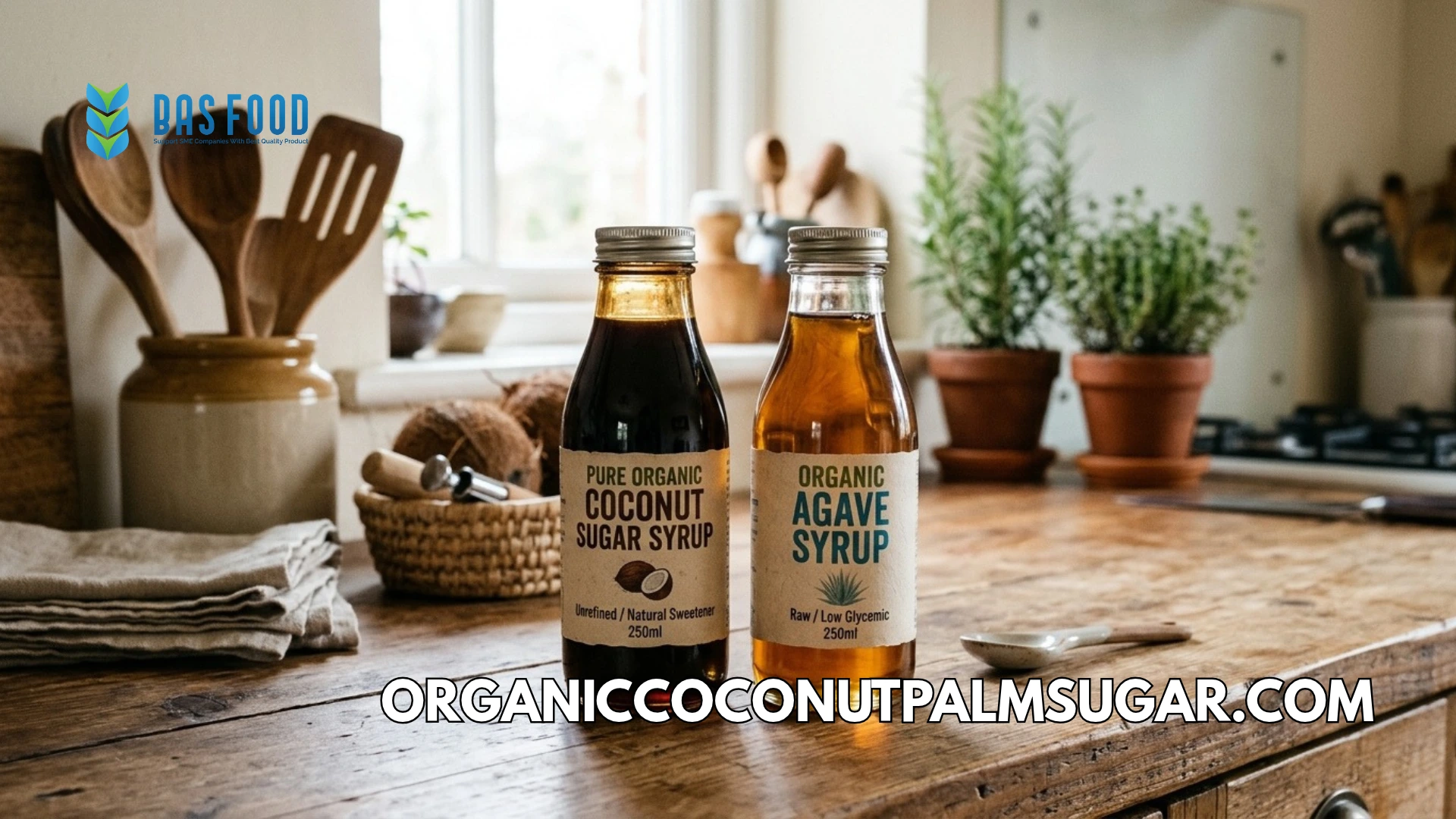
What Are Coconut Sugar Syrup and Agave Syrup?
Before comparing the two products, it helps to understand where they come from. Coconut sugar syrup is a liquid sweetener made from the sap of coconut palm trees. Producers collect the sap from coconut flower stalks and process it to create a concentrated, sweet liquid.
Depending on the production process, coconut sap may be filtered and heated until it reaches the desired concentration and consistency. The finished syrup typically has a warm, caramel-like flavor with notes that may remind people of brown sugar. Its color can range from golden brown to dark brown, depending on the raw material and processing conditions.
Agave syrup, also called agave nectar, comes from the agave plant. Producers extract juice from the plant’s core, then process it to create a sweet liquid. Commercial production often involves filtration and enzymatic conversion of carbohydrates into simpler sugars before concentration.
Agave syrup commonly has a light golden color and a relatively mild flavor, although its characteristics vary by agave species and manufacturing process. It is widely used as a sweetener in beverages, baked goods, sauces, and other food products.
Although both products are plant-based liquid sweeteners, their botanical sources and production methods are different. These differences influence their taste, composition, and suitability for particular applications.
Coconut Sugar Syrup vs Agave Syrup: Key Differences at a Glance
The easiest way to begin this syrup comparison is to look at the main characteristics of each product.
| Feature | Coconut Sugar Syrup | Agave Syrup |
|---|---|---|
| Main source | Coconut palm flower sap | Agave plant |
| Typical flavor | Caramel-like, warm, brown-sugar notes | Mild, neutral to lightly caramel-like |
| Color | Golden brown to dark brown | Light gold to amber, depending on processing |
| Main sugars | Typically sucrose, glucose, and fructose in varying proportions | Often fructose-rich, depending on the product |
| Texture | Viscous liquid | Usually smooth and pourable |
| Common uses | Coffee, desserts, sauces, bakery products | Beverages, desserts, sauces, bakery products |
| Flavor impact | Adds a noticeable caramel-like character | Usually adds sweetness with a milder flavor |
These descriptions are general. Actual products can vary according to the plant source, production method, concentration, and quality specifications. Buyers should always review the supplier’s technical documents rather than assume that every product has identical characteristics.
One important point is that neither syrup should be selected based on color or sweetness alone. Food manufacturers need to consider flavor, sugar composition, viscosity, soluble solids, and how the ingredient performs in the final recipe.
How Are These Two Natural Liquid Sweeteners Produced?
Production methods help explain why coconut sugar syrup and agave syrup have different characteristics.
Coconut sugar syrup production
Coconut sugar syrup starts with fresh coconut flower sap. Farmers collect the sap from coconut flower stalks, after which producers filter it to remove unwanted particles. Because fresh sap can ferment, proper handling and timely processing are important.
Next, producers heat the filtered sap to remove water and concentrate its natural sugars. They control the heating process until the syrup reaches the required consistency and concentration. After that, the syrup may undergo further filtration, quality checks, and packaging.
The final product retains a characteristic flavor that comes from coconut sap and the concentration process. However, color, aroma, sweetness, and viscosity can differ between batches. Consistent raw materials and process control help producers achieve more predictable results.
Agave syrup production
Agave syrup production begins with harvesting mature agave plants. Producers remove the leaves to access the plant’s central core, often called the piña. They then extract juice from this material.
The extracted juice undergoes processing that commonly includes filtration, enzymatic treatment, and concentration. Enzymes help break down complex carbohydrates into simpler sugars. Producers then concentrate the liquid to achieve the desired sweetness and consistency.
Different agave species and processing conditions can produce different syrup profiles. As a result, buyers should check the product’s sugar composition, soluble solids, and other specifications before selecting an agave syrup for manufacturing.
Both production processes require good hygiene, suitable equipment, and quality control. However, their raw materials and conversion processes are distinct, which is why the finished syrups do not have identical properties.
Flavor Profile: Which Syrup Works Better in Your Recipe?
Flavor is one of the most important factors when choosing a liquid sweetener. A syrup does more than add sweetness. It can also influence the aroma, color, and overall character of a food or beverage.
Coconut sugar syrup usually offers a deeper flavor. Its caramel-like notes make it suitable for recipes that benefit from a warm, brown-sugar taste. For example, coffee drinks, chocolate desserts, pancakes, sauces, and baked goods can work well with this flavor profile.
Agave syrup generally offers a milder taste. This can make it useful in recipes where manufacturers want sweetness without adding a strong caramel note. It may suit fruit-based beverages, light sauces, dressings, and recipes where the original ingredient flavor should remain prominent.
Nevertheless, there is no universal winner. A coffee brand may prefer coconut sugar syrup because its flavor complements roasted coffee. Meanwhile, a beverage manufacturer producing a light fruit drink may prefer a more neutral sweetener.
The best approach is to test both products in the actual recipe. Compare the sweetness, aroma, aftertaste, color, and overall consumer experience before making a purchasing decision.
Sweetness and Sugar Composition: What Should Buyers Know?
Coconut sugar syrup and agave syrup contain naturally occurring sugars. However, their sugar composition can differ significantly.
Coconut sugar syrup generally contains a mixture of sucrose, glucose, and fructose. The exact proportions depend on the coconut sap, concentration process, and finished-product specifications.
Agave syrup is often rich in fructose. Some commercial varieties contain a high proportion of fructose compared with glucose, although the composition varies between products. This difference can influence perceived sweetness and how manufacturers formulate recipes.
Because agave syrup can be sweeter than some other liquid sweeteners, manufacturers may need to use a different quantity when replacing it with coconut sugar syrup. However, there is no reliable universal conversion ratio. The right amount depends on the specific products and the desired result.
For accurate formulation, buyers should request a sugar profile or technical specification from the supplier. They should also compare sweetness through practical recipe trials rather than relying only on general descriptions.
It is also important to remember that plant-based or natural sweeteners are still sources of sugar. Neither coconut sugar syrup nor agave syrup should automatically be considered suitable for unrestricted consumption or as a solution for blood glucose management.
Texture, Viscosity, and Brix: Important Technical Factors
For food manufacturers, texture is just as important as flavor. A syrup must flow properly, mix with other ingredients, and deliver consistent results during production.
Coconut sugar syrup often has a rich, viscous texture. Its thickness depends on factors such as concentration, temperature, and the composition of the syrup. A more concentrated product may flow more slowly and provide a stronger sweetening effect per unit of weight.
Agave syrup is commonly smooth and pourable. However, its viscosity also depends on concentration, temperature, and sugar composition. Different commercial products may have noticeably different flow properties.
One technical measurement buyers should understand is Brix. Brix measures soluble solids using a scale based on sucrose solutions. In syrup manufacturing, it is often used as an indicator of concentration. However, a Brix reading is not always identical to the exact percentage of sugar in a mixed-sugar product.
For bulk procurement, buyers should ask suppliers about:
- Brix or soluble-solids specification.
- Viscosity and the measurement conditions.
- Moisture content, where relevant.
- pH, where relevant to the application.
- Sugar composition.
- Appearance, color, aroma, and flavor.
- Recommended storage conditions.
These details help manufacturers determine whether a syrup can work with their existing equipment and production process.
Food and Beverage Applications: Where Does Each Syrup Perform Best?
Both syrups have broad applications across the food industry. However, their different flavor profiles make them more suitable for certain recipes.
Coffee and beverage production
Coconut sugar syrup is a good option for coffee products that benefit from caramel-like sweetness. It can be used in iced coffee, milk-based coffee drinks, flavored lattes, and specialty beverages. Its deeper flavor can complement coffee’s roasted notes.
Agave syrup may suit beverages where a milder sweetener is preferred. Manufacturers can test it in fruit drinks, iced tea, smoothies, and other liquid products. Its sweetness profile may also influence the quantity needed for a recipe.
Bakery and dessert manufacturing
Coconut sugar syrup can add moisture and brown-sugar-like flavor to selected bakery products, fillings, toppings, and dessert sauces. However, manufacturers should adjust recipes carefully because the syrup introduces water as well as sugar.
Agave syrup can also be used in cakes, cookies, bars, dessert sauces, and sweet fillings. Its flavor may be less noticeable in recipes where other ingredients provide the main taste.
Sauces, dressings, and food preparations
Coconut sugar syrup can contribute depth to marinades, glazes, barbecue sauces, and sweet-savory products. Its caramel notes may work particularly well with spices and roasted flavors.
Agave syrup may be suitable for salad dressings, fruit sauces, and products where a lighter sweet taste is desired. In both cases, manufacturers should evaluate the syrup’s acidity, sweetness, viscosity, and interaction with other ingredients.
Ultimately, recipe testing is essential. A syrup that performs well in one application may not produce the same result in another.
Can Coconut Sugar Syrup Be an Agave Syrup Alternative?
Yes. Coconut sugar syrup can serve as an agave syrup alternative in many recipes, but it is not always a direct one-to-one replacement.
The first difference is flavor. Coconut sugar syrup usually adds a stronger caramel-like taste, while agave syrup is often milder. Therefore, switching to coconut sugar syrup may change the flavor of the finished product.
The second difference is sugar composition. Since agave syrup is often fructose-rich, replacing it with coconut sugar syrup may change perceived sweetness and other formulation characteristics. Manufacturers may need to adjust the amount used.
The third difference is color. Coconut sugar syrup can make a product darker, which may be desirable in chocolate desserts or sauces but less suitable for light-colored beverages.
When testing a replacement, manufacturers should consider the following:
- Start with a small trial batch.
- Compare sweetness by weight rather than assuming equal volumes will produce equal results.
- Adjust the recipe based on flavor and texture.
- Check the effect on color and final appearance.
- Review the product’s Brix and other technical specifications.
- Conduct stability and shelf-life testing where necessary.
This method helps manufacturers determine whether coconut sugar syrup meets their product requirements without compromising consistency.
Nutrition and Labeling: Avoiding Misleading Sweetener Claims
Natural sweeteners often attract consumer interest, but food businesses need to communicate their properties accurately. Coconut sugar syrup and agave syrup both contain sugars and contribute energy to the diet.
Agave syrup’s high fructose content does not automatically make it a healthier choice. Likewise, coconut sugar syrup should not be promoted as a sugar-free or universally healthier alternative to conventional sweeteners.
Nutrition information depends on the finished product’s actual composition. Manufacturers should use reliable product data and appropriate laboratory testing when preparing nutrition labels.
Labeling requirements also vary by destination market. Importers and manufacturers should check local regulations covering ingredient names, added sugars, nutrition declarations, allergens where applicable, and permitted product claims.
For B2B buyers, this means requesting accurate technical information from suppliers before finalizing product labels or marketing materials. Clear documentation helps reduce the risk of inaccurate claims and labeling problems.
Bulk Sourcing: How to Choose the Right Coconut Sugar Syrup Supplier
Once a manufacturer has selected the preferred syrup, the next step is finding a reliable supplier. Product quality, consistency, communication, and export readiness all matter when purchasing natural liquid sweeteners in bulk.
Start by asking for a current product specification sheet. It should explain the product’s main characteristics, including appearance, flavor, Brix, viscosity where available, packaging, and storage recommendations. A batch-specific Certificate of Analysis can provide additional information about the actual shipment.
Next, request samples for evaluation. Test the syrup in the intended recipe and compare the results with your current sweetener. If your business requires a particular flavor, concentration, or packaging format, discuss these needs with the supplier before placing an order.
International buyers should also confirm:
- Current product availability and production lead time.
- Minimum order quantity.
- Available packaging and container options.
- Shelf-life information supported by product validation.
- Batch traceability and quality documentation.
- Export documentation and destination-market requirements.
- Shipping terms and agreed Incoterms.
CV Bonafide Anugerah Sentosa is an Indonesian commodity supplier and exporter. Buyers interested in coconut-derived products can contact the company to discuss current availability, product specifications, samples, and export arrangements.
If you are comparing a coconut sugar exporter supplier or a coconut sugar supplier, remember to evaluate the syrup itself rather than relying only on the supplier’s general product portfolio. Ask for documents and samples that match the product you intend to purchase.
Conclusion: Choose the Syrup That Fits Your Product
The comparison of coconut sugar syrup vs agave syrup shows that both products can serve different roles in modern food manufacturing. Coconut sugar syrup offers a warm, caramel-like flavor that works well in coffee, desserts, sauces, and selected bakery products. Agave syrup generally provides a milder taste and is often used in beverages and recipes where a less pronounced flavor is preferred.
Neither syrup is automatically the better option for every business. The right choice depends on your recipe, desired sweetness, flavor profile, color, processing requirements, and target market.
For manufacturers and importers, the best purchasing decision starts with reliable product information. Compare specifications, request samples, test the syrup in your application, and confirm export requirements before ordering.
If you are exploring coconut sugar syrup from Indonesia, CV Bonafide Anugerah Sentosa can be contacted to discuss current product availability and sourcing requirements.