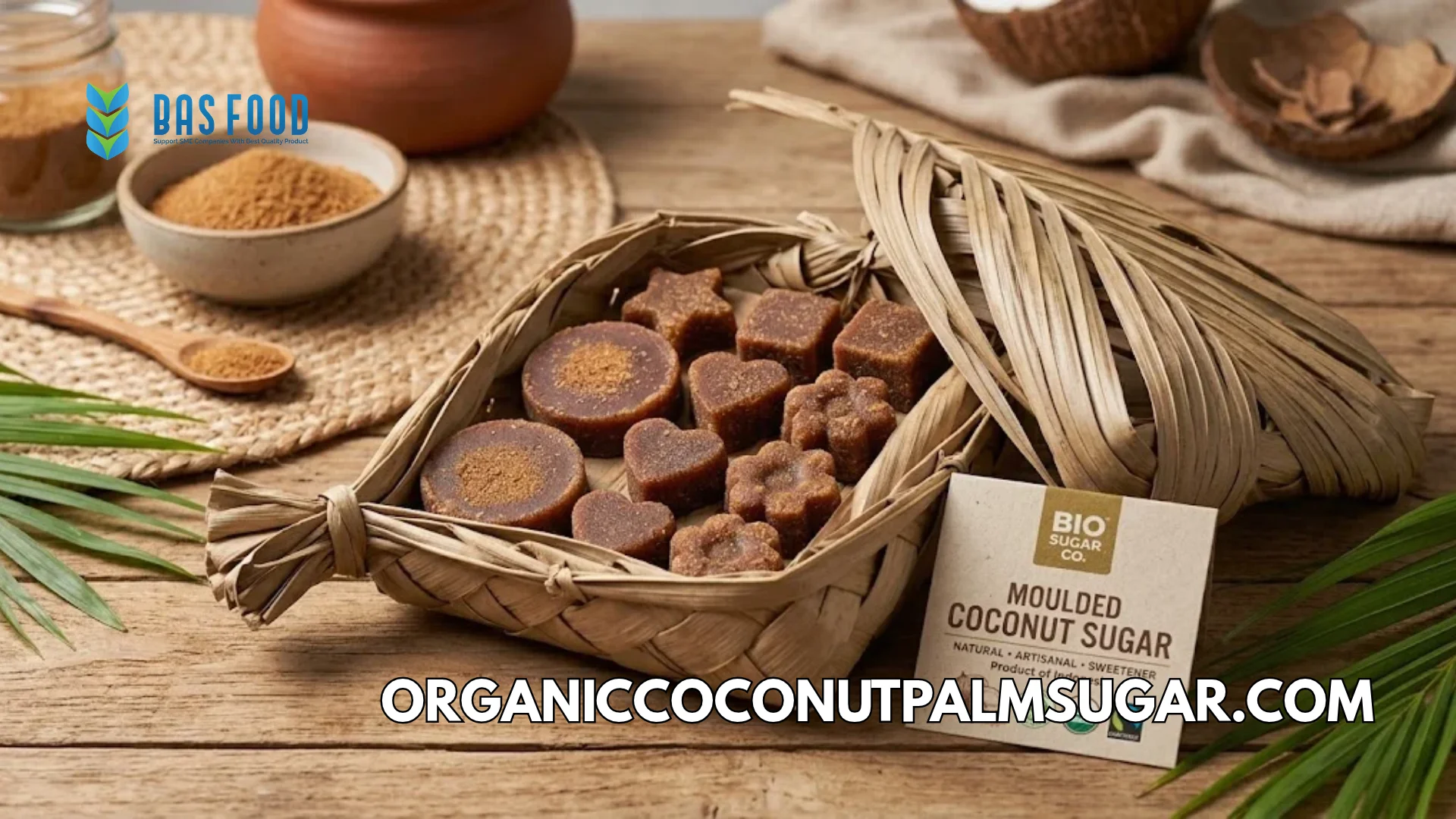
As demand for natural food ingredients grows, international buyers continue to explore sweeteners that offer distinctive flavours, practical formats, and reliable sourcing options. One product attracting interest is moulded coconut sugar. Made from coconut palm sap, this traditional sweetener is formed into solid blocks or other shapes, making it suitable for different culinary applications and distribution channels.
For importers, wholesalers, food distributors, and manufacturers, moulded coconut sugar supply means more than finding a seller with products in stock. It involves securing a dependable source that can meet agreed specifications, support planned order volumes, maintain suitable packaging, and coordinate export shipments. These factors matter because a supply interruption can affect production schedules, inventory levels, and customer satisfaction.
Moulded coconut sugar is commonly used in traditional cooking, sauces, desserts, beverages, and regional food products. Depending on the market, buyers may sell it directly to consumers or supply it to restaurants, food-service businesses, and food manufacturers. Its solid form also gives brands an opportunity to offer a different format from granulated or powdered coconut sugar.
However, buyers should understand that coconut sugar is an agricultural product. Its colour, aroma, texture, and other characteristics can vary with raw materials and processing methods. Therefore, a successful sourcing relationship begins with clear product specifications and realistic expectations about quality, volume, and delivery.
Why International Buyers Choose Moulded Coconut Sugar
A traditional sweetener with commercial potential
Coconut sugar has a distinctive caramel-like flavour that can complement many recipes. Moulded coconut sugar offers this flavour in a solid form, which consumers can cut, grate, crush, or dissolve according to their needs. This makes it a useful option for businesses serving customers who prefer traditional sweeteners or familiar regional ingredients.
For example, specialty food stores may stock moulded coconut sugar for household cooking. Asian grocery distributors may supply it to retailers and restaurants, while food manufacturers may use it as an ingredient in sauces, desserts, and other products. The actual suitability depends on the product’s specifications and the needs of each application.
Different markets, different product requirements
Although the product has broad culinary uses, buyers should not assume that every market wants the same block size, packaging, or flavour profile. One distributor may prefer smaller units for retail sales, while another may require larger blocks for food preparation. Some customers may prioritise traditional presentation, whereas others may focus on convenient storage and handling.
Consequently, importers should study their target customers before selecting a product. Consider local food habits, retail price expectations, competitor offerings, and packaging preferences. This research helps you choose a product that fits the market instead of buying stock based only on a low quotation.
When evaluating a moulded coconut sugar supply, ask potential suppliers which product formats they can provide and whether they can maintain the agreed specifications across repeat orders. This conversation is an important first step toward building a sustainable sourcing plan.
What Creates a Stable Supply of Moulded Coconut Sugar?
A stable supply depends on several connected factors. These include access to raw materials, production planning, quality management, packaging availability, inventory control, and shipping coordination. A supplier may offer an attractive price, but buyers also need to understand how the business plans and manages repeat orders.
Raw material availability and production planning
Coconut sugar production depends on coconut sap collected from coconut palm flower stalks. Farmers and processors must collect and handle this sap carefully before processing it into sugar. Harvesting conditions, seasonal factors, labour availability, and processing capacity can affect production schedules.
For this reason, buyers should discuss expected order volumes and purchasing frequency with their suppliers. If your business needs regular monthly deliveries, explain that requirement early. The supplier can then assess whether the requested schedule is realistic and identify any constraints that may affect availability.
It is also useful to share sales forecasts when possible. A forecast does not guarantee production or delivery, but it gives both parties a better basis for planning inventory and raw material needs. For large or recurring orders, discuss how far in advance you should place purchase orders.
Quality consistency across shipments
Stable supply also means receiving products that meet the agreed quality requirements. If one shipment contains blocks that differ significantly in size, moisture, colour, or packaging condition from the previous shipment, your business may face customer complaints or production problems.
To reduce this risk, create a written product specification. Depending on your needs, it may include block dimensions, unit weight, colour range, aroma, texture, moisture content, foreign matter controls, packaging material, and labelling requirements. Use measurable criteria wherever possible so both parties can evaluate the product consistently.
You should also clarify how the supplier handles quality concerns. Ask whether batches are identified by lot number, which checks take place before shipment, and what procedure applies if the delivered goods do not match the agreed specifications. Clear procedures help protect both the buyer and the supplier.
Bulk Sourcing: How to Plan Your Orders Efficiently
Bulk sourcing can help importers and distributors manage recurring demand, but purchasing larger quantities requires careful planning. A lower price per unit does not always mean a lower overall cost if the order creates excessive inventory, increases storage expenses, or ties up working capital.
Before placing a bulk order, estimate your sales volume, expected stock turnover, lead time, and safety stock needs. Consider how long the goods will remain in storage and whether your warehouse can maintain suitable conditions. Since sugar products can absorb moisture under unfavourable conditions, packaging integrity and warehouse humidity deserve attention.
Match order quantities to real demand
Start by reviewing historical sales or, for a new product, developing a conservative demand forecast. Estimate how much stock you expect to sell during the period between placing an order and receiving the next shipment. Add an appropriate buffer based on the reliability of your supply chain and the consequences of a stockout.
For example, a wholesaler with predictable monthly demand may plan repeat orders on a regular schedule. A new retailer testing customer interest may prefer a smaller initial purchase, if the supplier’s minimum order quantity allows it. The best approach depends on sales forecasts, order terms, cash flow, and shipping economics.
Avoid assuming that a supplier can always fulfil urgent orders. Production slots, packaging procurement, inspections, customs procedures, and transport availability may affect the final delivery date. Confirm the expected timeline before making commitments to your own customers.
Understand the full landed cost
When comparing suppliers, look beyond the product price. The total landed cost may include packaging, inland transport, export handling, freight, insurance where applicable, customs duties, import taxes, inspection fees, and destination charges.
These costs vary by destination, shipping method, order size, and trade terms. Ask suppliers to explain what their quotation includes and what remains the buyer’s responsibility. If you compare offers from several suppliers, use the same product specifications, packaging assumptions, delivery terms, and quantity basis.
A detailed cost comparison gives you a more realistic view of profitability. It also helps you identify whether a lower-priced product still offers value after freight and other import expenses are included.
How to Evaluate a Coconut Sugar Export Supplier
Choosing the right export supplier is essential for international trade. A dependable supplier should be able to explain its product offering, clarify commercial terms, communicate production limitations, and provide the documentation required for the transaction.
Review product specifications and samples
Before confirming an order, request a specification sheet and product samples when available. Examine the product’s appearance, aroma, flavour, texture, and physical dimensions. If you intend to use the sugar in a specific recipe or manufacturing process, test it under actual operating conditions.
Samples are useful, but they do not replace a written specification. Agree on the characteristics that matter most to your business and ask how the supplier checks them during production. Where your market requires particular food safety tests or independent laboratory reports, confirm which documents can be provided and whether they meet the applicable requirements.
Check export experience and communication
International orders often involve several parties, including the exporter, freight forwarder, customs broker, importer, and warehouse operator. Clear communication helps these parties coordinate the transaction and avoid unnecessary delays.
Ask potential suppliers about their export process, typical preparation steps, shipping arrangements, and ability to provide the documents required for your destination. Depending on the transaction, these may include a commercial invoice, packing list, transport document, certificate of origin, or other product-specific documentation.
Do not assume that every document is automatically available or required in every market. Requirements depend on the destination country, product classification, buyer’s arrangements, and current regulations. Verify the exact requirements with your customs broker or relevant authority.
Compare suppliers fairly
When evaluating a coconut sugar exporter supplier, compare more than price and product photographs. Review specification details, packaging, minimum order quantity, production lead time, payment terms, communication quality, traceability, and the process for resolving quality issues.
A supplier that explains limitations clearly may be a better long-term partner than one that promises everything without evidence. Reliable sourcing is built on clear expectations and consistent performance, not simply on the lowest initial offer.
Export Requirements and Documentation for International Buyers
Exporting moulded coconut sugar involves more than arranging transport. Importers must understand the food import rules, customs procedures, labelling requirements, and documentation applicable to their destination market.
The first step is to identify the correct product classification and confirm the import conditions with a qualified customs broker or relevant authority. These details may affect duties, taxes, required declarations, inspections, and any permits or certificates that apply to the shipment.
Buyers should also check food safety and labelling rules before finalising the product. Depending on the destination, requirements may cover ingredient information, net quantity, country of origin, responsible business details, lot identification, date marking, storage instructions, or nutritional information. The exact requirements differ across markets and product categories.
Prepare documentation before shipment
Discuss documentation early in the purchasing process. Confirm which party prepares each document, what information it must contain, and when the buyer needs it. Make sure product names, quantities, package counts, weights, and other key details remain consistent across the relevant paperwork.
If a certificate or test report is required, verify that the document is valid for the specific shipment and destination. Do not rely on generic assurances that a product is “export quality” without checking the evidence relevant to your business.
Allow time for compliance checks
Regulatory review and document preparation can affect the shipping schedule. If the shipment is your first import from a supplier or into a particular market, allow extra time to confirm the requirements before booking transport.
Good preparation helps prevent avoidable delays and supports a more predictable supply chain. It also gives your business a clearer understanding of the responsibilities shared by the exporter, importer, and logistics partners.
Why Work with CV Bonafide Anugerah Sentosa?
For buyers exploring Indonesian coconut-derived ingredients, CV Bonafide Anugerah Sentosa is a potential contact for discussing sourcing requirements and export opportunities. The most effective starting point is to explain your intended product, target market, order volume, packaging needs, and delivery expectations.
If your business needs moulded coconut sugar supply, prepare a brief that identifies the preferred block dimensions, unit weight, quality parameters, packaging format, and expected purchasing frequency. If you plan to distribute the product under your own brand, include your labelling and packaging requirements as well.
This information helps establish whether the proposed order is feasible and which details require further confirmation. It also gives both parties a clear basis for discussing specifications, quotations, lead times, and export arrangements.
Businesses searching for a coconut sugar supplier should confirm the exact product formats currently available. Coconut sugar can be supplied in different forms, such as moulded blocks, granules, or powder, but product availability varies by supplier. Do not assume that every format is offered under the same commercial terms.
Similarly, the term exportador de azúcar de coco means “coconut sugar exporter” in Spanish. It may help Spanish-speaking buyers describe their sourcing needs, but the same purchasing principles still apply: verify product specifications, quality controls, packaging, documentation, and delivery terms before placing an order.
Contact CV Bonafide Anugerah Sentosa to discuss your requirements and confirm current product availability, supply capabilities, minimum order quantities, and export terms. This step will help you determine whether the proposed arrangement fits your sourcing plan.
Conclusion: Build a Supply Chain You Can Grow With
A reliable moulded coconut sugar supply can help importers, wholesalers, distributors, and food manufacturers serve their customers with greater confidence. However, consistent sourcing requires more than placing an order. It depends on clear specifications, realistic demand planning, suitable packaging, quality controls, export documentation, and communication between buyer and supplier.
For bulk sourcing, focus on the total cost and the long-term reliability of the arrangement rather than price alone. Evaluate product samples, agree on measurable quality requirements, and make sure both parties understand delivery schedules and responsibilities.
If you are looking for a coconut sugar exporter supplier in Indonesia, begin with a clear sourcing brief and confirm the supplier’s current capabilities. By taking these steps, your business can make better purchasing decisions and develop a more organised approach to international trade.
Contact CV Bonafide Anugerah Sentosa to discuss your moulded coconut sugar requirements and confirm the product options, order quantities, packaging, and export arrangements that may be suitable for your business.