Choosing a new ingredient supplier is an important decision for any food business. For importers, wholesalers, distributors, and manufacturers, even a small difference in product quality can affect production, customer satisfaction, and operating costs. That is why requesting moulded coconut sugar samples is a smart step before committing to a large purchase. Moulded coconut sugar is a traditional sweetener made from coconut palm sap and formed into solid blocks or other shapes. Buyers may source it for traditional food products, specialty retail, food service, or selected manufacturing applications. However, not every supplier offers the same product characteristics. Color, aroma, texture, dimensions, moisture content, packaging, and handling performance can vary.
A sample allows your business to examine the actual product instead of relying only on a product description or photograph. It also gives you an opportunity to test the sugar in your intended application, compare different offers, and begin checking whether a supplier meets your business requirements.
In this guide, we explain how to request samples, what to check during evaluation, how to verify a supplier, and how to use sample results to make better purchasing decisions. We also discuss how buyers can contact CV Bonafide Anugerah Sentosa to explore Indonesian coconut sugar sourcing options and confirm current product availability.
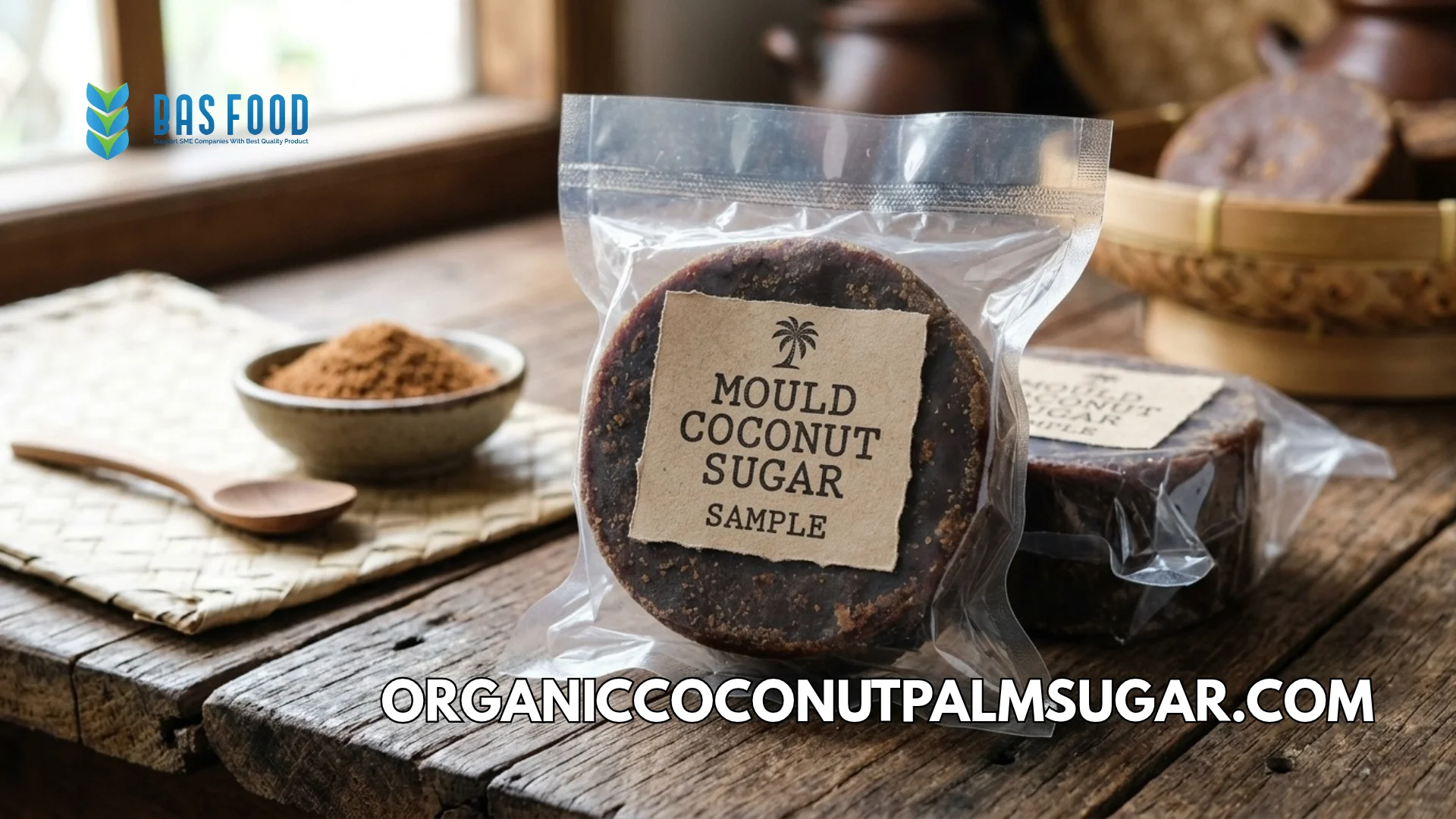
Why Moulded Coconut Sugar Samples Matter Before a Bulk Order
A supplier’s product description provides useful information, but it cannot show every detail that matters to a buyer. A photograph may show the color and shape of a sugar block, for example, but it cannot reliably tell you how hard the block feels, how easily it breaks, or how quickly it dissolves in a recipe.
That is where product samples become valuable. A physical sample lets your purchasing team examine the product directly and compare it with your requirements. Instead of guessing how the sugar will perform, you can test it under conditions that reflect your actual business needs.
For international buyers, sampling is especially useful because returning or replacing a commercial shipment can be expensive and time-consuming. A relatively small investment in evaluation may help identify a mismatch before it affects a large order.
Samples Help You Confirm Product Consistency
Moulded coconut sugar can differ in appearance and physical characteristics depending on raw materials, processing methods, moulds, and storage conditions. These differences do not automatically indicate poor quality, but they may matter when your business needs a consistent product.
For example, a food manufacturer may need blocks with a particular weight range so that employees can portion them efficiently. A distributor may prefer a consistent appearance across retail packs. Meanwhile, a traditional food producer may focus more on flavor, aroma, and how the sugar performs during cooking.
A sample gives you a starting point for defining the product you want. Once you approve the sample, you can document its relevant characteristics and ask the supplier to use agreed specifications for future orders.
Samples Reduce Purchasing Uncertainty
Buying from a new supplier involves several questions. Does the product match the description? Can the supplier provide the required quantity? Are the packaging and documents suitable for your market? Can the supplier communicate clearly about quality and delivery?
A sample helps answer the product-related questions, while supplier checks and written commercial terms address the others. Together, these steps create a more complete evaluation process.
However, remember that one sample cannot guarantee that every future batch will be identical. Buyers should also agree on specifications, batch identification, quality checks, and procedures for handling any differences between the approved sample and delivered goods.
Understanding Moulded Coconut Sugar Before Requesting Samples
Before contacting a supplier, understand what type of moulded coconut sugar your business needs. The term generally describes coconut sugar shaped into solid blocks or other forms after the coconut sap has been concentrated through heating and prepared for setting.
The exact product can vary by producer. Some blocks may be compact and firm, while others may have a different texture or shape. Color can range from lighter brown to darker brown, and the flavor may have caramel-like notes. Buyers should confirm the actual characteristics of the product being offered rather than assume that every moulded coconut sugar product is the same.
Define Your Intended Application
Your intended use should guide the sampling process. A manufacturer using the sugar in a sauce may need to evaluate how well it dissolves and blends with other ingredients. A business selling solid sugar blocks may focus more on appearance, shape, unit weight, and packaging.
If you plan to use moulded coconut sugar in beverages, consider whether your preparation process can break down or dissolve the blocks efficiently. For bakery products, check how the sugar behaves during mixing and heating. For retail sales, examine whether the product has the appearance and physical condition your customers expect.
Write down the most important requirements before requesting a sample. This prevents your team from judging the product only by general impressions and helps the supplier understand what you need.
How to Request Moulded Coconut Sugar Samples From a Supplier
A clear sample request makes the process easier for both sides. It tells the supplier what you need, why you need it, and how you will evaluate the product. It also helps avoid receiving a sample that looks interesting but does not match your commercial requirements.
Start by introducing your business and explaining whether you are an importer, distributor, manufacturer, retailer, or food-service operator. Then describe the product form, intended application, estimated order quantity, and destination country.
You do not need to know every technical detail before making an inquiry. If you are unsure about block dimensions or moisture requirements, explain your intended use and ask the supplier what options are available.
Ask Whether the Sample Represents the Commercial Product
One important question is whether the supplier will provide a representative sample of the product intended for bulk supply. A sample prepared specifically for evaluation may not always reflect the exact production conditions of a future commercial order.
Ask whether the sample comes from an existing production batch, a regular product line, or a specially prepared batch. If the supplier offers several product specifications, make sure you know which version you are evaluating.
Before placing a large order, request written confirmation of the agreed specifications. If the product’s appearance or performance is critical, discuss how the supplier will manage quality consistency between the sample and the shipment.
A Practical Guide to Sample Evaluation
Once the sample arrives, evaluate it systematically. A structured process helps your team make consistent decisions and creates a useful record for comparing multiple suppliers.
Start by checking the package on arrival. Look for damage, moisture exposure, broken packaging, missing labels, or other signs that the sample may have been affected during transit. Record any concerns before opening the package.
Next, compare the sample with the supplier’s product description and specification sheet, if available. This first check can help identify obvious differences before you move on to more detailed testing.
Check Appearance, Aroma, and Physical Condition
Inspect the sugar under suitable lighting. Note its color, shape, surface condition, and general uniformity. Check whether the blocks match the expected dimensions and whether there are unusual signs of contamination or damage.
Then assess the aroma. Moulded coconut sugar may have a characteristic sweet, caramel-like smell, but the exact profile can vary. Record whether the sample matches the flavor and aroma expectations for your product.
You should also evaluate texture and firmness. Check whether the blocks are easy to handle and portion in the way your process requires. A block that is too hard for your intended equipment or too fragile for retail handling may not be suitable, even if its appearance is acceptable.
These observations are useful for screening, but they do not replace laboratory testing or appropriate food safety checks.
Test the Sample in Your Actual Process
A sample that looks good on its own may behave differently during production. Therefore, conduct a small-scale trial using the same preparation method you expect to use in normal operations.
For example, a sauce manufacturer can test the time required to dissolve the sugar and observe how it affects flavor and color. A beverage producer can check whether the sugar fits the preparation process. A retail distributor can evaluate whether the blocks remain intact during ordinary handling and packing.
Use consistent conditions when comparing samples. If one product is tested with more heat or a different liquid ratio, the results may not provide a fair comparison.
Record the method, quantities, processing time, and observations. This information will help your team decide whether the product meets its needs and can also support future supplier discussions.
Review Laboratory Results Where Necessary
Visual and sensory checks cannot confirm every quality or safety parameter. Depending on your product, market, and regulatory requirements, you may need laboratory results for moisture, microbiological criteria, chemical parameters, or other relevant characteristics.
Ask the supplier what test results are available and whether they relate to the sample batch. If your business requires a specific test method or limit, communicate that requirement in advance.
For higher-risk applications or strict buyer specifications, consider independent testing through an appropriately qualified laboratory. Determine the required tests based on the product, intended use, and destination-market rules rather than assuming that one standard testing package covers every situation.
Supplier Verification: Going Beyond the Sample
A good sample is encouraging, but it does not prove that the supplier can meet every commercial requirement. Supplier verification is a separate step that helps buyers assess business reliability, product claims, documentation, and the ability to support an order.
Begin by checking the supplier’s business identity and contact information. Make sure the company name, quotation, invoice details, and payment instructions are consistent. For unfamiliar suppliers, use appropriate independent checks before sending significant payments.
You should also review the supplier’s answers to your questions. A reliable business relationship depends on clear information about specifications, lead times, packaging, and the responsibilities of each party.
Confirm the Supplier’s Product and Supply Capabilities
Ask whether the supplier currently offers moulded coconut sugar in your required specification. Do not assume that a company that exports coconut sugar granules, coconut oil, or other coconut derivatives also offers every form of coconut sugar.
Confirm the available block sizes, packaging choices, order conditions, and estimated production or preparation schedule. If you require a particular certification, testing report, or labeling arrangement, request the relevant evidence before relying on it.
It is also useful to discuss how the supplier handles quality concerns. Ask what information is needed if a delivered shipment does not match the agreed specifications and how the parties would review the issue.
Review Documents and Commercial Terms
Depending on the transaction, useful documents may include a product specification sheet, certificate of analysis, batch identification, ingredient declaration, quotation, and draft commercial invoice. Additional export and import documents may be necessary based on the destination market and shipping arrangement.
Check whether the available documents match the product being sampled. If a test report refers to a different product or batch, ask for clarification before treating it as evidence for your sample.
Finally, confirm the payment terms, order quantity, shipment responsibilities, and applicable Incoterms. These details should be clear before you issue a purchase order or transfer funds.
Working With an Indonesian Coconut Sugar Exporter Supplier
Indonesia is one origin buyers may consider when sourcing coconut-based ingredients. However, the suitability of a supplier depends on its actual products, quality controls, documentation, and ability to meet the buyer’s commercial requirements.
An coconut sugar exporter supplier should be evaluated based on the specific product being offered, the accuracy of its information, and the terms of the proposed transaction. Buyers should confirm the current product range instead of relying only on a general company description.
Contacting CV Bonafide Anugerah Sentosa
CV Bonafide Anugerah Sentosa operates in Indonesia’s commodity export and supply sector, including coconut-related products. Buyers interested in sourcing from Indonesia can contact the company to discuss their requirements and confirm whether moulded coconut sugar samples are currently available.
When making an inquiry, explain your intended application, preferred block size, estimated order volume, destination country, and any important quality requirements. You can also ask about sample availability, sample and courier costs, product specifications, packaging options, and the documentation that may be provided.
Be clear about your expected commercial timeline. If you are evaluating suppliers for an upcoming production run or distribution agreement, sharing that information can help the company understand your needs.
Product availability, specifications, and export terms should always be confirmed directly. Do not assume that a particular size, certification, private-label service, or minimum order quantity is available until the company has confirmed it.
Why Communication Matters During Sampling
The sample stage is also an opportunity to assess how well you and the supplier communicate. Notice whether the supplier answers technical questions clearly, provides consistent information, and explains limitations when a requirement cannot be confirmed.
Good communication does not guarantee that every shipment will be perfect, but it makes it easier to identify expectations and resolve questions. A written record of the agreed specifications is particularly useful when several people from purchasing, quality assurance, and logistics are involved.
If your company works with suppliers in different countries, keep sample records and commercial correspondence organized. This makes repeat purchasing and internal reviews more efficient.
What to Do After Approving a Sample
Sample approval should lead to a clear purchasing process rather than an informal assumption that the next shipment will be identical. Once your team selects a sample, document the characteristics that made it acceptable.
Your approval record may include photographs, dimensions, weight, sensory observations, processing results, test reports, and the supplier’s product specification. Include a sample reference or batch number if available.
Share the relevant requirements with the supplier and request written confirmation that the commercial order will follow the agreed specification.
Turn Sample Results Into a Written Specification
A written specification helps both sides understand what the buyer expects. It should focus on measurable or clearly described characteristics that matter to the intended use.
For example, if block dimensions and unit weight affect your packaging line, specify those requirements and the acceptable variation. If moisture content is critical, state the agreed limit and testing method. If the product will be used in a particular recipe, describe any performance criteria that the supplier can reasonably verify.
Avoid relying on phrases such as “premium quality” without defining what they mean for your purchase. Clear specifications are easier to assess and help reduce disputes.
Plan the First Commercial Order Carefully
Even after sample approval, consider whether your first order should be a trial shipment or a larger commercial purchase. The right decision depends on the business’s risk tolerance, demand forecast, supplier history, and the cost of testing or shipping.
Before confirming the order, check the product specification, quantity, packaging, price basis, delivery terms, payment conditions, and required documents. Make sure all parties understand who is responsible for each stage of the shipment.
When the goods arrive, inspect them against the agreed criteria. Keep records of any differences and discuss concerns promptly with the supplier. This creates a useful reference for future orders and supports a more consistent purchasing process.
Conclusion: Let the Sample Guide Your Sourcing Decision
Requesting moulded coconut sugar samples is a practical way to reduce uncertainty when evaluating a new supplier. It allows your team to inspect the product, test its performance, compare offers, and establish clear specifications before committing to a larger order.
For the best results, treat sampling as part of a complete sourcing process. Define your requirements, use consistent evaluation methods, verify the supplier, review the documents, and confirm the commercial terms in writing.
If you are exploring Indonesian coconut sugar sourcing, contact CV Bonafide Anugerah Sentosa to discuss your requirements and confirm whether suitable samples are available. A well-planned sample evaluation can help your business make a more informed decision and build a stronger foundation for long-term supplier cooperation.