Coconut sugar has become an interesting ingredient for businesses looking for alternatives to conventional sweeteners. Made from the sap of coconut flower buds, it is known for its natural brown color and caramel-like flavor. Food manufacturers, retailers, distributors, and foodservice businesses use coconut sugar in different ways, depending on the product format and the needs of their customers.
While granulated coconut sugar is convenient for measuring and mixing, moulded coconut sugar offers a solid form that suits traditional food markets, specialty retailers, and specific culinary applications. It can be shaped into blocks, cakes, discs, or other forms, depending on the production method. For buyers who want to add this product to their portfolio, choosing a reliable moulded coconut sugar supplier is an important first step.
However, selecting a supplier involves more than comparing prices. Buyers need to consider product quality, shape and size consistency, packaging, order quantities, lead times, documentation, and communication. These factors can affect storage, distribution, production planning, and customer satisfaction.
For international buyers, supplier evaluation is especially important because the product may travel a long distance before reaching its destination. Clear specifications and suitable packaging can help reduce avoidable problems during handling and transportation. Therefore, businesses should verify the supplier’s product details before placing a commercial order.
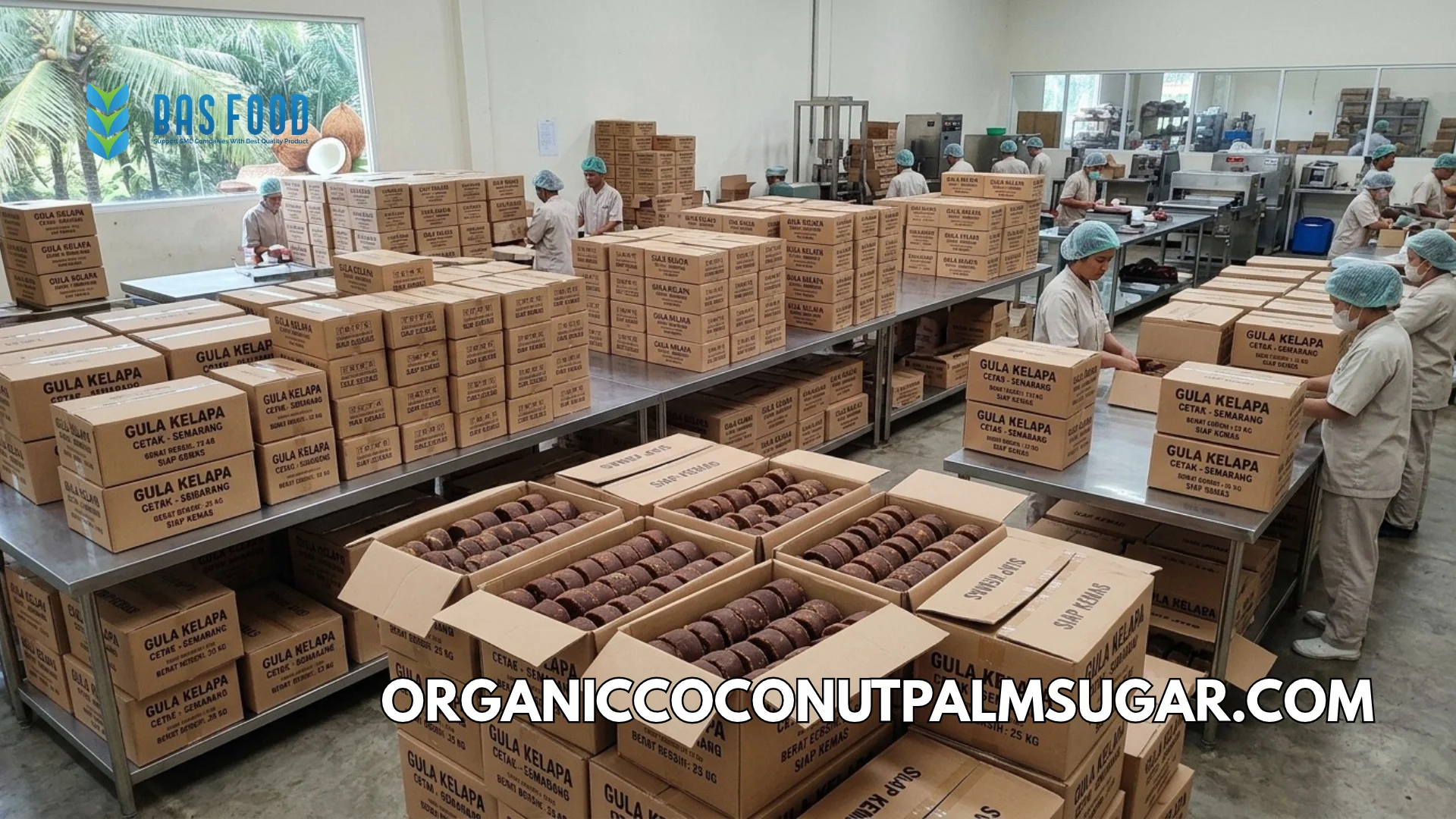
Who Needs a Moulded Coconut Sugar Supplier?
A moulded coconut sugar supplier can serve several types of businesses. Importers and distributors may purchase the product for wholesale distribution to supermarkets, independent retailers, specialty food shops, and regional wholesalers. These businesses generally need consistent product information, practical packaging, and reliable order communication to manage their supply chains.
Food manufacturers may also source moulded coconut sugar when a solid sweetener fits their processing requirements. Depending on the recipe, they may need to break down or dissolve the sugar before adding it to other ingredients. Before purchasing in large quantities, manufacturers should test the product in their own processes because firmness, moisture, and dissolution behavior can influence preparation time.
Restaurants, catering businesses, beverage producers, and traditional food makers may use moulded coconut sugar in everyday recipes. For these buyers, flavor and ease of handling can matter as much as the purchase price. They should consider whether the product can be portioned consistently and whether it performs well in the intended application.
Retail brands may also be interested in moulded coconut sugar for consumer-facing products. However, custom shapes, private-label packaging, and special branding are not automatically part of a standard supply offer. Buyers should ask whether these options are available, what minimum order quantities apply, and whether additional setup costs are involved.
What Makes a Reliable Food Ingredient Supplier?
A reliable food ingredient supplier should provide clear product information and help buyers understand what they are purchasing. For moulded coconut sugar, this means describing the raw material, product format, appearance, packaging, and relevant quality parameters. Clear information makes it easier for buyers to determine whether the product fits their market or manufacturing process.
Consistency is another important consideration. If a buyer plans to distribute the product regularly, substantial differences in size, color, texture, or packaging between shipments may create operational problems. Although natural ingredients can show some variation, buyers and suppliers should agree on acceptable specifications and tolerances before production.
Food safety and traceability also deserve attention. Depending on the destination market and the buyer’s requirements, relevant information may include product testing, hygiene controls, batch identification, storage guidance, and applicable food safety documentation. Buyers should verify any certifications directly and confirm that they cover the product and facility involved in the transaction.
Finally, communication helps turn a supplier relationship into a workable business partnership. A supplier should be able to respond to questions about product specifications, order terms, packaging, and delivery planning. If a request cannot be fulfilled, clear communication early in the process is better than discovering the limitation after an order has been confirmed.
Key Product Specifications to Check Before Buying
Before choosing a supplier, prepare a list of product specifications that matter to your business. This step helps suppliers understand your requirements and makes quotations easier to compare. Without clear specifications, two offers may refer to different product formats or quality expectations even when they use the same product name.
For moulded coconut sugar, consider requesting information about the following:
- Raw material: Confirmation that the product is made from coconut sap.
- Shape and dimensions: The expected form, length, width, diameter, or other relevant measurements.
- Weight per piece: The approximate or specified weight of each moulded unit.
- Color and appearance: The expected color range and acceptable surface characteristics.
- Flavor and aroma: A description of the product’s typical sensory profile.
- Texture and firmness: Information relevant to breaking, portioning, or processing.
- Moisture content: A documented value or specification where applicable.
- Packaging: The type of primary and secondary packaging and the net weight per pack.
- Storage and shelf life: Guidance supported by the supplier’s product information.
- Quality and food safety requirements: Relevant criteria based on the destination market and intended use.
Not every business needs the same level of detail. A retailer may focus on appearance, unit weight, and consumer packaging, while a food manufacturer may need additional technical data and application testing. Therefore, tailor the specification list to your actual requirements rather than requesting information that does not affect your purchasing decision.
It is also useful to agree on how the product will be checked before shipment. For example, the parties can discuss sample approval, inspection methods, acceptable variation, and the documents that will accompany the order. Written specifications provide a shared reference if questions arise later.
How to Evaluate a Bulk Supplier
A bulk supplier should be assessed according to your required quantity, product specifications, delivery schedule, and total purchasing cost. Do not assume that every supplier has the same production capacity or minimum order quantity. Instead, explain your expected volume and ask the supplier to confirm what it can currently support.
Start by checking the minimum order quantity, or MOQ. This is the smallest order accepted under the supplier’s commercial conditions. MOQ may depend on packaging, production arrangements, product format, and order requirements. A buyer placing a trial order may need a different arrangement from a distributor purchasing regular shipments.
Next, review lead time. Ask how long the supplier expects to need for order confirmation, production, quality checks, packaging, and export preparation. Keep production lead time separate from shipping time because international transportation depends on the route, carrier, destination, and logistics conditions.
Then, compare the full quotation. Consider the unit price, packaging costs, inland transport, export-related charges, freight, insurance where applicable, and destination costs. The lowest quoted price may not produce the lowest landed cost once all expenses are included.
Finally, assess how the supplier handles communication and quality issues. Ask how it confirms an order, reports delays, responds to product concerns, and reviews claims. These details can help you understand whether the supplier’s working process matches your business expectations.
Why Product Samples Are Important
A product sample lets buyers assess moulded coconut sugar before making a large purchase. Product descriptions and photographs can provide useful information, but they cannot fully demonstrate the flavor, aroma, firmness, or performance of a physical sample. Therefore, sample evaluation is often a sensible step for importers and manufacturers.
When a sample arrives, inspect its shape, dimensions, weight, color, surface, and packaging. Check whether the product matches the specifications you requested. If you intend to sell it directly to consumers, consider whether the pieces look consistent and whether the packaging protects them adequately.
You should also test the sample in its intended application. For example, if you plan to use the sugar in a beverage or sauce, observe how easily it breaks down and whether the flavor suits your recipe. If the product will enter a manufacturing process, test it under realistic operating conditions rather than relying only on a visual inspection.
Before requesting samples, clarify whether the sample is representative of the product that would be supplied in a commercial order. Ask about sample costs, shipping fees, and dispatch time. Once the product passes your evaluation, record the approved specifications and retain a reference sample where practical.
Packaging and Storage: Protecting Product Quality
Packaging plays an important role in protecting moulded coconut sugar from moisture, contamination, crushing, and unnecessary handling. Since sugar can absorb moisture from its surroundings, poor packaging or unsuitable storage conditions may affect its texture and handling properties. The packaging should therefore match the product characteristics, shipping conditions, and intended storage period.
For wholesale and export orders, buyers should discuss the primary packaging, outer carton or bag, net weight per package, units per carton, and shipping marks. If palletization is required, confirm the proposed arrangement and dimensions in advance. These details help the buyer prepare warehouse space and estimate handling requirements.
Storage conditions also matter after the shipment arrives. Follow the supplier’s guidance and keep the product in a clean, dry environment with suitable protection from moisture and strong odors. Avoid storing packages directly against damp floors or exposed areas where condensation may occur. Warehouse procedures should support the product’s documented storage requirements.
If the product will be stored for an extended period, ask for the supplier’s recommended shelf life and the basis for that guidance. Shelf life should not be assumed to be identical across every moulded coconut sugar product because processing, moisture, packaging, and storage conditions can vary.
Export Documentation and International Shipping
International sourcing requires coordination between the supplier, importer, freight forwarder, and other parties involved in the shipment. Before confirming the order, make sure both sides understand the product description, quantity, packaging details, delivery terms, and shipping schedule. Clear information can help prevent delays caused by incomplete paperwork or mismatched expectations.
Depending on the destination and the transaction, export and import documentation may include a commercial invoice, packing list, transport document, certificate of origin, or additional food-related documents. The exact requirements depend on the product classification and the rules of the importing country. Buyers should confirm current requirements with their customs broker and the relevant authorities before the goods are dispatched.
Delivery terms also need careful attention. The parties should identify who arranges transportation, who handles export and import clearance, and which costs are included in the quotation. If Incoterms® rules are used in the sales contract, state the relevant rule and named place clearly so that responsibilities are understood.
For first-time buyers, it is helpful to request a document checklist before production or shipment. This gives the supplier and importer time to review the paperwork and identify any special requirements. It can also reduce the risk of discovering a documentation issue when the goods are already in transit.
How to Choose a Coconut Sugar Manufacturer
A coconut sugar manufacturer may offer more direct insight into the production process than a trading company, but buyers should not assume that every manufacturer provides the same services. Some focus on standard products, while others may offer several formats or customized production options. The key is to verify the supplier’s role and capabilities before committing to an order.
Ask how the product is processed and which quality checks are relevant to the final specification. You can also ask how batches are identified, how product consistency is monitored, and how changes in raw materials or processing are handled. The answers should help you understand whether the supplier’s quality process fits your needs.
If you need a specific mould shape, weight, or packaging format, explain your requirements early. Ask whether the supplier can produce the requested format, whether tooling or setup costs apply, and what MOQ would be required. Do not assume that a standard product can be customized without additional time or cost.
It is also useful to clarify whether you are communicating directly with the manufacturer or through an exporter or distributor. Both arrangements can work, but the purchasing process, documentation flow, and responsibilities may differ. Understanding the supplier’s role helps you know whom to contact for technical questions, commercial terms, and order updates.
Considering CV Bonafide Anugerah Sentosa as a Potential Supplier
Businesses researching Indonesian coconut products may include CV Bonafide Anugerah Sentosa in their supplier evaluation. The next step is to confirm directly whether the company currently offers moulded coconut sugar in the required format and whether its commercial terms match your purchasing needs.
When making an inquiry, provide enough detail for the company to understand your request. State that you are looking for moulded coconut sugar and include the estimated quantity, preferred shape or size, packaging requirements, destination country, and intended application. If you need technical documentation or a sample, mention those requirements as well.
You can also ask about the minimum order quantity, expected lead time, available packaging, sample arrangements, and export documentation. If you require private-label packaging or a custom mould, ask whether the service is available and what conditions apply. Confirm all details in writing before placing the order.
For international buyers, choosing a coconut sugar exporter supplier involves checking more than the product name. You should verify the product range, quality specifications, order terms, and documentation that the company can provide for your destination market. These checks help you make a decision based on confirmed information rather than assumptions.
CV Bonafide Anugerah Sentosa can be considered as part of your sourcing research, but product availability and specific capabilities should be confirmed directly with the company. This is particularly important when your business depends on a particular mould size, packaging format, or recurring delivery schedule.
Building a Long-Term Relationship with Your Supplier
A successful supplier relationship can help businesses maintain more predictable purchasing routines. However, long-term cooperation depends on clear communication, realistic planning, and a shared understanding of product requirements. Buyers should communicate expected demand early while recognizing that every order still requires confirmation.
After receiving the first shipment, review the product and the overall transaction. Check whether the goods match the approved specifications, whether the packaging remained intact, whether the documents were complete, and whether the shipment arrived according to the agreed schedule. Share useful feedback with the supplier so that any issues can be addressed before the next purchase.
It is also worth maintaining a record of approved product specifications, samples, packaging details, purchase orders, and inspection results. These records make it easier to compare future shipments and investigate any differences. If you want to change the product format or packaging, discuss the change before production begins.
As your business grows, you may need different order quantities or packaging options. Review these requirements with the supplier and confirm which changes are feasible. A strong working relationship does not remove the need for quality checks; instead, it makes expectations clearer and helps both sides manage orders more effectively.
Final Checklist for Finding the Right Moulded Coconut Sugar Supplier
Choosing the right moulded coconut sugar supplier begins with defining your business requirements. Identify the market you serve, the product format you need, the expected order volume, and the quality standards that matter most. These details will help you screen suppliers and request relevant quotations.
Next, compare product specifications, sample quality, packaging, MOQ, lead time, documentation, and commercial terms. Ask clear questions and verify the supplier’s answers. For export purchases, check destination-country requirements and agree on delivery responsibilities before the goods are shipped.
Before placing a bulk order, make sure the important terms are documented. The purchase agreement should clearly identify the product, quantity, price, packaging, delivery conditions, payment terms, and process for handling nonconforming goods. This preparation can reduce uncertainty and support smoother transactions.
For businesses sourcing from Indonesia, CV Bonafide Anugerah Sentosa may be one company to contact during the supplier research process. Confirm directly whether moulded coconut sugar is currently available and whether the company can meet your specifications, order quantity, and export requirements.
Ultimately, the best supplier is not simply the one offering the lowest price. It is the one whose verified product, quality controls, communication, and commercial terms fit your business. By taking a structured approach to supplier selection, importers, distributors, retailers, and food manufacturers can make more confident purchasing decisions and build a more dependable supply chain.