As consumers become more selective about the ingredients in their food, demand for naturally sourced sweeteners continues to grow. Food manufacturers, beverage companies, bakeries, and health-focused brands are searching for ingredients that combine excellent taste with a simple production process. One product that continues to stand out is natural coconut sugar.
Made from the fresh sap of coconut palm blossoms, coconut sugar has become a popular ingredient in international food markets. Its rich caramel flavor, pleasant aroma, and wide range of applications make it suitable for everything from baked goods and beverages to sauces and confectionery products. At the same time, many buyers appreciate its traditional production process and naturally derived origin.
A common question among importers and consumers is, is coconut sugar natural? The short answer is yes. Coconut sugar is made from coconut blossom sap using a straightforward evaporation process rather than extensive refining. Because of this, it is widely recognized as a minimally processed sweetener and a preferred natural sugar alternative for many food manufacturers.
In this comprehensive guide, we will explore what makes natural coconut sugar unique, how it is produced, why it has gained worldwide popularity, and what businesses should consider when sourcing export-quality coconut sugar.
Is Coconut Sugar Natural?
One of the most frequently asked questions in the food industry is is coconut sugar natural?
The answer begins with understanding its source.
Natural coconut sugar is produced from the fresh sap collected from the flower blossoms of coconut palm trees. Farmers carefully tap the unopened blossoms to collect the naturally sweet liquid known as coconut blossom sap. The sap is then filtered and gently heated until enough water evaporates, allowing the natural sugars to crystallize.
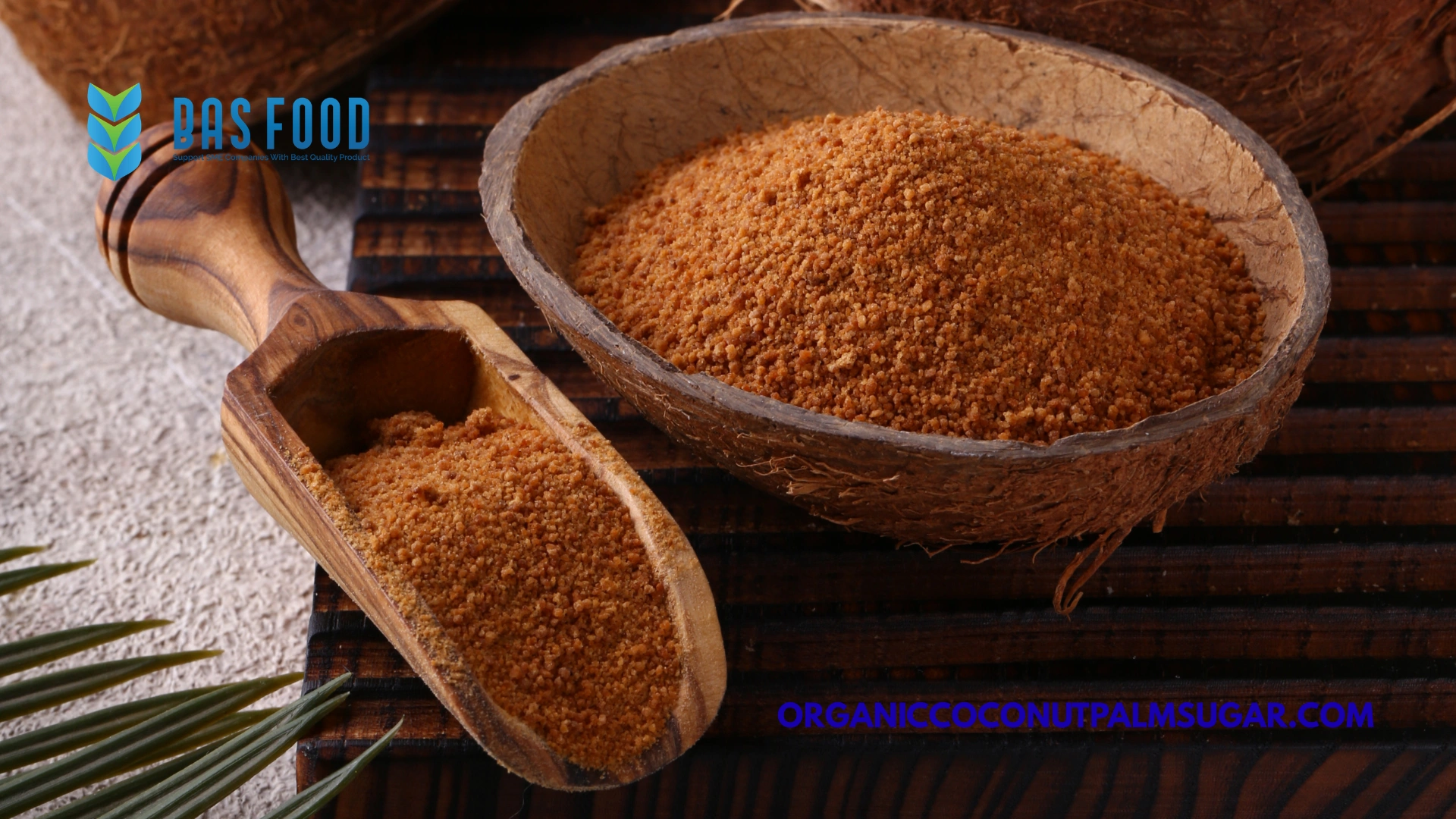
Unlike refined white sugar, which undergoes multiple industrial refining stages, coconut sugar is made through a relatively simple production process. No bleaching is required to create its natural golden to dark brown color, and its characteristic caramel flavor develops naturally during cooking.
Because the production method focuses primarily on evaporation rather than extensive refining, coconut sugar is commonly regarded as a minimally processed sweetener. This simple manufacturing process is one of the key reasons why businesses and consumers view it as a naturally sourced ingredient.
What Makes Natural Coconut Sugar Different?
Although many sweeteners are available today, natural coconut sugar offers several characteristics that make it stand out.
First, it has a rich caramel flavor that enhances both sweet and savory recipes. Instead of providing only sweetness, it contributes depth and complexity to baked goods, beverages, desserts, sauces, and confectionery.
Second, coconut sugar has a naturally appealing appearance. Its warm golden to dark brown color develops during the cooking process without the need for artificial coloring.
Another advantage is its versatility. Manufacturers can use coconut sugar in a wide variety of food applications with only minor recipe adjustments. This makes it a practical ingredient for both small artisan producers and large-scale food manufacturers.
Finally, consumers increasingly appreciate ingredients that come from recognizable agricultural sources. Since coconut sugar begins as fresh coconut blossom sap collected by farmers, it fits well with the growing interest in naturally derived food ingredients.
How Natural Coconut Sugar Is Made
Understanding the production process helps buyers appreciate why coconut sugar is often described as a minimally processed sweetener.
Harvesting Coconut Blossom Sap
The process starts with healthy coconut trees.
Experienced farmers carefully tap the unopened flower blossoms and collect the naturally sweet sap in clean containers.
Fresh sap is highly perishable, so it is transported quickly for processing.
Maintaining cleanliness during harvesting is essential because high-quality raw sap directly influences the quality of the finished product.
Gentle Evaporation
Once collected, the sap is filtered to remove natural impurities.
It is then heated slowly over controlled temperatures to evaporate water while concentrating the natural sugars.
Unlike heavily refined sweeteners, this process relies primarily on evaporation rather than multiple chemical refining stages.
Natural Crystallization
As moisture continues to evaporate, the concentrated syrup gradually forms sugar crystals.
The crystals are stirred continuously to achieve a uniform texture before being cooled, dried, and packaged.
Professional manufacturers carefully monitor moisture levels because they affect shelf life, texture, and product consistency.
Why Food Manufacturers Prefer Natural Coconut Sugar
The demand for natural coconut sugar continues to increase across many food industries.
Bakery Products
Bakers appreciate coconut sugar because it provides both sweetness and a pleasant caramel flavor.
It works well in cookies, cakes, muffins, breads, and pastries while contributing an attractive golden-brown appearance.
Beverage Industry
Coffee, tea, flavored drinks, smoothies, and nutritional beverages often use coconut sugar to create distinctive flavor profiles.
Its natural caramel notes complement many beverage formulations.
Confectionery
Chocolate manufacturers and candy producers value coconut sugar because it adds flavor complexity beyond simple sweetness.
Premium confectionery products frequently use coconut sugar to create unique taste experiences.
Dairy Products
Ice cream, yogurt, and flavored dairy products increasingly include coconut sugar as part of premium product formulations.
Its rich flavor pairs well with milk-based ingredients.
Sauces and Seasonings
Natural coconut sugar is also widely used in barbecue sauces, marinades, seasoning blends, and salad dressings.
Its balanced sweetness enhances savory recipes without overpowering other ingredients.
Natural Coconut Sugar as a Natural Sugar Alternative
Today’s consumers are paying closer attention to ingredient labels than ever before.
Many food companies are responding by selecting ingredients that align with consumer preferences for recognizable and naturally sourced foods.
As a natural sugar alternative, coconut sugar fits into this trend because it comes directly from coconut blossom sap and undergoes a relatively straightforward production process.
While manufacturers should avoid making unsupported health claims, many brands appreciate coconut sugar because it offers an ingredient story that consumers can easily understand.
Its traditional production methods also help companies communicate authenticity and craftsmanship within their product marketing.
For these reasons, coconut sugar continues to appear in premium food products across supermarkets, specialty stores, cafés, and restaurants worldwide.
Quality Factors That Define Premium Natural Coconut Sugar
Not every coconut sugar product offers the same level of quality.
Professional buyers evaluate several characteristics before selecting a supplier.
Color Consistency
High-quality coconut sugar should have a uniform golden to dark brown color.
Consistent color usually reflects stable production methods.
Moisture Content
Proper moisture control improves storage performance and helps reduce clumping during transportation.
Aroma
Premium coconut sugar has a pleasant caramel aroma without burnt or sour notes.
Texture
Granules or powder should flow freely without excessive clumping.
Uniform texture makes processing easier for food manufacturers.
Packaging
Moisture-resistant packaging protects product quality throughout international shipping and storage.
Reliable exporters invest in packaging that preserves freshness during long-distance transportation.
Indonesia’s Role in Producing Natural Coconut Sugar
Indonesia is one of the world’s largest producers of coconut sugar.
Its tropical climate supports millions of coconut trees, while experienced farming communities have collected coconut blossom sap for generations.
Traditional harvesting knowledge combined with modern manufacturing systems enables Indonesian exporters to supply consistent, high-quality coconut sugar to customers around the world.
Many Indonesian producers have also invested in improved quality control, hygienic processing, laboratory testing, and export-ready packaging.
These capabilities make Indonesia a trusted sourcing destination for international buyers seeking dependable supplies of natural coconut sugar.
How Importers Can Choose the Right Coconut Sugar Supplier
Selecting the right supplier is just as important as selecting the right product.
Professional importers like CV Bonafide Anugerah Sentosa evaluate production capacity, food safety systems, export experience, quality assurance procedures, and communication responsiveness.
Requesting product specifications, laboratory reports, and production samples helps buyers verify consistency before placing larger orders.
It is also beneficial to discuss packaging options, private labeling opportunities, and logistics support with potential suppliers.
Long-term partnerships with experienced exporters often result in more stable supply chains, consistent quality, and better customer service.
Frequently Asked Questions
Is coconut sugar natural?
Yes. Coconut sugar is made from fresh coconut blossom sap using a simple evaporation process, making it a naturally sourced sweetener.
Why is coconut sugar considered a minimally processed sweetener?
It is produced mainly by filtering and evaporating fresh sap without the extensive refining commonly used for white sugar.
What is coconut sugar made from?
Coconut sugar comes from the sap collected from the flower blossoms of coconut palm trees, not from the coconut fruit.
Can coconut sugar be used in baking?
Yes. Coconut sugar works well in cakes, cookies, breads, pastries, and many other baked goods.
Why do food manufacturers use coconut sugar?
Manufacturers value its rich caramel flavor, versatility, attractive appearance, and naturally sourced origin.
Conclusion
Natural coconut sugar has become one of the most popular ingredients in today’s global food industry because it combines traditional production methods with excellent versatility and a distinctive caramel flavor. Produced from fresh coconut blossom sap through a straightforward evaporation process, it is widely recognized as a minimally processed sweetener and a trusted natural sugar alternative for a wide range of food applications.
For importers, distributors, and food manufacturers, understanding is coconut sugar natural helps explain why this ingredient continues to gain worldwide recognition. Its simple production process, reliable functionality, and compatibility with modern consumer preferences make it an excellent choice for premium food products.
Choosing an experienced exporter is the final step toward ensuring consistent quality. A reliable supplier offers strong quality control, export-ready packaging, dependable documentation, and long-term supply stability, allowing businesses to confidently deliver high-quality coconut sugar to customers across international markets.