The bakery industry continues to explore new ingredients that can bring distinctive flavors, improve product variety, and meet changing consumer preferences. Sweeteners are an important part of this development. They do more than add sweetness. They also influence color, texture, moisture, flavor, and the overall eating experience of baked goods. One ingredient attracting interest among food manufacturers and bakery businesses is coconut sugar syrup. Made from concentrated coconut palm sap, this liquid sweetener offers a characteristic caramel-like taste that can complement cakes, cookies, pastries, breads, and other desserts.
For professional bakeries, ingredient selection is about more than flavor. Manufacturers must also consider consistency, processing requirements, storage, packaging, and reliable supply. This guide explores how coconut sugar syrup for bakery applications can support product development and what B2B buyers should understand before sourcing it.
What Makes Coconut Sugar Syrup an Interesting Bakery Ingredient?
Coconut sugar syrup is produced by concentrating the sap collected from coconut flower buds. During processing, water evaporates and the natural sugars become more concentrated, creating a thick, sweet liquid. Its color generally ranges from golden brown to dark brown, depending on the production process and concentration.
Unlike refined liquid sweeteners with a relatively neutral taste, coconut sugar syrup can offer a warm flavor with caramel-like, toffee, and molasses-style notes. These characteristics make it interesting for bakery products that benefit from deeper sweetness and a richer flavor profile.
For example, a bakery can use it in chocolate cakes, banana bread, cookies, brownies, and sweet pastry fillings. It can also complement ingredients such as cinnamon, vanilla, cocoa, coffee, nuts, and tropical fruits.
However, coconut sugar syrup is not simply a direct replacement for every other sweetener. Its moisture content, sweetness intensity, viscosity, and flavor can affect the final recipe. Therefore, manufacturers should test it in their own formulations before making large-scale production changes.
How Coconut Sugar Syrup Works in Different Bakery Products
Different bakery products require different ingredient functions. A cookie, for example, has different moisture and texture requirements from a soft cake or a bread loaf. Understanding these differences helps manufacturers decide where coconut sugar syrup can deliver the most value.
Cakes and muffins
Coconut sugar syrup can add sweetness and a deeper flavor to cakes and muffins. It works particularly well in recipes featuring chocolate, banana, cinnamon, coffee, or nuts. Its brown color can also influence the appearance of the finished product.
When using it in cake batter, manufacturers should consider the additional liquid it contributes. Too much liquid may change batter consistency and affect the final crumb. A controlled substitution, followed by texture and baking tests, is a practical way to develop the right formula.
Cookies and brownies
Cookies and brownies are also suitable products for testing coconut sugar syrup. Its caramel-like notes can complement chocolate, roasted nuts, oats, and spices. In some formulations, liquid sweeteners can influence spread, softness, and moisture retention.
However, the results depend on the other ingredients and the baking conditions. For example, adding more liquid sweetener may produce a softer cookie, but it can also make the dough difficult to handle. Bakers should adjust the recipe gradually instead of replacing all dry sugar at once.
Bread and sweet pastries
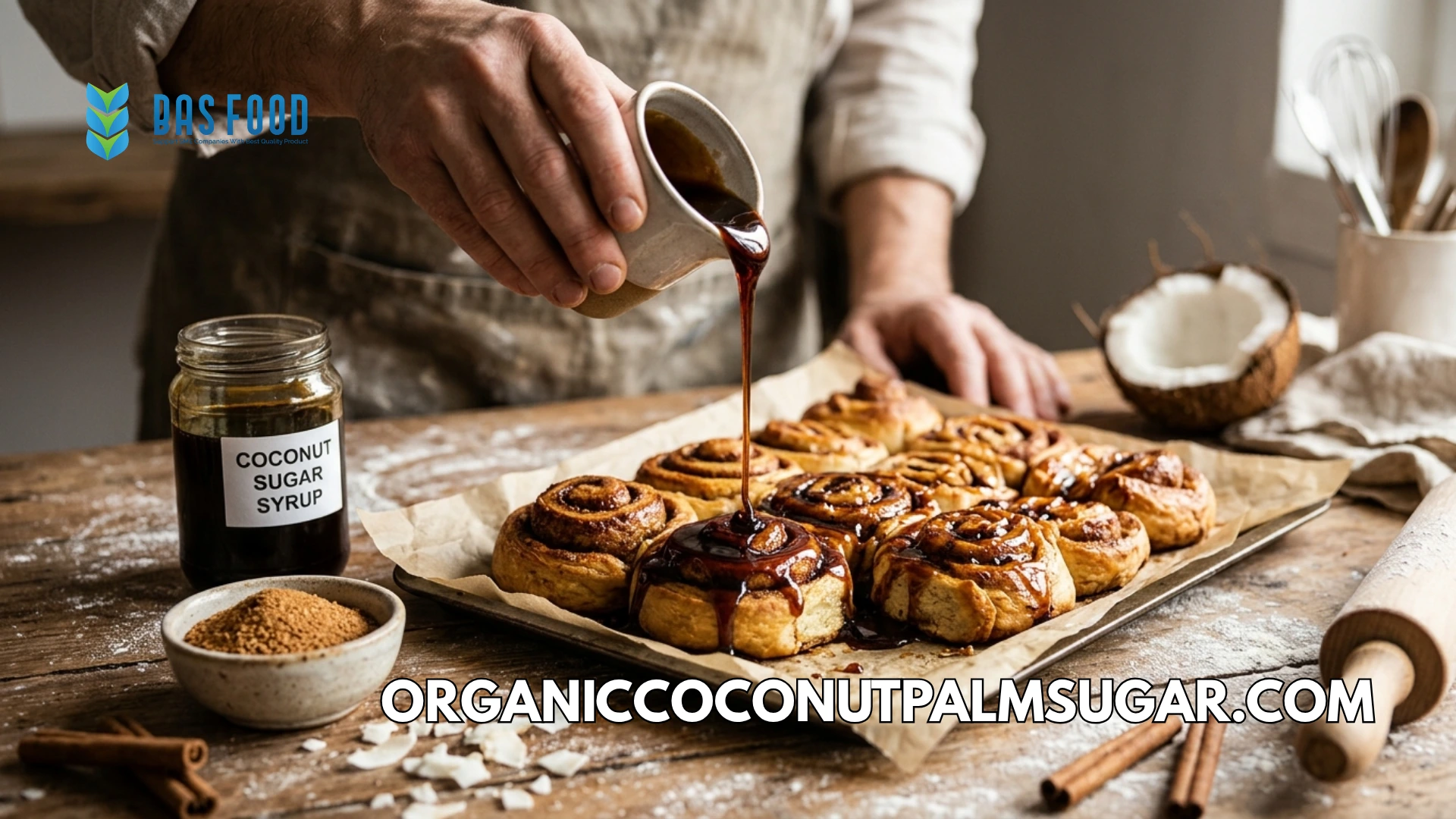
Sweet breads, cinnamon rolls, buns, and pastries can benefit from the flavor of coconut sugar syrup. Manufacturers may incorporate it into dough, fillings, glazes, or toppings, depending on the product design.
For filled pastries, it can work alongside ingredients such as cinnamon, coconut, chocolate, and fruit. In glazes, it can provide sweetness and a brown color. Nevertheless, bakers should check how the syrup behaves during heating and whether the finished product maintains the desired consistency.
Coconut Sugar Syrup as a Dessert Sweetener
A good dessert sweetener should do more than make a product taste sweet. It should complement the other ingredients and contribute to the intended flavor experience. This is one reason coconut sugar syrup deserves consideration in dessert development.
Its caramel-like profile can pair naturally with chocolate, vanilla, coffee, coconut, banana, cinnamon, and roasted nuts. These combinations create opportunities for bakeries to develop signature products with a distinctive taste.
For example, a chocolate brownie made with coconut sugar syrup may offer a deeper sweetness than a version made with a neutral liquid sweetener. A banana cake can benefit from the combination of ripe fruit and caramel-like notes. Meanwhile, cinnamon rolls can use the syrup in their filling or glaze to create a warm flavor.
Coconut sugar syrup can also support product development for dessert manufacturers producing puddings, sweet fillings, dessert sauces, and baked cheesecake toppings. Its liquid form makes it convenient to incorporate into many recipes, although the formulation must account for its water and soluble solids.
It is important to remember that coconut sugar syrup is not automatically a healthier sweetener or a sugar-free alternative. It contains sugars and contributes energy. Manufacturers should describe the product accurately and avoid unsupported nutritional or health claims.
The Role of Liquid Sugar in Bakery Formulation
Liquid sugar ingredients offer practical advantages in food manufacturing. They can be pumped, poured, blended, and distributed through a formulation without first dissolving dry crystals. For bakeries with suitable mixing equipment, this can simplify certain production steps.
Coconut sugar syrup provides sweetness in a liquid format. It may be incorporated into cake batter, cookie dough, fillings, glazes, and other bakery mixtures. However, manufacturers need to understand that replacing dry sugar with liquid sugar changes more than the sweetener source.
Dry sugar contributes solids to a recipe, while syrup contributes both sugar solids and water. This difference can influence batter thickness, dough handling, baking time, moisture, and final texture. As a result, a one-to-one replacement by weight may not produce the same outcome.
A practical formulation process should include several steps:
- Start with a small percentage of the original sugar replaced by coconut sugar syrup.
- Record the syrup’s available technical specifications, including Brix or soluble-solids information where provided.
- Adjust other liquid ingredients if necessary.
- Evaluate dough or batter consistency before baking.
- Compare the finished product’s flavor, color, texture, and moisture.
- Repeat the test until the formulation meets the desired product standard.
This method helps manufacturers understand how the ingredient performs before introducing it into regular production.
Flavor, Color, and Texture: What Bakers Should Expect
One of the most noticeable characteristics of coconut sugar syrup is its brown color. Depending on the product and concentration, it may give baked goods a warmer appearance. This can be useful for products such as chocolate cakes, brownies, gingerbread, banana bread, and cinnamon pastries.
Its flavor can also influence the final product. The caramel-like notes may create a richer taste when combined with cocoa, coffee, vanilla, or spices. However, this flavor is not suitable for every bakery application. Products that require a very mild or neutral sweetness may need a different sweetener.
Texture is another important consideration. Since coconut sugar syrup adds liquid to a recipe, it can affect the softness and moisture of baked products. The final result depends on the amount used, the syrup’s composition, the flour type, the fat content, and the baking process.
For this reason, bakeries should evaluate more than the taste of the raw syrup. A successful ingredient must perform well after mixing, baking, cooling, packaging, and storage. Product testing should cover the complete production process.
Practical Tips for Using Coconut Sugar Syrup in Commercial Baking
Moving from a small recipe test to commercial production requires careful planning. A syrup that performs well in a home kitchen may behave differently in a large mixer or automated production line. Therefore, bakery manufacturers should develop a clear testing procedure.
Begin with a controlled substitution
Instead of replacing all the sugar immediately, begin with a partial substitution. This allows the development team to observe changes in sweetness, color, moisture, and texture while keeping the original recipe as a reference.
Check the consistency of the syrup
Viscosity can affect pumping, pouring, mixing, and ingredient distribution. A thick syrup may require different handling from a thinner product. Manufacturers should request product information and test the syrup using their actual equipment.
Review baking conditions
Liquid sweeteners may influence browning and moisture. Therefore, manufacturers should monitor baking temperature, baking time, and the appearance of the finished product. Any adjustments should be based on trial results rather than assumptions.
Evaluate the finished product
After baking, allow the product to cool and assess its texture, flavor, color, and structure. If the product is intended for retail distribution, additional testing should evaluate packaging compatibility and quality during the intended storage period.
Maintain production records
Record the syrup batch, usage level, mixing conditions, baking conditions, and test results. These records help manufacturers reproduce successful formulations and investigate differences between production batches.
Bakery Applications That Can Benefit from Coconut Sugar Syrup
The versatility of coconut sugar syrup creates opportunities across several bakery categories. Manufacturers can explore it in existing products or use it to develop new recipes.
| Bakery product | Possible application |
|---|---|
| Chocolate cake | Sweetener for a deeper flavor profile |
| Brownies | Liquid sweetener that complements cocoa |
| Banana bread | Sweetener that pairs with ripe banana |
| Cookies | Ingredient for selected soft-cookie formulations |
| Cinnamon rolls | Filling or glaze ingredient |
| Muffins | Sweetener for fruit, chocolate, or nut muffins |
| Sweet bread | Ingredient for dough or filling |
| Pastries | Component in fillings and toppings |
| Granola bars | Sweetener and binder component, subject to formulation tests |
| Dessert sauces | Sweet base for bakery toppings |
These are potential applications rather than guaranteed results. Each product has its own formulation requirements, so manufacturers should conduct trials before adopting the syrup in commercial recipes.
For example, a bakery producing soft cookies may prioritize moisture and spread, while a cake manufacturer may focus on crumb structure and flavor. A pastry producer may be more concerned with filling viscosity and stability during baking.
Matching the ingredient to the product’s requirements is the best way to identify its commercial value.
Quality and Storage Considerations for Bakery Manufacturers
Consistent ingredient quality is essential for commercial bakeries. Differences in syrup concentration, color, flavor, or viscosity can affect production results. Therefore, buyers should request clear product specifications before placing regular orders.
Useful information to discuss with a supplier includes:
- Product origin and raw material.
- Ingredient composition.
- Brix or soluble-solids specification, if available.
- Moisture content, where measured.
- Color and flavor characteristics.
- Viscosity or handling information.
- Microbiological specifications and relevant test documentation.
- Packaging options and net weight.
- Batch identification and traceability.
- Recommended storage conditions and product shelf life.
Brix is commonly used to describe soluble-solids concentration in syrups. However, it should not be treated as a direct measurement of moisture content or water activity. These are different properties and may require separate testing.
Storage also deserves attention. Keep the syrup in suitable, tightly closed packaging and follow the supplier’s recommended storage instructions. Avoid unnecessary exposure to moisture, contamination, and unsuitable temperatures.
For manufacturers, shelf life should be supported by product-specific information and appropriate validation. Do not assume that all coconut sugar syrups have the same storage life simply because they share the same product name.
Choosing a Reliable Coconut Sugar Supplier for Bakery Production
A reliable coconut sugar supplier can help bakery manufacturers maintain consistent production and manage ingredient procurement. However, choosing a supplier should involve more than comparing prices.
First, buyers should evaluate product consistency. Ask whether the supplier can provide specifications for each product and explain how it manages batch variation. This is particularly important for bakeries that need a consistent flavor, color, and viscosity across multiple production runs.
Second, review packaging and logistics. Coconut sugar syrup is a liquid food ingredient, so packaging must be suitable for storage and transportation. Buyers should confirm available packaging formats, shipment arrangements, lead times, and documentation before confirming an order.
Third, discuss technical support and communication. A supplier that can respond clearly to questions about product specifications, samples, and export documentation can make the sourcing process easier. Buyers should also confirm whether the supplier can meet their required order volume and destination-market requirements.
For international buyers, working with an experienced coconut sugar exporter supplier can be useful when sourcing ingredients from Indonesia. Clear communication about specifications, packaging, documentation, and shipment schedules helps reduce misunderstandings during procurement.
Sourcing Coconut Sugar Syrup from Indonesia with CV Bonafide Anugerah Sentosa
Indonesia is an important origin for coconut-based food ingredients. Its coconut-growing regions support the production of products made from coconut palm sap, including coconut sugar in several forms.
For bakery manufacturers, importers, distributors, and food ingredient traders, Indonesia can be a sourcing destination worth exploring. However, buyers should always evaluate the actual product specifications and supplier capabilities rather than relying on country of origin alone.
CV Bonafide Anugerah Sentosa is an Indonesian exporter and supplier of coconut sugar and other coconut-derived products. Businesses looking for a coconut sugar supplier can contact the company to discuss product requirements, sourcing needs, and export arrangements.
Before purchasing, buyers should share their intended application. For example, a cake manufacturer may need a syrup with particular handling characteristics, while a bakery ingredient distributor may require specific packaging and documentation. Providing these details helps both parties assess whether the product is suitable.
If you are evaluating coconut sugar syrup for bakery applications, request the available technical specifications and discuss sample testing before moving to a larger order. This approach allows your product development team to assess flavor, consistency, and processing performance under real production conditions.
Conclusion: A New Ingredient for Creative Bakery Development
Coconut sugar syrup offers bakery manufacturers an interesting way to explore caramel-like flavor, brown color, and liquid sweetener functionality. From cakes and brownies to cookies, pastries, and sweet fillings, it can support a range of product development ideas.
However, successful use depends on understanding how the syrup interacts with the complete recipe. Its liquid content, concentration, viscosity, and flavor can influence the final product. Therefore, careful formulation trials and clear ingredient specifications are essential before commercial adoption.
For bakeries, importers, and food ingredient distributors, sourcing from a dependable supplier is equally important. CV Bonafide Anugerah Sentosa welcomes inquiries from businesses interested in Indonesian coconut sugar and coconut-derived ingredients. Contact the company to discuss your requirements and explore whether coconut sugar syrup is suitable for your bakery products.