The demand for gluten-free foods has grown rapidly over the last decade. Consumers are reading ingredient labels more carefully than ever, while food manufacturers continue developing products that meet different dietary preferences and lifestyle choices. As a result, many buyers are asking an important question: Is coconut sugar gluten free?
The simple answer is yes. Coconut sugar is naturally produced from the sap of coconut palm blossoms and does not naturally contain gluten. Because of its plant origin, coconut sugar gluten free has become an attractive ingredient for manufacturers producing gluten-free bakery products, beverages, snacks, desserts, and many other food applications.
However, understanding gluten-free ingredients involves more than knowing their natural source. Importers, distributors, and food manufacturers must also consider production practices, cross-contact prevention, food safety systems, and labeling requirements in different export markets. These factors are especially important when products are marketed as a gluten free sweetener or included in certified gluten-free food products.
This comprehensive guide explains everything businesses need to know about coconut sugar gluten free, including how it is produced, why it is naturally gluten-free, how manufacturers maintain product integrity, and why it has become a trusted allergy friendly sugar for global food production.
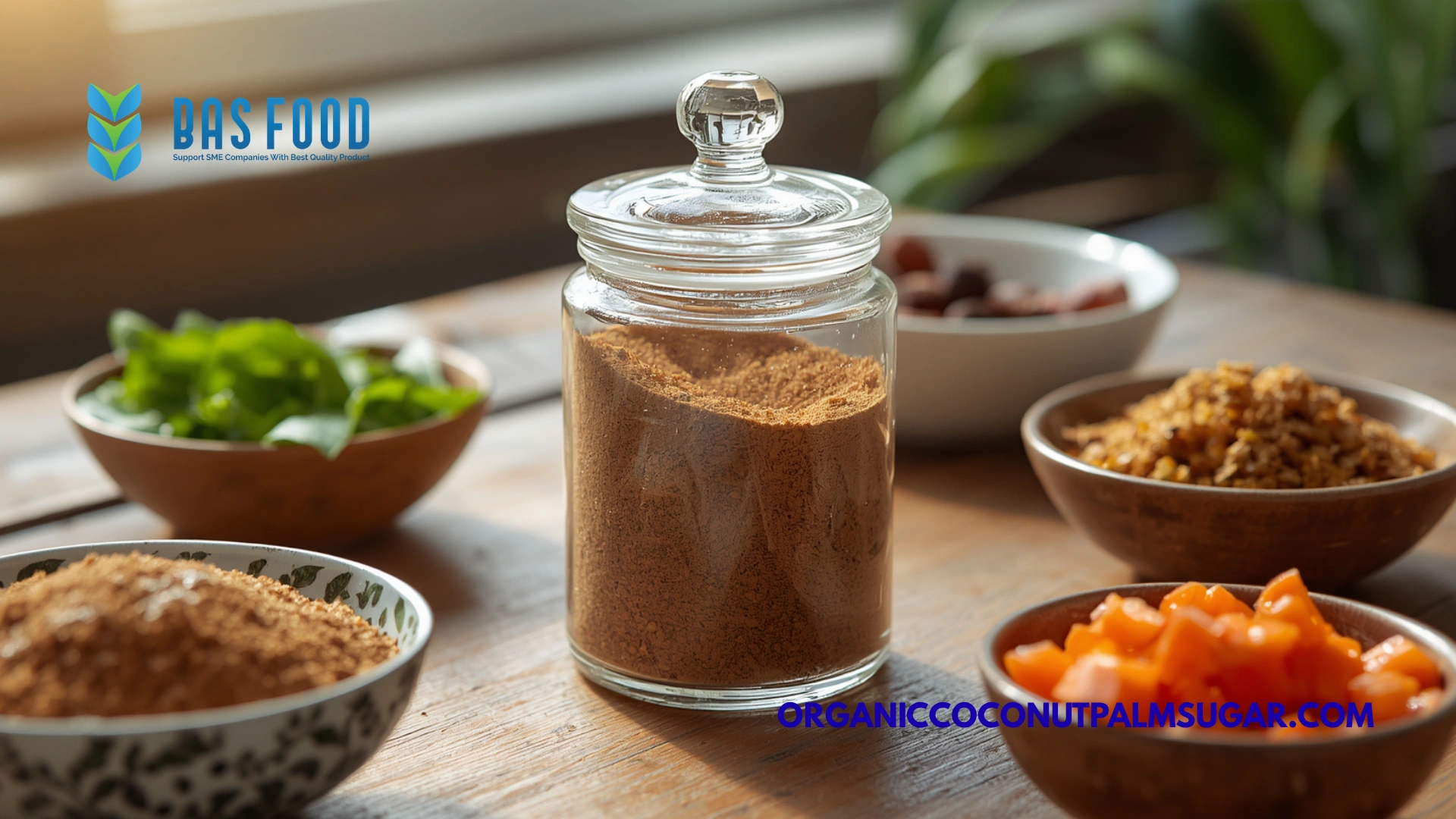
What Does Coconut Sugar Gluten Free Mean?
The phrase coconut sugar gluten free means that coconut sugar naturally does not contain gluten because it is produced from coconut blossom sap rather than wheat, barley, rye, or other gluten-containing grains.
Fresh sap is collected from the flower blossoms of coconut palm trees before being gently heated to evaporate water. This simple production process creates coconut sugar without introducing gluten-containing ingredients.
As a naturally plant-derived ingredient, coconut sugar is widely used in gluten-free product formulations across the international food industry.
Nevertheless, manufacturers should distinguish between an ingredient that is naturally gluten-free and a finished product that carries an official gluten-free certification. Certification requirements vary between countries and depend on production controls, testing, and regulatory compliance.
Why Coconut Sugar Is Naturally Gluten Free
One reason coconut sugar has gained international recognition is its straightforward production process.
Unlike grain-based sweeteners, coconut sugar comes entirely from coconut blossom sap.
The production stages typically include:
- Harvesting fresh sap
- Filtering the sap
- Gentle evaporation
- Crystallization
- Packaging
Since gluten-containing grains are not part of this process, coconut sugar is naturally free from gluten.
This simple origin makes it an attractive ingredient for manufacturers producing gluten-free foods.
However, maintaining gluten-free status throughout production requires careful quality management and contamination control.
Coconut Sugar as a Gluten Free Sweetener
Today’s food manufacturers have many sweetener options available.
Choosing the right gluten free sweetener depends on flavor, functionality, ingredient origin, consumer preferences, and regulatory requirements.
Coconut sugar offers several advantages.
Natural Origin
Consumers increasingly appreciate ingredients with transparent sourcing.
Coconut sugar’s plant-based origin supports this preference.
Rich Caramel Flavor
Unlike refined white sugar, coconut sugar contributes pleasant caramel notes that enhance finished products.
Excellent Versatility
Manufacturers can use coconut sugar in bakery products, beverages, sauces, desserts, cereals, confectionery, and snacks.
Consumer Appeal
Many brands value coconut sugar because it fits product lines featuring naturally sourced ingredients.
These characteristics continue supporting its popularity within gluten-free product development.
Coconut Sugar as an Allergy Friendly Sugar
Food allergies and sensitivities continue influencing product development around the world.
Many manufacturers seek ingredients that fit a wide range of dietary needs.
Although every allergen claim should follow local regulations, coconut sugar is often considered an allergy friendly sugar because it does not naturally contain gluten and is not produced from common cereal grains.
Responsible manufacturers still verify production conditions to reduce the risk of cross-contact during processing and packaging.
Professional suppliers also maintain food safety systems that help protect product integrity throughout manufacturing.
How Coconut Sugar Is Produced
Understanding production helps explain why coconut sugar naturally remains gluten-free.
Harvesting Coconut Blossom Sap
Experienced farmers carefully collect fresh sap from unopened coconut flower blossoms.
Maintaining sap quality at this stage supports overall product consistency.
Filtration
Fresh sap is filtered to remove natural impurities before cooking.
Controlled Evaporation
The filtered sap is heated slowly until water evaporates.
This process naturally concentrates the sugars without introducing additional ingredients.
Crystallization
After reaching the desired consistency, the syrup forms crystals that become coconut sugar.
Manufacturers may produce powder, granules, blocks, or liquid forms depending on customer requirements.
Throughout the process, gluten-containing grains are not part of the ingredient itself.
Applications in Gluten-Free Food Manufacturing
The versatility of coconut sugar allows manufacturers to use it across many gluten-free food categories.
Bakery Products
Gluten-free breads, cakes, muffins, cookies, brownies, and pastries often use coconut sugar.
Its caramel flavor enhances both taste and appearance.
Beverages
Coffee, tea, smoothies, flavored drinks, and nutritional beverages benefit from coconut sugar’s balanced sweetness.
Snack Foods
Granola bars, fruit snacks, cereals, and protein products frequently include coconut sugar.
Dairy Alternatives
Plant-based yogurt, frozen desserts, and dairy-free ice cream often incorporate coconut sugar.
Sauces and Condiments
Dressings, barbecue sauces, marinades, and seasoning blends also benefit from its rich flavor.
Preventing Cross-Contact During Production
Although coconut sugar itself is naturally gluten-free, manufacturers should implement production controls to minimize cross-contact.
Professional exporters often maintain quality systems that include:
- Facility hygiene
- Equipment cleaning
- Ingredient segregation
- Supplier verification
- Batch traceability
- Product documentation
Some manufacturers also conduct laboratory testing depending on customer requirements and destination market regulations.
These practices help support consistent product quality and customer confidence.
What Importers Should Ask Their Suppliers
Professional sourcing involves more than comparing prices.
Importers should request documentation that explains production methods, quality management systems, and available certifications.
Important questions include:
- Is the ingredient naturally gluten-free?
- Are gluten-containing ingredients processed in the same facility?
- What cross-contact controls are in place?
- Is laboratory testing available?
- Does the supplier provide certificates of analysis?
- Are gluten-free certifications available if required?
Reliable suppliers communicate openly and provide documentation that supports international trade requirements.
Global Demand for Gluten-Free Ingredients
Consumer interest in gluten-free foods continues expanding across international markets.
Although many consumers require gluten-free diets for medical reasons, others choose gluten-free products based on personal preferences.
This growing demand encourages manufacturers to develop broader product portfolios using ingredients such as coconut sugar.
Importers also recognize new opportunities to supply food manufacturers producing premium gluten-free products.
Strong partnerships with experienced exporters help businesses meet increasing market demand while maintaining product consistency.
Common Misunderstandings About Coconut Sugar Gluten Free
Several misconceptions exist regarding coconut sugar.
One common misunderstanding is that every naturally gluten-free ingredient automatically qualifies for gluten-free labeling.
In reality, labeling requirements depend on production controls, local regulations, and certification standards.
Another misconception is that coconut sugar comes from coconuts themselves.
Actually, it is produced from the sap of coconut flower blossoms.
Some buyers also assume supplier documentation is unnecessary because the ingredient is naturally gluten-free.
Professional importers understand that documentation remains essential for regulatory compliance and customer confidence.
Frequently Asked Questions
Is coconut sugar gluten free?
Yes. Coconut sugar is naturally gluten-free because it is produced from coconut blossom sap rather than gluten-containing grains.
Is coconut sugar a gluten free sweetener?
Yes. Coconut sugar is widely used as a gluten free sweetener in bakery products, beverages, snacks, desserts, and sauces.
Is coconut sugar allergy friendly?
Coconut sugar is often considered an allergy friendly sugar because it is naturally free from gluten. However, manufacturers should verify production controls and labeling requirements.
Can gluten-free manufacturers use coconut sugar?
Yes. Coconut sugar is commonly used in gluten-free food formulations across many product categories.
Should importers request documentation?
Yes. Buyers should always review product specifications, food safety documentation, and any applicable certifications before making product claims.
Conclusion
Understanding coconut sugar gluten free helps importers, manufacturers, and distributors make informed sourcing decisions for today’s growing gluten-free food industry. Because coconut sugar is produced from coconut blossom sap rather than gluten-containing grains, it is naturally recognized as a gluten free sweetener suitable for many commercial food applications.
Its rich caramel flavor, versatile functionality, and plant-derived origin also make it an attractive allergy friendly sugar for bakery products, beverages, snacks, desserts, sauces, and dairy alternatives. At the same time, businesses should remember that gluten-free labeling depends not only on the ingredient itself but also on production practices, cross-contact controls, testing, and regulatory requirements.
For companies serving international food markets, partnering with an experienced exporter ensures consistent quality, reliable documentation, export-ready packaging, and dependable supply. As demand for gluten-free products continues growing worldwide, coconut sugar remains a valuable ingredient that combines natural origin, excellent functionality, and broad commercial appeal.