Choosing the right sweetener is an important decision for food manufacturers, beverage companies, bakeries, and distributors. It affects not only taste but also product consistency, processing efficiency, and final product quality. One ingredient that has gained attention in the food industry is food grade coconut sugar syrup. Made from coconut flower sap, this liquid sweetener offers a distinctive caramel-like flavor and a convenient format for commercial applications. Manufacturers can use it in beverages, sauces, desserts, bakery products, and other recipes that require a liquid sweetener. In addition, its liquid form can make dosing and blending easier in many production environments.
However, not every coconut sugar syrup is automatically suitable for food manufacturing. Buyers need to consider food safety, processing controls, product specifications, packaging, and supplier documentation before placing an order.
This guide explains what food grade coconut sugar syrup means, how producers make it, which quality parameters matter, and what B2B buyers should check when sourcing it in bulk.
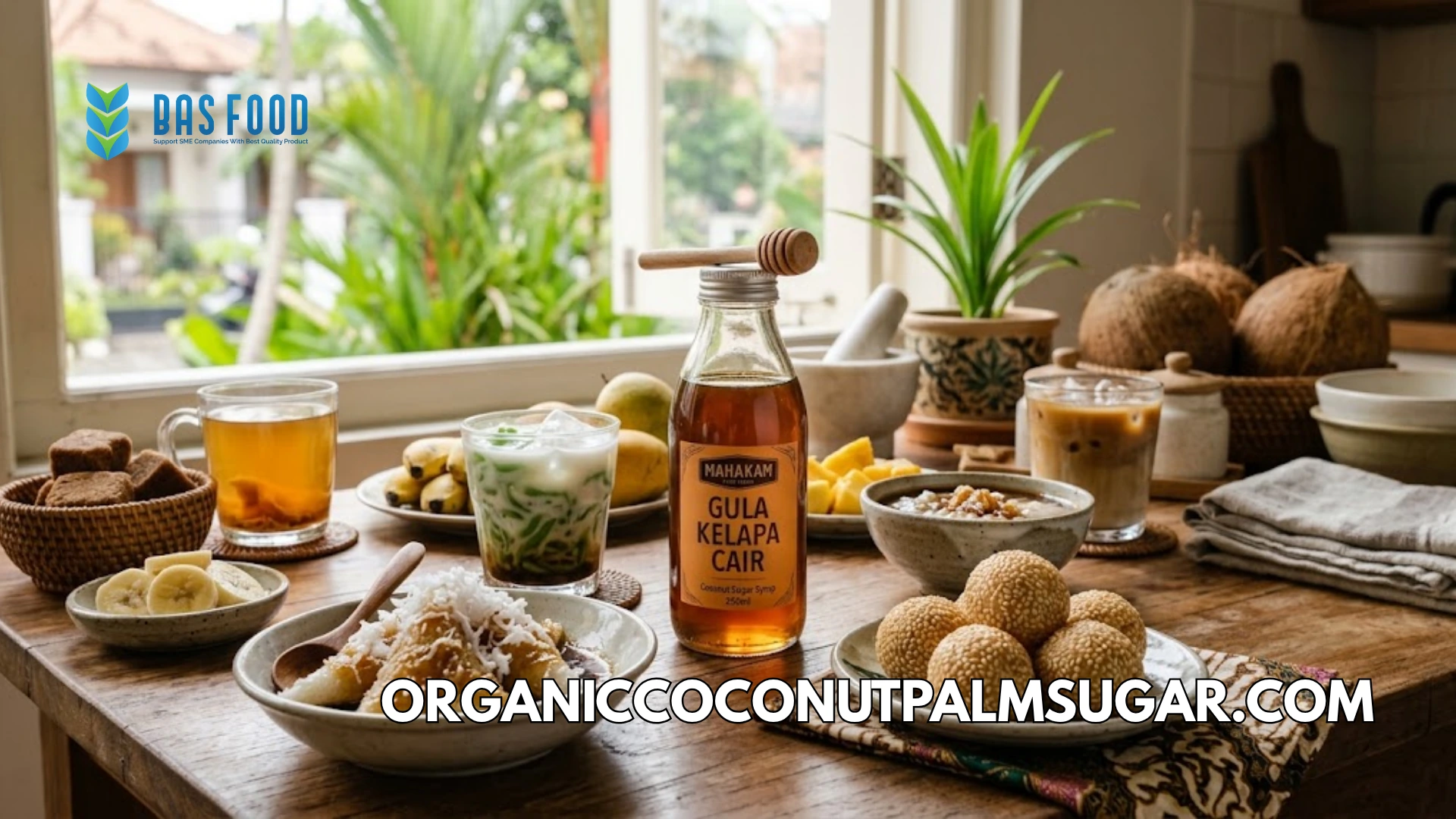
What Is Food Grade Coconut Sugar Syrup?
Food grade coconut sugar syrup is a liquid sweetener made by concentrating the sap collected from coconut flower stalks. Producers heat the sap under controlled conditions until it reaches the desired concentration and consistency. The finished product has a sweet taste and often features caramel, toffee, or molasses-like notes.
Unlike granulated or moulded coconut sugar, this product remains in liquid form. That makes it useful for manufacturers who want a sweetener that can be pumped, poured, measured, or blended into other ingredients.
The term food grade means that the product is intended to meet the relevant safety and quality requirements for use in food. It should be produced, handled, stored, and packed under suitable hygienic conditions. The exact requirements depend on the destination market and the product’s intended application.
What Makes a Syrup Food Grade?
Food-grade status involves more than appearance or taste. Producers need to control raw materials, processing conditions, equipment hygiene, packaging, and storage. They should also have suitable procedures for preventing contamination and monitoring product quality.
For buyers, a supplier’s statement that a syrup is food grade should be supported by relevant product information and documentation. Depending on the market and application, this may include a product specification, batch-specific Certificate of Analysis (COA), food safety documentation, and applicable regulatory information.
Coconut Sugar Syrup vs. Other Coconut Sugar Forms
Coconut sugar is available in several forms, including granules, powder, blocks, and syrup. Each form has different handling and application requirements.
Granulated coconut sugar is convenient for dry blends and recipes that need a solid sweetener. Moulded coconut sugar is often used in traditional food preparation. In contrast, syrup works well when manufacturers need a liquid ingredient that can mix directly into a formulation.
Therefore, choosing the right form depends on the production process, equipment, recipe, and desired final texture.
How Producers Make Food Grade Coconut Sugar Syrup
The production process begins with collecting sap from coconut flower stalks. Farmers carefully tap the flower stalks and collect the liquid in suitable containers. Since fresh sap can ferment if producers do not handle it properly, collection and transportation require attention.
Freshness matters because fermentation can change the sap’s acidity, aroma, and taste. Producers should therefore use clean collection equipment and manage the time between collection and processing. Good raw material handling creates a stronger foundation for consistent syrup quality.
Sap Filtering and Preparation
After collection, producers filter the sap to remove visible particles and unwanted materials. This step helps improve the cleanliness of the raw material before heating.
However, filtration alone does not make the sap safe. Producers must also control hygiene, handling time, and processing conditions. Raw material quality and clean equipment work together to support a suitable finished product.
Heating and Concentration
Next, producers heat the filtered sap to evaporate water and increase its concentration. As the liquid becomes more concentrated, its color, sweetness, and viscosity change.
The heating process needs careful control. Excessive heating may create an overly dark color, a strong cooked flavor, or other unwanted changes. On the other hand, insufficient concentration may produce a thinner syrup that does not meet the buyer’s requirements.
Producers should monitor the process and use agreed product specifications to determine when the syrup is ready.
Cooling and Packaging
Once the syrup reaches the target characteristics, producers cool it under suitable hygienic conditions before packaging. Packaging materials should be suitable for food contact and compatible with the syrup’s characteristics.
The filling area, containers, closures, and transfer equipment must remain clean. Otherwise, contamination can occur even after the cooking stage. Good packaging practices help protect the product during storage and transportation.
Key Quality Parameters Buyers Should Understand
When sourcing food grade coconut sugar syrup, buyers should review several quality parameters rather than focusing on sweetness alone. These measurements help manufacturers determine whether the syrup is suitable for their recipes and production systems.
A complete specification should describe the product’s appearance, color, aroma, flavor, Brix, viscosity, pH, moisture-related characteristics, and relevant safety criteria. The exact parameters and acceptance limits should match the intended application and destination market.
Brix and Soluble Solids
Brix is commonly used to describe the concentration of soluble solids in a syrup. A refractometer can provide a Brix reading, which is often used as a practical process and quality-control indicator.
However, Brix is based on a sucrose reference scale. Coconut sugar syrup contains a mixture of sugars and other soluble compounds, so a Brix reading should not be treated as an exact measurement of total sugar content.
Buyers should request the agreed Brix range and confirm the measurement method and temperature conditions. A higher Brix value does not automatically mean that a syrup is better. The right concentration depends on the product specification and intended use.
Viscosity and Flow
Viscosity describes how easily a liquid flows. A thinner syrup may be easier to pump and dose, while a thicker syrup may provide a different texture in sauces, toppings, and dessert products.
Temperature affects viscosity, so buyers should compare results under consistent conditions. If viscosity is an important purchasing requirement, the specification should identify the test method, temperature, and measurement unit.
Color, Aroma, and Flavor
Coconut sugar syrup generally has a brown to dark brown appearance, although the exact shade can vary. Its flavor often includes caramel-like or toffee notes.
Natural variation may occur due to sap characteristics and processing conditions. A darker syrup is not automatically lower quality, just as a lighter syrup is not automatically better. Buyers should agree on acceptable sensory characteristics and request a representative sample before ordering.
pH and Moisture-Related Properties
pH indicates how acidic or alkaline a product is. It can help buyers understand product characteristics and monitor consistency, but pH alone cannot prove that a syrup is safe or microbiologically stable.
Moisture content and water activity are also different measurements. Moisture content indicates the amount of water present, while water activity describes how available that water is for chemical and microbial processes. Depending on the product and application, both may be relevant to quality assessment.
Why Food Safety Matters in Industrial Liquid Sweetener Supply
Food manufacturers need ingredients that meet their safety requirements and remain consistent throughout production. This is especially important when buying an industrial liquid sweetener in large quantities.
Coconut sugar syrup must be handled carefully from sap collection to final delivery. Poor hygiene, unsuitable containers, uncontrolled fermentation, or contamination during filling can affect the finished product.
Hygienic Processing Practices
Producers should maintain clean processing areas and use equipment suitable for food production. Cleaning procedures should cover collection containers, filters, heating vessels, transfer lines, storage tanks, and filling equipment.
They should also manage personnel hygiene and prevent contact between finished syrup and unclean surfaces. These practices reduce contamination risks and support consistent production.
Process Control and Traceability
Traceability allows producers and buyers to connect a finished batch with its raw materials, production date, and relevant processing records. This information becomes valuable when investigating a quality concern or managing a shipment.
A suitable quality system should identify batches clearly and maintain records of important production and inspection activities. Buyers can ask suppliers how they manage batch identification and whether they can provide supporting documentation.
Testing and Product Approval
Testing requirements depend on the product, intended use, and destination market. Buyers may need to review microbiological criteria, chemical parameters, contaminants, and other relevant requirements.
A supplier should be able to explain which tests are performed and how the results relate to the agreed specification. For specific regulatory questions, importers should also check the requirements of the relevant food authority in their destination country.
Applications of Food Grade Coconut Sugar Syrup
One advantage of coconut sugar syrup is its flexibility. Its liquid format makes it suitable for products where manufacturers need a sweetener that can blend into other ingredients without first dissolving a solid sugar.
The syrup’s flavor can also contribute to the overall taste of a finished product. However, manufacturers should conduct formulation trials because its color, sweetness, viscosity, and caramel notes may influence the final result.
Beverage Manufacturing
Beverage companies may use coconut sugar syrup in coffee drinks, tea, smoothies, flavored milk, and other specialty beverages. Its liquid form can make it convenient for blending and portion control.
For commercial beverage production, manufacturers should evaluate sweetness, solubility, viscosity, and flavor compatibility. They should also consider how the syrup behaves during mixing, heating, filling, and storage.
Bakery and Dessert Products
Bakeries and dessert manufacturers may use coconut sugar syrup in cakes, sauces, fillings, puddings, toppings, and selected sweet baked goods.
Because the syrup contains water, it can affect the moisture balance and texture of a recipe. Manufacturers may need to adjust other liquid ingredients to maintain the desired consistency.
Its caramel-like flavor may complement chocolate, coconut, banana, coffee, and other ingredients. Still, small-scale testing is important before introducing it into full production.
Sauces, Dressings, and Food Preparations
Coconut sugar syrup may also be considered for sauces, marinades, glazes, and selected dressings. It can contribute sweetness, color, and flavor while offering a liquid format that fits many mixing processes.
However, the syrup’s pH, viscosity, and flavor profile should match the formulation. Manufacturers should also assess its performance during heat treatment and storage.
Food Grade Ingredients: What Should Manufacturers Look For?
When choosing food grade ingredients, manufacturers need to consider both technical performance and food safety. A product may have an appealing taste but still be unsuitable for a particular production line if its viscosity, concentration, or packaging does not meet the required conditions.
Start with the product specification. It should clearly identify the product and describe the key characteristics that the supplier agrees to provide. Avoid relying on vague descriptions such as premium quality or natural syrup without measurable information.
Request a Product Specification Sheet
A useful specification sheet may include:
- Product name and ingredient description.
- Country of origin.
- Appearance and color.
- Aroma and flavor.
- Brix range.
- Viscosity, where applicable.
- pH range.
- Moisture or water activity, where relevant.
- Microbiological criteria.
- Packaging format and storage conditions.
- Shelf-life information.
Not every buyer needs every parameter. The specification should reflect the intended use and relevant regulatory requirements.
Check the Certificate of Analysis
A COA provides test results for an identified batch. It helps buyers compare the actual product with the agreed specification.
Before approving a shipment, confirm that the COA includes the correct product name, batch number, test results, units, and relevant test methods. A generic specification sheet is useful, but it does not replace batch-specific test results.
Evaluate a Representative Sample
Samples allow buyers to test the syrup in their own formulations. This is especially useful when flavor, color, viscosity, or mixing behavior affects the finished product.
Whenever possible, request a sample that represents the product intended for commercial supply. Record the results of internal testing and share any required adjustments with the supplier before confirming a bulk order.
Buying Bulk Syrup: Packaging, Storage, and Logistics
Purchasing bulk syrup requires careful planning because liquid ingredients need suitable containers and handling procedures. Packaging should protect the product from contamination, leakage, and unsuitable storage conditions.
The right packaging depends on order size, transport distance, warehouse facilities, and the buyer’s production equipment. Suppliers may offer different container options, but buyers should confirm current availability rather than assuming a particular format.
Choosing Suitable Packaging
Food-contact packaging should be appropriate for the syrup and comply with relevant market requirements. Containers must be clean, properly sealed, and strong enough to withstand handling and transportation.
Buyers should discuss filling conditions, closure systems, container capacity, labeling, and palletization. For larger shipments, it is also useful to confirm how the supplier protects containers against damage during loading and transit.
Storage and Shelf Life
Coconut sugar syrup should be stored according to the supplier’s validated instructions. Temperature, exposure to air, packaging integrity, and hygiene can all influence product condition.
Do not assume that every syrup has the same shelf life. The period depends on the product’s formulation, concentration, processing, packaging, and validation. Buyers should request a documented shelf-life statement and clarify whether it applies to unopened containers or after opening.
Planning International Shipments
International buyers should confirm the order quantity, packaging configuration, shipping schedule, required documents, and delivery terms before production begins.
They should also agree on the inspection and acceptance process. Clear arrangements help both parties understand what happens if a shipment does not meet the agreed specification.
How to Choose a Reliable Coconut Sugar Syrup Supplier
A dependable supplier should understand the product and the needs of commercial buyers. Price matters, but it should not be the only factor in the purchasing decision.
Look for clear communication, consistent documentation, suitable production controls, and the ability to discuss technical requirements. A supplier should be willing to explain its product specifications and answer questions about processing, testing, and packaging.
Working with CV Bonafide Anugerah Sentosa
CV Bonafide Anugerah Sentosa is an Indonesian supplier and exporter of coconut-derived products. Businesses interested in sourcing coconut sugar products can contact the company to discuss current product availability, specifications, samples, packaging options, and export arrangements.
Buyers searching for a coconut sugar supplier or coconut sugar exporter supplier should always confirm the exact product form they need. Coconut sugar granules, moulded coconut sugar, and liquid syrup have different specifications and handling requirements.
For a successful B2B relationship, both parties should agree on product parameters, sample approval, documentation, order quantities, and delivery terms before confirming a commercial shipment.
Conclusion: Choose a Syrup That Meets Your Production Standards
Food grade coconut sugar syrup can be a useful liquid sweetener for manufacturers looking for a distinctive flavor and convenient ingredient format. Its applications range from beverages and desserts to bakery products and sauces.
However, successful sourcing requires more than selecting a syrup based on taste or appearance. Buyers should understand the production process, review important quality parameters, check food safety documentation, and test samples in their own formulations.
For B2B procurement, a clear specification and batch-specific COA provide a stronger basis for quality approval. By working with a supplier that communicates openly and understands export requirements, businesses can make better purchasing decisions and build a more dependable supply relationship.