Coconut sugar syrup is becoming an interesting ingredient for food manufacturers, beverage companies, bakeries, and specialty food brands. Its smooth texture, natural brown color, and sweet flavor make it a practical option for many recipes. However, before adding it to a commercial product, buyers need to understand what goes into the syrup and how each component affects its quality.
Understanding coconut sugar syrup ingredients is especially important for B2B buyers. A syrup’s composition can influence its sweetness, thickness, color, flavor, storage stability, and suitability for different food applications. Although coconut sugar syrup generally starts with coconut palm sap, the final composition can vary depending on the raw material, processing method, concentration, and any additional ingredients.
For importers and food manufacturers, knowing these details makes it easier to compare suppliers, check product labels, and develop consistent recipes. In this guide, we explore the main ingredients in coconut sugar syrup, explain how producers transform coconut sap into a liquid sweetener, and share practical tips for sourcing the right product for your business.
What Is Coconut Sugar Syrup Made Of?
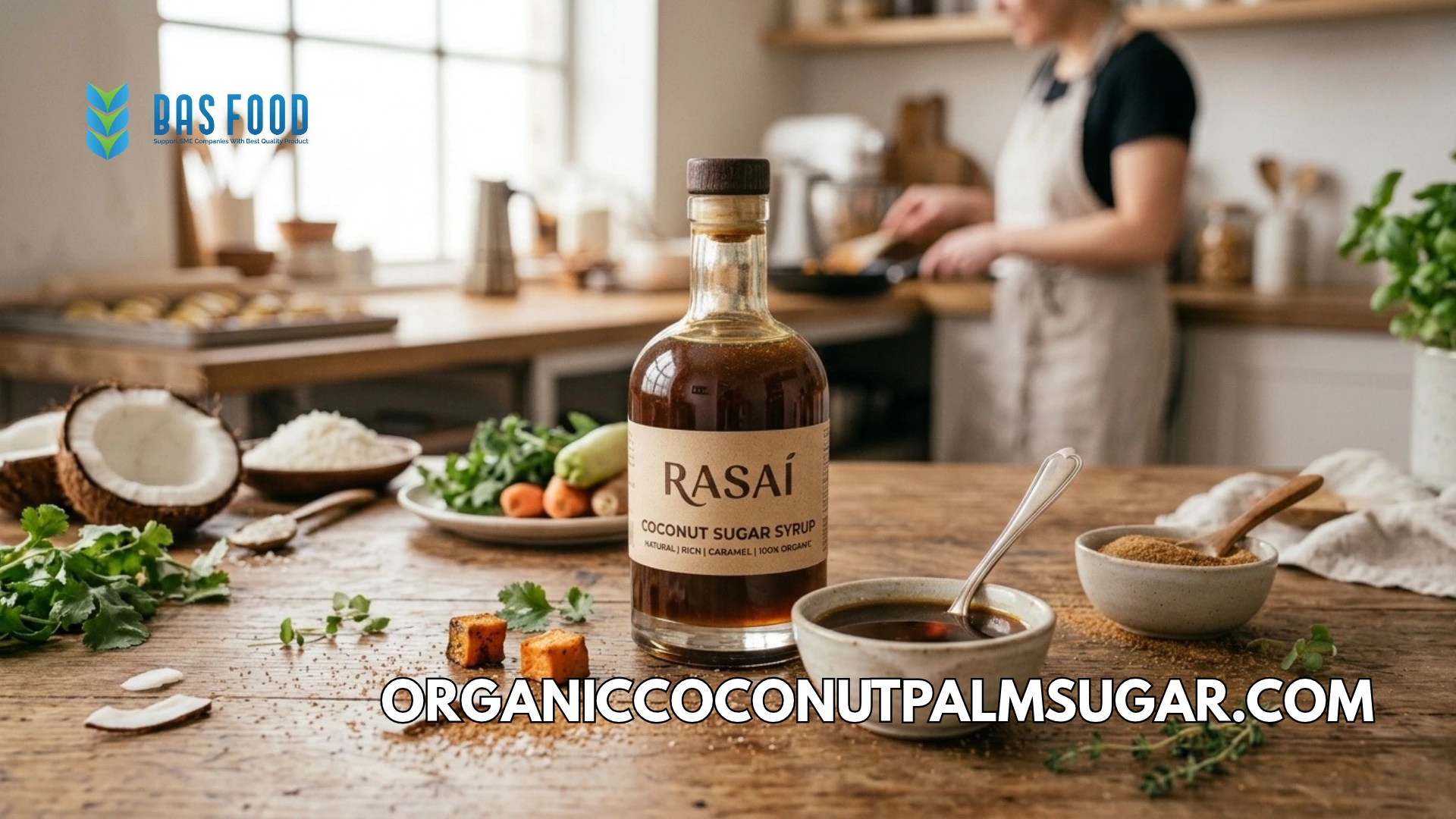
Coconut sugar syrup is a liquid sweetener generally produced by concentrating sap collected from coconut palm flower stalks. The sap contains water, naturally occurring sugars, and smaller amounts of other dissolved substances. Producers heat the sap to remove water and concentrate the remaining solids until the liquid reaches the required consistency.
In a straightforward formulation, the primary ingredient is coconut palm sap. Depending on the product and manufacturing method, the ingredient declaration may identify it as coconut sap, coconut palm sap, or another appropriate product-specific name. Buyers should always check the actual label and technical documentation rather than assuming that every product uses the same terminology.
The main components of coconut sugar syrup generally include:
- Water: Naturally present in fresh coconut sap, with much of it removed during concentration.
- Sugars: The main contributors to sweetness and dissolved solids.
- Minor natural compounds: Small amounts of other substances from the sap that may influence flavor, aroma, color, and composition.
- Optional additional ingredients: Some products may contain added ingredients, depending on the formulation and applicable labeling requirements.
Not every coconut sugar syrup has an identical composition. Differences in sap quality, processing conditions, concentration, and formulation can affect the final product. Therefore, food manufacturers should use the supplier’s product specification and ingredient declaration as the primary reference when evaluating a particular syrup.
Coconut Sap Ingredients: The Foundation of Coconut Sugar Syrup
To understand coconut sugar syrup, it helps to start with the raw material. Coconut palm sap is collected from the flower stalks of coconut palms. Skilled tappers prepare the stalks and collect the liquid in suitable containers, following practices intended to protect the sap from dirt and contamination.
Fresh sap contains a large amount of water and a mixture of naturally occurring sugars. It also contains small quantities of other dissolved substances, which can contribute to the sap’s overall characteristics. The proportions vary depending on factors such as palm condition, collection practices, weather, and the time between collection and processing.
Naturally occurring sugars
Sugars are the main source of sweetness in coconut palm sap. Sucrose is commonly an important sugar, while glucose and fructose may also be present. Their relative proportions can vary with the raw material and handling conditions.
During syrup production, water evaporates and the sugars become more concentrated. This process increases the concentration of dissolved solids and helps create the syrup’s characteristic sweetness and body. However, the final sweetness is not determined by sugar concentration alone; flavor perception can also be influenced by other compounds and processing conditions.
Water and dissolved solids
Water is a natural part of fresh coconut sap. During production, manufacturers remove some of this water to achieve the target concentration and consistency. The amount of water remaining in the finished syrup affects its flow characteristics and may also influence its storage stability.
Dissolved solids include sugars and other substances that remain in the liquid after concentration. Producers may monitor these solids using measurements such as degrees Brix, where appropriate. However, Brix is a concentration indicator rather than a complete description of the syrup’s composition or safety.
Minor compounds that shape flavor
Coconut sap contains small amounts of other natural compounds that may contribute to aroma, taste, and color. As the sap is heated, chemical reactions can change the flavor profile and develop cooked-sugar notes.
These changes help explain why coconut sugar syrup can have a warm, caramel-like flavor. Nevertheless, the exact taste depends on the starting sap and the processing method, so buyers should evaluate the sensory properties of the finished product rather than relying on general descriptions.
How Processing Changes Coconut Sugar Syrup Ingredients
The ingredients in coconut sugar syrup begin with the natural composition of the sap, but processing changes the proportions of its components. The most important change is the removal of water through heating and evaporation.
First, producers collect the sap and remove unwanted particles through suitable filtration. They then heat it in an appropriate vessel. As water evaporates, the liquid becomes more concentrated, and the sugars and other dissolved substances make up a larger proportion of the remaining syrup.
The heating process also influences the product’s flavor and color. Controlled heating can develop the familiar brown-sugar-like profile, while excessive heating may cause unwanted darkening or burnt notes. For this reason, producers need suitable process controls rather than relying only on the appearance of the liquid.
The degree of concentration also affects thickness. A syrup with a higher concentration of dissolved solids may flow more slowly than a less concentrated product, although temperature and composition also influence viscosity. Manufacturers should therefore define the desired characteristics for the intended application.
It is important to understand that concentration does not necessarily mean that producers add more sugar. In a simple syrup made only from coconut sap, heating mainly removes water and concentrates the substances already present. If a commercial product includes added sugar, water, preservatives, or other ingredients, those additions should be identified in the product’s actual formulation and ingredient declaration.
Understanding Liquid Sweetener Composition
The term liquid sweetener composition describes the substances present in a liquid sweetener and their relative amounts. For coconut sugar syrup, this may include water, sucrose, glucose, fructose, other dissolved solids, and small quantities of naturally occurring compounds.
The precise composition matters because it can affect how the syrup performs in food manufacturing. For example, a beverage company may focus on sweetness, color, flavor, and ease of mixing. A sauce manufacturer may also need to consider viscosity, acidity, and stability within a more complex recipe.
Does every coconut sugar syrup have the same composition?
No. Natural variation in coconut sap can affect the starting material, while heating and concentration influence the finished syrup. Different manufacturers may also use different processing controls or product specifications.
As a result, two syrups may share the same general product name but differ in sweetness, color, viscosity, or other measurable properties. This does not automatically mean that one is better than the other. The relevant question is whether the product meets the buyer’s requirements.
What does Brix tell buyers?
Degrees Brix is commonly used to indicate soluble solids concentration. It can help manufacturers monitor a syrup’s concentration and support consistency between batches. However, a Brix reading does not independently reveal the exact proportion of every sugar or identify all the compounds present.
For applications that require precise nutritional information or technical performance, buyers may need additional analysis. The appropriate tests depend on the product and intended use, so manufacturers should agree on relevant parameters with their suppliers.
Why the ingredient list matters
An ingredient list helps buyers understand what the manufacturer has included in the product. If a syrup contains only coconut palm sap, its declaration should reflect that formulation in accordance with applicable labeling rules. If the producer adds other ingredients, those additions may need to appear on the label.
For B2B procurement, the ingredient declaration should be checked alongside the technical specification and certificate of analysis, where available. This helps confirm whether the product matches the requirements of the buyer’s recipe, customer, and destination market.
Coconut Syrup Formulation: Pure Sap or Added Ingredients?
Coconut syrup formulation refers to the way a producer develops the syrup’s composition and target properties. Some products may be made by concentrating coconut palm sap alone, while other commercial formulations may include additional ingredients for a particular purpose.
For example, a manufacturer may develop a syrup to meet a defined sweetness level, viscosity range, or flavor profile. However, buyers should not assume that every coconut sugar syrup contains preservatives, added sugar, water, or flavoring. The actual formulation must be verified with the supplier.
Single-ingredient coconut sugar syrup
A syrup made solely from coconut palm sap has a relatively simple ingredient profile. The producer relies on the raw material and concentration process to create the finished product. This may appeal to buyers looking for a simple ingredient declaration, although they still need to confirm the exact product specification.
Even a single-ingredient syrup requires proper processing and quality controls. A simple ingredient list does not automatically establish microbial safety, long shelf life, or suitability for every food application.
Formulations with additional ingredients
Some liquid sweetener products may include added ingredients to achieve specific technical or sensory properties. Whether these additions are appropriate depends on the product’s intended use and the regulations of the destination market.
For example, any permitted additive would need to serve a defined function and be declared as required. Buyers should check the ingredient list and request clarification if a specification or label is unclear. This is particularly important for brands with strict clean-label, vegan, allergen, or customer-specific requirements.
Choosing the right formulation
The best formulation depends on the intended application. A syrup for beverages may need to flow easily and blend consistently, while a topping or sauce ingredient may require a thicker texture. A food manufacturer should therefore define its technical requirements before asking suppliers for quotations.
Where possible, test a sample in the actual recipe. This helps reveal whether the syrup delivers the expected sweetness, color, flavor, and processing performance.
How Coconut Sugar Syrup Ingredients Affect Flavor, Color, and Texture
The components of coconut sugar syrup work together to create its sensory characteristics. Sugars contribute sweetness and dissolved solids, while the remaining natural compounds and the effects of heating influence flavor and color.
Coconut sugar syrup often has a brown color and a cooked-sugar or caramel-like flavor. The intensity varies with the sap and processing conditions. Manufacturers should not assume that every batch will have exactly the same shade or aroma without agreed specifications and suitable quality controls.
Texture is another important factor. The syrup’s concentration, composition, and temperature influence how easily it pours. A syrup that flows well at a warm temperature may become thicker in a cooler environment, which can affect pumping, filling, and dosing in a production facility.
For beverage manufacturers, a syrup that blends predictably can simplify ingredient handling. For bakeries and sauce producers, viscosity may influence mixing time and the distribution of sweetness throughout the product. In each case, testing under realistic conditions is more useful than evaluating the syrup only by sight.
Flavor compatibility also matters. Coconut sugar syrup may complement coffee, tea, chocolate, baked goods, sauces, and desserts, but its characteristic flavor and brown color may not suit every recipe. Product developers should consider whether these features support or compete with the intended taste and appearance.
Quality and Food Safety: What Buyers Need to Check
Knowing the ingredients is only one part of evaluating coconut sugar syrup. B2B buyers also need to understand how the product is made, how the manufacturer controls quality, and what evidence supports the product’s suitability for the intended use.
One important factor is raw-material handling. Coconut sap can ferment if it remains untreated for too long under conditions that support microbial activity. Unwanted fermentation may affect its acidity, aroma, and flavor. Producers should use suitable collection practices, hygienic equipment, and controlled processing to manage these risks.
The concentration process must also be controlled. Although heating reduces water content, buyers should not assume that concentration alone guarantees a safe product or a particular shelf life. The manufacturer should establish appropriate controls and support its shelf-life claims with relevant evidence.
Check the product against your requirements
Before placing a large order, compare the supplier’s documentation with your purchasing specification. If sweetness, viscosity, color, or other properties are important to the recipe, define suitable acceptance limits.
For new suppliers, a sample trial can help identify differences before commercial production. Record the results and agree on the required characteristics before scaling up.
How to Choose a Reliable Coconut Sugar Supplier
A suitable coconut sugar supplier should provide clear product information and communicate openly about specifications, documentation, packaging, and commercial terms. For B2B buyers, a low quoted price is not enough if the product does not meet the required quality or cannot be handled efficiently.
Begin by explaining your intended application. Tell the supplier whether you need syrup for beverages, bakery products, sauces, or another food category. Then identify the important requirements, such as ingredient declaration, concentration, viscosity, flavor, packaging format, order quantity, and destination country.
Next, request the relevant technical documents. Check that the ingredient declaration matches your expectations and that the specification includes the parameters important to your application. If you require a specific composition or claim, such as a particular labeling standard, ask for appropriate supporting evidence rather than relying on a general description.
Finally, confirm the commercial details. These may include product availability, minimum order quantities, lead times, packaging options, shipping arrangements, and export documentation. Each point should be agreed directly with the supplier before an order is finalized.
Sourcing From a Coconut Sugar Exporter Supplier in Indonesia
Indonesia is an established origin for coconut-based products, making it a market that international food businesses may consider when sourcing coconut sugar ingredients. However, suppliers can differ in product range, processing methods, specifications, and export capabilities, so buyers should evaluate each business individually.
When contacting a coconut sugar exporter supplier, provide a clear product brief. State that you require coconut sugar syrup rather than granules or moulded blocks, and explain the properties your business needs. This helps prevent misunderstandings and allows the supplier to assess whether its current offering matches your requirements.
CV Bonafide Anugerah Sentosa operates in the Indonesian commodity export sector, with a business focus that includes coconut-related products and sugar products. Buyers interested in coconut sugar syrup should contact the company directly to confirm current availability, ingredient specifications, packaging options, minimum order quantities, and export terms. Product availability and commercial conditions should always be verified before purchasing.
International buyers may also encounter the Spanish phrase exportador de azúcar de coco, which means coconut sugar exporter. When searching across markets and languages, confirm the exact product form and ingredient profile. A supplier offering coconut sugar granules may not necessarily offer syrup, and a supplier of syrup may have different specifications from another producer.
For a new supply relationship, consider evaluating a sample if one is available. Test the syrup in your actual formulation, review the documentation, and agree on the quality parameters before moving to larger orders.
Conclusion: Understand the Ingredients Before You Buy
Understanding coconut sugar syrup ingredients helps food manufacturers make informed decisions about product quality, formulation, and sourcing. Coconut palm sap provides the starting material, while concentration removes water and increases the proportion of sugars and other dissolved solids. The resulting syrup’s composition, color, flavor, and viscosity depend on both the raw material and the production process.
For B2B buyers, the most reliable approach is to review the actual ingredient declaration and technical specification instead of relying on general descriptions. Check the parameters that matter to your application, request relevant documentation, and test the syrup in the intended recipe.
If you are sourcing coconut sugar syrup from Indonesia, contact CV Bonafide Anugerah Sentosa to discuss the current product range and confirm availability, specifications, and export requirements. A clear understanding of the ingredients and a well-defined purchasing specification can help your business build a more dependable supply relationship.