As consumers continue to move away from highly refined sugars, food manufacturers are actively searching for ingredients that support clean-label formulations and natural product positioning. This shift has fueled demand for alternative sweeteners that offer appealing flavors, minimal processing, and strong sustainability credentials. Among the most popular options are coconut nectar and maple syrup. Both products are widely recognized as natural sweeteners, and both have become important ingredients in food and beverage manufacturing. However, despite some similarities, they differ significantly in origin, production methods, flavor profiles, applications, and sourcing opportunities. For importers, distributors, wholesalers, and food manufacturers, understanding the differences between these two products is essential. Selecting the right ingredient can influence product performance, brand positioning, supply chain reliability, and consumer acceptance.
This comprehensive guide explores the topic of coconut nectar vs maple syrup, providing a detailed natural syrup comparison that helps global buyers make informed sourcing decisions.
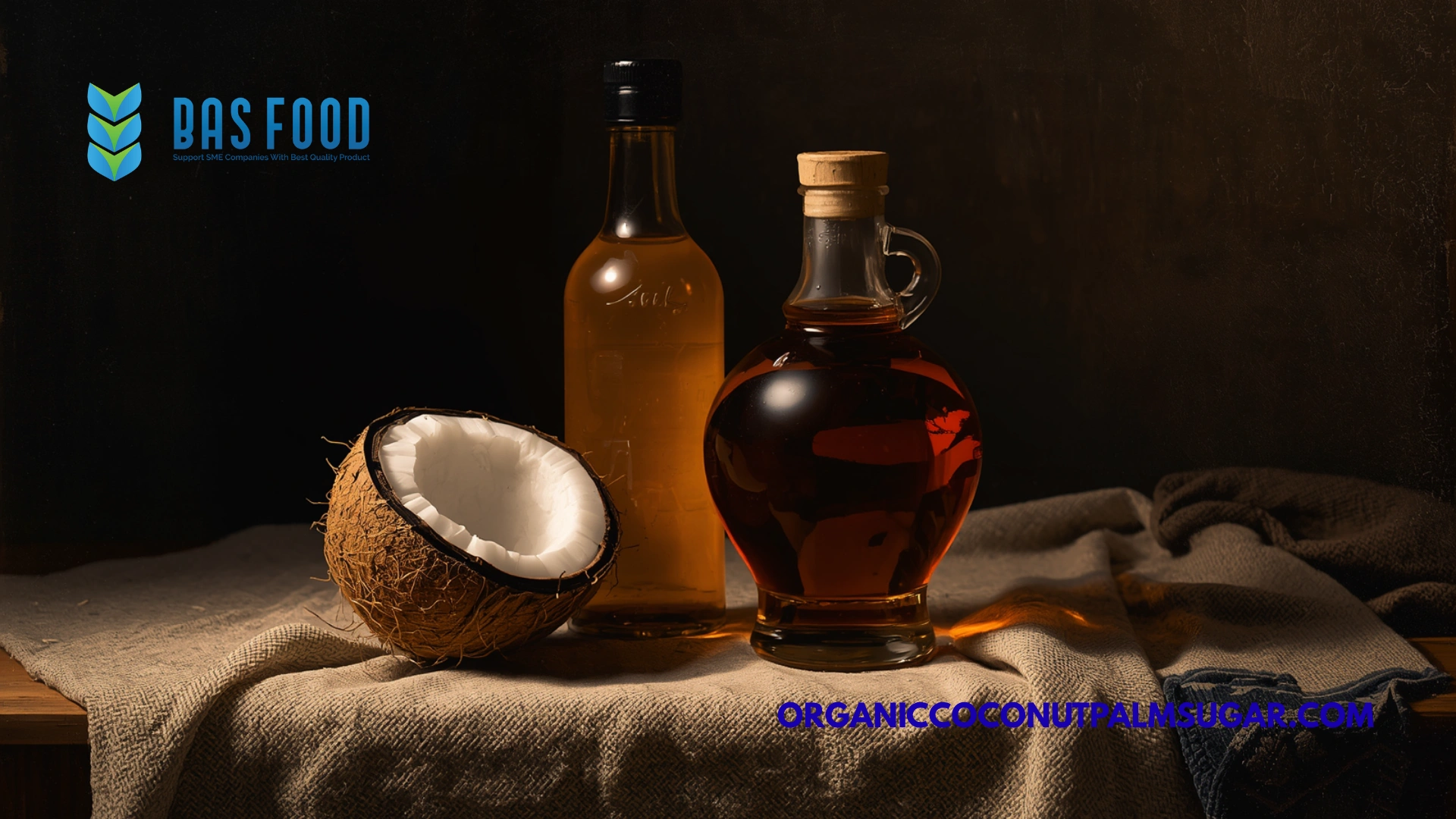
What Is Coconut Nectar?
Coconut nectar is a liquid sweetener made from the sap of coconut flower blossoms. Before coconuts develop into mature fruit, the flowering stalks produce a nutrient-rich sap that can be collected through a traditional tapping process.
Farmers carefully harvest the sap and transport it to processing facilities where it is filtered and gently heated. As water evaporates, the sap thickens into a rich golden syrup known as coconut nectar.
One reason coconut nectar has gained popularity is its minimal processing. Manufacturers typically avoid chemical refining, bleaching, or extensive industrial treatment. As a result, the final product retains much of its natural character and distinctive flavor.
Today, coconut nectar is used in beverages, sauces, bakery products, nutritional supplements, snack foods, and plant-based formulations. Its growing popularity reflects consumer demand for natural ingredients and clean-label products.
What Is Maple Syrup?
Maple syrup is a natural sweetener produced from the sap of maple trees, primarily found in North America. The most common sources include sugar maple, red maple, and black maple trees.
During specific seasons, producers tap maple trees and collect the sap that naturally flows from the trunks. Because raw maple sap contains a high percentage of water, it must undergo extensive evaporation to achieve the familiar syrup consistency.
The production process involves boiling large volumes of sap until the desired concentration is reached. This creates the characteristic amber-colored syrup that consumers recognize worldwide.
Maple syrup has long been associated with breakfast foods such as pancakes and waffles. However, modern food manufacturers also use it in beverages, sauces, baked goods, confectionery products, and specialty food formulations.
Its distinctive flavor and premium image have helped maintain strong demand across international markets.
Coconut Nectar vs Maple Syrup: Understanding the Production Process
One of the most important aspects of the coconut nectar vs maple syrup discussion is understanding how each product is produced.
Coconut nectar begins with the harvesting of sap from coconut flower blossoms. Farmers collect the sap daily and process it quickly to prevent natural fermentation. Gentle heating removes excess moisture and transforms the sap into syrup.
Maple syrup production follows a different path. Producers collect sap directly from maple tree trunks. Because maple sap contains a much higher water content, producers must evaporate significantly more moisture to achieve syrup consistency.
Another key difference is geographic availability. Coconut nectar production thrives in tropical regions where coconut trees grow year-round. Maple syrup production depends heavily on seasonal climate conditions found in specific temperate regions.
For buyers evaluating sourcing options, understanding these production differences can help assess supply stability, scalability, and long-term availability.
Flavor Profile Comparison
Flavor is one of the most influential factors when selecting sweeteners for food manufacturing.
Coconut nectar offers a rich, smooth sweetness with caramel-like notes. Many manufacturers describe its flavor as mild, balanced, and versatile. Because of its subtle profile, coconut nectar blends well with a wide range of ingredients.
Its flavor complements beverages, energy bars, sauces, baked goods, and functional foods without overpowering other components.
Maple syrup delivers a more distinctive taste. It typically features stronger woody, earthy, and caramelized notes that many consumers immediately recognize.
While maple syrup can add unique character to food products, its stronger flavor profile may not be suitable for every formulation.
For many manufacturers, the decision comes down to desired sensory outcomes. Products requiring subtle sweetness may benefit from coconut nectar, while formulations seeking a more recognizable flavor identity may favor maple syrup.
Texture and Functional Properties
Texture plays an important role in food manufacturing and ingredient selection.
Coconut nectar generally has a smooth and slightly thicker consistency. This characteristic makes it easy to incorporate into liquid formulations and applications requiring controlled viscosity.
Manufacturers frequently use coconut nectar in:
- Functional beverages
- Smoothies
- Plant-based products
- Sauces
- Dressings
- Nutritional supplements
Maple syrup also offers excellent functionality, although viscosity can vary depending on grade and processing conditions.
Its traditional applications include:
- Breakfast syrups
- Bakery products
- Marinades
- Confectionery products
- Specialty beverages
Both ingredients perform well in liquid formulations. However, specific application requirements often determine which sweetener provides the best functionality.
Natural Syrup Comparison: Nutritional Perspectives
Consumers increasingly evaluate sweeteners based on nutritional considerations. Consequently, many buyers seek information regarding ingredient composition and consumer perception.
Both coconut nectar and maple syrup originate from natural plant sources and undergo less processing than refined white sugar.
Coconut nectar contains naturally occurring compounds derived from coconut blossom sap. Maple syrup similarly contains naturally occurring minerals from maple tree sap.
However, it is important to remember that both products function primarily as sweeteners and should be consumed in moderation.
Rather than focusing solely on nutritional claims, many food brands emphasize factors such as:
- Natural sourcing
- Minimal processing
- Ingredient transparency
- Sustainability
- Clean-label positioning
These attributes often resonate strongly with modern consumers seeking healthy sweeteners and natural alternatives.
Sustainability and Environmental Considerations
Sustainability has become a major factor in global sourcing decisions.
Coconut nectar production offers several sustainability advantages. Coconut trees can remain productive for decades while continuously generating sap and fruit. Farmers harvest sap without removing the trees from production.
This renewable production model supports long-term agricultural sustainability and provides ongoing income opportunities for farming communities.
Maple syrup production also relies on renewable harvesting practices. Producers tap maple trees without cutting them down, allowing the trees to continue growing and producing sap for many years.
Both industries can support sustainable agricultural systems when managed responsibly.
However, coconut nectar offers an additional advantage in many regions because coconut trees produce throughout the year. This supports more consistent production cycles compared with maple syrup, which depends on seasonal sap flow conditions.
Market Demand for Healthy Sweeteners
The market for healthy sweeteners continues to expand as consumers seek alternatives to refined sugar.
Food and beverage manufacturers are increasingly reformulating products to align with evolving consumer preferences. Clean-label ingredients, plant-based products, and naturally sourced sweeteners have become important purchasing criteria.
As a result, both coconut nectar and maple syrup have experienced growing demand across multiple sectors.
Key growth areas include:
Functional Beverages
Manufacturers use natural syrups in:
- Energy drinks
- Wellness beverages
- Smoothies
- Sports nutrition products
- Bakery Products
Natural sweeteners are increasingly incorporated into:
- Cookies
- Cakes
- Muffins
- Artisan breads
- Plant-Based Foods
The rise of vegan and plant-based products has created additional demand for naturally sourced sweeteners.
Premium Food Products
Consumers often associate natural syrups with premium quality, supporting higher-value product positioning.
Coconut Nectar vs Maple Syrup: Which Is Better for Manufacturers?
The answer depends largely on application requirements and business objectives.
Coconut nectar may be the preferred option when manufacturers seek:
- Mild flavor profiles
- Tropical ingredient positioning
- Year-round sourcing availability
- Clean-label formulations
- Sustainable tropical agriculture sourcing
Maple syrup may be the preferred option when manufacturers require:
- Distinctive flavor identity
- Traditional consumer recognition
- North American product positioning
- Specialty food applications
Both ingredients have strong market appeal and can support premium product development.
Rather than viewing the decision as a competition, many manufacturers evaluate which ingredient best aligns with their target audience, formulation goals, and branding strategies.
Why Indonesia Is Emerging as a Leading Source of Coconut Nectar
Indonesia is one of the world’s largest producers of coconut-based products.
The country’s tropical climate supports extensive coconut cultivation throughout the year. Millions of coconut trees provide abundant raw materials for coconut nectar production.
Indonesian farmers have generations of experience in coconut sap harvesting and traditional sweetener production. Combined with modern processing facilities, this expertise supports high-quality export products.
In addition, Indonesia offers competitive production costs and growing export infrastructure that enables reliable international supply.
These advantages have helped position Indonesia as one of the most attractive sourcing destinations for coconut nectar and other coconut-derived ingredients.
Partner with a Trusted Coconut Nectar Supplier from Indonesia
For manufacturers, distributors, and importers seeking premium coconut nectar, choosing the right supplier is critical.
CV Bonafide Anugerah Sentosa supplies high-quality coconut nectar and a wide range of coconut-derived products for international markets. The company works closely with Indonesian producers and farming communities to ensure product quality, consistency, and reliable export performance.
In addition to coconut nectar, CV Bonafide Anugerah Sentosa supplies coconut sugar, organic coconut sugar, virgin coconut oil, coconut milk products, coffee, spices, and fishery products.
Through strong sourcing networks and export expertise, the company helps global buyers access premium Indonesian ingredients that support product innovation and long-term business growth.
Conclusion
The comparison of coconut nectar vs maple syrup highlights the strengths of two highly respected natural sweeteners. While both products offer natural origins and broad food industry applications, they differ in sourcing, production methods, flavor profiles, and supply chain characteristics.
For manufacturers seeking a mild, versatile, and tropical sweetener with year-round availability, coconut nectar offers significant advantages. For brands seeking a distinctive flavor associated with traditional syrup products, maple syrup remains a valuable option.
Ultimately, the best choice depends on formulation goals, target markets, and brand positioning. By understanding this detailed natural syrup comparison, global buyers can make informed sourcing decisions that align with evolving consumer demand for healthy sweeteners and natural ingredients.