Coconut sugar syrup is more than a natural sweetener. For food manufacturers, beverage producers, importers, and ingredient distributors, it is a functional ingredient that must deliver consistent sweetness, color, texture, and performance. A syrup that tastes excellent in one batch but changes noticeably in the next can create problems for production and product quality.
That is why understanding coconut sugar syrup quality parameters matters. These parameters help buyers evaluate whether a product meets their requirements before placing a bulk order. They also give suppliers and manufacturers a shared reference for checking product consistency.
In this guide, we explore the main quality indicators of coconut sugar syrup, from color consistency and flavor profile to moisture content, Brix, viscosity, and microbiological quality. We also explain how quality control works and what B2B buyers should request from a supplier.
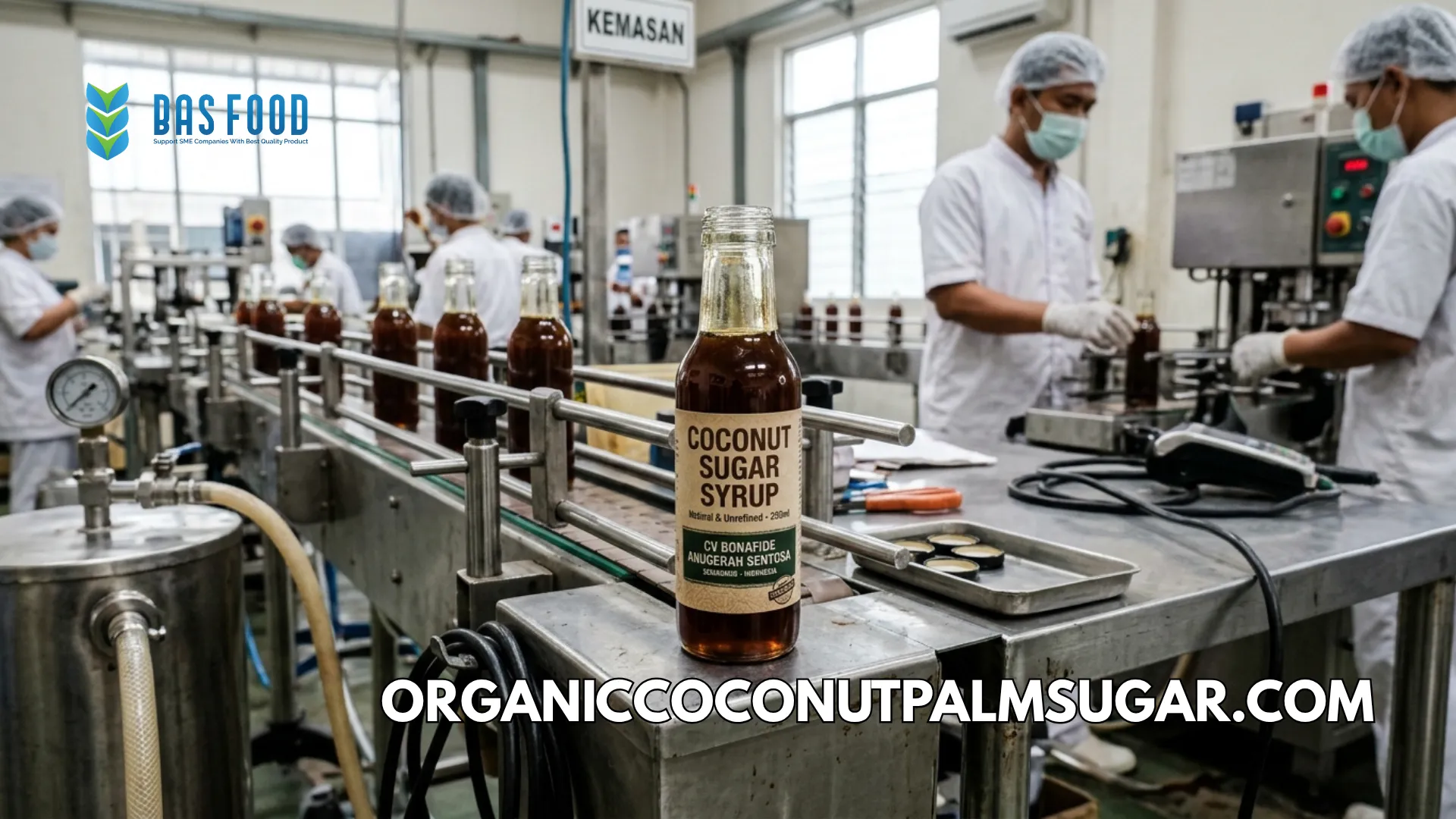
Why Coconut Sugar Syrup Quality Parameters Matter
Coconut sugar syrup is commonly made by concentrating fresh coconut sap until it reaches the desired consistency. The finished product has a sweet taste and a characteristic brown color, often with caramel-like notes. Manufacturers use it in beverages, bakery products, sauces, desserts, and other food applications.
However, natural raw materials can vary. Coconut variety, growing conditions, sap freshness, collection practices, and processing methods may influence the final product. As a result, two syrups may look similar but perform differently during manufacturing.
Clear quality parameters help reduce this uncertainty. They allow buyers to define acceptable product characteristics, compare supplier offers, and check whether delivered batches meet agreed requirements.
For importers, these parameters also support communication across the supply chain. A distributor can share technical details with customers, while a food manufacturer can use the same information to assess whether the syrup fits a recipe or production process.
Color Consistency: Creating a Reliable Visual Standard
One of the first things buyers notice is the syrup’s appearance. Coconut sugar syrup generally has a brown to dark brown color. Its exact shade can vary according to the raw material and concentration process.
Color consistency matters when manufacturers need every production batch to look similar. For example, a beverage company may want its coffee syrup to produce the same visual appearance in every bottle. A dessert producer may also need a predictable color to maintain the look of its finished products.
What Influences Coconut Sugar Syrup Color?
Several factors can affect color:
- Sap freshness: Raw material condition can influence the final color and flavor.
- Heating conditions: Temperature and heating time affect the concentration process and color development.
- Concentration level: Longer processing and greater concentration may change the syrup’s appearance.
- Filtration: Removing suspended particles can improve visual clarity.
- Storage: Unsuitable storage conditions may contribute to changes in product appearance.
A darker syrup is not automatically better or worse. The important point is whether its color matches the agreed specification and remains suitable for the intended application.
How Buyers Can Check Color Consistency
Buyers can compare samples under similar lighting and temperature conditions. They should also agree on a reference sample or an acceptable color range when visual consistency is important.
For larger orders, suppliers should use consistent inspection procedures and record relevant observations. A clear visual standard makes it easier to identify differences between batches.
Flavor Profile: The Taste That Defines the Product
The flavor profile is another important part of coconut sugar syrup quality. The syrup commonly has a sweet taste with caramel-like or cooked-sugar notes. Depending on the production method, it may also have a distinctive aroma associated with concentrated coconut sap.
For food manufacturers, flavor is not just a sensory detail. It affects how the syrup interacts with other ingredients and how consumers experience the finished product. A coffee manufacturer, for instance, may want a syrup with a rich caramel note. A sauce producer may prefer a more balanced sweetness that does not overpower other flavors.
What Can Change the Flavor Profile?
Raw material freshness and processing conditions are important factors. Sap that is not handled properly before processing may develop unwanted sensory characteristics. In addition, excessive or poorly controlled heating can create stronger cooked or burnt notes.
Storage also matters. Exposure to unsuitable conditions may affect flavor over time. Therefore, manufacturers should protect the syrup from contamination and follow the recommended storage instructions.
How to Evaluate Flavor
Sensory evaluation should take place using a consistent method. Buyers can compare samples for sweetness, aroma, aftertaste, and any unusual sour, fermented, burnt, or foreign notes.
However, taste alone cannot confirm overall product quality or food safety. Sensory checks should support laboratory testing and documented quality control procedures.
Moisture Content and Water Activity: Understanding Product Stability
Moisture content describes the amount of water present in coconut sugar syrup. It is an important parameter because water contributes to the product’s composition and influences its physical properties.
A syrup’s moisture level can affect concentration, viscosity, and processing performance. For example, a manufacturer may need a product with a consistent solids level to achieve the same result in every recipe.
However, moisture content and water activity are not the same measurement. Moisture content tells us how much water is present, while water activity indicates how much water is available to support microbial growth and certain chemical reactions.
Why Water Activity Matters
Water activity is particularly relevant when evaluating product stability. A syrup may contain water but have a lower water activity because dissolved sugars bind some of that water. Still, buyers should not assume that a high sugar concentration alone guarantees microbiological stability.
Processing hygiene, pH, packaging integrity, storage temperature, and microbial testing also influence product safety and shelf life.
What Should Buyers Request?
When relevant to the product and market, buyers should ask for moisture content and water activity results. They should also request the supplier’s recommended storage conditions and supporting shelf-life information.
These details help manufacturers assess whether the syrup suits their storage, distribution, and production requirements.
Brix and Total Soluble Solids: Measuring Syrup Concentration
Brix is one of the most widely used measurements for liquid sweeteners. It is commonly measured with a refractometer and expressed in degrees Brix (°Bx). The reading indicates soluble solids on a sucrose reference scale.
For coconut sugar syrup, Brix helps buyers understand how concentrated the product is. A higher reading generally indicates a higher concentration of soluble solids, which can influence sweetness, viscosity, and the amount of syrup needed in a recipe.
However, coconut sugar syrup contains a mixture of sugars and other soluble substances. Therefore, a Brix reading is not an exact measurement of total sugar content. It also does not independently prove purity, safety, or shelf stability.
Why Brix Matters in Commercial Production
Brix helps food manufacturers maintain formulation consistency. If the concentration changes between batches, the amount of syrup needed to achieve a target sweetness or solids level may also change.
It can also support process monitoring and supplier comparisons. Buyers should agree on an acceptable Brix range and measurement method before confirming an order.
Temperature can influence refractometer readings. Therefore, testing procedures should include appropriate temperature control or compensation to make results comparable.
Viscosity and Flow Behavior: Getting the Right Consistency
Viscosity describes a liquid’s resistance to flow. In simple terms, it tells us whether the syrup is relatively thin or thick.
This parameter is important because coconut sugar syrup must move through production equipment, mix with other ingredients, and fill into containers. A syrup that is too thick for a manufacturer’s pumping system may slow down production. A thinner syrup may be easier to handle but might not provide the desired texture in a topping or sauce.
Factors That Influence Viscosity
Several factors can affect syrup thickness:
- Brix level: Higher soluble solids concentration often increases viscosity.
- Temperature: Syrup generally becomes thinner when warmed and thicker when cooled.
- Sugar composition: Different soluble components can influence flow behavior.
- Processing conditions: Concentration and heating methods can affect the final consistency.
- Storage: Changes during storage may influence physical properties.
Because temperature affects viscosity, buyers should compare results only when the measurement conditions are consistent.
Setting Viscosity Requirements
A useful specification should identify the viscosity target or acceptable range, measurement temperature, test method, and unit. Dynamic viscosity is commonly reported in centipoise (cP) or millipascal-seconds (mPa·s).
The correct requirement depends on the application. Beverage manufacturers may need a syrup that blends easily, while sauce producers may prefer a thicker consistency.
pH, Acidity, and Other Chemical Parameters
The pH value indicates how acidic or alkaline a product is. It can be useful when evaluating coconut sugar syrup because acidity may influence flavor, processing, and product stability.
However, pH alone cannot determine whether a syrup is safe or shelf-stable. Buyers should consider it alongside water activity, processing conditions, packaging, and microbiological results.
Free acidity or other chemical measurements may also be relevant depending on the product specification. The appropriate tests should reflect the syrup’s formulation and intended market.
Why Chemical Testing Matters
Chemical testing gives buyers information that sensory inspection cannot provide. A syrup may have an acceptable color and flavor but still fail to meet a required technical specification.
For this reason, importers should ask which chemical parameters the supplier routinely checks and which additional tests can be arranged when needed.
The supplier and buyer should agree on test methods and acceptance limits before production or shipment. This prevents confusion when different laboratories use different procedures.
Microbiological Quality and Food Safety
Microbiological quality is a critical part of coconut sugar syrup evaluation. Because the syrup is a food ingredient, manufacturers and importers need confidence that it has been produced, handled, and packed under suitable hygienic conditions.
Potential microbiological requirements depend on the product, processing method, destination market, and intended use. Buyers may need testing for total plate count, yeast and mold, or specified pathogens, depending on applicable regulations and customer requirements.
How Processing Supports Microbiological Quality
Good manufacturing practices help reduce contamination risks. Important controls include clean raw material handling, hygienic equipment, controlled processing, suitable packaging, and protection against contamination after processing.
The product’s concentration, pH, and water activity may also influence microbial stability. Nevertheless, no single measurement should replace a suitable food safety assessment.
What Buyers Should Check
Importers should request relevant microbiological test results and confirm that they meet the requirements of the destination market. They should also review the supplier’s food safety procedures and traceability arrangements where applicable.
A batch-specific certificate of analysis (COA) is useful because it reports test results for a particular production lot. Buyers should compare those results with the agreed specification rather than relying only on a general product description.
Packaging, Shelf Life, and Storage Conditions
Even a well-produced syrup can lose quality if the packaging or storage conditions are unsuitable. Packaging should be food-grade, properly sealed, and appropriate for the product’s viscosity and transportation needs.
Buyers should confirm the packaging material, container size, net weight, closure system, and labeling details. They should also check whether the packaging can withstand the expected export and distribution conditions.
Shelf life depends on several factors, including product concentration, water activity, pH, processing hygiene, packaging integrity, and storage temperature. Therefore, suppliers should support shelf-life claims with suitable product data.
Practical Storage Recommendations
Follow the supplier’s stated storage instructions. Keep containers closed, protect the syrup from direct sunlight and excessive heat, and avoid contamination during handling.
For opened containers, follow the supplier’s guidance on resealing, handling, and storage. Do not assume that the shelf life of an unopened product also applies after opening.
Quality Control: Keeping Every Batch Consistent
A reliable quality control system helps ensure that coconut sugar syrup meets the agreed requirements. It should cover more than final product inspection. Ideally, it begins with raw material handling and continues through processing, packaging, storage, and dispatch.
At the raw material stage, producers should pay attention to sap freshness and hygienic collection. During processing, they should monitor concentration, heating, and filtration. After production, they should inspect the finished syrup and perform the relevant tests.
Important Quality Control Activities
A practical quality control program may include:
- Raw material inspection and handling checks
- Monitoring of processing conditions
- Brix measurement
- Viscosity measurement under defined conditions
- Appearance, color, aroma, and flavor checks
- Moisture and water activity testing where required
- pH and relevant chemical testing
- Microbiological testing based on product requirements
- Packaging and seal inspection
- Batch identification and traceability
The exact testing schedule depends on the manufacturer’s quality system and customer requirements. Not every test needs to be performed in the same way or at the same frequency.
Specification Sheet and Certificate of Analysis
A product specification sheet defines the expected characteristics and acceptable limits. A COA provides actual test results for a particular batch.
Buyers should request both documents where available. They should also confirm that the COA identifies the correct product and batch number.
This simple document review can help prevent disputes and make incoming quality checks more efficient.
How to Choose a Coconut Sugar Syrup Supplier
Choosing a supplier requires a balance between product quality, technical support, commercial terms, and communication. A competitive price is useful, but it should not be the only deciding factor.
Start by sharing your intended application and technical requirements. Explain the target Brix, viscosity, color, flavor profile, packaging, and destination market. This helps the supplier determine whether the product can meet your needs.
Next, request a sample and current specification sheet. If the product passes your initial evaluation, ask for a batch COA and discuss order quantities, lead times, export documents, and delivery terms.
Sourcing Inquiries with CV Bonafide Anugerah Sentosa
Businesses looking for Indonesian coconut-based ingredients can contact CV Bonafide Anugerah Sentosa to discuss sourcing requirements. Buyers interested in coconut sugar syrup should confirm current product availability, specifications, samples, packaging options, and export arrangements directly with the company.
The company may also be relevant to broader sourcing inquiries involving a coconut sugar supplier or coconut sugar exporter supplier. However, importers should verify the availability and technical details of each product separately.
When contacting a supplier, share your target quality parameters and intended application. This makes it easier to discuss whether the product is suitable for your manufacturing or distribution needs.
Conclusion: Quality Starts with Clear Parameters
Understanding coconut sugar syrup quality parameters helps B2B buyers make informed decisions and reduce uncertainty during procurement. Color consistency, flavor profile, moisture content, Brix, viscosity, pH, and microbiological quality all contribute to the overall assessment of a syrup.
However, the right specification depends on how the product will be used. A beverage manufacturer may prioritize concentration and flow behavior, while a sauce producer may focus on viscosity, color, and flavor. Therefore, buyers should define their requirements before comparing suppliers.
For a more reliable purchasing process, request a current specification sheet, review batch test results, evaluate a representative sample, and confirm packaging and storage conditions. With clear requirements and consistent quality control, businesses can source coconut sugar syrup with greater confidence.