When food manufacturers choose a liquid sweetener, taste is only part of the decision. The way a syrup pours, mixes, coats ingredients, and behaves during storage can also affect the quality of the final product. For beverage brands, bakeries, sauce producers, and ingredient distributors, understanding coconut sugar syrup consistency is essential for choosing the right ingredient and maintaining reliable production results.
Coconut sugar syrup is a liquid sweetener made by concentrating coconut sap or processing coconut-derived sugars into a syrup, depending on the product formulation. Its consistency can range from relatively fluid and easy to pour to thick and slow-moving. This difference influences how easily manufacturers measure the syrup, blend it with other ingredients, fill containers, and achieve a consistent result across production batches.
However, there is no single consistency that suits every application. A beverage manufacturer may prefer a thinner syrup that mixes quickly into drinks, while a bakery or dessert producer may need a thicker product that coats ingredients effectively. Therefore, buyers should consider the intended use before selecting a specification.
For businesses sourcing coconut-based ingredients, CV Bonafide Anugerah Sentosa operates in Indonesia’s commodity export sector. Buyers can contact the company directly to confirm current product availability, specifications, packaging options, and export terms. In this guide, we explore the factors that influence syrup consistency and explain how B2B buyers can evaluate it for their applications.
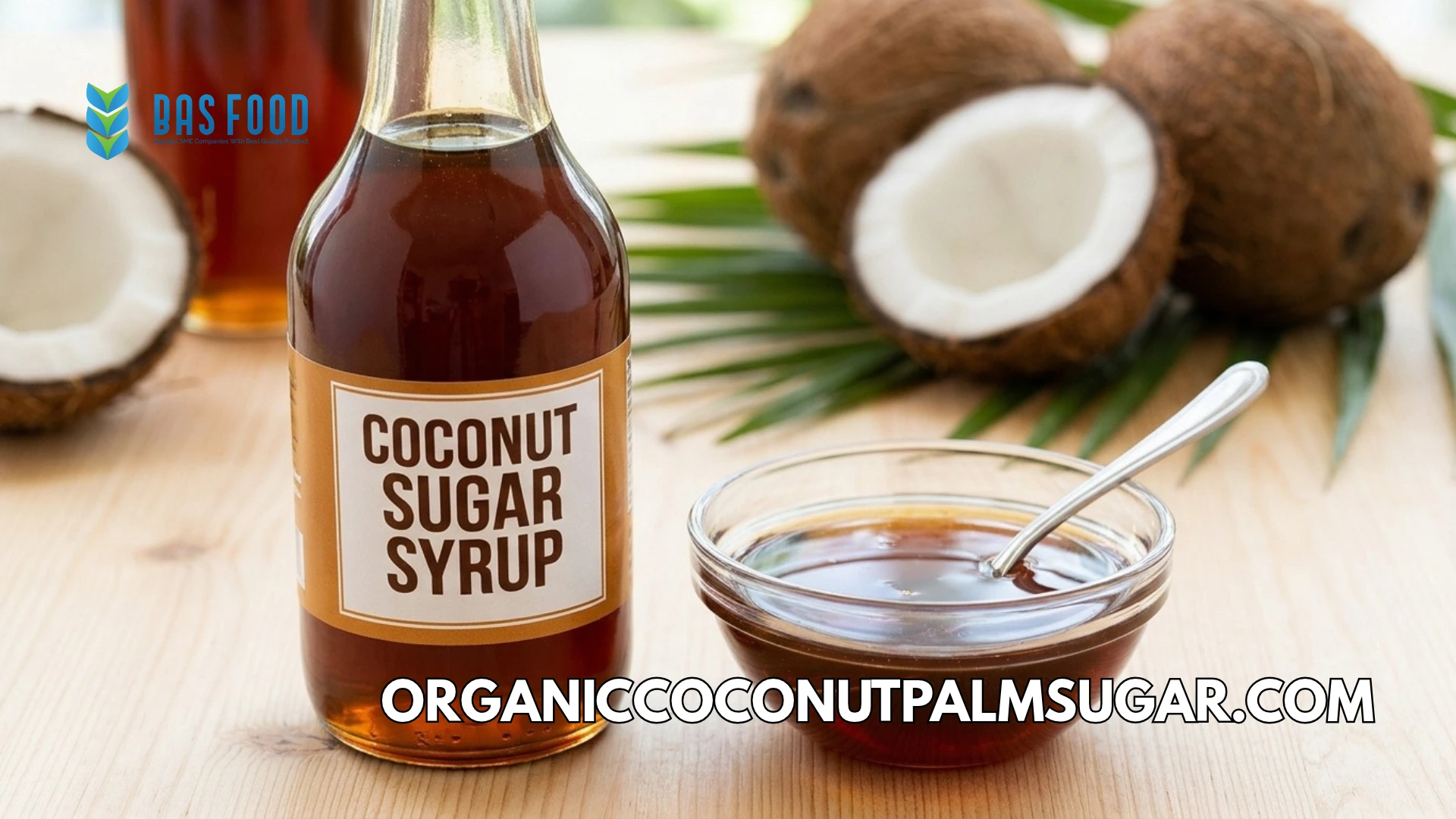
What Is Coconut Sugar Syrup Consistency?
Coconut sugar syrup consistency describes how the liquid sweetener behaves when poured, stirred, pumped, or spread. In everyday language, people often describe consistency as thin, medium, or thick. These descriptions are useful for initial discussions, but commercial buyers usually need more specific measurements to compare products accurately.
Two syrups may look similar in a bottle but behave differently during manufacturing. One may pour smoothly at room temperature, while another may flow slowly or become more difficult to handle in cooler conditions. These differences can affect dosing equipment, mixing time, filling speed, and the amount of syrup that remains on the sides of containers or production equipment.
Consistency is closely related to viscosity, which measures a fluid’s resistance to flow. A higher-viscosity syrup generally flows more slowly under comparable conditions, while a lower-viscosity syrup flows more easily. However, viscosity is not the only factor that determines how a syrup performs. Temperature, soluble solids, composition, and equipment design also play important roles.
For this reason, manufacturers should avoid relying only on visual descriptions such as “thick” or “smooth.” Instead, they should define the required performance and, when necessary, use a measurable viscosity range under stated test conditions.
Understanding Syrup Thickness and Viscosity
Syrup thickness is one of the first characteristics buyers notice. It affects how a product pours from a bottle, spreads across a surface, and combines with other ingredients. In commercial settings, viscosity provides a more technical way to describe this behavior.
A thinner coconut sugar syrup may move easily through pipes and dispensing equipment. This can be helpful for beverage manufacturers that need quick mixing and accurate dosing. A thicker syrup, on the other hand, may provide more coating ability and a slower flow that suits certain dessert toppings, sauces, or specialty food products.
Nevertheless, thicker does not automatically mean better quality. A syrup may be too thick for a high-speed filling line or too thin for an application that requires a stable coating. The correct viscosity depends on the product’s intended function and the conditions under which manufacturers will use it.
What affects viscosity?
Several factors influence coconut sugar syrup viscosity:
- Soluble solids: A higher concentration of dissolved sugars generally increases viscosity, although the exact effect depends on composition and temperature.
- Temperature: Syrup usually becomes less viscous as it warms and more viscous as it cools.
- Sugar composition: Different proportions of sugars and other dissolved substances can affect flow behavior.
- Processing conditions: Heating and concentration influence the syrup’s final composition and physical properties.
- Storage conditions: Temperature changes, water loss, and product changes during storage may affect consistency.
Because these factors interact, a buyer should evaluate viscosity under conditions that reflect actual production and storage. A measurement taken at one temperature may not represent how the syrup behaves on a cold warehouse floor or inside a heated production system.
How Production Methods Influence Coconut Sugar Syrup Consistency
Coconut sugar syrup consistency starts with the raw material and develops throughout processing. When producers concentrate coconut sap, they remove water and increase the concentration of dissolved solids. As concentration rises, the syrup generally becomes thicker.
However, the final result depends on more than the amount of water removed. Raw material composition, heating conditions, processing time, and the producer’s target specification can all influence the product. Even when two batches reach a similar concentration, they may not have exactly the same viscosity because their compositions or processing histories differ.
Concentration and solids content
Brix is commonly used to estimate soluble solids in sugar-rich liquids. It can provide useful information about concentration and help manufacturers compare batches. However, Brix does not directly measure viscosity, and it cannot describe every aspect of a syrup’s composition.
A higher Brix reading often corresponds to a thicker syrup under comparable conditions, but buyers should not assume a fixed relationship between Brix and flow. If consistency is critical, the product specification may need both a soluble-solids target and a viscosity range.
Heating and processing control
Heating helps concentrate the syrup, but processing conditions must remain controlled. Excessive heating can change flavor and color, while insufficient concentration may leave the syrup more fluid than intended. Producers therefore need to balance the desired consistency with other quality requirements.
For B2B buyers, it is helpful to ask whether the supplier defines a target concentration, monitors key processing conditions, and checks the finished product against a specification. These details support a clearer understanding of how consistency is managed.
Liquid Sweetener Texture: Beyond Thick or Thin
Liquid sweetener texture includes more than viscosity. It can also describe smoothness, mouthfeel, coating behavior, and the way the syrup interacts with other ingredients. These qualities matter because consumers experience the finished food or beverage rather than the syrup in isolation.
For example, a syrup may be thick but still pour smoothly, or it may flow unevenly and leave an undesirable sticky residue. In beverages, the syrup may need to disperse without creating excessive mixing time. In toppings and sauces, it may need to coat a surface evenly without running off too quickly.
Texture also influences how the syrup feels in the mouth. Depending on its concentration and composition, coconut sugar syrup may create a light coating or a fuller sensation. However, perceived texture can change when the syrup is mixed with fats, proteins, acids, or other sweeteners.
How to evaluate texture
A practical sensory assessment can begin with a simple set of observations:
- Pouring behavior: Does the syrup flow smoothly from its container?
- Surface coating: Does it spread evenly over a spoon or food surface?
- Mixing behavior: Does it blend easily into the intended recipe?
- Mouthfeel: Does it create the desired sensation without unwanted stickiness?
- Consistency after mixing: Does the finished product maintain its intended texture?
These observations help teams identify whether a syrup is suitable for a specific use. Still, sensory evaluation should complement rather than replace technical testing when the application requires precise control.
Understanding Syrup Flow Properties in Food Manufacturing
Syrup flow properties determine how a sweetener moves through equipment and behaves during handling. They are especially important for businesses that use pumps, pipes, dosing systems, automated filling lines, or large mixing tanks.
A syrup that flows easily at the point of purchase may behave differently under factory conditions. For instance, a cooler storage area can increase viscosity and make pumping more difficult. Similarly, a long transfer line or narrow nozzle may create more resistance than a short, wide opening.
Some liquids also change their flow behavior when manufacturers apply different levels of force. A simple viscosity measurement may not fully describe such behavior. Where relevant, a supplier or laboratory may need to measure viscosity across different shear conditions to understand how the syrup behaves during pumping or mixing.
Pumping and transfer
Manufacturers should confirm that the syrup can move through their equipment at the expected temperature and flow rate. This may involve checking pump capacity, pipe dimensions, transfer distance, and the product’s viscosity range.
If a syrup is too thick, the production team may need to adjust the handling temperature or use suitable equipment. However, any heating method must remain within the product’s recommended handling conditions to avoid unwanted changes in flavor or quality.
Filling and dosing
Consistency also affects packaging operations. A syrup that flows unevenly can slow filling, cause inaccurate dosing, or leave excessive residue in containers and nozzles. These problems may increase production time and cleaning requirements.
For this reason, manufacturers should test the syrup using their actual filling or dispensing system when possible. A successful small-scale trial can reveal practical issues before the business commits to larger orders.
How Temperature Changes Coconut Sugar Syrup Consistency
Temperature is one of the most important variables affecting syrup flow. In general, warming a sugar syrup reduces its viscosity, making it easier to pour and pump. Cooling usually increases viscosity, which can make the same syrup appear much thicker.
This behavior explains why a product may flow smoothly during production but move more slowly after being stored in a cooler environment. The change does not necessarily mean the syrup has deteriorated. It may simply reflect the effect of temperature on its physical properties.
Nevertheless, temperature-related changes should be evaluated alongside other signs of quality. If the syrup develops unexpected crystals, unusual odors, visible contamination, or other changes, buyers should investigate rather than assume that temperature alone explains the problem.
Establish a practical temperature range
For industrial use, buyers should define the temperature range at which the syrup must perform. A beverage plant may store and dispense syrup under different conditions from a bakery or dessert manufacturer.
Suppliers can be asked for handling guidance and any available viscosity data at specified temperatures. If the product requires warming before use, the buyer should confirm the recommended method and avoid uncontrolled heating.
A useful quality specification should state the test temperature whenever viscosity is reported. Without that information, two viscosity results may not be directly comparable.
How to Maintain Consistent Quality Between Batches
Batch consistency is essential for manufacturers who want their finished products to taste and perform the same way every time. Changes in syrup viscosity can affect dosing, sweetness distribution, coating, and processing speed. Therefore, consistency should be managed through clear specifications and routine quality checks.
The first step is to define the desired product characteristics. Depending on the application, the specification may include Brix or another soluble-solids measurement, viscosity at a stated temperature, color, flavor, packaging, and relevant safety criteria.
The second step is to ensure that each batch is identified and evaluated appropriately. A batch record or certificate of analysis can help buyers connect the delivered product with the relevant testing results. The exact information available depends on the supplier and the agreed quality system.
For repeat orders, buyers should compare batch results over time and discuss any meaningful variation with the supplier. Agreeing on acceptance limits and procedures for investigating deviations can reduce uncertainty and help maintain reliable production.
What B2B Buyers Should Ask a Coconut Sugar Supplier
When sourcing coconut sugar syrup, buyers should request enough information to determine whether the product matches their technical and commercial requirements. A product description alone rarely provides all the details needed for industrial purchasing.
Start by asking for the product specification, available packaging, minimum order quantity, lead time, and storage instructions. If viscosity matters to your process, request the relevant measurement method, test temperature, and acceptance range. If the supplier does not have a defined viscosity specification, discuss whether it can provide a sample for evaluation.
It is also important to ask about batch traceability and available documentation. Depending on the product and destination market, useful documents may include a technical data sheet, certificate of analysis, ingredient declaration, and relevant food safety documentation. Buyers should verify which documents are available rather than assuming every supplier provides the same set.
CV Bonafide Anugerah Sentosa operates in Indonesia’s commodity export sector. Businesses interested in coconut sugar syrup can contact the company directly to confirm current availability, product specifications, packaging options, and export terms. Buyers should verify whether the offered product meets their required consistency and application needs before placing an order.
When contacting a potential coconut sugar exporter supplier, explain your intended application and target performance. For example, a beverage manufacturer may need a syrup that mixes easily at a defined temperature, while a dessert producer may prioritize coating ability and a thicker texture.
The same principle applies when evaluating a coconut sugar supplier for ongoing business. Request a representative sample, test it under realistic conditions, and confirm the agreed specification in writing. This process supports clearer communication and helps both parties understand what consistency means for the intended product.
Conclusion: Consistency Is the Key to Better Syrup Performance
Understanding coconut sugar syrup consistency helps food manufacturers choose a liquid sweetener that fits their production process. Syrup thickness, viscosity, temperature, soluble-solids content, and processing conditions all influence how the product pours, mixes, and performs.
For B2B buyers, the goal is not simply to find the thickest or thinnest syrup. It is to identify a product with the right flow properties for the intended application and to verify those properties through appropriate testing. Clear specifications, representative samples, batch documentation, and realistic production trials can help businesses achieve more reliable results.
If you are sourcing coconut sugar syrup for beverages, bakery products, sauces, or other food applications, define your target consistency before requesting quotations. Contact CV Bonafide Anugerah Sentosa to confirm current product availability and discuss your requirements. By evaluating product performance alongside documentation and supply terms, your business can make a more informed sourcing decision.