Have you ever noticed that coconut sugar syrup can look golden amber in one bottle and deep brown in another? This difference often raises questions for food manufacturers, importers, distributors, and product developers. Does a darker syrup mean better quality? Does a lighter color indicate a milder flavor? Or can the color reveal something about the way the syrup was produced?
Understanding coconut sugar syrup color helps businesses make better sourcing decisions and maintain consistent product quality. Coconut sugar syrup is generally produced by concentrating sap collected from coconut palm flowers. During heating and concentration, the sap changes in color, flavor, and thickness. As a result, the final appearance depends on several factors, including the raw material, processing conditions, and storage.
For B2B buyers, color is more than a visual feature. It can help with product identification, batch comparison, and quality checks. However, color alone cannot confirm purity, safety, sweetness, or shelf life. Buyers need to evaluate it alongside other technical specifications.
In this guide, we explore what determines coconut sugar syrup color, why variations occur, how manufacturers can assess color consistency, and what importers should consider when sourcing this natural sweetener.
What Is Coconut Sugar Syrup, and Why Does Its Color Matter?
Coconut sugar syrup is a liquid sweetener made by concentrating coconut palm sap. The sap contains water and naturally occurring sugars, along with smaller amounts of other compounds. During processing, producers remove part of the water to create a thicker liquid with a concentrated sweet taste.
Unlike refined white sugar syrup, coconut sugar syrup typically develops shades ranging from amber to brown. Its color reflects the nature of the raw material and the chemical changes that occur during heating. However, there is no single shade that automatically defines every acceptable coconut sugar syrup product.
Color matters because manufacturers often need their ingredients to look consistent from one production batch to another. A beverage company, for example, may want a repeatable syrup appearance for iced coffee, tea, or specialty drinks. A bakery or sauce manufacturer may have different requirements depending on the finished product.
For importers and distributors, a clear color specification also makes supplier comparisons easier. Instead of relying on descriptions such as “light brown” or “dark amber,” buyers can agree on a reference sample or a suitable instrumental measurement method.
Nevertheless, color should never be the only purchasing criterion. A syrup may have the desired appearance but still fail to meet the buyer’s requirements for taste, viscosity, soluble solids, microbiological quality, or packaging. A complete product specification offers a much more reliable basis for procurement.
What Determines Coconut Sugar Syrup Color?
Several factors influence the final color of coconut sugar syrup. The first is the quality and composition of the fresh coconut sap. Sap characteristics can vary with harvesting conditions, handling practices, and the time between collection and processing. These differences may affect the starting material and the way it responds to heating.
The second factor is the concentration process. Producers heat coconut sap to evaporate water and increase its soluble solids content. As the liquid becomes more concentrated, its color may become more pronounced. The temperature, duration of heating, and overall process conditions can influence the extent of color development.
Natural sugars and other compounds in the sap also contribute to changes during processing. Heating can promote browning reactions, including reactions involving sugars and other components in the raw material. The extent of these changes depends on the composition of the sap and the conditions used during production.
Equipment and operating practices matter as well. Differences in heating systems, temperature control, batch size, and processing time can produce noticeable variations between batches. Therefore, a manufacturer seeking a consistent appearance needs more than a fixed recipe. The producer must also control the process and check the finished syrup.
Finally, storage can influence how the syrup looks over time. Exposure to unsuitable temperatures, light, air, or poor packaging conditions may affect product quality. Buyers should follow the supplier’s storage recommendations and investigate unexpected changes rather than assuming that every color shift is harmless.
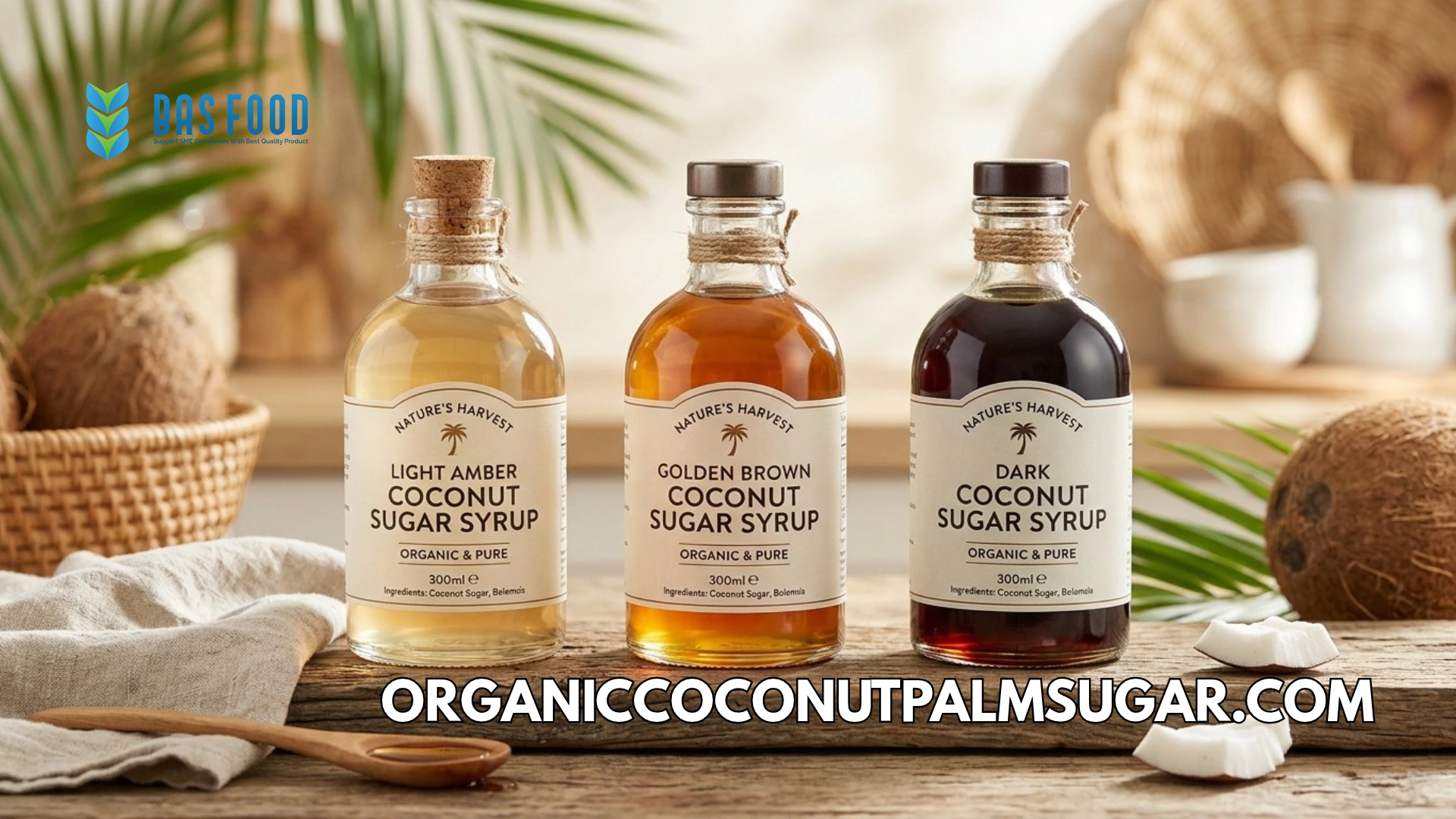
Understanding Light Amber, Golden Brown, and Dark Coconut Syrup
Coconut sugar syrup can appear in several shades, from relatively light amber to rich, deep brown. These descriptions are useful for initial discussions between buyers and suppliers, but they are not universal grades. One supplier’s description of “golden brown” may not match another supplier’s reference exactly.
Light amber syrup may appeal to manufacturers who want a more subtle visual effect in certain beverages or sauces. However, a lighter appearance does not necessarily mean that the syrup contains less sugar, has a milder flavor, or has undergone less processing. These properties must be assessed separately.
Golden brown syrup offers a familiar appearance for many coconut-based sweetener applications. It can be used in product development where a natural brown color fits the intended presentation. Even so, the final appearance in a recipe depends on the amount of syrup used and the other ingredients in the formulation.
Dark coconut syrup may be suitable for applications where a deeper brown tone is desirable, such as selected sauces, bakery fillings, dessert toppings, or specialty beverages. A darker syrup may also have a more pronounced cooked or caramel-like flavor, but color alone cannot establish its flavor profile. Buyers should evaluate the actual sample before making assumptions.
For B2B procurement, the best color depends on the application. A beverage producer may prioritize visual consistency, while a sauce manufacturer may focus on flavor, thickness, and the finished product’s appearance. Rather than choosing the lightest or darkest syrup by default, buyers should define the color range that suits their product.
Does Darker Coconut Sugar Syrup Mean Better Quality?
One common misconception is that darker coconut sugar syrup must be more natural, more concentrated, or higher in quality. In reality, color alone cannot prove any of these claims. A darker appearance may result from raw material variation, heating conditions, concentration, or other production factors.
Similarly, a lighter syrup is not automatically more refined or safer. A lighter color may reflect differences in the sap or processing conditions, but it does not independently establish the product’s purity or quality. Manufacturers should avoid judging a supplier’s performance from appearance alone.
To assess quality properly, buyers should review several characteristics together. These may include color, aroma, taste, viscosity, soluble solids content, ingredient declaration, and relevant microbiological or chemical parameters. The exact checks depend on the intended application and the buyer’s product requirements.
For example, a beverage manufacturer might require a syrup that meets a defined color range and viscosity so it can be dosed consistently. The same manufacturer may also need to verify soluble solids content to support formulation calculations. Color is useful in this process, but it cannot replace a measurement of soluble solids.
A reliable quality assessment also compares each batch with an agreed reference or specification. If the new batch looks substantially different, the buyer can ask the supplier to investigate the cause and provide supporting data. This approach helps separate normal variation from a potential quality problem.
In short, good coconut sugar syrup is syrup that meets the agreed specification and performs consistently in the intended application. Its shade is one part of that evaluation, not the final verdict.
How Heating and Concentration Affect Syrup Color
Heating is an essential part of producing coconut sugar syrup because it removes water and concentrates the naturally occurring sugars. As the sap heats, its appearance can change gradually. These changes depend on the raw material and the conditions used throughout the process.
Temperature and heating time are especially important. Excessive heat or prolonged heating may promote more browning than intended. On the other hand, different production methods can produce different color profiles even when the final syrup has a similar concentration.
Concentration also affects how the syrup looks. As water evaporates, the remaining soluble components become more concentrated. This can make the color appear deeper, although the relationship between concentration and color is not identical for every batch or production system.
Manufacturers should therefore monitor the process rather than relying on color alone to decide when the syrup is ready. Measuring soluble solids, often expressed in degrees Brix, can help assess concentration. However, Brix does not directly measure color, identify the exact sugar composition, or prove that the product is microbiologically safe.
Good process control aims to deliver a syrup that meets the required concentration, flavor, viscosity, and appearance. The producer can then compare the finished batch against established quality limits and make adjustments when necessary.
For importers, understanding these factors helps explain why some color variation may occur between suppliers or production batches. It also provides useful questions to ask when a supplier offers a product with a color profile that differs from the buyer’s expectations.
How Coconut Sugar Syrup Color Affects Food and Beverage Applications
Coconut sugar syrup is used in different food and beverage formulations, and each application may require a different appearance. In coffee drinks, the syrup can contribute sweetness and a brown tone that complements the beverage. The final visual result depends on the coffee, milk or milk alternative, syrup dose, and serving method.
In tea and other beverages, the syrup’s color may influence the appearance of the finished drink. Manufacturers should test the syrup in the intended concentration because the color seen in the original container may differ substantially after dilution. Flavor and sweetness should be evaluated at the same time.
Bakeries may use coconut sugar syrup in selected fillings, sauces, toppings, or other formulations where a liquid sweetener is appropriate. The syrup’s color may contribute to the appearance of the finished product, although baking temperature and the other ingredients can also affect browning.
Sauce and condiment manufacturers may value a deeper color for certain recipes. However, they should verify that the syrup’s flavor, viscosity, and sweetness fit the formulation. A darker shade should not be used as a substitute for flavor testing or specification checks.
For industrial buyers, sample testing is often the most practical way to assess suitability. Request a sample, prepare the intended recipe, and compare the finished product with the current formulation. This process helps determine whether the syrup’s color is acceptable and whether the ingredient performs consistently under real production conditions.
How to Control Syrup Color During Manufacturing
Producers who want consistent coconut sugar syrup color need a structured quality management process. It begins with raw material handling. Fresh coconut sap should be collected and processed under suitable hygienic conditions, and the time between collection and processing should be managed according to the producer’s established procedures.
Next, manufacturers should monitor key processing variables. Temperature, heating duration, batch size, and concentration targets can all affect the final result. Documenting these variables makes it easier to identify why one batch looks different from another.
Finished-product testing is another important step. Producers can compare color against a reference sample or measure it using an agreed method. They should also check other relevant properties, such as soluble solids, viscosity, sensory characteristics, and applicable safety parameters.
If a batch falls outside the agreed color range, the producer should investigate the cause before deciding whether the batch meets the customer’s requirements. Possible explanations may include differences in the raw sap, process variation, or storage conditions. Corrective actions should follow the manufacturer’s quality procedures rather than relying on visual judgment alone.
Packaging and storage are equally important. Suitable food-grade packaging can help protect the product during storage and transport. Buyers should confirm the recommended storage conditions, handling instructions, and shelf-life information with the supplier.
These controls benefit both producers and importers. A clear specification, consistent manufacturing practices, and documented checks make it easier to maintain product quality across repeat orders.
Packaging, Storage, and Shelf-Life Considerations
Packaging can influence how well coconut sugar syrup maintains its quality during distribution. Containers should be suitable for food contact, protect the product from contamination, and withstand the expected transport and storage conditions. The right format depends on order size, handling equipment, destination, and the supplier’s available packaging options.
Light exposure, temperature, and contact with air can affect food products in different ways. Therefore, buyers should store coconut sugar syrup according to the supplier’s instructions and avoid assuming that every product has the same storage requirements. Packaging should remain closed and intact during storage, and staff should follow established hygiene procedures when handling opened containers.
Color changes during storage should be assessed carefully. A change may be related to storage conditions or normal product characteristics, but it could also signal a quality issue. Buyers should compare the product with its specification and investigate changes in color, odor, texture, or other properties rather than relying on appearance alone.
Shelf life must be supported by appropriate product data. It can depend on formulation, concentration, processing, packaging, storage conditions, and microbiological controls. A particular Brix value or dark color does not independently guarantee safety or establish a universal shelf life.
For importers, it is useful to request the manufacturer’s shelf-life information, storage recommendations, batch identification details, and relevant quality documents before placing an order. These details help businesses plan inventory, shipping, and product rotation more effectively.
Choosing a Coconut Sugar Supplier for Consistent Color
Finding the right coconut sugar supplier involves more than requesting a price list. B2B buyers should look for a supplier who can clearly explain the product specification, provide relevant quality documentation, communicate realistic lead times, and confirm the commercial terms before an order is placed.
When color consistency matters, buyers should explain the target shade and intended application at the beginning of the discussion. They can request a representative sample and ask whether the supplier uses a defined color specification or measurement method. This helps both sides establish realistic expectations before production and shipment.
Buyers should also confirm the other properties that matter to their formulation. These may include ingredients, soluble solids content, viscosity, taste, aroma, packaging, storage requirements, and shelf-life documentation. The required checks will vary by application and destination market.
CV Bonafide Anugerah Sentosa operates in Indonesia’s commodity export sector. Businesses interested in coconut sugar and other coconut-derived products can contact the company to confirm its current product portfolio, available specifications, packaging options, minimum order quantities, and export terms. Buyers should verify directly whether the required coconut sugar syrup specification is available.
For a reliable comparison, assess suppliers using the same criteria. Review technical suitability, documentation, communication, sample performance, order terms, and delivery arrangements. This gives purchasing teams a stronger basis for choosing a supplier and reduces the risk of unexpected differences between samples and commercial batches.
A long-term supply relationship works best when the buyer and supplier agree on measurable requirements. A defined color range, a reference sample, and clear batch documentation can support more consistent procurement over time.
Conclusion: Color Is a Clue, Not the Whole Quality Story
Coconut sugar syrup color can range from light amber to deep brown because of differences in raw coconut sap, heating conditions, concentration, processing methods, and storage. These variations are a natural part of working with an ingredient made from agricultural raw materials, but they still need to be managed according to the buyer’s requirements.
A darker syrup is not automatically better, and a lighter syrup is not automatically purer or safer. Manufacturers should assess color alongside taste, aroma, viscosity, soluble solids, relevant safety checks, and the needs of the finished product.
For B2B buyers, the most effective strategy is to define a clear specification, use a reference sample or suitable measurement method, test the syrup in the intended application, and work with a supplier who can provide the necessary technical and commercial information.
CV Bonafide Anugerah Sentosa can be contacted to discuss its current coconut-derived product portfolio and export capabilities. Buyers should confirm the availability and specification of coconut sugar syrup directly before making a purchasing decision.
By treating color as one part of a broader quality assessment, food manufacturers and importers can select coconut sugar syrup more confidently and maintain a consistent appearance across their products.