As consumer preferences continue to evolve, vegan-friendly food products have become one of the fastest-growing segments in the global food industry. Supermarkets, restaurants, cafés, and food manufacturers are expanding their product lines to meet the increasing demand for plant-based ingredients. Among the many natural sweeteners available today, coconut sugar vegan has become a popular topic for businesses looking to develop products for this growing market.
Coconut sugar is produced from the sap of coconut palm blossoms through a simple evaporation process. Since it is sourced entirely from plants, it is generally considered a suitable plant based sugar for vegan diets. This makes it an attractive ingredient for companies producing bakery products, beverages, snacks, confectionery, dairy alternatives, and other vegan-friendly foods.
For importers and food manufacturers, understanding why coconut sugar is widely recognized as a vegan sweetener helps support product development, ingredient sourcing, and international marketing strategies. However, businesses should also understand the importance of verifying production practices, certifications, and labeling requirements before making vegan claims in different markets.
This guide explores everything you need to know about coconut sugar vegan, including how it is produced, why it is suitable for vegan products, its commercial applications, and what international buyers should consider when sourcing coconut sugar for vegans.
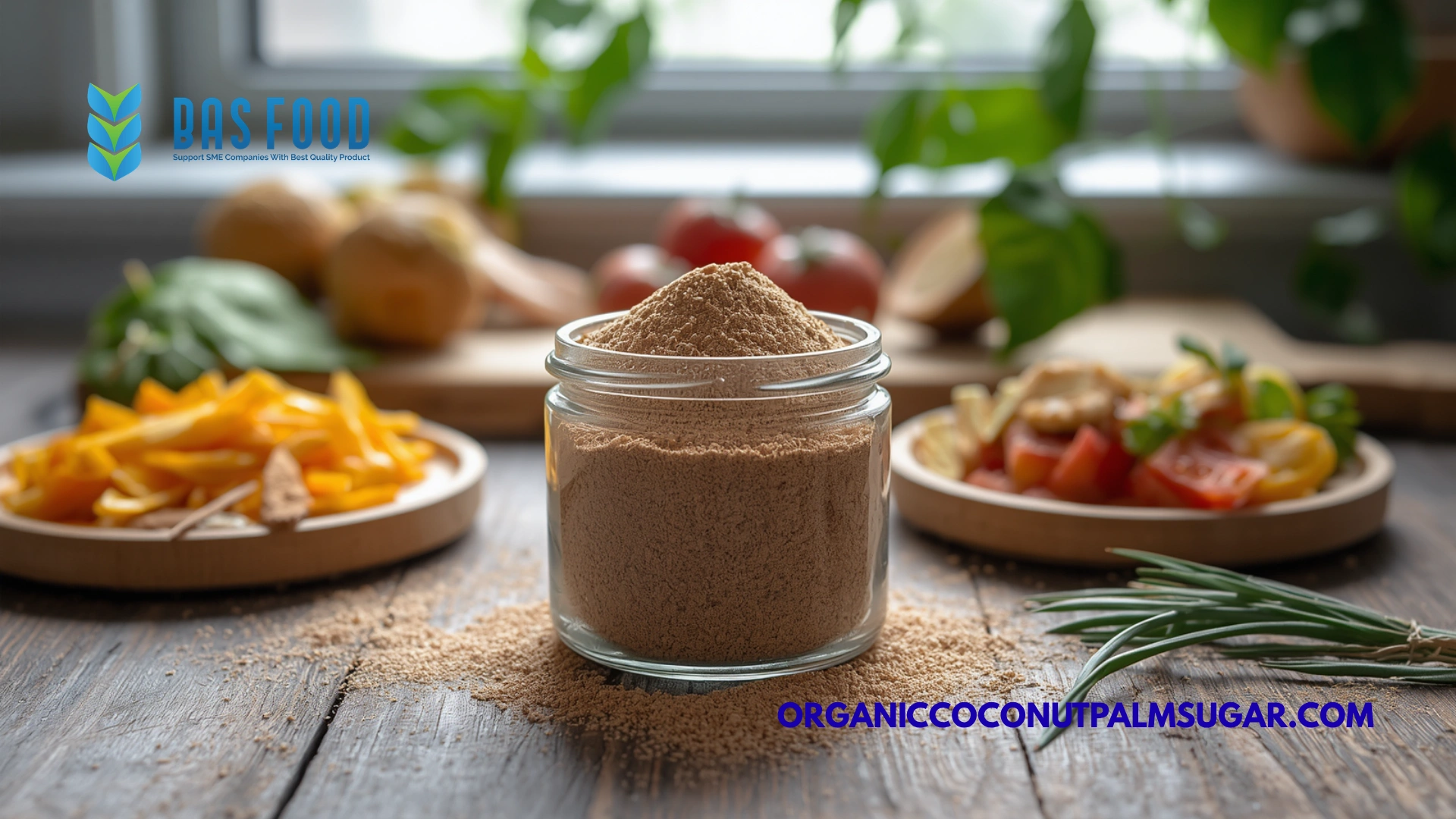
What Does Coconut Sugar Vegan Mean?
The phrase coconut sugar vegan simply refers to coconut sugar that is suitable for vegan diets because it is produced entirely from plant-derived ingredients.
Unlike sweeteners that may involve animal-derived processing aids or ingredients, coconut sugar begins with fresh sap collected from the blossoms of coconut palm trees.
The sap is filtered and gently heated until the water evaporates, leaving behind concentrated sugar crystals.
Because the production process uses a plant source rather than animal ingredients, coconut sugar is generally recognized as a suitable ingredient for vegan food products.
Nevertheless, manufacturers should always review supplier documentation and production practices to ensure products meet the specific vegan standards required by their target markets.
Why Coconut Sugar Is Considered a Plant Based Sugar
One reason for the growing popularity of coconut sugar is its straightforward origin.
As a plant based sugar, coconut sugar comes directly from coconut palm blossoms without requiring animal-derived ingredients during production.
The manufacturing process focuses mainly on collecting sap and evaporating excess water.
This relatively simple production method appeals to food manufacturers seeking ingredients with transparent sourcing and minimal processing.
Consumers who follow vegan lifestyles often appreciate foods made from recognizable plant ingredients.
For brands developing vegan product lines, coconut sugar offers an ingredient that aligns well with these expectations.
Coconut Sugar for Vegans: Why Manufacturers Choose It
There are several reasons why businesses choose coconut sugar for vegans.
Plant Origin
The most important factor is its plant-based source.
Since coconut sugar comes from coconut blossom sap, it naturally fits vegan product formulations.
Rich Flavor
Coconut sugar provides a pleasant caramel flavor that enhances many recipes.
Its balanced sweetness works well in premium bakery products, beverages, desserts, and confectionery.
Natural Appearance
Its attractive golden to brown color contributes visual appeal to finished products.
Many manufacturers appreciate this natural characteristic.
Versatility
Coconut sugar can be used across multiple food categories without major formulation changes.
This flexibility supports product innovation while simplifying ingredient sourcing.
Coconut Sugar as a Vegan Sweetener
Modern food manufacturers have many sweetening options available.
However, vegan sweetener selection depends on several important factors.
Companies evaluate flavor, functionality, ingredient origin, processing requirements, consumer acceptance, and regulatory compliance.
Coconut sugar performs well in each of these areas.
Its pleasant taste complements both sweet and savory products.
Its natural production process also appeals to brands that emphasize clean ingredient lists and transparent sourcing.
For these reasons, coconut sugar has become an increasingly common ingredient in vegan product development.
Industries Using Coconut Sugar in Vegan Products
The popularity of vegan foods has created new opportunities across many industries.
Bakery Products
Cookies, cakes, muffins, brownies, breads, and pastries frequently include coconut sugar in vegan recipes.
Its caramel flavor enhances finished products while supporting attractive color.
Plant-Based Beverages
Coffee drinks, teas, smoothies, nutritional beverages, and flavored drinks often use coconut sugar for sweetness.
Its smooth flavor blends well with plant-based milk alternatives.
Dairy Alternatives
Manufacturers producing vegan yogurt, frozen desserts, and non-dairy ice cream often include coconut sugar in premium formulations.
Snack Foods
Energy bars, granola, cereals, fruit snacks, and protein products commonly use coconut sugar.
Its natural origin aligns with consumer expectations for plant-based foods.
Sauces and Condiments
Barbecue sauces, marinades, dressings, and seasoning blends also benefit from coconut sugar’s balanced sweetness.
Production Process Behind Coconut Sugar
Understanding production helps explain why coconut sugar is generally suitable for vegan products.
Step 1: Harvesting Coconut Blossom Sap
Experienced farmers carefully collect fresh sap from coconut flower blossoms.
The harvesting process requires skill to maintain sap quality.
Step 2: Filtration
Fresh sap is filtered to remove natural impurities before cooking.
Step 3: Gentle Heating
The filtered sap is heated gradually until water evaporates.
As moisture decreases, the syrup thickens naturally.
Step 4: Crystallization
The concentrated syrup crystallizes into coconut sugar.
Manufacturers may produce powder, granulated, block, or liquid forms depending on customer requirements.
Throughout this process, the ingredient remains plant-derived.
Why Importers Should Verify Vegan Claims
Although coconut sugar is generally suitable for vegan products, responsible businesses verify supplier documentation before making labeling claims.
Importers should request information regarding:
- Production methods
- Ingredient declarations
- Cross-contamination controls
- Food safety systems
- Product specifications
- Available certifications
Regulations regarding vegan labeling vary between countries.
Professional exporters understand these requirements and provide documentation to support customer compliance.
Working with experienced suppliers reduces regulatory risks while improving market confidence.
Coconut Sugar and Global Vegan Food Trends
Demand for vegan foods continues expanding across international markets.
Consumers increasingly seek products made with plant-derived ingredients that support their dietary preferences.
As a result, manufacturers continue investing in vegan product development across bakery, beverages, snacks, confectionery, frozen desserts, and ready-to-eat meals.
This growth creates additional opportunities for coconut sugar suppliers serving global food manufacturers.
Reliable sourcing partnerships become increasingly valuable as international demand continues rising.
Choosing the Right Coconut Sugar Supplier
Selecting an experienced supplier is essential for maintaining consistent product quality.
Professional exporters offer:
- Reliable production capacity
- Consistent quality
- Export-ready packaging
- Product specifications
- Food safety documentation
- Responsive customer support
- Flexible packaging options
Importers should request production samples and review supplier documentation before placing large orders.
Long-term partnerships with dependable exporters help ensure stable supply while supporting business growth.
Common Misunderstandings About Coconut Sugar Vegan
Some consumers mistakenly believe that every natural sweetener is automatically vegan.
In reality, manufacturers should always verify ingredient sourcing and production methods before making vegan claims.
Another misconception is that coconut sugar is produced from coconuts themselves.
Actually, coconut sugar comes from the sap of coconut flower blossoms rather than the fruit.
Some also assume all coconut sugar products carry vegan certification.
While many products are suitable for vegan diets, certification depends on individual manufacturers and certification organizations.
Understanding these differences helps businesses communicate accurate information.
Conclusion
Understanding coconut sugar vegan helps importers, manufacturers, and distributors make informed sourcing decisions for today’s growing plant-based food industry. Because coconut sugar is produced from coconut blossom sap, it is generally recognized as a plant based sugar that fits well within vegan product formulations.
Its pleasant caramel flavor, versatile functionality, and straightforward production process make it a valuable vegan sweetener for bakery products, beverages, snacks, desserts, sauces, and many other food applications. At the same time, businesses should always verify supplier documentation and labeling requirements before making vegan claims in international markets.
For companies developing premium sugar for vegans, partnering with an experienced exporter ensures consistent quality, reliable supply, export-ready packaging, and the technical documentation needed to support successful global trade. As demand for plant-based foods continues to grow, coconut sugar remains an excellent ingredient choice for manufacturers seeking both quality and versatility.