
As food manufacturers move toward gluten-free, clean-label, and plant-based formulations, alternative flours such as coconut flour and cassava flour have gained significant traction. While both are gluten-free and derived from tropical crops, their functional behavior, nutritional profile, and processing performance differ substantially.
This article provides a manufacturing-focused comparison to help food producers choose the right flour based on product goals, processing constraints, and market positioning.
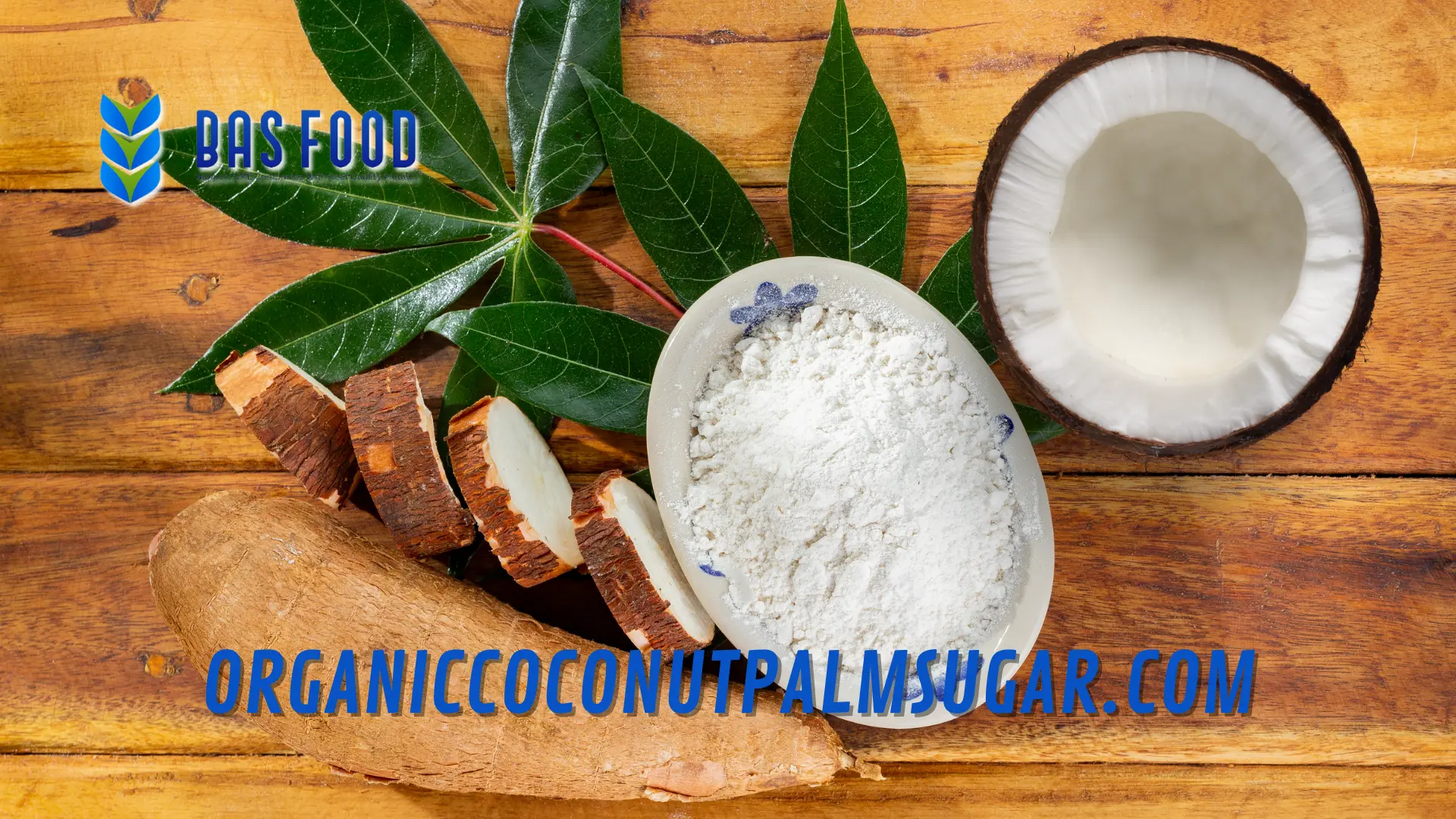
Introduction to Alternative Flours in Food Manufacturing
Traditional wheat flour offers predictable structure and elasticity, but increasing demand for:
- Gluten-free products
- Grain-free formulations
- Allergen-friendly foods
has pushed manufacturers to explore non-cereal flours. Coconut flour and cassava flour are among the most commonly evaluated options, yet they are not interchangeable in most formulations.
Raw Material Origin and Processing Differences
Coconut Flour
- Derived from defatted coconut meat
- By-product of coconut milk or coconut oil extraction
- Dried and finely milled
- This process removes most fat, leaving a fiber-dense flour.
Cassava Flour
- Made from whole cassava root
- Peeled, washed, dried, and milled
- Minimal processing, no fermentation
Cassava flour retains the whole-root starch structure, making it closer to traditional flour behavior.
Nutritional Profile Comparison
| Parameter | Coconut Flour | Cassava Flour |
|---|---|---|
| Dietary Fiber | Very high (35–45%) | Low (2–4%) |
| Protein | Moderate | Very low |
| Fat | Low | Very low |
| Carbohydrates | Moderate | High |
| Glycemic Impact | Low–moderate | High |
Manufacturing Implications
- Coconut flour supports high-fiber and low-carb claims
- Cassava flour supports neutral nutrition and energy-dense products
Functional Properties in Food Formulation
Water Absorption Capacity
Coconut flour absorbs 4–5 times more water than wheat flour due to its high fiber content. This dramatically affects:
- Dough viscosity
- Batter yield
- Mixing energy
Cassava flour has low water absorption, behaving more like refined starch-based flours.
Texture and Structure
Coconut Flour
- Dense
- Crumbly if not properly hydrated
- Requires binders (eggs, gums, starches)
Cassava Flour
- Soft
- Elastic when heated
- Produces lighter crumb
From a processing perspective, cassava flour is easier to scale for mainstream products.
Processing Behavior and Manufacturing Impact
Mixing and Hydration
- Coconut flour requires precise hydration control
- Cassava flour is more forgiving during mixing
Thermal Behavior
- Coconut flour does not gelatinize like starch
- Cassava flour gelatinizes readily, contributing to structure
Equipment Compatibility
- Coconut flour formulations often need recipe redesign
- Cassava flour can often be adapted to existing wheat-based lines
Application Suitability by Product Category
Best Uses for Coconut Flour
- High-fiber baked goods
- Keto or low-carb snacks
- Nutrition bars
- Specialty health products
Best Uses for Cassava Flour
- Gluten-free bread and rolls
- Flatbreads and tortillas
- Cakes and muffins
- Snacks and coatings
Cassava flour is preferred where neutral taste and familiar texture are required.
Flavor and Sensory Impact
Coconut Flour
- Mild coconut note (varies by supplier)
- Can influence flavor profile
- May require masking in savory products
Cassava Flour
- Neutral flavor
- Clean mouthfeel
- Minimal impact on final taste
For mass-market products, flavor neutrality is often a decisive advantage.
Cost, Supply Chain, and Scalability
| Factor | Coconut Flour | Cassava Flour |
|---|---|---|
| Raw Material Yield | Lower | Higher |
| Cost Volatility | Moderate | Low |
| Global Supply | Stable | Very strong |
| Industrial Availability | Moderate | High |
Cassava flour benefits from:
- Large-scale root production
- Strong supply chains in Asia, Africa, and Latin America
This makes cassava flour more scalable for high-volume manufacturing.
Labeling, Claims, and Regulatory Considerations
Coconut Flour Claims
- Gluten-free
- Grain-free
- High fiber
- Keto-friendly (formulation dependent)
⚠️ Coconut is classified as a tree nut allergen in some markets.
Cassava Flour Claims
- Gluten-free
- Grain-free
- Nut-free
- Clean label
Cassava flour is often preferred for allergen-sensitive markets.
Key Advantages and Limitations
Coconut Flour
Advantages
- Exceptional fiber content
- Strong health positioning
Limitations
- Difficult processing
- Texture challenges
- Higher formulation complexity
Cassava Flour
Advantages
- Wheat-like functionality
- Neutral taste
- Easy scale-up
Limitations
- Limited nutritional differentiation
- Higher glycemic index
Conclusion
Coconut flour and cassava flour serve very different roles in food manufacturing, despite both being gluten-free and plant-based. Coconut flour excels in nutritional positioning, particularly for high-fiber and low-carb products, but requires careful formulation and processing control. Cassava flour, on the other hand, offers functional familiarity, scalability, and neutral sensory performance, making it ideal for mainstream gluten-free applications.
For food manufacturers, the right choice depends on:
- Target consumer claims
- Processing capabilities
- Cost and scale requirements
🥣 Selecting the correct flour is not just an ingredient decision—it is a formulation and manufacturing strategy.
Contact CV Bonafide Anugerah Sentosa how we can provide the best solutions for you. WhatsApp: +62 8213 4505 737, Email: info@bonafideanugerahsentosa.com / bas.mdir@gmail.com.