Bulk organic coconut sugar plays a growing role in industrial food production. Manufacturers and distributors require stable supply, clear specifications, and reliable export handling. Therefore, sourcing decisions must go beyond price and focus on compliance, volume capacity, and logistics efficiency.
This page explains production capability, minimum order quantity, container loading details, and regulatory readiness. It is designed for high-volume buyers preparing to secure long-term contracts.
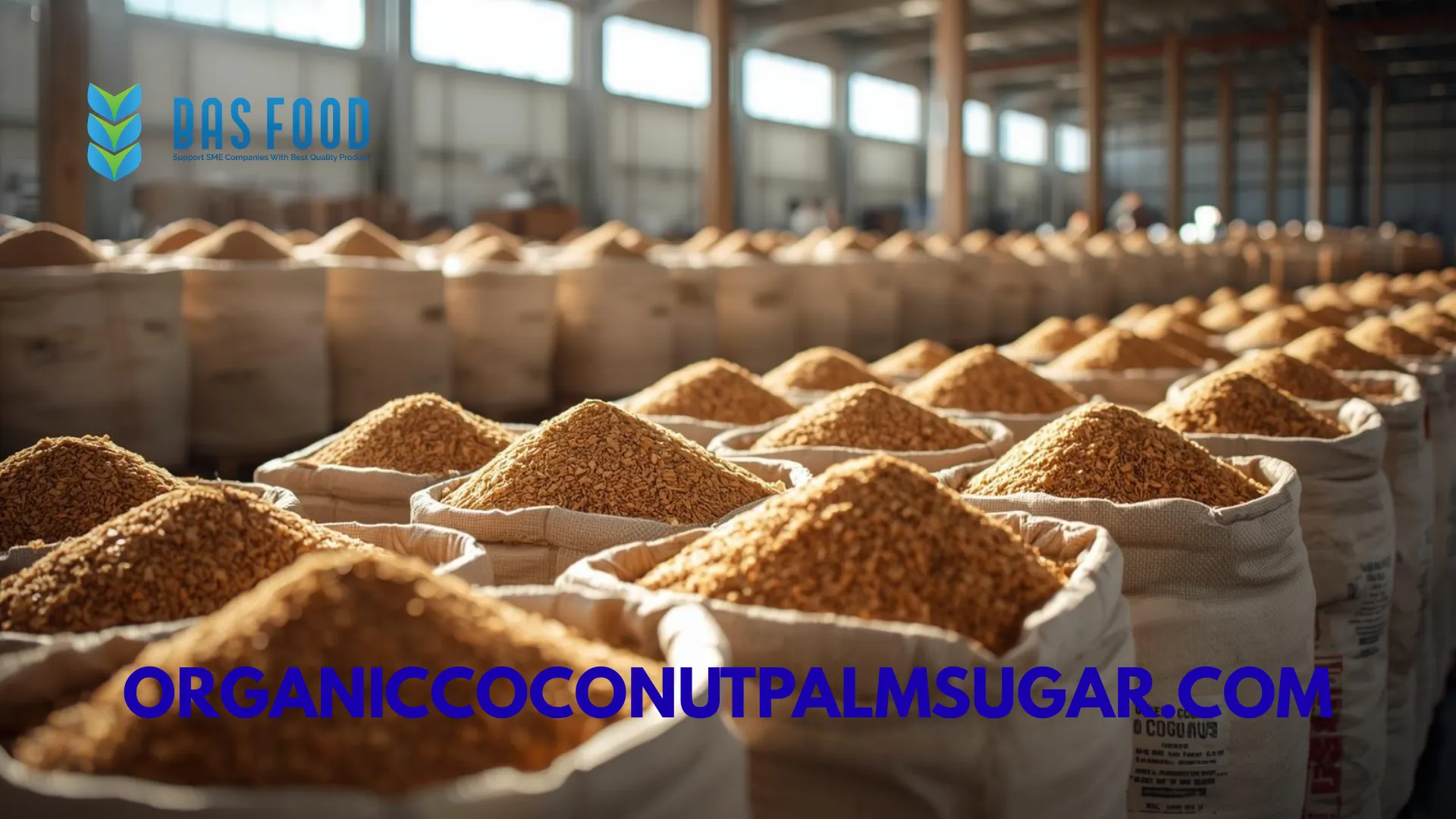
Understanding Bulk Organic Coconut Sugar for Industrial Use
Food manufacturers use coconut sugar in bakery, beverage, confectionery, and health-focused products. As demand increases, buyers seek consistent granulation and color across batches.
In addition, industrial buyers require predictable lead times. Bulk supply must align with production schedules and inventory planning.
Therefore, exporters must operate structured sourcing networks and centralized processing systems.
Why Manufacturers Choose Bulk Organic Coconut Sugar
Many producers select coconut sugar as a natural sweetener alternative. It offers functional sweetness while meeting clean-label positioning.
Moreover, organic certification supports premium product lines. This alignment helps brands comply with EU, USA, and Middle East organic standards.
However, industrial buyers prioritize reliability over marketing claims. Stable supply and documentation accuracy remain the key decision factors.
Production Capacity and Supply Stability
Large-scale orders require proven production capacity. Exporters must coordinate farmer networks, processing facilities, and quality control teams.
Consistent sap collection supports year-round output. Indonesia’s tropical climate helps maintain stable harvest cycles.
For verified production figures, buyers should review the production capacity page. Transparent capacity data reduces procurement uncertainty.
MOQ and Contract Volume Planning
Minimum order quantity often starts at one full container load. This approach ensures cost efficiency and standardized export handling.
However, contract structures can vary based on annual volume commitments. Long-term agreements often secure better pricing and priority production slots.
Buyers planning continuous supply should discuss rolling forecast models. These forecasts align manufacturing output with shipment schedules.
Container Loading and Packaging Options
Standard Packaging Formats
Exporters typically offer 25 kg kraft paper bags with inner liners. Some buyers request jumbo bags for industrial transfer systems.
Packaging must protect against moisture exposure. Therefore, sealed inner plastic liners are standard practice.
For full specifications, buyers may review available packaging options through the packaging page.
Container Capacity
A 20-foot container usually loads around 16–18 metric tons, depending on pallet configuration. A 40-foot container can hold significantly more volume.
Proper pallet arrangement improves airflow and reduces shifting during transit. Desiccants help manage humidity throughout sea shipment.
Compliance With International Food Regulations
Export shipments must meet food safety and organic standards. Buyers serving the EU market require valid organic certification recognized by EU authorities.
Similarly, the USA requires compliance with USDA organic regulations. Middle East markets may request halal certification alongside organic documentation.
Therefore, exporters must prepare complete documentation sets before shipment departure.
Quality Control and Laboratory Testing
Quality control begins at raw sap collection. Processing teams monitor heating, drying, and crystallization stages.
Each batch undergoes moisture and microbiological testing. Heavy metal analysis and contaminant screening may also be required.
Exporters with experience in regulated sectors maintain strict verification systems. For example, companies handling tuna species such as bluefin tuna comply with seafood export regulations and detailed traceability systems. This compliance culture strengthens quality control across all product categories.
Export Logistics and Trade Documentation
Bulk shipments require precise documentation. Commercial invoices, packing lists, certificates of origin, and organic certificates must match shipment details.
Although coconut sugar does not require cold chain logistics, exporters must control humidity during transit. Moisture management protects product stability.
International trade compliance reduces customs delays. Therefore, documentation accuracy directly impacts delivery timelines.
Risk Management for High-Volume Buyers
Weather patterns, port congestion, and regulatory updates can affect shipments. Buyers should assess supplier contingency planning.
Diversified sourcing regions reduce dependency on one production area. In addition, exporters with multi-product portfolios often maintain stronger compliance systems.
CV Bonafide Anugerah Sentosa operates across coconut-based products, spices, cocoa products, and regulated fishery exports including bluefin tuna. This operational diversity supports structured documentation and export coordination for global buyers.
Best Practices Before Confirming a Purchase Order
First, request detailed product specifications and recent lab reports. Then, verify organic and food safety certificates.
Next, confirm MOQ, packaging format, and container loading plans. Clear alignment prevents misunderstandings during shipment.
Finally, agree on payment terms and delivery schedules. Transparent communication supports long-term supply relationships.
Building Long-Term Industrial Supply Partnerships
Industrial food production depends on consistent raw materials. Therefore, selecting a reliable exporter protects manufacturing continuity.
Bulk organic coconut sugar offers scalable supply when supported by structured processing and export compliance. Manufacturers who conduct thorough due diligence reduce risk and protect brand integrity.
Buyers ready to proceed should initiate technical discussions to align volume planning, documentation, and shipment scheduling.
Frequently Asked Questions
1. What is the typical MOQ for bulk organic coconut sugar?
Most exporters set MOQ at one full container load, usually 16–18 metric tons for a 20-foot container.
2. Does coconut sugar require temperature-controlled shipping?
No. However, exporters must control humidity and use moisture-protective packaging.
3. What certifications are required for EU and USA markets?
Valid organic certification, food safety documentation, and sometimes halal certification are required depending on destination.
4. How do buyers verify product quality before shipment?
Buyers can request laboratory test reports, specification sheets, and third-party inspection if needed.
5. How long does production take for a full container order?
Production timelines depend on volume and scheduling, but exporters usually confirm lead time during contract negotiation.
Contact CV Bonafide Anugerah Sentosa how we can provide the best solutions for you. WhatsApp: +62 8213 4505 737, Email: info@bonafideanugerahsentosa.com / bas.mdir@gmail.com.