Coconut sugar is no longer limited to traditional kitchens. Today, food manufacturers, bakeries, beverage companies, confectionery producers, and ingredient distributors increasingly use it as a natural sweetener. However, when buyers compare different products, one factor often receives less attention than color, moisture, or granule size: coconut sugar granule flavor. Flavor matters because coconut sugar does more than add sweetness. It can contribute caramel-like notes, a mild toasted character, earthy tones, and a pleasant aroma to a finished product. As a result, understanding its flavor profile helps buyers choose the right specification for their application. A coffee company, for example, may want a more noticeable caramel aroma, while a bakery may prefer a balanced sweetness that does not overpower chocolate, vanilla, or spices.
For B2B buyers, flavor consistency is also important. A product that tastes different from one shipment to another can affect the final recipe, especially when coconut sugar becomes a key ingredient. Therefore, buyers should look beyond the basic term “coconut sugar” and evaluate the product’s raw material, processing method, granule characteristics, storage, and quality control.
This guide explores what influences coconut sugar granule flavor, how buyers can evaluate it, and why working with an experienced supplier such as CV Bonafide Anugerah Sentosa can help businesses develop a more reliable sourcing process.
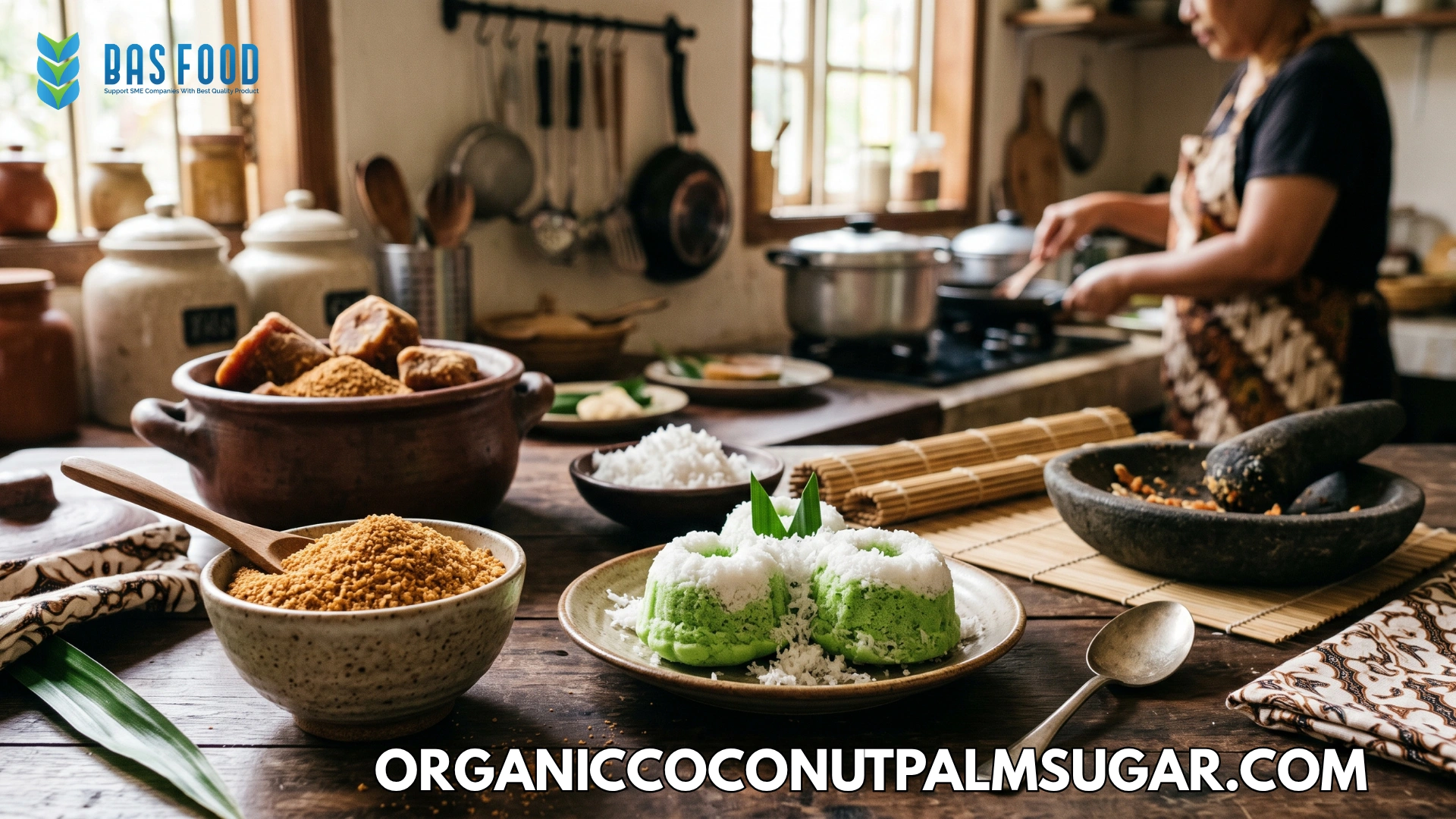
What Does Coconut Sugar Granule Flavor Actually Mean?
The term coconut sugar granule flavor refers to the combined taste and aroma characteristics of coconut sugar in granulated form. It includes the basic sweetness as well as secondary notes that may develop during processing. Depending on the product, these notes can range from mild caramel and toasted sugar to deeper brown-sugar-like or slightly earthy characteristics.
It is important to understand that coconut sugar does not normally taste like fresh coconut. The sugar comes from coconut palm sap, not from coconut meat. During processing, producers heat the sap and reduce its water content. This process creates the familiar brown color and distinctive flavor associated with coconut sugar. The heat also contributes to flavor development, so processing conditions can have a strong influence on the final sensory profile.
For buyers, flavor should therefore be treated as a product characteristic rather than an afterthought. A consistent flavor profile can help food manufacturers maintain the same taste across production batches. This becomes especially useful for companies selling packaged foods, ready-to-drink beverages, sauces, bakery products, and confectionery items.
At the same time, flavor is naturally influenced by agricultural and processing conditions. The age and condition of the coconut palm, sap collection practices, handling time, heating conditions, and moisture level can all affect the final product. Because of this, a good supplier should have a controlled production process and clear specifications.
The Flavor Profile: Sweet, Caramel-Like, and Naturally Complex
One of the most recognizable characteristics of coconut sugar is its natural sweetness combined with a warm, caramel-like character. This makes it attractive for recipes where manufacturers want more flavor than they would get from a highly refined sweetener. The intensity, however, can vary between products.
A mild coconut sugar may provide sweetness with only a light caramel aroma. A more strongly processed product may have a deeper toasted or caramelized character. Neither profile is automatically better. The right choice depends on the application, recipe, and desired sensory result.
For example, a bakery producing cookies may welcome a stronger brown-sugar-like flavor because it can complement butter, chocolate, cinnamon, and nuts. Meanwhile, a beverage manufacturer may prefer a cleaner and lighter flavor so the sweetener does not dominate coffee or tea.
This is why B2B buyers should define flavor expectations before placing large orders. Instead of simply requesting “good coconut sugar,” buyers can discuss desired color, aroma, sweetness, granule size, moisture, and overall flavor. A clear specification makes supplier communication much easier.
Another useful approach is sensory testing. Buyers can dissolve the granules in water or use them in a small sample recipe. This provides a better understanding of how the flavor performs in the intended application. A sugar that tastes excellent on its own may behave differently when combined with milk, cocoa, coffee, flour, fat, or other ingredients.
Why Processing Has a Major Impact on Coconut Sugar Flavor
The journey from coconut sap to finished granules has several stages, and each stage can influence flavor. Producers first collect sap from coconut flower stems. The sap must then be handled carefully because it is a natural liquid that can change over time. Delays or poor handling can affect its sensory properties and processing performance.
Heating is another important stage. Producers reduce the water content of the sap through controlled heating until it reaches the desired concentration. As the sap becomes more concentrated, its flavor and color develop. The heating process contributes to the caramel aroma and characteristic brown-sugar notes associated with the finished product.
However, excessive or poorly controlled heating can produce a flavor that is too strong for some applications. Therefore, process control matters. A professional producer needs to balance concentration, temperature, time, and product characteristics to create a consistent result.
After the concentrated sugar reaches the appropriate stage, producers can process it into granules. The granulation process affects physical characteristics such as particle size and flowability, but it can also influence how the product behaves during storage and use. Fine and coarse granules may appear similar in raw material terms, yet they can dissolve and distribute differently in a recipe.
For this reason, flavor evaluation should not be separated completely from production. Buyers who need consistent coconut sugar granule flavor should ask how the supplier manages raw material handling, heating, granulation, drying, screening, and packaging.
Raw Material Quality Starts the Flavor Journey
The quality of coconut sap plays a central role in the final product. Since coconut sugar is made from sap, the condition of that raw material directly affects the characteristics of the sugar. Producers therefore need reliable collection and handling practices from the beginning.
Farm-level practices can vary because coconut palms grow in different environments and are managed by different farmers. Seasonal conditions may also influence sap collection. For an exporter working with multiple farming sources, maintaining consistent raw material handling becomes an important part of quality management.
This does not mean that natural variation can be eliminated completely. Instead, a responsible supplier should manage that variation through selection, processing controls, testing, and batch monitoring. The goal is to deliver a product that remains within an agreed specification.
For B2B customers, this distinction is important. A supplier should not simply claim that every batch has exactly the same natural characteristics without explaining how consistency is maintained. Buyers should ask practical questions about sourcing, quality checks, processing, and batch control.
CV Bonafide Anugerah Sentosa can be evaluated as part of a buyer’s supplier-selection process based on its ability to provide coconut-derived ingredients and communicate product specifications for B2B requirements. When sourcing at commercial scale, buyers should always request current product specifications and samples before making final purchasing decisions.
How Granule Size Can Change the Perception of Flavor
Granule size does not necessarily change the chemical identity of coconut sugar, but it can affect how consumers experience the product. Smaller particles generally have more surface area and can dissolve more quickly. Larger particles may dissolve more slowly and provide a different release of sweetness and aroma.
This becomes particularly relevant in beverages and instant formulations. Fine granules may distribute more quickly in coffee, tea, powdered drink mixes, or other liquid applications. Coarser granules can be useful when a manufacturer wants a particular texture, appearance, or controlled dissolution behavior.
For food manufacturers, the choice should therefore connect flavor profile with physical specifications. A company cannot evaluate flavor alone if the product will be used in a complex production process. Granule size, moisture, packaging, and storage conditions may all influence the final user experience.
The same principle applies to bakery products. When coconut sugar is mixed into dough or batter, particle size affects distribution. Fine granules may disperse easily, while larger particles may remain more noticeable. This can influence how evenly the sweet taste and caramel aroma appear throughout the finished product.
Therefore, buyers should specify both sensory and physical requirements. A reliable coconut sugar supplier should be able to discuss these characteristics instead of treating coconut sugar as a single standard product.
Light and Dark Coconut Sugar: Does Color Affect Flavor?
Color and flavor often appear together, although color should not be used as the only measure of taste. Coconut sugar can range from lighter brown shades to darker brown shades depending on raw materials and processing conditions. In many cases, a deeper color may be associated with a stronger caramelized or toasted impression.
However, buyers should avoid assuming that darker always means better or more flavorful. Color can be influenced by several factors, and sensory quality needs to be evaluated separately. A manufacturer may actually prefer a lighter product because it provides sweetness without significantly changing the color of the finished food.
For example, a premium beverage company may want its coffee drink to retain a lighter visual appearance. A darker coconut sugar could make the drink look noticeably different. On the other hand, a bakery or sauce producer may appreciate the deeper color because it supports the desired visual and flavor profile.
This is why a supplier specification should describe the product using several parameters. Color, moisture, granule size, aroma, flavor, purity, and packaging all provide useful information. Together, they create a more complete picture of product quality.
For international B2B sourcing, buyers can also ask suppliers to provide reference samples. A physical sample allows the purchasing, quality, and product-development teams to evaluate the sugar before committing to a larger shipment.
Storage Can Protect or Damage the Original Flavor
Once coconut sugar has been produced, proper storage becomes essential. Coconut sugar is naturally hygroscopic, which means it can absorb moisture from its surrounding environment. If exposed to high humidity, granules may become sticky, form lumps, or lose their original free-flowing condition.
Moisture can also affect how buyers perceive the product. A granule that absorbs moisture may no longer dissolve or flow in the same way. In extreme cases, prolonged exposure to unsuitable storage conditions can contribute to changes in texture and sensory quality.
Therefore, buyers should keep coconut sugar in clean, dry, and well-protected storage areas. Packaging should provide an effective barrier against environmental moisture, while warehouses should avoid unnecessary exposure to humidity and heat.
This point is particularly important for importers purchasing large quantities. A product may leave the production facility in excellent condition but encounter unsuitable conditions during transportation, warehousing, or distribution. Good storage practices are therefore part of maintaining the intended coconut sugar granule flavor, not merely protecting appearance.
A supplier can help by providing appropriate packaging recommendations and product storage guidance. However, the importer and distributor also have an important role in maintaining product quality after delivery.
Evaluating Coconut Sugar Flavor Before a Large Purchase
A good B2B purchasing process starts with samples. Before buying a container or committing to a recurring supply agreement, buyers should request representative samples from the supplier. Ideally, the sample should come from the same specification and production process intended for commercial orders.
During evaluation, buyers can check several basic sensory characteristics. Look at the color, smell the product, taste a small amount, and observe how it dissolves. Then test it in the actual application whenever possible. This provides much more useful information than evaluating the sugar only in isolation.
For example, a coffee company could test the sugar in its standard coffee recipe. A bakery could compare it in cookies or cakes. A confectionery manufacturer could test how it interacts with chocolate or other ingredients. The goal is to see whether the flavor supports the final product.
It is also useful to create an internal sensory reference. Once a company approves a particular sample, it can retain a reference sample and compare future deliveries against the agreed standard. This approach can help purchasing and quality teams identify meaningful changes.
In addition, buyers should request technical information from the supplier. Important data may include moisture specification, granule size, packaging format, origin, shelf-life information, and applicable food safety documentation. These details support a more complete supplier evaluation.
Choosing a Reliable Coconut Sugar Supplier for B2B Needs
Finding a suitable coconut sugar supplier requires more than searching for the lowest price. Price matters, but consistency, communication, product quality, documentation, packaging, and export capability can have a much greater effect on long-term purchasing performance.
A supplier should understand that B2B customers often have specific production requirements. One buyer may need fine granules, while another may need a different particle size. One may prioritize flavor intensity, while another may prioritize a lighter color. A flexible supplier should be able to discuss these needs clearly.
When evaluating a supplier, buyers can ask about raw material sourcing, production processes, quality control, batch consistency, packaging, minimum order quantities, lead times, and export documentation. They can also ask how the supplier handles complaints or quality deviations.
CV Bonafide Anugerah Sentosa is relevant to this discussion as an Indonesian supplier and exporter of coconut-derived products. Buyers interested in working with the company should still conduct their own qualification process, request current specifications, and confirm the exact product requirements before placing an order.
For companies sourcing both coconut sugar and other coconut-based ingredients, having a supplier with a broader product range may also simplify purchasing. However, each product should still be assessed against its own technical and sensory specifications.
Coconut Sugar Flavor Across Different Food Applications
The right flavor profile depends heavily on the end product. In bakery applications, coconut sugar can add sweetness and warm caramel notes to cookies, cakes, muffins, granola, and other baked foods. These characteristics can work especially well with chocolate, cinnamon, nuts, coffee, and vanilla.
In beverages, the desired profile may be different. Coffee and tea producers may want a sweetener that adds depth without covering the main beverage character. Instant drinks may also require granules that dissolve efficiently and distribute evenly throughout the formulation.
Sauces, marinades, breakfast cereals, snack products, and confectionery can have their own requirements as well. Consequently, there is no single flavor specification that works perfectly for every manufacturer.
This is where product development and procurement teams should work together. Procurement can define supply requirements, while product developers can define the sensory target. Together, they can create a practical specification for the coconut sugar granule flavor they want to source.
A clear specification also helps the supplier understand the buyer’s expectations. Instead of vague terms such as “premium taste,” buyers can describe the preferred aroma, sweetness level, color range, granule size, moisture target, and application.
Final Thoughts: Flavor Is Part of the Product Specification
The flavor of coconut sugar granules is shaped by much more than sweetness. Raw coconut sap, handling, heating, processing, granulation, moisture, storage, and packaging can all influence the final sensory experience. Therefore, businesses should evaluate flavor as part of a complete product specification.
For B2B buyers, the ideal approach is simple: define the application, establish clear specifications, request samples, perform sensory and application tests, and evaluate the supplier’s ability to deliver consistent quality. This process reduces uncertainty and makes large-scale purchasing more predictable.
Coconut sugar offers food manufacturers an interesting combination of natural sweetness, warm color, and distinctive caramel aroma. When the right specification matches the right application, it can add both sweetness and character to a wide range of products.
For businesses looking for an Indonesian coconut sugar supplier, CV Bonafide Anugerah Sentosa can be included in the supplier evaluation process. Buyers should discuss their required flavor profile, granule specifications, packaging, order volume, and export requirements directly with the supplier before confirming commercial orders.
Ultimately, understanding coconut sugar granule flavor helps buyers make better purchasing decisions. Instead of treating coconut sugar as a generic commodity, companies can evaluate it as a functional food ingredient with specific sensory and technical characteristics. That shift can lead to better product consistency, stronger supplier relationships, and a more reliable ingredient supply chain.