Coconut sugar has become one of the most recognized natural sweeteners in today’s food industry. From premium bakery products and beverages to sauces, chocolates, and snack foods, this traditional sweetener is now used by manufacturers around the world. Along with its rich caramel flavor and natural production process, many people are also interested in learning about coconut sugar nutrition facts.
Consumers today pay closer attention to food labels than ever before. They want to understand where ingredients come from, how they are produced, and what they contain. As a result, food brands and importers are often asked questions about coconut sugar nutrients, minerals in coconut sugar, and whether coconut sugar naturally contains antioxidants.
Understanding these topics helps businesses communicate product information accurately while avoiding unsupported health claims. Although coconut sugar contains naturally occurring nutrients and minerals from coconut blossom sap, it is still a sweetener and should be enjoyed as part of a balanced diet.
In this guide, we explain coconut sugar nutrition facts, explore its naturally occurring components, discuss how processing affects nutritional composition, and provide practical information for importers, distributors, and food manufacturers serving global markets.
What Are Coconut Sugar Nutrition Facts?
When discussing coconut sugar nutrition facts, it is important to understand what coconut sugar actually is.
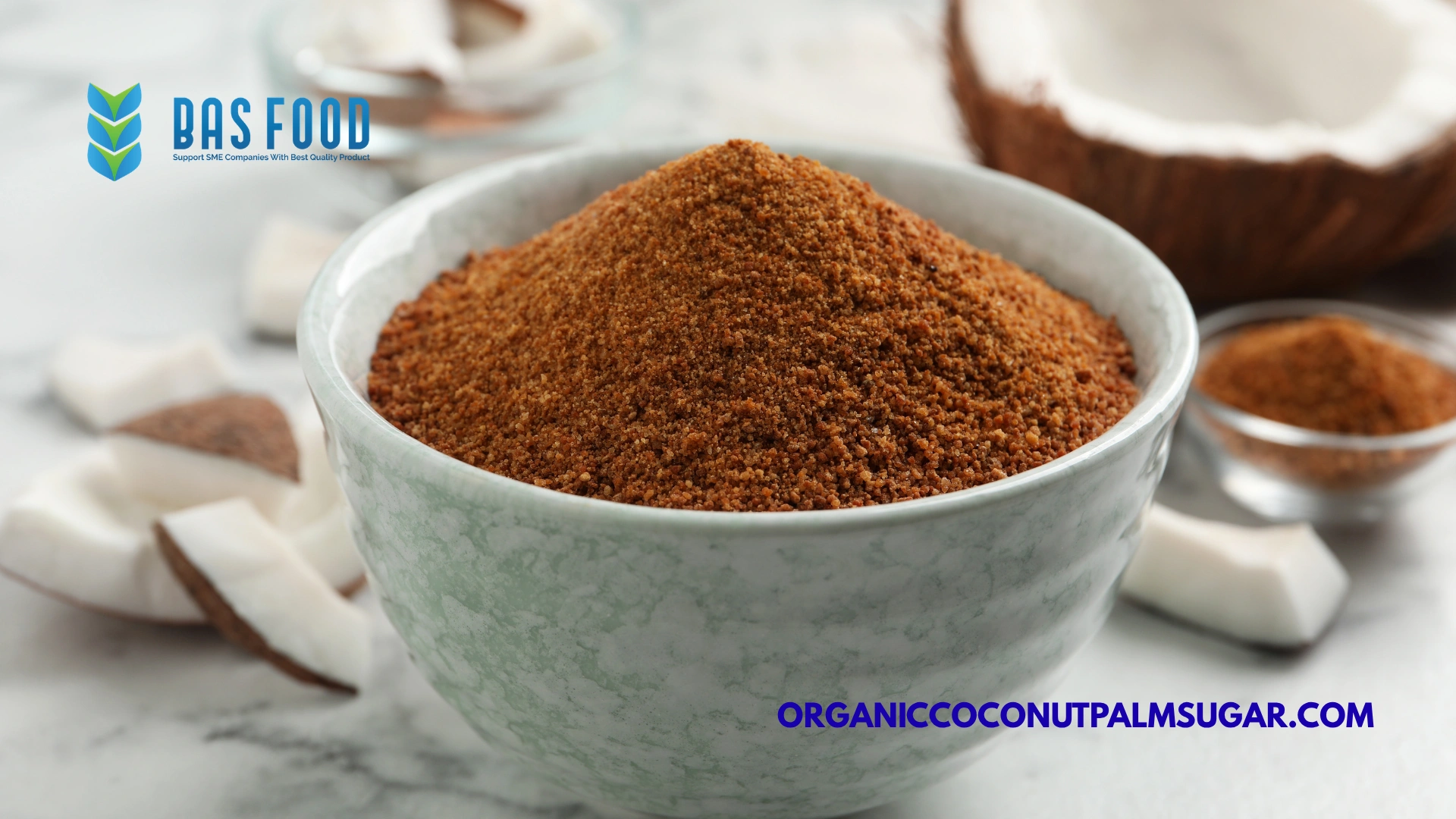
Coconut sugar is made by collecting fresh sap from the flower blossoms of coconut palm trees. The sap is gently heated to evaporate water until it forms crystals. Because the production process is relatively simple and focuses mainly on evaporation, some naturally occurring compounds from the sap remain in the finished product.
Like other sugars, coconut sugar is primarily composed of carbohydrates that provide energy. It also contains small amounts of naturally occurring vitamins, minerals, and other plant-derived compounds inherited from the coconut blossom sap.
However, these nutrients are present in relatively small quantities. Coconut sugar should not be promoted as a significant source of essential nutrients or as a replacement for nutrient-rich foods such as fruits, vegetables, legumes, or whole grains.
Understanding this balance helps businesses communicate accurate product information while maintaining consumer trust.
Coconut Sugar Nutrients: What Does Coconut Sugar Naturally Contain?
Many buyers ask about coconut sugar nutrients because they want to understand how coconut sugar differs from highly refined sweeteners.
Although exact nutritional composition varies depending on the raw material, production method, and manufacturer, coconut sugar naturally contains several components inherited from coconut blossom sap.
These may include naturally occurring carbohydrates, trace amounts of minerals, and small quantities of plant compounds.
Because coconut sugar undergoes a relatively simple evaporation process rather than extensive refining, some of these naturally occurring components remain in the final product.
It is important to remember that nutritional values can vary between production batches and suppliers. Buyers who require detailed nutritional information should always request laboratory-tested nutritional specifications from their supplier.
Reliable exporters often provide product documentation that includes nutritional analysis performed by accredited laboratories.
Minerals in Coconut Sugar
One of the most frequently discussed aspects of coconut sugar nutrition facts is the presence of minerals in coconut sugar.
Fresh coconut blossom sap naturally contains small amounts of minerals that remain partially present after processing.
Depending on the source and production method, coconut sugar may naturally contain trace amounts of minerals such as:
- Potassium
- Magnesium
- Calcium
- Iron
- Zinc
The exact quantities vary considerably depending on the coconut trees, soil conditions, climate, harvesting practices, and processing methods.
Although these minerals contribute to coconut sugar’s natural composition, they are generally present in modest amounts. Therefore, coconut sugar should not be considered a primary dietary source of minerals.
Food manufacturers should communicate these characteristics responsibly without overstating nutritional benefits.
Does Coconut Sugar Contain Antioxidants?
Another common question concerns antioxidants.
Because coconut sugar is produced from plant-derived sap using relatively gentle processing, it may naturally contain certain antioxidant compounds that originate from the coconut blossom.
These compounds can vary depending on agricultural conditions, harvesting practices, and manufacturing methods.
However, antioxidant content is not standardized across all coconut sugar products.
Manufacturers and exporters should avoid making broad or exaggerated antioxidant claims unless they are supported by appropriate laboratory testing and comply with local food regulations.
Instead, businesses can accurately describe coconut sugar as a naturally derived sweetener produced from coconut blossom sap using a traditional evaporation process.
This approach provides consumers with reliable information while maintaining regulatory compliance.
How Coconut Sugar Is Produced and Why It Matters
The production process plays an important role in determining the final characteristics of coconut sugar.
Harvesting Fresh Coconut Blossom Sap
Everything begins with experienced farmers collecting fresh sap from unopened coconut flower blossoms.
The sap is naturally sweet and must be processed quickly to preserve its quality.
Gentle Evaporation
The collected sap is filtered and heated slowly to remove excess water.
Unlike highly refined sweeteners, coconut sugar production focuses mainly on evaporation rather than multiple refining stages.
Natural Crystallization
As water continues evaporating, the concentrated syrup naturally forms crystals.
These crystals are cooled, dried, and packaged for domestic and international markets.
Because the production process is relatively straightforward, coconut sugar retains its characteristic caramel flavor, natural brown color, and some naturally occurring compounds from the original sap.
Why Food Manufacturers Choose Coconut Sugar
Although nutrition is one consideration, food manufacturers choose coconut sugar for many additional reasons.
- Rich caramel flavor enhances baked goods, beverages, sauces, chocolates, and desserts.
- Natural brown color contributes attractive appearance without artificial coloring.
- Versatility allows manufacturers to use it in a wide variety of product formulations.
Many companies also appreciate its simple ingredient story because consumers increasingly seek recognizable, naturally sourced ingredients.
These practical advantages continue driving global demand for coconut sugar across multiple food categories.
Applications Across the Food Industry
The versatility of coconut sugar makes it suitable for many commercial applications.
Bakery Products
Cookies, cakes, muffins, pastries, and breads all benefit from coconut sugar’s caramel flavor and attractive color.
Beverage Industry
Coffee drinks, tea products, smoothies, flavored beverages, and nutritional drinks often include coconut sugar.
Confectionery
Chocolate, candy, caramel products, and dessert fillings frequently use coconut sugar to enhance flavor complexity.
Dairy Products
Ice cream, yogurt, flavored milk, and frozen desserts can also incorporate coconut sugar into premium formulations.
Sauces and Seasonings
Barbecue sauces, marinades, seasoning blends, and dressings use coconut sugar to create balanced sweetness and rich flavor.
Nutrition Labeling for Coconut Sugar
Professional exporters understand that accurate labeling is essential for international trade.
Importers often request complete nutritional specifications before placing orders.
Reliable suppliers typically provide laboratory-tested information covering:
- Energy
- Carbohydrates
- Total sugars
- Moisture
- Ash content
- Nutritional analysis when available
Nutrition labels should always comply with the regulations of the destination market.
Providing accurate documentation helps build trust while supporting regulatory compliance.
How Importers Should Evaluate Coconut Sugar Suppliers
Businesses sourcing coconut sugar should evaluate much more than price.
Professional buyers review supplier experience, production capacity, quality management systems, export capabilities, packaging, and documentation.
Requesting nutritional specifications, certificates of analysis, and product samples helps buyers verify consistency before purchasing large volumes.
It is also beneficial to discuss labeling requirements and destination-country regulations early in the sourcing process.
Working with experienced exporters reduces quality risks while ensuring dependable long-term supply.
Common Misunderstandings About Coconut Sugar Nutrition Facts
Several misconceptions exist regarding coconut sugar.
One common misunderstanding is that coconut sugar is a significant source of vitamins and minerals.
While coconut sugar naturally contains small amounts of certain nutrients inherited from coconut blossom sap, it remains primarily a sweetener.
Another misconception is that all coconut sugar products contain identical nutritional values.
In reality, agricultural conditions, production methods, and processing techniques all influence final composition.
Finally, some people assume coconut sugar can replace nutrient-rich whole foods.
Although coconut sugar has naturally occurring compounds, it should still be consumed as part of a balanced diet rather than as a nutritional substitute.
Frequently Asked Questions
What are coconut sugar nutrition facts?
Coconut sugar is primarily a carbohydrate-based natural sweetener. It also contains small amounts of naturally occurring minerals and plant-derived compounds inherited from coconut blossom sap.
What nutrients are found in coconut sugar?
Coconut sugar nutrients may include trace amounts of minerals such as potassium, magnesium, calcium, iron, and zinc, depending on production conditions.
Does coconut sugar contain antioxidants?
Coconut sugar may naturally contain certain plant-derived antioxidant compounds, but levels vary between products and manufacturers.
Is coconut sugar a major source of vitamins and minerals?
No. Although it contains naturally occurring minerals in small amounts, coconut sugar should not be considered a major dietary source of essential nutrients.
Why do food manufacturers use coconut sugar?
Manufacturers value its rich caramel flavor, natural brown color, versatile functionality, and traditional production process.
Conclusion
Understanding coconut sugar nutrition facts helps importers, food manufacturers, and consumers make informed decisions. Coconut sugar is primarily a natural sweetener made from coconut blossom sap, while also containing small amounts of coconut sugar nutrients, naturally occurring minerals in coconut sugar, and certain plant-derived antioxidants.
Although these naturally occurring components contribute to its unique composition, coconut sugar should be presented responsibly without exaggerated nutritional claims. Accurate communication, supported by laboratory analysis and regulatory compliance, helps businesses build credibility in international markets.
For importers and manufacturers, partnering with an experienced exporter ensures access to consistent product quality, reliable nutritional documentation, and dependable supply. As global demand for naturally sourced ingredients continues to grow, coconut sugar remains a valuable ingredient for a wide range of food and beverage applications.