As consumers around the world become more interested in natural food ingredients, coconut sugar has quickly become one of the most popular alternatives to refined white sugar. Food manufacturers, beverage companies, bakeries, and health-focused brands are increasingly choosing this sugar because it offers a rich caramel flavor, a natural production process, and excellent versatility across many food applications.
However, despite its growing popularity, many buyers still ask the same question: what is coconut sugar? Understanding how it is produced, what makes it unique, and why it is becoming a preferred sweetener can help importers and manufacturers make better purchasing decisions.
Whether you are a food manufacturer looking for a reliable ingredient or an importer searching for a dependable supplier, this guide will give you the knowledge you need to source coconut sugar with confidence.
What Is Coconut Sugar?
If you have ever wondered what is coconut sugar, the answer is surprisingly simple.
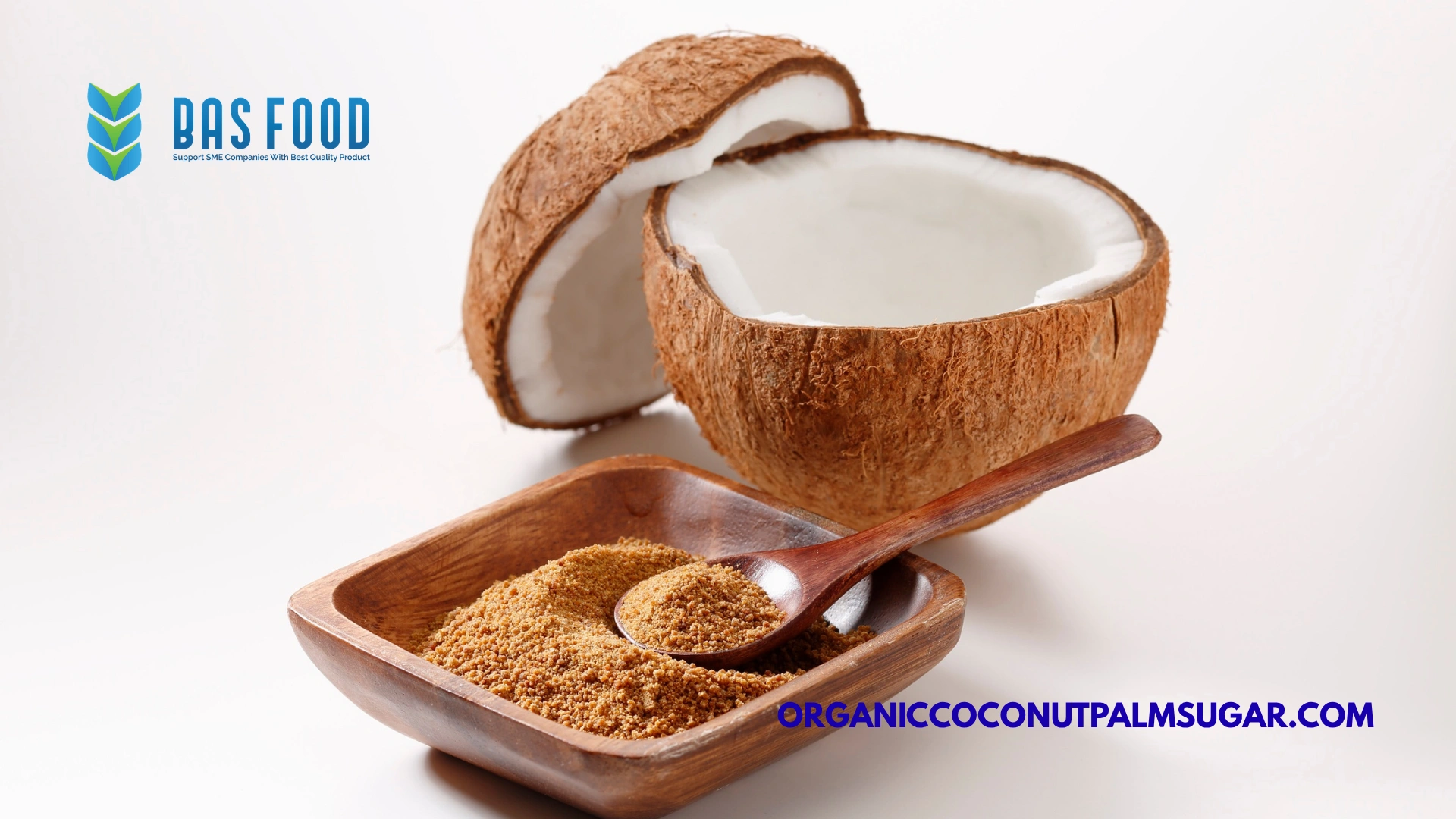
Coconut sugar is a natural sweetener made from the fresh sap of coconut palm flower blossoms. Farmers carefully collect the sap by tapping the flower stems of mature coconut trees. The collected sap is then heated slowly to evaporate its water content until it becomes a thick syrup. As the syrup continues to cook, it naturally crystallizes into coconut sugar.
Unlike refined white sugar, which goes through extensive industrial processing, coconut sugar is produced using a relatively simple method that helps preserve its natural color, flavor, and aroma. This traditional process has been practiced for generations in many coconut-producing countries, especially Indonesia.
One important point to understand is that coconut sugar does not come from the coconut fruit itself. Instead, it comes from the sweet sap produced by the coconut blossom. This often surprises first-time buyers, making it one of the most interesting facts when discussing coconut sugar explained.
The final product has a warm golden to dark brown color and offers a rich caramel-like taste that enhances both sweet and savory recipes.
Why Coconut Sugar Is Becoming More Popular Worldwide
The global food industry is changing rapidly. Consumers are reading ingredient labels more carefully and looking for products made with recognizable, naturally sourced ingredients.
As a result, coconut sugar has become an attractive option for brands that want to create premium food products without relying solely on refined sugar.
One reason for its popularity is its unique flavor profile. Instead of providing only sweetness, coconut sugar adds subtle caramel and toffee notes that improve the taste of baked goods, beverages, sauces, desserts, and confectionery products.
Another reason is its versatility. It performs well in many food applications without requiring major recipe adjustments. This makes it easier for manufacturers to incorporate coconut sugar into existing production lines.
In addition, coconut sugar aligns well with current consumer trends that favor natural ingredients and minimally processed foods. While businesses should avoid making unsupported health claims, many consumers appreciate that coconut sugar is produced from a renewable agricultural resource using traditional harvesting methods.
How Coconut Sugar Is Made
Understanding the production process helps buyers appreciate why product quality can vary between suppliers.
Harvesting Fresh Coconut Sap
Everything begins with healthy coconut trees.
Experienced farmers climb the trees and carefully tap the unopened flower blossoms. Fresh sap flows naturally from the flower stems into clean collection containers.
The quality of the sap depends on factors such as tree health, harvesting skills, weather conditions, and collection hygiene.
Fresh sap should be processed as quickly as possible to preserve its natural sweetness and prevent unwanted fermentation.
Gentle Heating Process
Once collected, the sap is filtered and transferred into large cooking pans.
The sap is heated over controlled temperatures to slowly evaporate its water content. During this process, the natural sugars become more concentrated.
Unlike highly refined sweeteners, coconut sugar production focuses on careful evaporation rather than chemical refining.
Natural Crystallization
As more moisture evaporates, the syrup thickens until it naturally forms crystals.
The crystals are stirred continuously to achieve a uniform texture before being cooled, dried, and packaged.
Professional manufacturers carefully control moisture levels during this stage because they directly affect product quality, shelf life, and storage performance.
Coconut Sugar Explained: What Makes It Different?
Many sweeteners appear similar at first glance, but coconut sugar has several characteristics that distinguish it from conventional sugar.
Natural Caramel Flavor
One of the biggest advantages of coconut sugar is its rich caramel flavor.
Rather than tasting simply sweet, it adds depth to recipes, making it popular in premium bakery products, beverages, sauces, chocolates, and desserts.
Brown Color
Coconut sugar naturally ranges from golden brown to dark brown.
Its color develops naturally during cooking without requiring artificial coloring.
Pleasant Aroma
High-quality coconut sugar has a mild caramel aroma that enhances many food products.
Proper processing helps preserve this characteristic throughout production.
Excellent Versatility
As a natural coconut sweetener, coconut sugar works well in:
- Bakery products
- Coffee and tea
- Chocolate
- Ice cream
- Breakfast cereals
- Sauces
- Marinades
- Snack foods
- Beverage mixes
- Health food products
This flexibility explains why manufacturers from many industries continue adopting coconut sugar as an ingredient.
Common Types of Coconut Sugar
International buyers can choose from several product forms depending on their manufacturing needs.
Granulated Coconut Sugar
Granulated is the most common export product.
It dissolves easily and is suitable for retail packaging, food manufacturing, and industrial applications.
Powder Coconut Sugar
Powdered has finer particles.
It is widely used in instant beverages, powdered drink mixes, seasoning blends, and food processing.
Block Coconut Sugar
Traditional block sugar remains popular in many regional markets.
It is commonly used for cooking traditional recipes and specialty foods.
Liquid Coconut Sugar
Liquid coco sugar is produced before crystallization is completed.
It is used in beverages, sauces, syrups, and food manufacturing where liquid sweeteners are preferred.
Applications of Coconut Sugar Across Food Industries
One reason for the growing demand for this sugar is its wide range of commercial applications.
Bakery Industry
Bakeries use this sugar in cookies, cakes, muffins, breads, and pastries.
Its caramel flavor enhances finished products while providing natural sweetness.
Beverage Manufacturing
Coffee products, tea blends, smoothies, flavored drinks, and nutritional beverages often include this sugar as a sweetening ingredient.
Its pleasant flavor pairs well with many beverage formulations.
Confectionery
Chocolate manufacturers and candy producers appreciate coco sugar because it contributes both sweetness and flavor complexity.
Premium confectionery products often benefit from its natural caramel notes.
Dairy Products
Ice cream, yogurt, and flavored milk products increasingly incorporate coco sugar into new product formulations.
Its distinctive flavor helps create premium consumer experiences.
Sauce and Seasoning Production
Coco sugar is also used in barbecue sauces, marinades, salad dressings, and seasoning blends.
Its balanced sweetness complements savory ingredients without overpowering them.
Choosing High-Quality Coconut Sugar
Not all coco sugar is produced to the same standard.
Professional buyers evaluate several quality indicators before selecting a supplier.
Color consistency is one important factor. Uniform color generally indicates stable production practices.
Moisture content is another critical consideration. Proper moisture control improves shelf life and reduces clumping during storage.
A clean caramel aroma without burnt or sour odors indicates careful processing.
Particle size consistency is especially important for manufacturers using automated production equipment.
Reliable suppliers also provide product specifications, quality documentation, and export-ready packaging that meets international requirements.
Why Indonesia Is a Leading Coconut Sugar Supplier
Indonesia is recognized as one of the world’s leading producers of coconut sugar.
The country benefits from abundant coconut plantations, experienced farming communities, and generations of traditional expertise in coconut sap harvesting.
Many Indonesian manufacturers combine traditional production methods with modern food safety systems, allowing them to supply international buyers with consistent export-quality products.
Indonesian exporters also offer flexible packaging options, private labeling services, and customized product specifications to meet the needs of global food manufacturers.
These advantages make Indonesia a trusted sourcing destination for businesses looking for a reliable natural coconut sweetener.
Tips for Importers When Sourcing Coconut Sugar
Choosing the right coconut sugar supplier involves more than comparing prices.
Importers should evaluate production capacity, quality assurance systems, packaging options, export experience, and communication responsiveness.
Requesting product specifications, certificates of analysis, and production samples allows buyers to verify product consistency before placing large orders.
It is also important to discuss packaging requirements, container loading practices, and recommended storage conditions to protect product quality during international shipping.
Building long-term relationships with professional exporters helps ensure a stable supply, consistent quality, and dependable customer service.
Conclusion
Understanding what is this sugar helps businesses appreciate why this ingredient continues to gain popularity across international food industries. Made from the fresh sap of coconut palm blossoms, this sugar offers a naturally rich caramel flavor, attractive brown color, and excellent versatility for a wide variety of food applications.
This guide has provided coconut sugar explained in a simple and practical way, covering its production process, characteristics, applications, and sourcing considerations. As a trusted natural coconut sweetener, coconut sugar continues to meet the growing demand for naturally sourced food ingredients in global markets.
For importers, distributors, and food manufacturers, partnering with an experienced exporter is essential. A reliable supplier delivers consistent quality, proper packaging, and dependable service, ensuring that every shipment supports your production goals and customer expectations.