Organic coconut sugar has become one of the most sought-after natural sweeteners in global markets. Buyers from food manufacturers to health-focused brands are actively sourcing this product due to its natural origin, low glycemic index, and sustainable production process. Understanding organic coconut sugar processing is essential to appreciating the care behind every granule. But behind every granule of coconut sugar lies a detailed and careful journey. From tapping fresh coconut sap to transforming it into rich brown crystals, the process combines traditional knowledge with modern quality control.
In this guide, we break down how organic coconut sugar is made, step by step, with a focus on both organic coconut sugar processing and block coconut sugar processing. This article is designed for importers, distributors, and B2B buyers who want a deeper understanding of the product they source.
The Origin Story: Understanding Coconut Sap as the Raw Material
The production of organic coconut sugar starts with one key ingredient: coconut sap. This sap is collected from the flower buds of coconut trees, often referred to as coconut blossoms.
Farmers climb the trees daily to tap the unopened flower buds. They carefully cut the tip and attach a container to collect the sap. This process requires skill and consistency because the quality of sap directly affects the final sugar.
Fresh coconut sap is naturally sweet and contains essential nutrients like potassium, magnesium, zinc, and iron. However, it is also highly perishable. Therefore, farmers must process it within a few hours after collection to prevent fermentation.
In organic systems, no chemical preservatives are allowed. Instead, farmers use natural methods to maintain sap quality. For example, they may clean collection containers thoroughly and use traditional techniques to slow down fermentation. This step is critical in ensuring the integrity of organic coconut sugar processing.
From Sap to Syrup: The First Transformation Stage
Once the sap is collected, it moves quickly to the cooking stage. This is where the transformation begins.
The fresh sap is poured into large pans or woks and heated over a controlled fire. Traditionally, this is done using wood-fired stoves. In modern facilities, stainless steel equipment and controlled heating systems are used to ensure consistency and hygiene.
As the sap heats up, water content starts to evaporate. Gradually, the liquid thickens into a golden-brown syrup. During this stage, continuous stirring is essential. It prevents burning and ensures even heat distribution.
This stage is one of the most important parts of organic coconut sugar processing. The temperature must be carefully controlled. If it is too high, the sugar may burn and develop a bitter taste. If it is too low, the evaporation process will be inefficient.
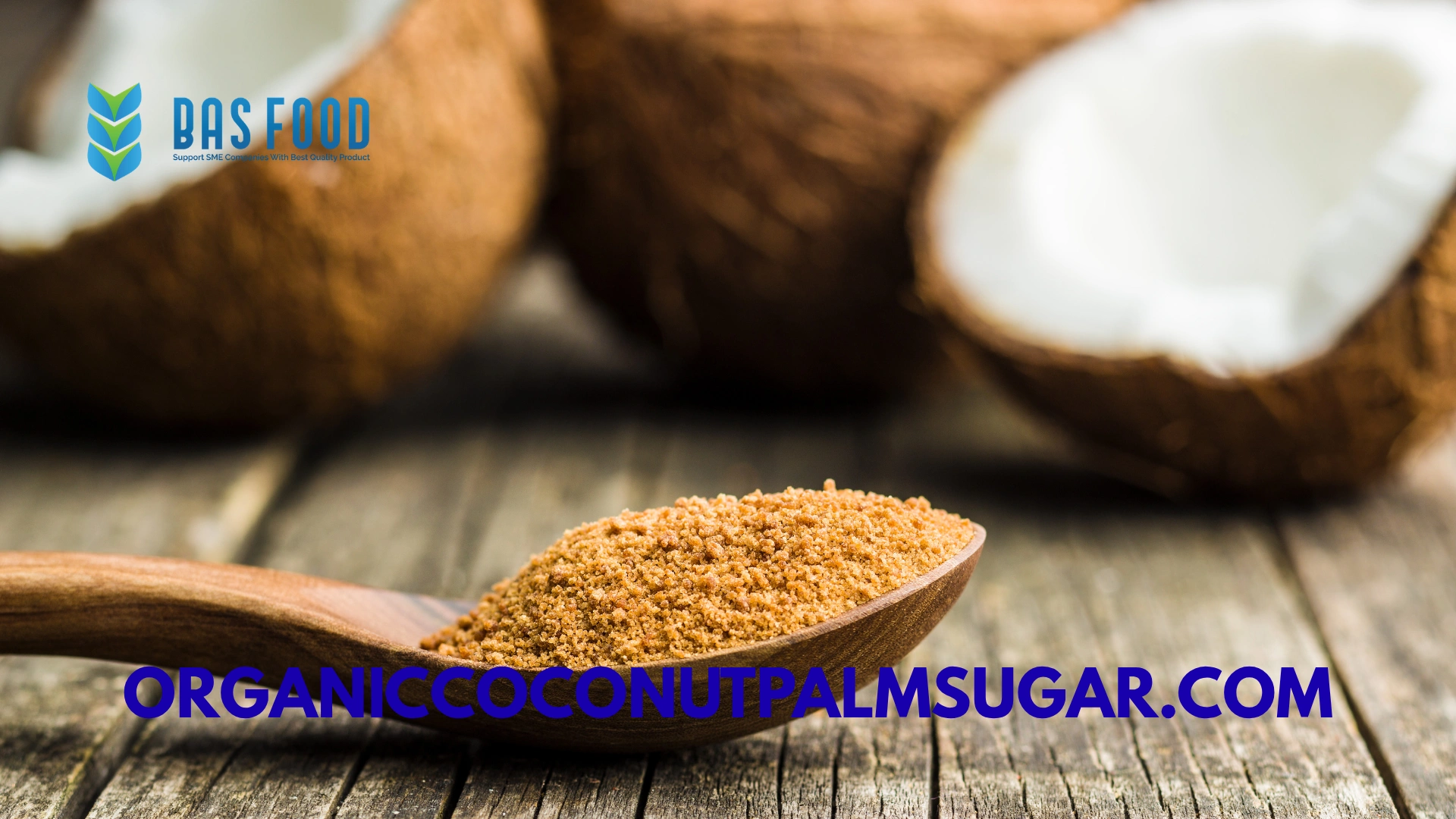
The result of this stage is a thick, aromatic coconut syrup. This syrup is the base for both granulated coconut sugar and block coconut sugar.
Crystallization: Turning Syrup into Granulated Coconut Sugar
After the sap has been reduced to a thick syrup, the next step is crystallization. This is where the syrup transforms into the familiar granulated form.
The thick syrup is continuously stirred as it cools down. During this process, sugar crystals begin to form naturally. The texture gradually changes from sticky liquid to coarse granules.
This stage requires experience and precision. The timing is crucial. If the stirring stops too early, the sugar may remain in a paste-like form. If done correctly, the result is dry, free-flowing coconut sugar granules.
Modern producers often use mechanical mixers to improve consistency and efficiency. However, the principle remains the same as traditional methods.
At this point, the product is sieved to achieve uniform particle size. It is then dried further if necessary to reduce moisture content. Proper drying is essential for shelf stability, especially for export markets.
This crystallization process is a defining step in organic coconut sugar processing, ensuring the final product meets international quality standards.
Block Coconut Sugar Processing: Traditional Form with Strong Market Demand
While granulated coconut sugar is popular, block coconut sugar still holds a strong position in many markets.
Block coconut sugar processing follows a similar initial process. The sap is collected and cooked into a thick syrup. However, instead of continuing to stir until granules form, the syrup is poured into molds.
These molds can be made from bamboo, coconut shells, or metal forms. Once poured, the syrup cools and solidifies into solid blocks.
This traditional form is widely used in local cuisines and food industries. It offers a rich flavor and is often preferred for certain applications where slow melting is desired.
Block coconut sugar has several advantages:
- Longer shelf life due to lower surface exposure
- Easier handling in bulk form
- Distinct traditional appeal for niche markets
For exporters, offering both granulated and block forms can open access to wider market segments. Understanding block coconut sugar processing helps buyers choose the right product format for their needs.
Organic Certification and Quality Control: Meeting Global Standards
In today’s market, organic certification is not just a label. It is a requirement for many buyers.
Organic coconut sugar must be produced without synthetic chemicals, pesticides, or artificial additives. This applies to both farming and processing stages.
Certification bodies inspect the entire supply chain. They ensure that:
- Coconut trees are grown in organic-certified areas
- Sap collection methods are clean and chemical-free
- Processing facilities follow strict hygiene standards
- No contamination occurs during production
Quality control also plays a key role. Export-grade coconut sugar must meet specific parameters, including:
- Moisture content
- Color consistency
- Granule size
- Microbiological safety
Producers often conduct lab testing to ensure compliance with international standards such as HACCP, ISO, and USDA Organic.
Strong quality control systems are essential for maintaining trust in organic coconut sugar processing. For B2B buyers, this ensures product reliability and consistency across shipments.
Packaging and Export Preparation: From Factory to Global Markets
Once the coconut sugar is ready, the next step is packaging. This stage is critical for preserving product quality during transportation.
Granulated coconut sugar is typically packed in:
- Kraft paper bags with inner liners
- Vacuum-sealed plastic bags
- Bulk sacks for industrial buyers
Block coconut sugar is packed in cartons or wrapped individually, depending on buyer requirements.
Exporters must also consider:
- Moisture protection
- Contamination prevention
- Compliance with import regulations
Labeling is equally important. It must include product details, origin, certification, and batch information.
For international trade, logistics planning is essential. Coconut sugar must be stored in dry conditions and transported carefully to maintain quality.
A well-managed export process reflects the professionalism of the supplier and supports long-term business relationships.
Sustainability and Ethical Production: A Key Selling Point
One of the strongest advantages of coconut sugar is its sustainability.
Coconut trees continue to produce sap for many years without being cut down. This makes coconut sugar production environmentally friendly compared to other sweeteners.
In addition, the process supports rural communities. Farmers benefit from steady income, and traditional knowledge is preserved.
Organic practices further enhance sustainability by protecting soil health and biodiversity.
For global buyers, sustainability is not just a trend. It is a key purchasing factor. Highlighting ethical and sustainable practices in organic coconut sugar processing can strengthen brand positioning and market appeal.
Why Understanding the Process Matters for B2B Buyers
Importers and distributors gain a clear advantage when they understand how coconut sugar is made.
It helps in:
- Evaluating supplier capabilities
- Ensuring product quality
- Communicating value to end customers
- Building stronger partnerships
Buyers who understand both organic coconut sugar processing and block coconut sugar processing can make better sourcing decisions.
They can also differentiate their products in competitive markets by emphasizing quality, authenticity, and sustainability.
Partnering with a Reliable Supplier from Indonesia
Indonesia is one of the world’s leading producers of coconut sugar. Its tropical climate and abundant coconut plantations create ideal conditions for production.
Working with a reliable supplier is essential. A trusted exporter ensures:
- Consistent quality
- Certified organic products
- Flexible packaging options
- Timely delivery
CV Bonafide Anugerah Sentosa is a trusted Indonesian supplier of coconut sugar and other coconut-based products. The company combines traditional expertise with modern processing standards to meet global demand.
By partnering with experienced exporters, buyers can secure high-quality products and build long-term supply chains.
Conclusion: From Sap to Crystals, A Journey of Quality and Care
Organic coconut sugar is more than just a sweetener. It is the result of careful harvesting, precise processing, and strict quality control.
From fresh coconut sap to golden crystals, every step matters. Whether in granulated form or solid blocks, the final product reflects the skill and dedication of the producers.
For B2B buyers, understanding this journey is essential. It ensures better sourcing decisions and stronger market positioning.
As demand continues to grow, suppliers who focus on quality, sustainability, and transparency will lead the market.